





OEM Scissors Sourcing Guide: Dual-Tone Precision for Everyday Cutting
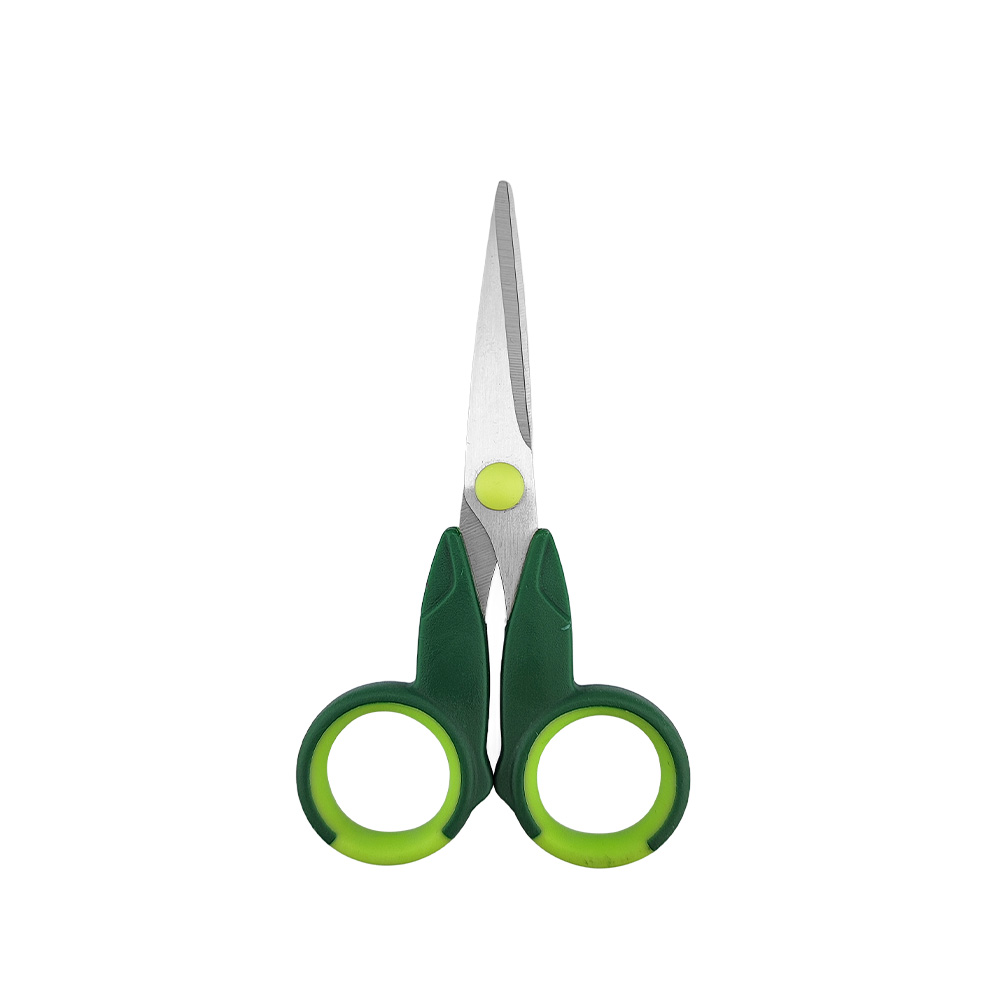
For brands, importers and distributors, OEM scissors are not only a simple household tool. They are a product category where comfort, cutting control, appearance, packaging and supplier consistency all affect repeat sales. The Dual-Tone Precision Scissors shown in the original article present a clear example: a deep forest green handle with a lime highlight, a contoured grip and stainless steel blades with a fine pointed tip. Those visible details make the product suitable for everyday cutting tasks while also giving buyers useful points to discuss with a factory or supplier.
Key Takeaways
- OEM scissors should be evaluated by grip comfort, blade alignment, cutting performance and packaging requirements.
- The dual-tone handle can help a retail or private-label product look more distinctive without changing the basic product function.
- Stainless steel blades and a fine pointed tip support common tasks such as cutting paper, cardboard, fabric and packaging.
- B2B buyers should confirm specifications, samples, quality checks, branding options and compliance expectations before placing an order.
What Makes These OEM Scissors Relevant for Buyers?
The product described in the source article is positioned as a pair of precision household scissors with a dual-tone handle and stainless steel blades. Its strongest market advantage is not a complicated feature list, but a balanced combination of recognizable design and practical daily use. In categories such as household scissors, craft scissors and office scissors, buyers often need a product that is easy to understand, visually clear on a shelf or online listing, and reliable for repeated use.
The forest green and lime handle creates contrast, which can support brand differentiation for private-label programs. The contoured shape is described as ergonomic and intended to provide a comfortable, secure grip. For sourcing teams, this should lead to specific sample testing rather than assumption. Ask users to cut paper, thin cardboard, packaging tape and fabric scraps, then record whether the grip feels stable and whether the pivot action remains smooth.
Handle Design: Comfort, Control and Brand Identity
Handle design is one of the first things shoppers notice and one of the first things users judge. A dual-tone handle can make a common tool easier to identify within a product range, especially if a buyer is developing coordinated kitchen, office or craft accessories. However, color alone is not enough. The shape, opening size and surface feel all influence usability.
When reviewing OEM samples, consider how the handle fits different hand sizes and whether the grip supports both quick cuts and longer cutting sessions. The original article notes that the ergonomic design helps reduce hand fatigue during prolonged tasks. Buyers should verify this with hands-on evaluation because comfort depends on the target user group and the materials being cut.
Blade Performance and Everyday Cutting Uses
The scissors are described with stainless steel blades and a fine pointed tip. These features make them relevant for common household, office and creative applications, including paper, cardboard and fabric cutting. Stainless steel is widely used in scissors because it can support clean cutting performance and everyday durability, but buyers should avoid assuming a specific steel grade unless the supplier confirms it in writing.
The fine pointed tip is useful for detailed cuts, starting cuts in narrow areas and trimming small shapes in craft or design work. For a retail product, this can broaden the product story beyond general household use. At the same time, pointed scissors may require clearer packaging warnings or handling guidance depending on the market. Buyers should ask the supplier what packaging format, labeling and age recommendations are normally used for similar products.
Comparison Checklist for OEM Scissors Samples
| Evaluation Area | What to Check | Questions to Ask the Supplier |
|---|---|---|
| Handle comfort | Grip stability, hand fit, pressure points and control during repeated cuts | Can handle shape, color or surface texture be customized? |
| Blade details | Stainless steel blades, tip shape, edge alignment and smooth opening action | What blade material specification can be documented? |
| Cutting performance | Paper, cardboard, fabric scraps and packaging materials | What in-process or final cutting checks are used? |
| Private label options | Logo placement, color matching, hang card, sleeve or blister packaging | What artwork files and color references are required? |
| Order planning | Sample approval, lead time, carton packing and shipment protection | What are the MOQ, lead time and packing details for this model? |
B2B Sourcing Guidance for OEM and Private Label Programs
When sourcing OEM scissors, the first step is to define the sales channel and user scenario. A supermarket item, an office supply product and a craft-focused product may look similar, but they can require different packaging, copywriting and quality expectations. Provide the supplier with a short product brief that includes target market, preferred handle colors, logo needs, packaging style, estimated order quantity and any required documentation for the destination market.
Do not rely only on catalog photos. Request physical samples and compare them against a written checklist. Confirm the actual handle colors under normal lighting, inspect the blade edges, test the pivot, and check whether the scissors cut smoothly from the heel of the blade to the tip. If the product will be sold online, also check whether the color contrast and blade shape are easy to recognize in product photography.
Commercial details should be confirmed directly with the supplier. Ask about MOQ, sample cost, production lead time, packaging charges, logo methods, carton dimensions, spare parts policy and inspection standards. If the order needs compliance documents, chemical restrictions, labeling rules or market-specific safety information, request written confirmation rather than assuming that a general household product automatically meets every requirement.
Use and Care Guidance for End Users
Even well-made household scissors perform better when used correctly. For consumer packaging or online product pages, provide simple care instructions that reduce misuse and returns. These scissors are suitable for daily tasks such as cutting paper, cardboard, fabric and packaging, but users should avoid cutting hard wire, metal sheet or materials that can damage the blade edge unless the product is specifically designed for that purpose.
- Wipe the blades clean and dry after use, especially after cutting adhesive tape or damp materials.
- Store the scissors closed and away from small children.
- Use the fine tip carefully for detailed work rather than forcing it through thick material.
- Keep one pair for fabric if clean textile cuts are important.
- Do not twist the blades sideways while cutting, as this can affect alignment.
FAQ: OEM Scissors Buying Questions
Can the dual-tone handle be customized?
It may be possible, but buyers should confirm available color options, color matching method, MOQ and any tooling or setup requirements with the supplier before planning a private-label range.
Are these scissors only for household use?
The described product is suitable for household tasks and can also support office, craft and light professional use such as cutting paper, cardboard and fabric. Final positioning depends on packaging, testing and buyer requirements.
What should buyers check before approving a sample?
Check grip comfort, blade alignment, cutting smoothness, tip accuracy, surface finish, logo placement and packaging quality. Test several materials that match the intended end use.
Should a buyer ask for certifications?
Ask what documents are available and what is required for your sales market. Do not assume compliance claims; request written documentation for any mandatory standard, labeling rule or restricted substance requirement.
How can brands reduce quality variation?
Use an approved sample, written specifications, clear packaging artwork and a defined inspection checklist. Confirm how the supplier controls blade sharpness, handle appearance, pivot movement and final packing.
Final Thoughts
The Dual-Tone Precision Scissors demonstrate how a familiar product can gain market appeal through a clear handle design, comfortable grip concept and practical stainless steel blades. For B2B buyers, the best approach is to treat the product as both a user tool and a sourcing project. Verify samples, ask precise supplier questions, document specifications and build packaging around real use cases. That process helps turn OEM scissors from a basic catalog item into a dependable private-label product for household, office or craft assortments.
