




Unlocking Potential with Versatile OEM Kitchen Shears
OEM kitchen shears are a practical product category for distributors, private-label brands, kitchenware importers, and retailers that need dependable cutting tools with room for customization. Unlike a standard off-the-shelf listing, an OEM program may allow buyers to discuss handle color, packaging, logo placement, accessory functions, and other commercial details directly with a supplier. The goal is not simply to find a low unit price, but to source a product that fits the target market, retail channel, and expected use cases.
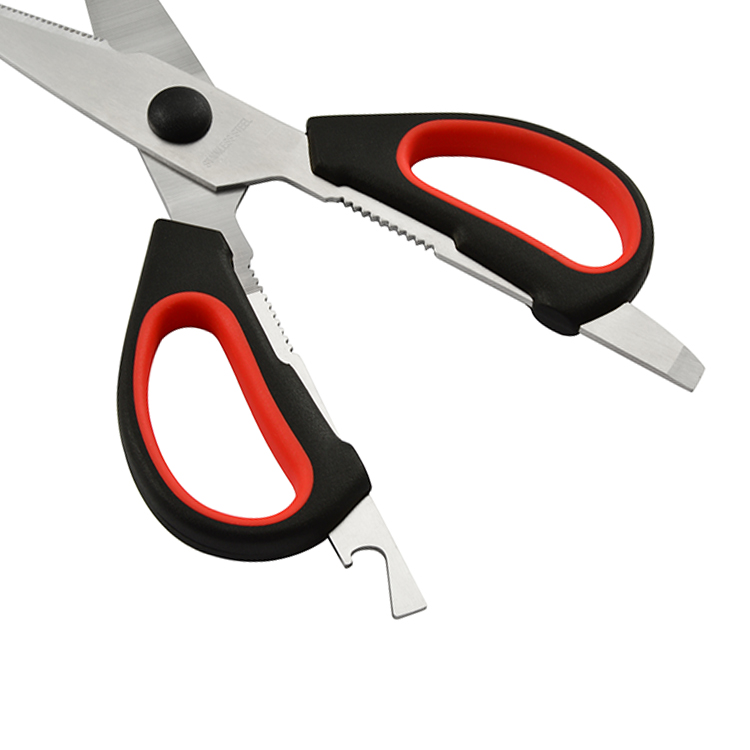
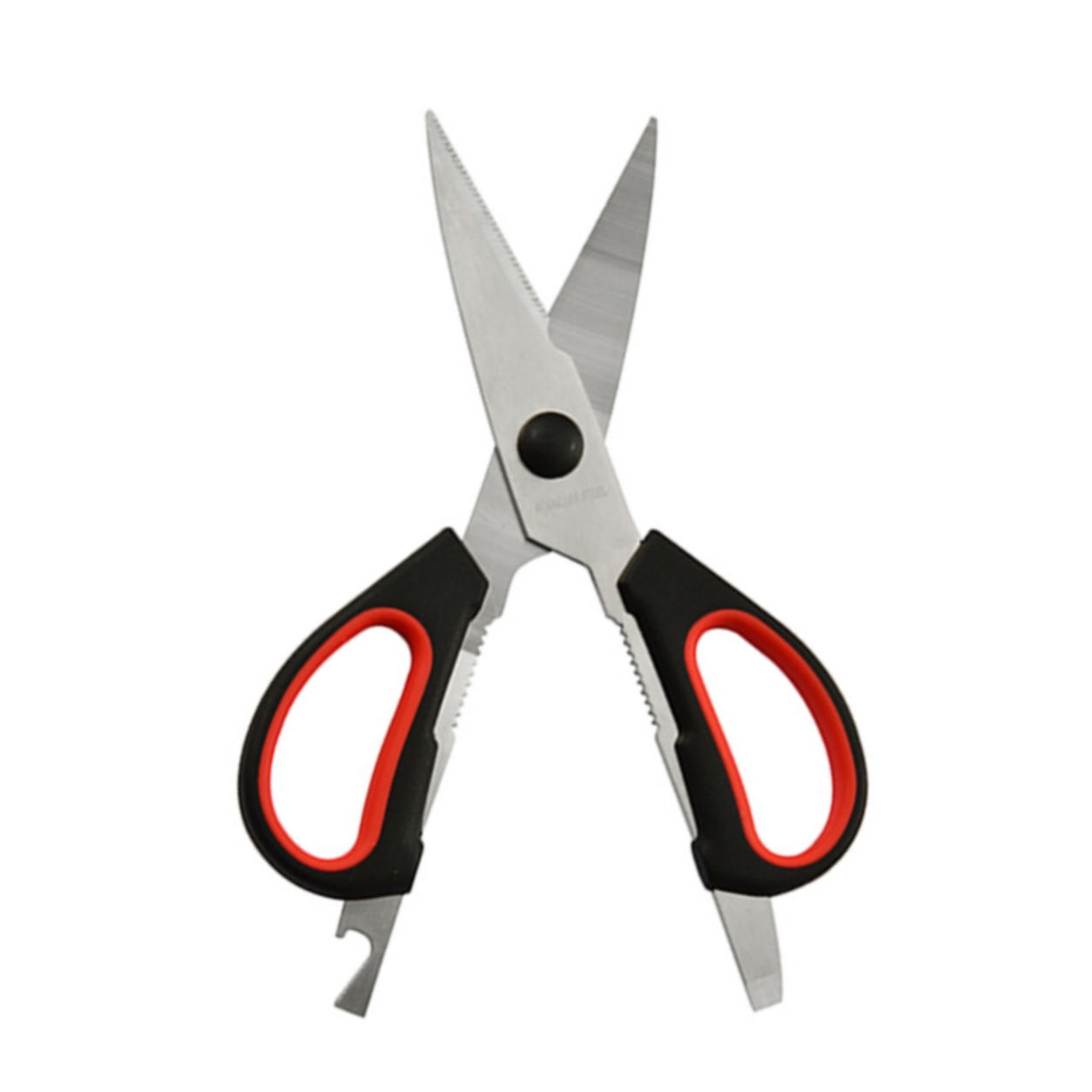
The original product information highlights kitchen scissors with multi-functional features, including serrated blades, rust-resistant stainless steel, a bottle opener, nutcracker, fish scaler, and soft-grip handles in red and black. Those details make the product relevant for buyers looking for an all-purpose kitchen cutting tool rather than a simple pair of scissors. The product image below is preserved from the original article.
Key Takeaways
- OEM kitchen shears should be evaluated by blade performance, handle comfort, pivot strength, cleaning method, packaging options, and supplier communication.
- Multi-function features can add value, but only if they are useful for the intended market and do not compromise cutting performance.
- Buyers should ask suppliers to confirm material details, production tolerances, available customization, MOQ, lead time, inspection process, and packaging specifications.
- Do not rely on product photos alone. Request samples and test them on the foods and packaging materials common in your sales channel.
What Makes OEM Kitchen Shears Different?
OEM kitchen shears are typically developed for a buyer’s brand, packaging plan, or distribution requirement. For a wholesale buyer, this can be useful when the same product needs to appear in a retail blister card, gift box, online bundle, or professional kitchenware assortment. The key advantage is flexibility, but flexibility depends on what the factory can actually support.
Before discussing artwork or logo printing, buyers should define the target user. A home-cooking customer may value comfortable grips and easy cleaning. A restaurant supply customer may care more about durability, repeat cutting performance, and replacement cycles. A promotional buyer may focus on packaging, color consistency, and delivery timing. Clear positioning helps prevent over-specifying features that add cost without improving customer satisfaction.
Core Features to Evaluate Before Ordering
The source article describes a multi-function kitchen shear design with serrated blades and several integrated tools. These features can be useful, but they should be assessed in relation to real tasks. For example, serrated edges may help grip slippery materials, while a built-in bottle opener or nutcracker can reduce the need for separate small tools. A fish scaler can be attractive for seafood-focused markets, but it may be less important in general retail channels.
When reviewing samples, check whether each feature is easy to use and positioned safely. A tool that looks good in a product photo may not perform well if the handle angle is uncomfortable or the blades separate too loosely. Buyers should also ask whether the shears are designed to be detachable for cleaning, if applicable, and whether the supplier can provide care instructions suitable for the final packaging.
Comparison Checklist for B2B Buyers
| Evaluation Area | What to Check | Questions to Ask the Supplier |
|---|---|---|
| Blade design | Cutting smoothness, serration, tip alignment, edge consistency | What blade material and hardness can be confirmed? Are sample and bulk production made to the same specification? |
| Handle comfort | Grip shape, hand fit, slip resistance, left/right hand suitability | Can handle color or material be customized? Are color samples available before mass production? |
| Integrated functions | Bottle opener, nutcracker, fish scaler, packaging cutter, or other tools | Which functions are standard, and which require a mold change or design adjustment? |
| Cleaning and care | Ease of washing, hinge area, food residue traps, care label clarity | What cleaning instructions should be printed on the package or insert? |
| Packaging | Retail display, barcode placement, instructions, protective cover | What packaging formats are available, and can the supplier support buyer-provided artwork? |
| Quality control | Visual inspection, function testing, carton checks, defect criteria | What inspection steps are used before shipment, and can a pre-shipment inspection be arranged? |
Customization Options to Discuss with a Kitchen Scissors Factory
Custom kitchen shears manufacturing can involve more than adding a logo. Depending on the supplier’s tooling and production process, buyers may be able to discuss handle colors, packaging layout, product inserts, surface finish, hanging holes, blade markings, or accessory combinations. However, each requested change may affect cost, lead time, and sample approval steps.
For a smoother OEM discussion, prepare a brief product specification sheet before contacting a factory. Include the intended retail market, preferred packaging type, estimated order volume, target price range, logo requirements, labeling needs, and any benchmark samples. If you do not know the exact technical specification, describe the use case instead. A good supplier conversation should help translate the buyer’s market need into a practical product configuration.
Sample Testing: What Buyers Should Do in-House
Samples are essential because kitchen shears are judged by feel as much as by appearance. A buyer should test the sample repeatedly, not just open and close it once. Use common kitchen materials such as herbs, poultry skin, food packaging, parchment, twine, and thin cardboard if those tasks match your target users. For multi-function designs, test each secondary function as well.
- Inspect the sample visually for scratches, rough edges, handle defects, and blade alignment.
- Open and close the shears several times to evaluate pivot smoothness and stability.
- Cut different materials and record whether the blades slip, crush, or cut cleanly.
- Check whether the grip remains comfortable after repeated use.
- Wash and dry the shears according to the supplier’s suggested care method, then inspect the hinge and blade area.
- Compare the sample to the approved artwork and packaging plan before confirming bulk production.
Supplier Questions That Reduce Sourcing Risk
Because the original article does not provide commercial terms such as MOQ, capacity, certifications, or lead time, buyers should ask for those details directly rather than assume them. This is especially important when planning seasonal promotions or retail launches with fixed delivery windows.
- What is the minimum order quantity for standard and customized versions?
- What is the typical sampling process, and how many rounds of sample revision are possible?
- Which parts of the product can be customized without new tooling?
- What packaging formats are available for wholesale or retail sales?
- How are cutting performance, appearance, and packaging checked before shipment?
- Can the supplier provide product photos, care instructions, and carton information for buyer review?
- What documents can be provided for the destination market, if required by the buyer or importer?
Practical FAQ
Are OEM kitchen shears only for large brands?
No. OEM sourcing can suit importers, distributors, retailers, and private-label sellers. The practical fit depends on the supplier’s MOQ, customization options, and the buyer’s sales plan.
Which feature matters most in multi-function kitchen scissors?
Cutting performance should come first. Extra tools such as a bottle opener, nutcracker, or fish scaler are useful only if the shears still cut reliably and feel safe in the hand.
Should buyers choose every available function?
Not always. Too many functions can make a product look complex or increase cost. Select the functions that match your customers’ cooking habits and retail positioning.
How can I confirm quality before bulk production?
Request samples, create a simple test checklist, approve packaging artwork carefully, and ask the supplier what inspection standards will be used for mass production.
What information should I provide when contacting a supplier?
Share your target market, estimated quantity, packaging preference, logo needs, expected timeline, and any reference samples. Clear information helps the supplier respond with practical options.
Final Sourcing Advice
OEM kitchen shears can be a strong category when the product design, supplier capability, and market need are aligned. The multi-functional design described in the source article offers useful talking points, especially for buyers interested in serrated blades, integrated tools, and soft-grip handles. The best next step is to request samples, test them against real use cases, and confirm all commercial and technical details with the supplier before placing a wholesale or OEM order.
