








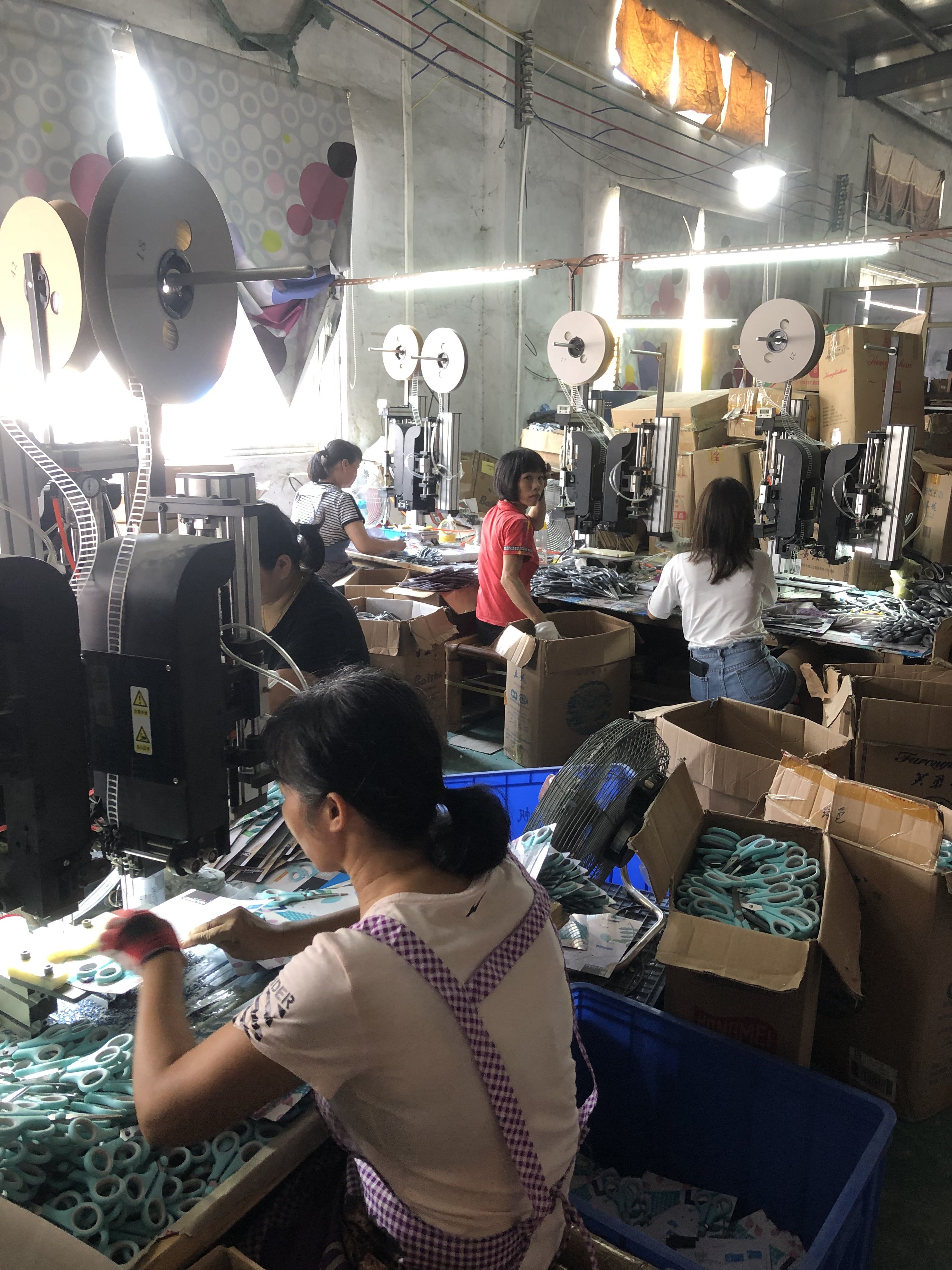
Household Scissors Factory Guide to OEM Packaging and Automatic Card Binding
For importers, retailers, distributors, and private-label brands, sourcing household scissors is not only about finding a sharp cutting tool. A reliable household scissors factory should also understand product consistency, user comfort, retail packaging, and how the finished item will arrive on a store shelf or in an e-commerce warehouse. The original article introduced common user frustrations such as dull cutting, uncomfortable handles, and weak presentation. This updated guide turns those points into practical sourcing criteria for buyers evaluating OEM household scissors and automatic card binding packaging.
Key Takeaways
- Assess scissors as both a functional tool and a retail product.
- Ask suppliers clear questions about blade consistency, handle comfort, packaging durability, and inspection steps.
- Automatic card binding can support neat, repeatable retail presentation, but buyers should confirm card material, hanging hole style, and transit protection.
- Do not rely on appearance alone; request samples and compare cutting performance before confirming an OEM order.
Why Household Scissors Often Fail in Daily Use
End users usually notice quality problems quickly. A pair of scissors may look acceptable in the package but struggle with ordinary tasks such as cutting paper, opening mail, trimming light fabric, or handling simple kitchen-related chores. Common complaints include blades that feel dull, handles that create hand fatigue, loose movement at the pivot, and packaging that bends or separates during shipping.
For a buyer, these issues can become product returns, poor reviews, or inconsistent shelf presentation. The sourcing goal is therefore to reduce avoidable variation before mass production. A factory discussion should cover how the scissors are designed, how samples are approved, how packaging is assembled, and what checks are performed before shipment. If a supplier cannot explain these points clearly, buyers should slow down and ask for more evidence.
What to Evaluate in a Household Scissors Factory
A household scissors factory may offer standard styles, private-label options, or OEM development. The right choice depends on your sales channel and customer expectations. For general household use, buyers should examine cutting feel, opening and closing smoothness, handle comfort, and whether the product feels stable during repeated use. The original article mentions soft-grip handles and precision-crafted blades; if those features are important for your program, confirm them directly on the approved sample and written specification.
Useful questions to ask a supplier include:
- What materials and construction details are used for the blade, handle, and pivot?
- Can the supplier provide pre-production samples matching the final packaging?
- What inspection steps are used for cutting performance, appearance, and packaging?
- How are sharp edges, blade alignment, and handle finish checked?
- Which parts of the product can be customized for OEM branding?
These questions do not require the supplier to make broad claims. They help buyers document what is actually being ordered and reduce misunderstandings between sample approval and shipment.
Automatic Card Binding for Retail-Ready Packaging
Automatic card binding is a packaging method used to attach scissors to a printed card or retail display card in a consistent way. The original article specifically notes the use of automatic card binding machines for household scissor OEM packaging. For retail buyers, this matters because packaging must hold the product securely, present the brand clearly, and protect the scissors during handling and transport.
When reviewing card binding, look beyond the front design. Confirm whether the scissors sit firmly on the card, whether the attachment points are neat, and whether the package can hang straight on a retail hook. If the product is intended for online sales, ask how the carded product is packed inside cartons to reduce bending, rubbing, or damage. Packaging that looks good in a showroom may not perform well after long-distance shipping unless it is tested under realistic conditions.
Comparison Checklist for OEM Scissor Sourcing
| Area to Check | What Buyers Should Review | Questions to Ask the Supplier |
|---|---|---|
| Cutting performance | Clean cutting on intended materials such as paper, light fabric, or household packaging | Can samples be tested against the target use cases before order confirmation? |
| Handle comfort | Grip shape, hand fit, surface feel, and comfort during repeated use | Are soft-grip or ergonomic handle options available for this model? |
| Blade and pivot consistency | Smooth opening and closing, stable alignment, and no obvious looseness | How are blade alignment and pivot tightness inspected? |
| OEM branding | Logo placement, card artwork, color options, and product labeling | Which branding elements can be customized, and what artwork files are required? |
| Automatic card binding | Secure attachment, neat appearance, hanging hole position, and card strength | Can the supplier provide packaged samples using the same binding method? |
| Shipment readiness | Carton packing, product protection, and final inspection records | What packaging checks are completed before goods are released? |
How to Brief an OEM Household Scissors Project
A clear brief helps a factory quote and sample accurately. Start with the target customer: home users, office users, school supply buyers, kitchen accessory shoppers, or promotional product distributors may all need different priorities. Then define the retail format. A carded scissor for supermarkets may need strong shelf visibility and a hanging hole, while an e-commerce item may need packaging that resists damage in parcel handling.
Your OEM brief should include expected size range, handle preference, color direction, logo requirements, card artwork needs, barcode or labeling requirements, and packaging quantity per carton if known. If details are not finalized, say so and ask the supplier what options are available. Avoid assuming that every scissor model can accept every handle color, card shape, or binding format. Confirm feasibility in writing before approving artwork or opening purchase orders.
Sample Approval and Quality Control Steps
Before confirming production, request samples that represent the final product and the final packaging method. A loose sample is useful for checking cutting feel, but it does not show how the product will look after automatic card binding. If the retail package is part of the selling point, the packaged sample should be reviewed as carefully as the scissors themselves.
During sample review, test repeated opening and closing, compare several units if available, and cut the materials your customers are likely to use. Review the card for printing clarity, product alignment, and attachment strength. If anything changes after sample approval, such as handle material, card thickness, artwork, or binding position, request an updated confirmation. Small changes can affect both user experience and shelf presentation.
Practical FAQ
What is automatic card binding for scissors?
It is a packaging process that attaches scissors to a retail card in a controlled and repeatable way. It helps create a neat carded product for display, but buyers should still verify security, appearance, and shipping protection.
Should I choose standard scissors or OEM scissors?
Standard models may be faster to source when your requirements are simple. OEM options are better when you need private branding, specific packaging, color direction, or a product matched to a defined retail program.
What should I ask before placing a bulk order?
Ask for final product samples, packaged samples, available customization options, inspection procedures, packing details, lead time, MOQ, payment terms, and any documents required by your market or sales channel.
Can packaging quality affect customer satisfaction?
Yes. Weak or poorly aligned packaging can make a good product look low quality, cause damage in transit, or create problems for retail display. Packaging should be evaluated together with cutting performance.
Contact and Supplier Discussion
For business inquiries, the original article listed Ann Wu as the contact and provided the email address ann@bonetcn.com. Buyers can also review the listed websites: http://www.bonetfactory.com, http://www.bonethome.com, and http://www.bonetscissor.net. When contacting any supplier, share your target market, expected packaging format, and sample requirements so the discussion begins with clear, verifiable details.
