




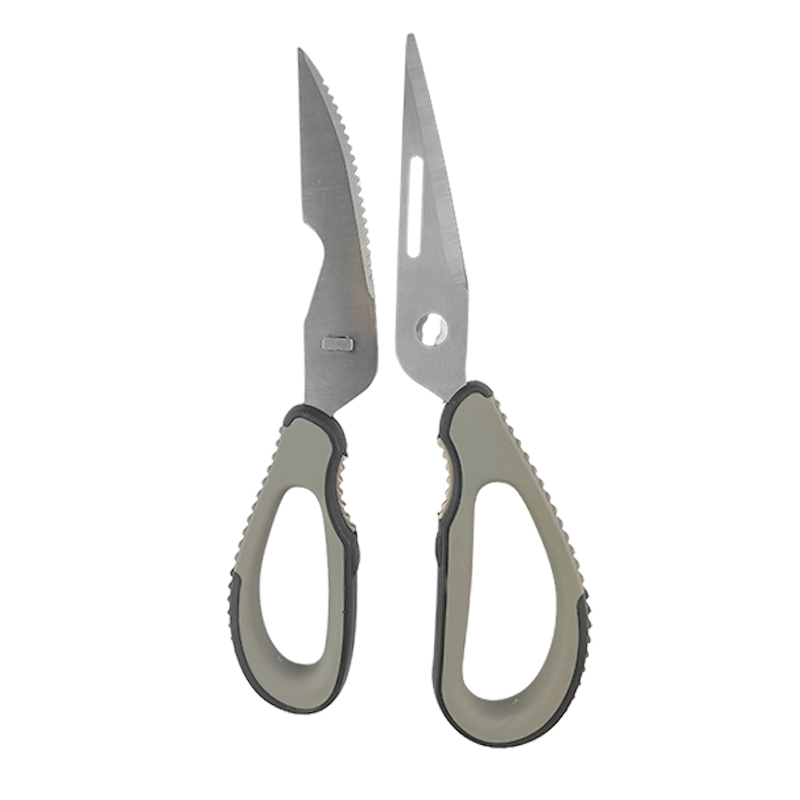
OEM Multi-Functional Kitchen Scissors: A Practical Sourcing Guide
Multi-functional kitchen scissors are a small product category with a surprisingly wide range of buyer expectations. For retailers, importers, kitchenware brands and food-service distributors, the goal is not simply to find scissors that cut. The better question is whether a supplier can provide a consistent, comfortable and useful tool that fits the target market, packaging plan and after-sales requirements.
The original product description highlights several practical features: stainless steel blades, a micro-serrated edge, an ergonomic soft-grip handle, a grey and black finish, plus integrated nutcracker and bottle opener functions. Those are useful starting points for an OEM or wholesale discussion, but buyers should still verify details directly with the supplier before placing a production order.

What Makes Kitchen Scissors Multi-Functional?
Standard kitchen scissors are usually selected for cutting food packaging, herbs, meat, vegetables or general kitchen materials. Multi-functional kitchen scissors add secondary uses that can reduce the number of small tools needed in a drawer or prep area. In this case, the described added functions include a nutcracker and a bottle opener.
For B2B buyers, the key is to define which functions matter to the end user. A home-cooking line may value convenience and comfort. A promotional kitchenware program may focus on visible features and packaging appeal. A food-service buyer may prioritize cleaning, grip security and repeat cutting performance. The same product may not suit every sales channel, so feature selection should be tied to the intended use case.
Blade Design: What Buyers Should Verify
The source article states that the scissors use stainless steel blades and a micro-serrated edge. Stainless steel is a common choice for kitchen cutting tools because buyers associate it with kitchen use, but the exact grade, heat treatment, hardness and corrosion-resistance expectations should not be assumed unless the supplier provides documentation.
A micro-serrated edge can help grip slippery materials and reduce sliding during cutting. That may be useful for herbs, packaging, poultry skin or other kitchen materials. However, buyers should ask how the serration affects sharpening, cleaning and long-term user experience. If the product will be sold in a market with strict customer-return standards, sample testing should include both first-use sharpness and repeated-use performance.
Handle Comfort and Control
The original description mentions an ergonomic handle with a soft-grip lining and a grey and black finish. Handle design matters because kitchen scissors are often used quickly, sometimes with wet hands, and sometimes for harder cutting tasks. A comfortable handle can reduce strain, but comfort is subjective and varies by hand size.
Before committing to a wholesale order, request samples and test them with several users. Check whether the finger openings suit the target market, whether the soft-grip surface feels secure, and whether the handle remains comfortable during repeated cutting. If branding colors are important, ask the supplier whether color customization is available, what color references they require, and how color consistency is controlled between production batches.
Comparison Checklist for OEM Evaluation
| Evaluation Area | What to Check | Questions to Ask the Supplier |
|---|---|---|
| Blade material | Stainless steel is stated, but grade is not specified | What steel grade is used, and can it be documented? |
| Cutting edge | Micro-serrated edge is described | How is cutting performance tested before shipment? |
| Handle | Ergonomic soft-grip handle is described | Can grip material, color or shape be customized? |
| Added functions | Nutcracker and bottle opener are stated | Are these functions tested for repeated use? |
| Packaging | Not specified in the source | What retail, bulk or private-label packaging options are available? |
| Compliance | Not specified in the source | Which market-specific requirements can the supplier support? |
OEM and Wholesale Sourcing Questions
When the topic is OEM kitchen scissors, sourcing quality depends on more than the product photo. Buyers should build a clear request for quotation that separates confirmed requirements from optional improvements. This helps prevent misunderstandings about materials, packaging, branding and inspection.
- Ask for current product specifications, including blade material, handle material, dimensions and weight.
- Request physical samples before confirming artwork, packaging or bulk quantities.
- Clarify whether logo printing, handle color changes or private-label packaging are available.
- Ask what inspection steps are used for blade sharpness, assembly, appearance and packaging.
- Confirm lead time, minimum order quantity, payment terms and spare-carton policy directly with the supplier.
- Discuss market requirements early if the scissors will contact food or be sold in regulated regions.
These questions do not replace formal testing or legal review, but they help buyers identify whether a supplier is prepared for organized wholesale cooperation.
How to Match the Product to the Sales Channel
For retail kitchenware, the selling points should be easy for customers to understand: cutting, gripping, opening bottles and cracking nuts. Packaging may need clear icons and safe-use instructions. For online sales, images should show the scissors from multiple angles, including the blade edge, handle, and integrated tools.
For promotional or private-label programs, consistency may matter more than a long feature list. Buyers should confirm whether the same finish, handle texture and packaging can be repeated across batches. For distributors serving restaurants or food-prep environments, cleaning guidance and durability expectations should be discussed before purchase. If detachable construction is important to the buyer, it should be confirmed directly rather than assumed from a product name or link.
Quality Control Before Shipment
A practical inspection plan should be agreed upon before production. At minimum, buyers can define acceptable appearance standards, packaging requirements, basic cutting checks and function checks for the bottle opener and nutcracker. If the order is for a regulated market, buyers should confirm which documents, material declarations or third-party tests are needed.
It is also wise to keep an approved sample. This sample becomes the reference for color, finish, handle feel, blade alignment and packaging quality. Without an approved reference, disputes can become subjective, especially when the product includes multiple functions and visible design elements.
Key Takeaways
- Multi-functional kitchen scissors should be evaluated by use case, not only by feature count.
- The stated stainless steel blades, micro-serrated edge and soft-grip handle are useful points to verify through samples.
- Nutcracker and bottle opener functions should be checked for comfort and repeat use.
- OEM buyers should ask clear questions about materials, customization, inspection, packaging and compliance support.
- Do not assume specifications, certifications, MOQ or lead time unless the supplier confirms them in writing.
FAQ
Are multi-functional kitchen scissors suitable for wholesale programs?
Yes, they can be suitable when the target customer values compact kitchen tools with several everyday uses. Wholesale buyers should confirm specifications, packaging options and inspection standards before ordering.
What should an OEM buyer confirm first?
Start with blade material, handle material, dimensions, available customization, packaging format, minimum order quantity and lead time. If the product will be sold in a regulated market, ask about documentation and testing support early.
Does a micro-serrated edge matter?
A micro-serrated edge can help grip food or packaging while cutting, reducing slippage. Buyers should still test samples to see whether the edge suits their intended use and customer expectations.
Can the handle color or branding be customized?
The original article describes a grey and black finish but does not state customization details. Buyers should ask the supplier whether color matching, logo placement and private-label packaging are available.
How should buyers compare scissors from different factories?
Use the same test method for each sample: cutting performance, handle comfort, blade alignment, added-function usability, cleaning convenience, packaging quality and supplier communication. Written comparison notes make final supplier selection more reliable.
