




The Essential 3-Piece Knife Set for Everyday Kitchen Prep
A good kitchen does not need a drawer full of rarely used blades. For many home cooks, a compact 3-piece knife set can cover most daily preparation tasks: chopping vegetables, slicing proteins, trimming small produce, and peeling fruit. The set described here focuses on three practical tools: a Santoku knife, a paring knife, and a peeler. Together, they form a simple, space-saving kit for routine cooking without unnecessary complexity.
Key Takeaways
- A 3-piece knife set is best for cooks who want essential prep tools rather than a large knife block.
- The Santoku knife handles most chopping, slicing, and mincing tasks.
- The paring knife is useful for small, controlled cuts and detail work.
- The peeler saves time on produce prep and can reduce waste when used correctly.
- Comfort, safe handling, easy cleaning, and proper storage matter as much as blade sharpness.
What Is Included in a Practical 3-Piece Knife Set?
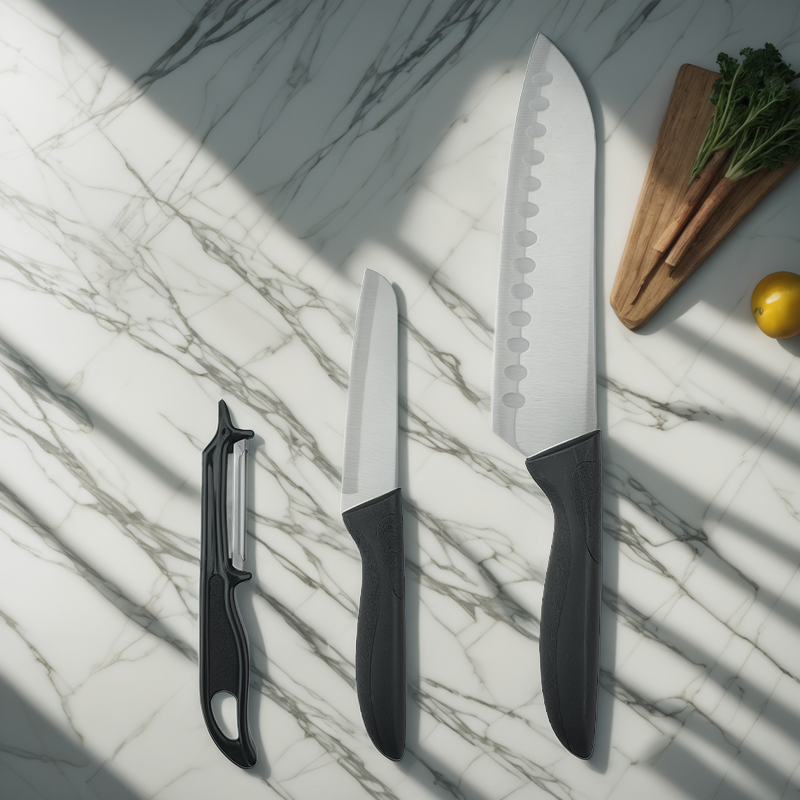
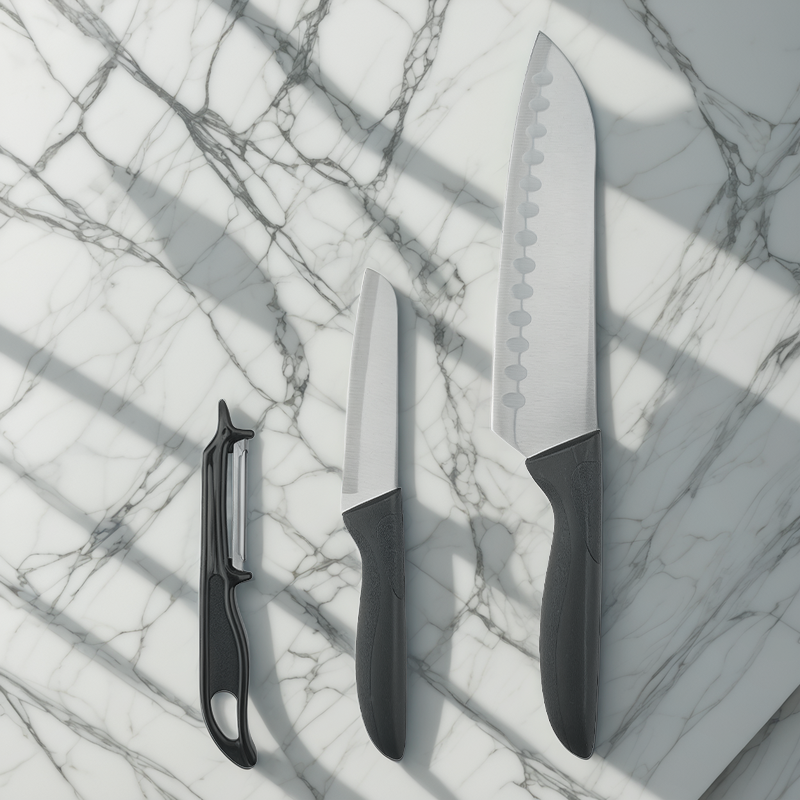
A balanced 3-piece set usually includes one medium all-purpose knife, one small precision knife, and one peeling tool. In this case, the core tool is a Santoku knife, supported by a paring knife and a streamlined peeler. This combination is useful because it separates kitchen tasks by size and control.
The Santoku knife is intended for larger cutting jobs such as slicing vegetables, chopping herbs, and portioning boneless ingredients. The paring knife is shorter and easier to control, making it suitable for trimming stems, coring fruit, or making careful cuts by hand. The peeler is designed for removing skins from ingredients such as potatoes, carrots, apples, and cucumbers.
This setup is especially helpful for apartment kitchens, first homes, shared kitchens, RVs, and cooks who prefer fewer tools that are used often. It can also work as a secondary prep set for quick meals when pulling out a full knife roll is unnecessary.
Comparison Checklist: Which Tool Should You Use?
| Tool | Best For | Use It When | Avoid Using It For |
|---|---|---|---|
| Santoku knife | Chopping, slicing, mincing | You need a stable blade for vegetables, herbs, or boneless foods | Cutting through bones, frozen food, or very hard shells |
| Paring knife | Small cuts and detail work | You are trimming, coring, scoring, or cutting small produce | Heavy chopping or tasks that require a longer blade |
| Peeler | Removing thin skins | You want quick, even peeling with less removed flesh | Using as a knife, prying tool, or cutter for hard materials |
The Santoku Knife: Your Main Prep Tool
The Santoku knife is often chosen as a versatile alternative to a traditional chef’s knife. Its shape supports a forward-and-down cutting motion and works well for many everyday ingredients. The original product description notes a stainless steel blade and scalloped indentations along the blade. Those indentations are commonly used to help reduce food sticking during slicing, especially with moist ingredients such as cucumbers, potatoes, or cooked proteins.
For best results, use the Santoku on a stable cutting board and keep the tip, edge, and handle under control. Let the blade do the work rather than forcing it through ingredients. If food begins to crush instead of cut cleanly, the edge may need sharpening or professional maintenance.
Common Santoku tasks include:
- Dicing onions, peppers, carrots, and celery
- Slicing cooked or raw boneless proteins
- Chopping herbs with controlled strokes
- Cutting fruit such as melons after they are safely portioned
The Paring Knife: Small Tasks Need Better Control
A paring knife is not a miniature chef’s knife; it is a precision tool. Its advantage is control in tight spaces and on small ingredients. Use it when a full-size blade feels awkward or unsafe. For example, trimming strawberry tops, removing blemishes from potatoes, segmenting citrus, and scoring pastry are all jobs where a paring knife can be easier to manage.
Because a paring knife is often used close to the hand, safe technique is important. Keep fingers away from the edge, cut slowly, and avoid twisting the blade inside hard ingredients. If you prefer hand-held work, choose a grip that feels secure and stop if the ingredient becomes slippery. For many tasks, placing the food on a board is safer than cutting in the air.
The Peeler: Simple Tool, Big Time Saver
The peeler completes the set by handling a job that knives can do but often do less efficiently. A dedicated peeler can remove thin strips of skin while preserving more of the ingredient. The original description highlights a streamlined black body and peeling edge designed for smooth use. In practice, performance depends on edge condition, produce firmness, and hand control.
Use light pressure and peel away from your body when possible. Rinse produce first so dirt does not drag across the surface. For long vegetables such as carrots or cucumbers, rest one end on the cutting board for stability. For round produce, rotate the item slowly and keep your fingertips clear of the blade path.
How to Choose a 3-Piece Knife Set
When comparing knife sets, avoid choosing only by appearance. A matte black handle or minimal design may look clean in a modern kitchen, but the set should also feel balanced, secure, and easy to maintain. Product photos can help, but they do not replace practical evaluation.
- Check the tool mix: Make sure the included knives match your cooking habits. Santoku, paring knife, and peeler is a useful everyday combination.
- Ask about blade material: If a listing says stainless steel, ask whether the supplier provides care instructions and sharpening guidance. Do not assume a specific steel grade unless it is stated.
- Evaluate handle comfort: The handle should feel secure when dry and reasonably controllable during normal prep.
- Look at edge maintenance: Ask whether the knives can be honed, sharpened, or serviced with standard kitchen tools.
- Consider storage: A compact set still needs safe storage, such as a sheath, drawer organizer, magnetic strip, or knife block.
Use, Cleaning, and Storage Tips
Even a simple knife set lasts longer and performs better when handled correctly. Wash knives soon after use, especially after cutting acidic foods such as citrus or tomatoes. Hand washing is generally safer for sharp edges and handles than leaving knives loose in a dishwasher, where they can knock against other utensils.
Dry each tool before storage. Do not toss uncovered knives into a drawer, because edges can dull and hands can be injured when reaching inside. Use a cutting board made for kitchen knives rather than glass, stone, or metal surfaces, which can damage edges quickly. A sharp knife is usually safer than a dull one because it requires less force and is more predictable.
Who Benefits Most from This Kind of Set?
A 3-piece knife set is a practical choice for people who cook regularly but do not need many specialized blades. It suits simple weeknight meals, vegetable prep, fruit preparation, lunch packing, and basic recipe work. It can also help beginners learn which knife to use for each task before investing in a larger collection.
However, it is not the right solution for every job. If you often break down whole poultry, slice crusty bread, fillet fish, or prepare large quantities of food, you may eventually need additional knives. The value of a small set is focus: fewer tools, clearer choices, and easier care.
Practical FAQ
Is a Santoku knife enough for everyday cooking?
For many home kitchens, yes. It can handle most vegetable chopping, slicing, and mincing tasks. You may still want a bread knife or larger chef’s knife for specific foods.
Can I put this type of knife set in the dishwasher?
Check the supplier’s care instructions. As a general rule, hand washing and immediate drying help protect edges and handles better than dishwasher cleaning.
How often should I sharpen the knives?
It depends on frequency of use, cutting surface, and care. If the blade slips, crushes food, or needs extra force, it may be time to hone or sharpen it.
What should I ask before buying online?
Ask about blade material details, handle material, recommended cleaning method, storage options, warranty terms, and whether replacement or care guidance is available.
Is a peeler really necessary if I have a paring knife?
A paring knife can peel, but a peeler is usually faster and removes a thinner layer. For frequent produce prep, it is worth having both.
