




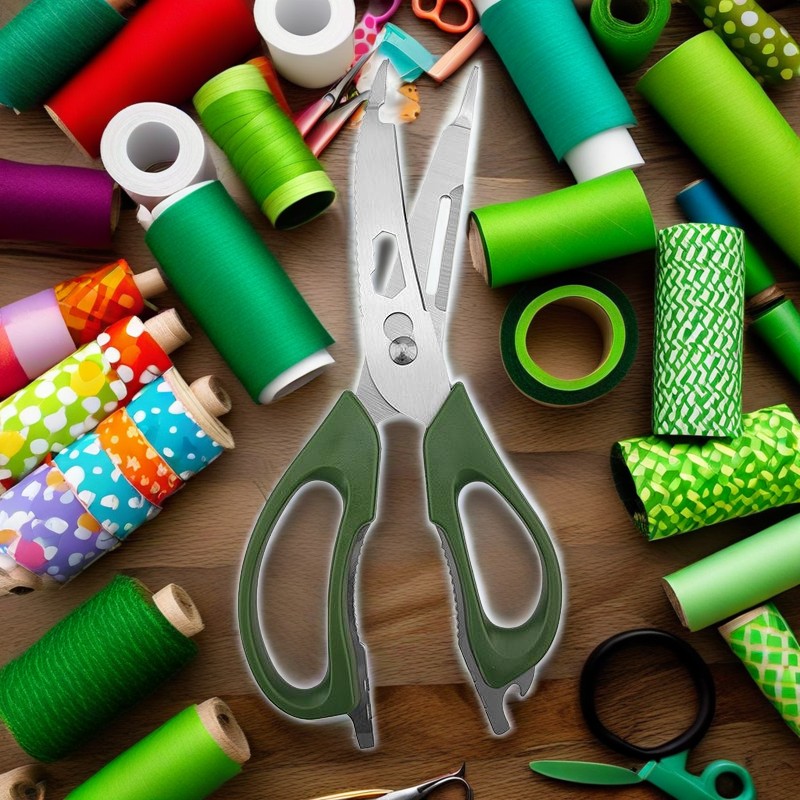
Multi-Functional Outdoor Scissors: Practical Buying and Use Guide
Multi-functional outdoor scissors are designed for people who want one compact cutting tool for common tasks outside the kitchen or workshop. The original product concept highlights outdoor use, stainless steel blades, ergonomic handles, non-slip texture, a compact build, and possible extra functions such as a bottle opener, nutcracker, multi-purpose blade, detachable design, peeler, or scraper on some models. Those are useful ideas, but buyers should still evaluate each specific model carefully before relying on it for camping, fishing, hiking, garden trimming, or light DIY jobs.
This guide explains what to look for, how to compare options, and how to care for outdoor scissors so they stay practical in real conditions. It is written for consumers and small business buyers who need product-selection guidance without inflated claims.
Key Takeaways
- Choose outdoor scissors based on the tasks you actually perform, not the number of advertised functions.
- Stainless steel blades are useful for outdoor use, but edge design, cleaning, and storage still matter.
- Non-slip, ergonomic handles improve control when hands are wet, cold, or tired.
- Extra tools such as bottle openers, nutcrackers, scrapers, or peelers should be checked for strength and usability.
- For wholesale or OEM sourcing, ask suppliers clear questions about materials, packaging, samples, and quality checks.
What Multi-Functional Outdoor Scissors Are For
Outdoor scissors sit between household scissors and a full outdoor multi-tool. They are most useful for quick cutting tasks where a controlled scissor action is safer or more accurate than a knife. Common uses include cutting rope, trimming small plants, preparing fishing line, opening food packaging, cutting tape, and handling minor camp or garden tasks.
They should not be treated as a replacement for heavy-duty pruning shears, saws, axes, or professional rescue tools. If you plan to cut thick branches, wire, hard plastic, or dense construction material, check whether the product is designed for that load. A good outdoor scissor is practical because it does several everyday jobs well, not because it promises to replace every tool in a pack.
Blade Design and Cutting Performance
The source article states that the scissors use stainless steel blades. Stainless steel is a sensible choice for outdoor gear because it can resist normal moisture better than many untreated steels, but it is not maintenance-free. After contact with saltwater, soil, plant sap, or food, the blades should be cleaned and dried.
Look at the blade edge before buying. A smooth edge can be useful for paper, packaging, food wrap, and general clean cuts. A serrated edge, when present, may help grip slippery or tougher materials such as rope or fishing line. The hinge should open smoothly without excessive wobble. If the scissors feel loose, cutting accuracy can drop and hand fatigue can increase.
Handle Comfort and Outdoor Control
The original article mentions ergonomic handles, outdoor-style colors such as army green, and a non-slip texture. Comfort is more than appearance. Handle shape affects how much pressure you can apply and how safely you can guide the blades. If the handle openings are too small, they may pinch the fingers during repeated cuts. If they are too smooth, they can feel unsafe in rain, near water, or while wearing light gloves.
For camping and fishing, prioritize grip security and easy cleaning. For gardening, check whether the handle allows enough leverage for plant stems and twine. For home DIY use, make sure the scissors can be stored safely away from children and protected from drawer damage.
Extra Functions: Useful or Unnecessary?
Some outdoor scissors include functions beyond cutting, such as a bottle opener, nutcracker, multi-purpose blade, detachable halves, peeler, or scraper. These features can reduce the number of small tools you carry, but each one should be judged on its own. A bottle opener that is awkward to access may not be useful. A detachable design can help with cleaning or scraping, but only if the locking mechanism feels secure.
When comparing models, ask one simple question: will this function be used often enough to justify extra weight, cleaning time, and complexity? A simpler pair of scissors with a strong hinge and comfortable handle may be better than a crowded tool that performs poorly at the main cutting job.
Comparison Checklist for Buyers
| Feature to Check | Why It Matters | Questions to Ask Before Buying |
|---|---|---|
| Blade material | Affects durability, cleaning, and outdoor suitability. | Is the blade stainless steel? Are care instructions provided? |
| Edge type | Smooth and serrated edges behave differently on rope, line, and packaging. | Is the edge smooth, serrated, or a combination? |
| Handle design | Controls comfort, grip, and safety during repeated use. | Is the handle non-slip? Can it be used with wet hands? |
| Added functions | Extra tools may save space but can add complexity. | Which functions are included, and are they demonstrated clearly? |
| Storage and portability | Outdoor tools need safe packing and quick access. | Is there a cover, lock, sheath, or safe packaging option? |
Use and Care Tips for Longer Service
- Rinse and dry the blades after use around saltwater, soil, plant sap, or acidic foods.
- Do not twist the blades through hard material; use a tool designed for that job instead.
- Keep the hinge area clean so grit does not affect opening and closing.
- Store the scissors closed, ideally with a sheath or protective cover if supplied.
- Check the handle and hinge before each trip, especially after heavy use.
Outdoor gear often fails from neglect rather than normal use. A few seconds of cleaning after a trip can prevent stiffness, staining, or poor cutting performance later.
Guidance for Wholesale and OEM Sourcing
If you are sourcing multi-functional outdoor scissors for retail, promotional kits, private label, or OEM projects, do not rely only on product photos. Ask the supplier for samples and confirm the exact blade material, handle material, dimensions, weight, packaging, available colors, logo options, and carton details. If certifications, testing reports, or compliance documents are required for your market, request current documents and verify that they apply to the exact model being ordered.
Commercial buyers should also ask about minimum order quantity, lead time, sample cost, production tolerance, inspection process, replacement policy, and whether the supplier can maintain consistent materials across repeat orders. These details are not safe to assume unless they are confirmed in writing.
FAQ
Are multi-functional outdoor scissors suitable for camping?
Yes, they can be useful for cutting rope, food packaging, tape, and small camp materials. For heavy wood preparation or thick branches, use a dedicated outdoor tool.
Can they cut fishing line?
Many outdoor scissors can cut fishing line, especially if the blade edge grips well. Check the specific model and test it safely before a trip.
Do stainless steel blades need maintenance?
Yes. Stainless steel still benefits from cleaning and drying, particularly after saltwater, soil, plant sap, or food contact.
Are extra features always better?
No. Extra features are valuable only if they are comfortable, strong, and easy to clean. The main cutting function should remain the priority.
What should business buyers ask a supplier?
Ask about exact materials, sample availability, packaging, logo customization, MOQ, lead time, inspection steps, and any required compliance documents for the target market.
