




Upgrade Your Kitchen: Premium 3-Piece Knife Set
A good 3-piece kitchen knife set is often enough for most daily cooking tasks. Instead of filling a drawer with tools you rarely use, a focused set can cover slicing vegetables, trimming fruit, preparing herbs, peeling potatoes, and handling small detail work. This guide explains how to evaluate a set that includes a Santoku knife, a paring knife, and a peeler, with practical advice on selection, safe use, cleaning, and maintenance.
What Makes a 3-Piece Knife Set Useful?
The value of a compact knife set comes from choosing tools that complement each other. A Santoku knife is typically used for general prep, including slicing, dicing, and chopping. A paring knife handles smaller foods and more controlled cuts, such as trimming strawberries, peeling an apple by hand, or removing blemishes from vegetables. A peeler speeds up repetitive peeling tasks and can reduce waste when used correctly.
For many home kitchens, these three tools cover a large share of meal preparation. They are also easier to store, clean, and maintain than a large block set. The key is to understand what each piece is designed to do and avoid using it for tasks that can damage the blade, such as cutting bones, frozen food, or hard packaging.
Core Pieces in the Set
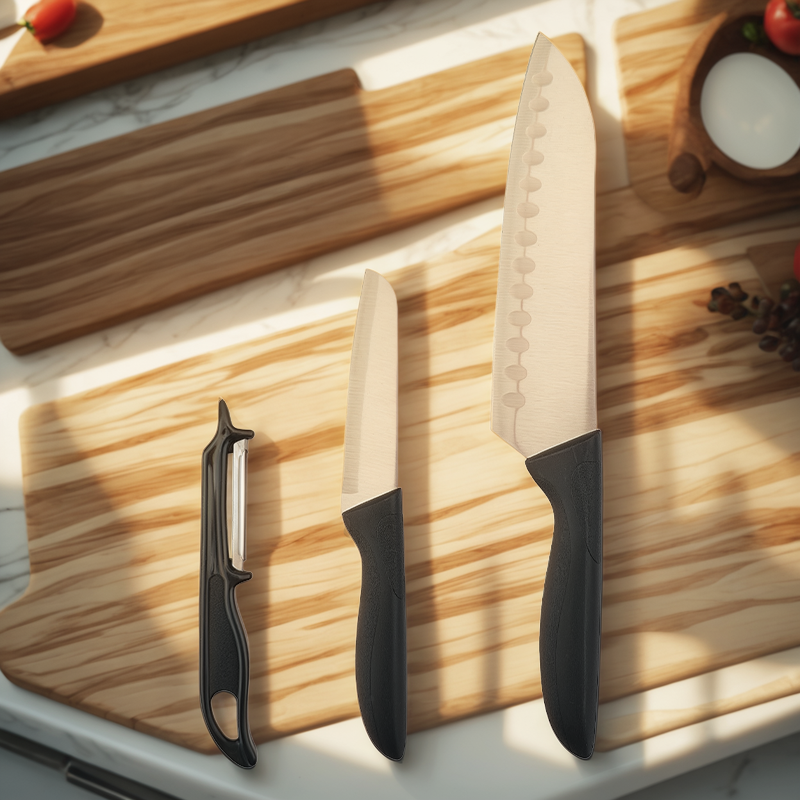
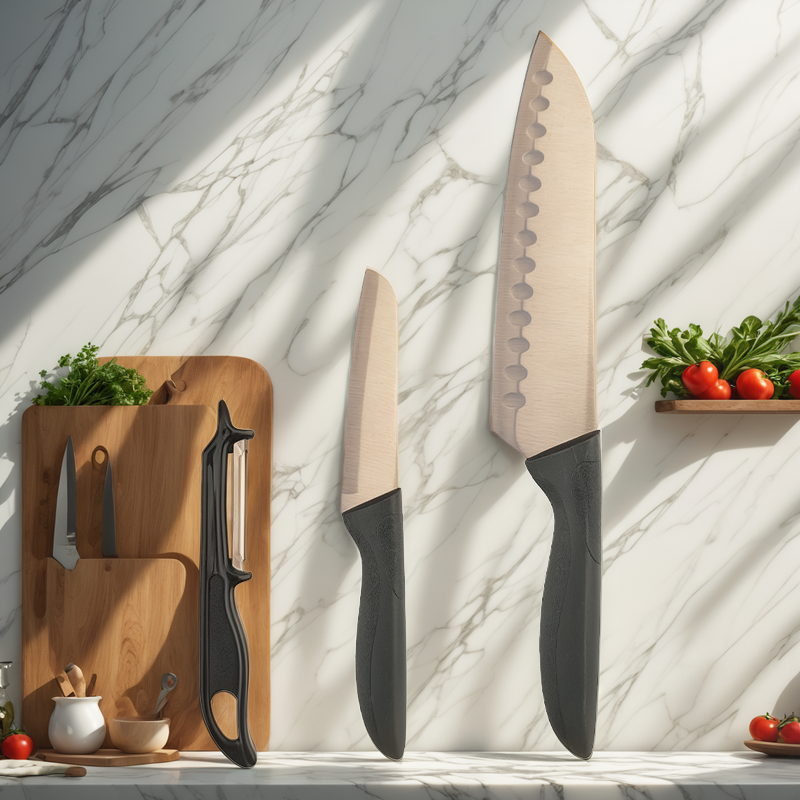
The original product description presents a 3-piece kitchen set made up of a Santoku knife, a paring knife, and a precision peeler. It also describes stainless steel blades and black ergonomic handles. When comparing similar sets, use the tool roles below as a practical checklist.
| Tool | Best For | What to Check Before Buying |
|---|---|---|
| Santoku knife | Slicing vegetables, chopping herbs, dicing meat or cooked foods | Comfortable balance, secure handle, clean blade edge, and whether the hollow-edge design is present |
| Paring knife | Peeling by hand, trimming, small garnishes, detail cuts | Tip control, handle grip, blade sharpness, and ease of maneuvering |
| Peeler | Potatoes, carrots, cucumbers, apples, and other produce | Smooth peeling action, comfortable handle, stainless steel blade, and easy cleaning |
How to Evaluate Blade and Handle Quality
When choosing kitchen knives, focus on the details that affect everyday use. The source article refers to stainless steel blades, which are commonly selected for corrosion resistance and ease of maintenance. However, stainless steel can vary widely, so buyers should ask what steel type is used, how the blade is finished, and what sharpening method is recommended.
Handle design matters just as much as the blade. A handle should feel stable when your hand is dry and reasonably secure during normal food prep. If the set has black ergonomic handles, as described in the original article, look for a shape that supports a natural grip without sharp edges or awkward pressure points. If you are buying online, check product photos from multiple angles and ask the supplier for handle material details if they are not listed.
- Look for a blade edge that appears even and clean.
- Choose handles that are comfortable for your hand size.
- Confirm whether the knife is intended for hand washing only.
- Ask whether replacement or care guidance is available.
- Avoid vague descriptions that do not explain the included tools.
Why the Santoku Knife Is the Main Prep Tool
In this type of set, the Santoku knife is the everyday workhorse. The original article notes a hollow-edge design, which is commonly used to help reduce friction and limit food sticking during slicing. That can be helpful with foods such as cucumbers, potatoes, onions, and other ingredients that cling to a blade surface.
Use the Santoku for controlled push cuts, gentle rocking motions, and straight slicing. Keep the cutting board stable, tuck fingertips away from the blade, and avoid twisting the knife through hard ingredients. A Santoku is versatile, but it is not a cleaver. If a food requires heavy force, choose a more suitable tool instead of risking damage or injury.
Paring Knife and Peeler: Small Tools, Big Impact
The paring knife and peeler are easy to overlook, but they often determine how smooth prep feels. A paring knife should be light enough for controlled hand work but sturdy enough for trimming produce. It is the better choice for small foods where a larger knife feels clumsy.
The peeler supports speed and consistency. The original description mentions a sharp stainless steel blade designed for produce such as potatoes and carrots. For best results, wash produce first, peel away from your body, and keep strokes steady rather than forceful. If a peeler begins to snag or remove too much flesh, it may need cleaning, drying, or replacement depending on its condition.
Care and Storage for Longer Service Life
Even a practical kitchen knife set can perform poorly if it is stored loose in a drawer or left wet after washing. Good care is simple: clean promptly, dry completely, and protect the edges. Avoid soaking knives for long periods, especially if the handle material is not specified. Dishwashers can expose knives to harsh detergents, heat, and impact with other utensils, so hand washing is usually the safer routine unless the supplier clearly states otherwise.
- Wash each tool with mild dish soap after use.
- Dry the blade and handle immediately with a clean towel.
- Store knives in a sheath, rack, magnetic strip, or protected organizer.
- Use wood or plastic cutting boards rather than glass or stone.
- Sharpen or hone according to the supplier’s recommended method.
Key Takeaways
A 3-piece kitchen knife set can be a smart choice when it includes the right tools and feels comfortable in daily use. The Santoku knife handles most cutting tasks, the paring knife adds precision, and the peeler improves speed with produce. Before buying, confirm blade material details, handle construction, care instructions, and what is included in the set. After purchase, proper washing, drying, storage, and cutting board choice will help preserve performance.
Practical FAQ
Is a 3-piece knife set enough for a home kitchen?
For many everyday meals, yes. A Santoku knife, paring knife, and peeler can handle a broad range of vegetable, fruit, herb, and general prep tasks. You may still want specialty knives for bread, bones, fish, or large roasts.
What should I ask before buying this type of set?
Ask what blade material is used, whether the handles are dishwasher safe, how the knives should be sharpened, and whether the Santoku includes the hollow-edge design shown or described. If product specifications are not listed, request them before ordering.
Can I put the knives and peeler in the dishwasher?
Unless the supplier clearly states dishwasher suitability, hand washing is the safer choice. Dishwashers can dull edges, cause tools to knock against other items, and may affect handles over time.
How do I keep the Santoku knife sharp?
Use a suitable cutting board, avoid hard surfaces, clean and dry the knife promptly, and sharpen it with an appropriate sharpener or professional service. Follow the supplier’s angle and maintenance guidance if provided.
What is the safest way to store the set?
Store knives so the cutting edges are protected and not loose in a drawer. A knife guard, drawer insert, magnetic strip, or rack can help prevent edge damage and reduce the risk of accidental cuts.
