








3-Piece Knife Set Guide: Santoku, Utility Knife and Peeler
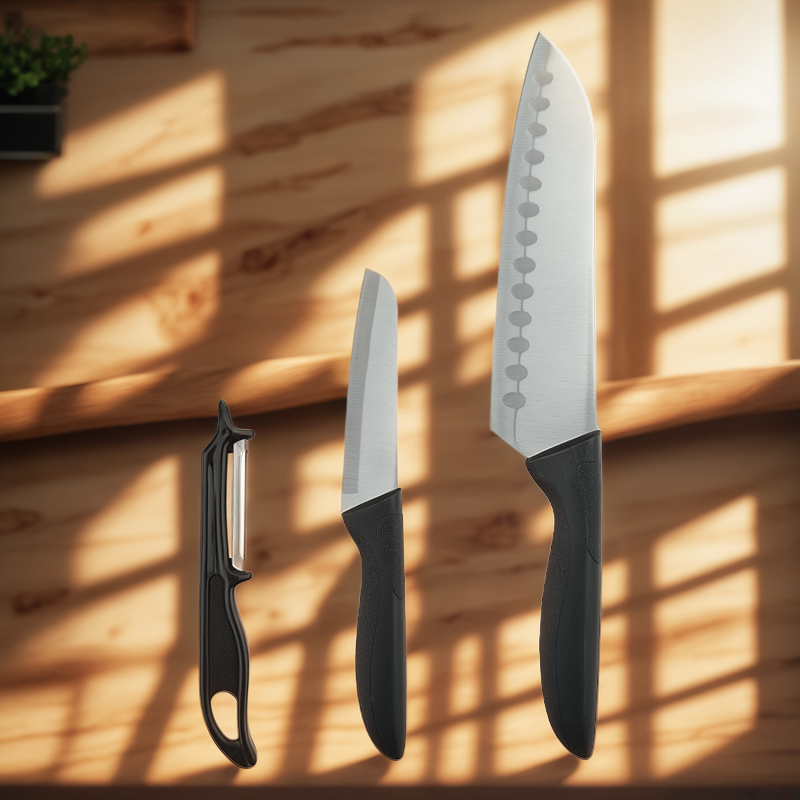
A good small knife set should make daily food preparation faster, safer and more predictable. For many home kitchens, a 3-piece knife set is enough to cover the most common tasks without crowding the drawer with tools that rarely get used. The set shown here focuses on three practical pieces: a Santoku knife, a compact utility knife and a stainless steel peeler. Together, they support chopping, slicing, trimming and peeling for vegetables, fruit, herbs, boneless proteins and everyday ingredients.
This guide explains what each tool is best for, how to compare similar kitchen knife sets and how to care for the blades and handles so the set remains useful over time. It is written for buyers who want a clear, functional choice rather than a large block set.
Key Takeaways
- A 3-piece set is best for everyday prep, small kitchens and buyers who prefer fewer, more useful tools.
- The Santoku knife handles most chopping, slicing and mincing tasks.
- The compact utility knife is useful for smaller ingredients and more controlled cuts.
- The stainless steel peeler helps remove skins with less waste when used with light, steady pressure.
- Care, storage and sharpening habits matter as much as the initial knife choice.
What Is Included in This 3-Piece Kitchen Knife Set?
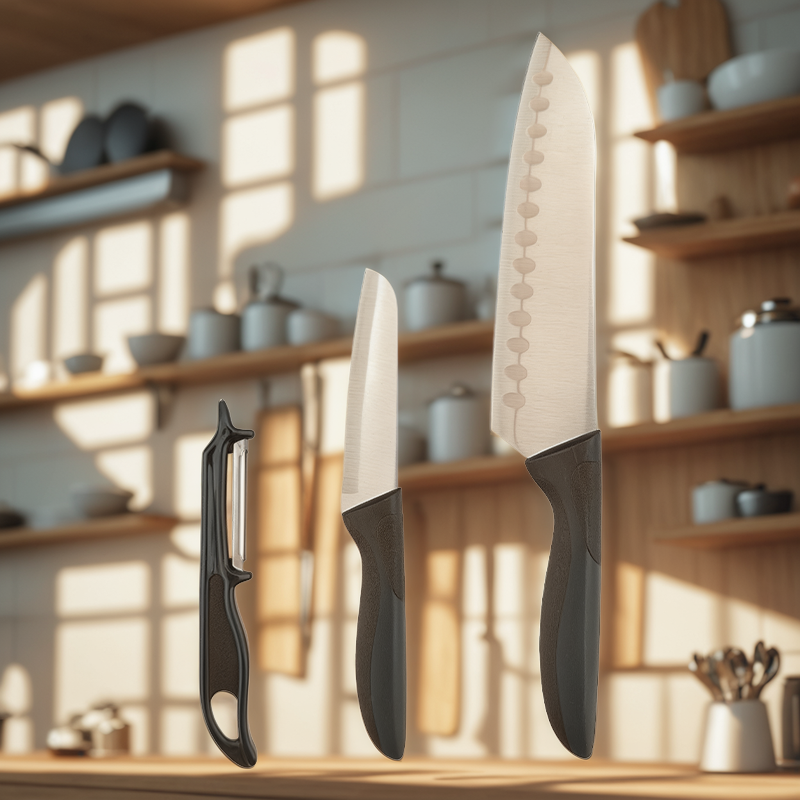
The original set includes three essentials. The first is a Santoku knife with a stainless steel blade and scalloped indentations along the side. Those indentations are intended to help reduce food sticking to the blade during slicing and chopping. The second piece is a compact utility knife, suited to detail work such as trimming vegetables, peeling fruit by hand or cutting smaller ingredients. The third piece is a peeler with a stainless steel blade, designed for removing skins from produce with minimal waste.
The set also has a coordinated look, with black ergonomic handles and polished stainless steel blades. While appearance is not the most important factor in a knife purchase, consistent handle shape and balance can make a set feel easier to learn and use. When comparing any similar set, focus first on comfort, blade control, ease of cleaning and whether the three tools match your actual cooking habits.
How the Santoku Knife Supports Daily Prep
The Santoku is usually the workhorse in this type of set. Its shape is suitable for a wide range of common kitchen tasks, including chopping onions, slicing cucumbers, cutting mushrooms, mincing herbs and preparing boneless meat or fish. The broad blade also helps move chopped ingredients from the board to a pan or bowl.
The scalloped indentations are useful when cutting moist or thin foods that may cling to a flat blade, such as potatoes, zucchini or apple slices. They do not eliminate sticking in every situation, but they can make repetitive prep smoother. For best results, use a stable cutting board and a forward-and-down cutting motion rather than forcing the blade straight down with excessive pressure.
When to Use the Compact Utility Knife
The compact utility knife fills the gap between a large chef-style blade and a small paring tool. It is a sensible choice when the Santoku feels too large for the task. Use it for trimming green beans, cutting citrus, slicing small rolls, halving strawberries or cleaning up vegetable ends. It can also be useful for quick jobs when you do not want to take out a larger knife.
Because a utility knife is smaller, control becomes more important than speed. Keep fingertips tucked back, use a dry handle and cut on a board rather than in your hand whenever possible. If you often prepare packed lunches, fruit plates or small vegetable portions, this may become the tool you reach for most often.
Why the Peeler Matters More Than Many Buyers Think
A peeler is sometimes treated as an accessory, but it can have a large effect on prep efficiency. A stainless steel peeler blade helps remove the outer layer of carrots, potatoes, apples and similar produce. A well-handled peeler can reduce waste because it takes off a thin, controlled strip rather than cutting deeply into the ingredient.
Use light pressure and long, even strokes. If the produce has tough spots, rotate it rather than pressing harder. After use, rinse the peeler carefully because small pieces of skin can collect around the blade area. Drying it before storage helps keep the tool clean and ready for the next use.
Comparison Checklist for Choosing a 3-Piece Knife Set
When evaluating this or any similar kitchen knife set, use a checklist instead of relying only on appearance. The right set should fit your hand, your cooking style and your storage space.
| Selection Point | What to Check | Why It Matters |
|---|---|---|
| Core tools | Santoku knife, compact utility knife and peeler | Covers most everyday cutting and peeling tasks |
| Blade material | Stainless steel is stated for the blades | Supports routine kitchen use and straightforward cleaning |
| Handle comfort | Black ergonomic handles are described | A secure grip improves control during repetitive prep |
| Food release | Scalloped indentations on the Santoku | May reduce sticking with sliced produce and moist foods |
| Storage plan | Knife block, sheath, drawer tray or magnetic strip | Protects edges and reduces contact accidents |
| Maintenance | Ask how the blades should be sharpened and washed | Care habits determine long-term performance |
Use and Care Tips for Longer Service
Even a practical knife set performs poorly if it is stored loosely, used on hard surfaces or left wet after washing. Treat the three tools as precision prep items rather than general-purpose scrapers or openers.
- Cut only on suitable boards such as wood, bamboo or food-prep plastic. Avoid glass, stone and metal surfaces.
- Wash knives soon after use with mild detergent, then dry them with a towel before storage.
- Store blades separately from loose utensils to reduce edge damage and accidental contact.
- Use the Santoku for chopping and slicing, the utility knife for smaller detail work and the peeler only for peeling.
- Sharpen or hone as needed according to the supplier’s care guidance. If guidance is not provided, ask before purchase.
Dishwasher use is a common question. Unless the supplier clearly states that a knife is suitable for dishwasher cleaning, hand washing is the safer habit. High heat, detergent and contact with other utensils can affect handles and edges over time.
Who Is This Set Best For?
A 3-piece kitchen knife set is a strong fit for home cooks who prepare regular meals but do not need a large professional assortment. It also suits apartments, starter kitchens, vacation homes and compact workspaces where storage is limited. The combination is especially practical for buyers who prepare vegetables, fruit, salads, simple stir-fries and everyday family meals.
If you frequently break down whole poultry, fillet fish, slice bread or carve roasts, you may still need additional specialized knives. That does not make the 3-piece set less useful; it simply means it should be viewed as a core prep set rather than a complete solution for every possible kitchen task.
Practical FAQ
Is a 3-piece knife set enough for a beginner kitchen?
Yes, for many beginners it is enough to start. A Santoku knife, utility knife and peeler cover most daily vegetable, fruit and simple protein preparation. Add specialized knives later only if your cooking habits require them.
What is the Santoku knife best used for?
It is best for everyday chopping, slicing and mincing. The broad stainless steel blade and scalloped indentations make it suitable for repeated cuts through many common ingredients.
How should I store these knives?
Use a knife block, blade guards, a drawer organizer or a magnetic strip designed for knives. Avoid tossing them into a drawer with other utensils, as this can damage edges and create safety risks.
Can the peeler replace a paring knife?
Not completely. The peeler is better for removing thin skins from produce. A utility or paring-style knife is better for trimming, shaping and cutting small ingredients.
What should I ask before buying a similar set?
Ask about recommended cleaning method, sharpening guidance, handle construction, storage options and any warranty or after-sales support. If material grade, dishwasher suitability or test results are important to you, request written details from the supplier before ordering.
