




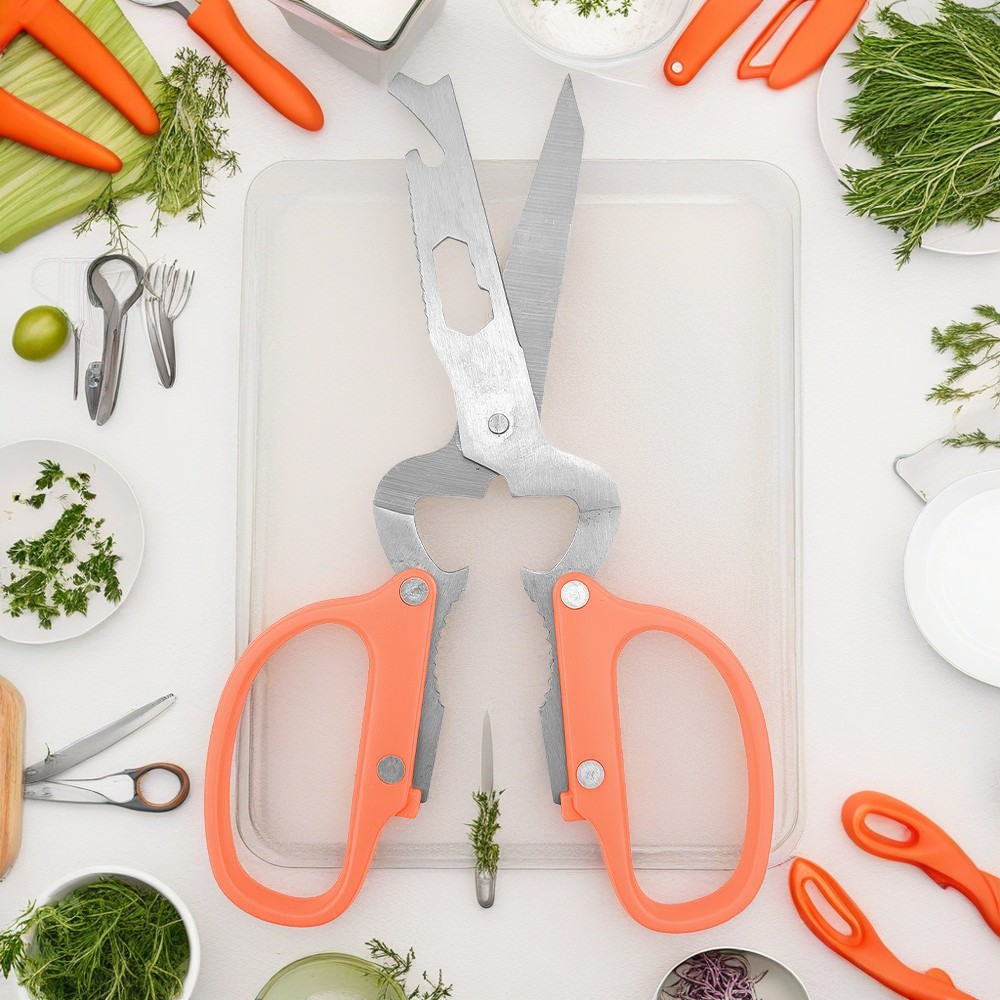
Multifunction Kitchen Scissors: A Practical Guide for Everyday Prep
Multifunction kitchen scissors are designed to handle more than simple cutting. In a busy home kitchen, they can help trim meat, snip vegetables, scale fish, crack nuts, open bottles, scrape peels, and reduce the number of single-purpose tools kept in a drawer. The original product description highlights a modern design with comfortable mint handles and precision stainless steel blades, plus added functions such as a serrated section, cutter, peel scraper, fish scaler, nut cracker, and bottle opener.
This guide explains how to evaluate a pair of multifunction kitchen scissors for daily cooking, how to use the main features safely, and what care habits can help keep the tool practical over time. It is written for shoppers who want useful selection guidance rather than a decorative product description.
Key Takeaways
- Choose kitchen scissors based on the foods you prepare most often, not only on the number of listed functions.
- Stainless steel blades are useful for kitchen work, but buyers should still check cleaning instructions and drying requirements.
- Ergonomic handles matter if you cut meat, herbs, packaging, or vegetables frequently.
- Extra features such as a nut cracker, bottle opener, fish scaler, and peel scraper are most valuable when they are easy to access and clean.
- Safe storage and thorough washing are important because kitchen scissors touch raw and cooked foods.
What Makes Kitchen Scissors Multifunctional?
A standard pair of kitchen scissors is mainly used for cutting herbs, trimming packaging, or dividing soft foods. Multifunction kitchen scissors add other working surfaces to the same tool. The product described in the source includes stainless steel blades for cutting, a serrated blade section, a cutter, a peel scraper, a fish-scaling function, a fruit-peeling function, a nut-cracking area, and a bottle opener.
The benefit is not that one tool replaces every knife, peeler, opener, and fish scaler in every situation. Instead, it gives cooks a quick option for small tasks that do not justify pulling several tools from the drawer. For example, a cook might trim poultry, snip spring onions, open a bottle, and crack a few nuts while preparing a meal. A well-designed pair of scissors can make these short tasks faster and keep the prep area less cluttered.
Best Everyday Uses in the Kitchen
Multifunction kitchen scissors are especially helpful for jobs where a cutting board and knife are less convenient. They can cut directly over a bowl, pot, or plate, which reduces transfer steps. They are also useful for portioning foods with irregular shapes.
- Trimming meat: Use the blades to remove small pieces of fat or divide thin cuts into portions. Wash immediately after contact with raw meat.
- Cutting vegetables and herbs: Snip leafy greens, scallions, parsley, or soft vegetables directly into a dish.
- Preparing seafood: A fish scaler can help remove scales before cooking, while the blades can trim fins or open packaging.
- Handling fruit: A peel scraper or peeling edge can assist with simple fruit-prep tasks, depending on the fruit and skin texture.
- Opening and cracking: The built-in opener and nut cracker can reduce the need to search for separate tools during cooking or serving.
For dense bones, frozen food, very hard shells, or heavy butchery, use a dedicated tool. Multifunction kitchen scissors are most practical for controlled, routine prep rather than force-heavy cutting.
Feature Comparison Checklist
Before buying multifunction kitchen scissors, compare features in a practical way. More functions are only useful if they are comfortable, easy to clean, and suited to your cooking habits.
| Feature to Check | Why It Matters | Question to Ask Before Buying |
|---|---|---|
| Stainless steel blades | Support food-prep cutting and regular washing | What cleaning and drying method does the supplier recommend? |
| Ergonomic handle | Reduces hand strain during repeated cutting | Does the handle fit both small and large hands comfortably? |
| Serrated section | Helps grip slippery or fibrous foods | Is the serration positioned where it is actually useful? |
| Nut cracker and bottle opener | Adds convenience for serving and prep tasks | Are these areas sturdy and comfortable to use? |
| Fish scaler and peel scraper | Supports seafood and fruit preparation | Can these surfaces be cleaned thoroughly after use? |
| Storage design | Protects blades and reduces drawer hazards | Is there a cover, lock, or safe storage recommendation? |
How to Choose the Right Pair
Start with your cooking routine. If you often prepare poultry, herbs, vegetables, seafood, and fruit, multifunction kitchen scissors may be a practical addition. If you mainly reheat prepared meals, a simpler pair of scissors may be enough.
Handle comfort is one of the most important details. The source mentions a comfortable mint handle and an ergonomic design. When comparing products, look for a grip that feels stable when wet or oily, with enough room for your fingers. If possible, check whether the handle shape works for both left- and right-handed users in your household.
Blade quality is another key factor. The original description states that the scissors use stainless steel blades. Stainless steel is commonly selected for kitchen tools because it suits repeated food contact and washing, but it still needs proper care. Ask whether the scissors are dishwasher safe or hand-wash only, whether the blades separate for cleaning, and how the hinge area should be dried.
Finally, think about cleaning access. A multifunction tool has more edges, grooves, and contact points than a simple pair of scissors. If food residue can collect around the nut cracker, opener, or scaling surface, maintenance becomes more important.
Use and Safety Tips
Kitchen scissors are sharp tools, even when they look compact. Use them with the same attention you would give a knife. Keep the cutting path clear, avoid twisting the blades through hard foods, and do not use them for tasks outside kitchen preparation unless the product instructions allow it.
- Use a separate cutting board or bowl when trimming raw meat to limit cross-contamination.
- Wash the scissors promptly after cutting raw poultry, seafood, or meat.
- Dry the hinge and blade area carefully before storing.
- Store with the blades closed and away from children.
- Avoid cutting metal wire, hard plastic, or frozen food unless the supplier states that the scissors are suitable for that use.
If the scissors become loose at the hinge, difficult to close, or visibly damaged, stop using them for food preparation until they can be adjusted or replaced.
Cleaning and Care
Good care keeps kitchen scissors hygienic and pleasant to use. Always follow the supplier's instructions first. If instructions are not available, hand washing with warm water and mild dish soap is a safe default for many kitchen tools. Pay attention to the inner blade surfaces, hinge, serrated section, scaler, scraper, and bottle-opener area.
Rinse thoroughly and dry immediately with a clean towel. Even stainless steel tools can develop spots or corrosion if left wet, especially around joints or where food acids remain. Store in a dry drawer, utensil holder, or protective cover. If the blades separate for cleaning, reassemble them only when fully dry and check that they close smoothly before storage.
FAQ
Can multifunction kitchen scissors replace a chef's knife?
No. They are useful for trimming, snipping, opening, scaling, and small prep jobs, but a chef's knife is still better for precise slicing, chopping, and larger cutting tasks.
Are stainless steel kitchen scissors rust-proof?
The source describes stainless steel blades and mentions resistance to rust, but care still matters. Wash, rinse, and dry the scissors promptly, especially after contact with salty or acidic foods.
What foods are best suited to kitchen scissors?
They work well for herbs, leafy vegetables, thin meat portions, cooked foods, some seafood-prep tasks, and small packaging jobs. Avoid very hard or frozen foods unless the supplier confirms suitability.
How should I compare multifunction features?
Look beyond the feature list. Check whether the nut cracker, bottle opener, fish scaler, cutter, and peel scraper are comfortable to use, easy to clean, and relevant to how you cook.
Should I put kitchen scissors in the dishwasher?
Only do so if the supplier's care instructions allow it. Hand washing and immediate drying are often the safer approach when instructions are unclear.
Final Thoughts
Multifunction kitchen scissors can be a useful everyday tool when the design matches real cooking habits. The described model combines stainless steel blades, a mint ergonomic handle, and multiple prep functions such as cutting, scaling, peeling, cracking, and opening. For the best result, choose based on comfort, cleaning access, and the tasks you perform most often. A practical pair should save small steps in the kitchen without creating extra maintenance or safety concerns.
