




Kitchen Scissors Manufacturer Guide for Bulk Buyers
Kitchen scissors can look simple in a catalog, but they are easy to underestimate in sourcing. A sample may cut paper cleanly and look suitable for a retail shelf, yet bulk orders can reveal issues such as uneven blade alignment, loose pivots, uncomfortable handles, trapped food residue, or packaging that fails to explain the product’s functions. For importers, supermarkets, distributors, and private-label buyers, selecting a kitchen scissors manufacturer is therefore a quality-control decision as much as a purchasing decision.
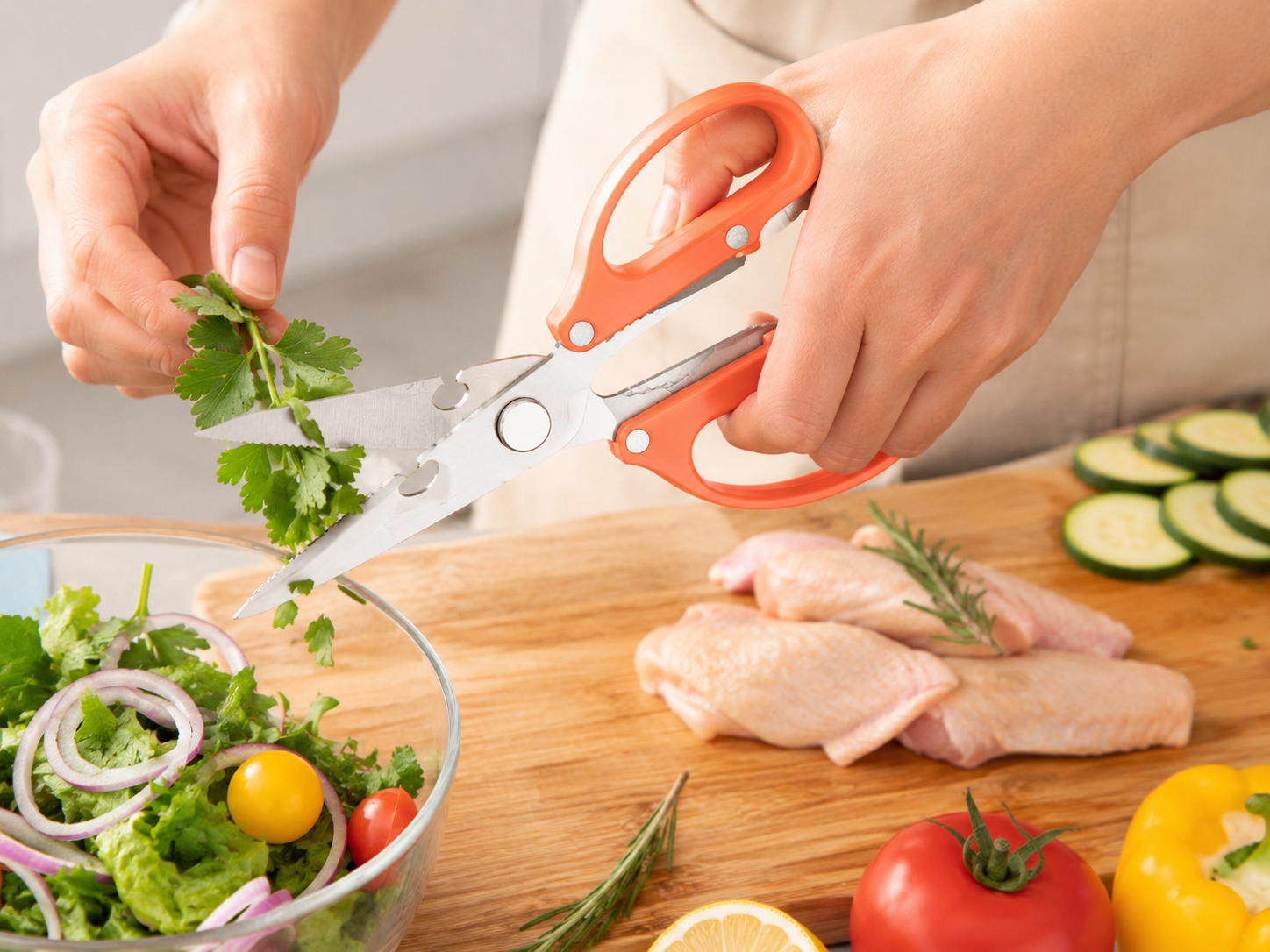
This guide explains how to evaluate blade design, cleaning structure, handle construction, packaging, and repeat-order reliability before committing to bulk production. It also outlines the questions buyers should ask when comparing OEM or wholesale kitchen shears programs.
Key Takeaways
- Kitchen scissors should be tested on real kitchen tasks, not only on paper or thin plastic.
- Blade alignment, pivot tension, and edge grinding are major indicators of bulk-order consistency.
- Detachable or easy-clean structures can improve hygiene positioning, but the locking mechanism must feel secure.
- Retail packaging should explain useful functions such as a serrated edge, bottle opener, fish scaler, or nutcracker-style section.
- B2B buyers should confirm quality-control steps, customization limits, packaging options, and compliance documentation with the supplier.
Blade Design Determines Real Cutting Performance
A kitchen shear is expected to cut more than stationery. Depending on the target market, end users may use it for herbs, cooked meat, poultry preparation, fish fins, vegetables, food packaging, or light household tasks. This means the blade must balance sharpness, rigidity, corrosion resistance expectations, edge retention, and cleaning convenience.
When reviewing samples from a kitchen scissors manufacturer, buyers should inspect blade thickness, edge consistency, surface polishing, burr control, and whether the two blades meet cleanly along the cutting path. Serrated or micro-serrated sections can help grip slippery food or packaging, but they should be tested for actual performance instead of accepted as a visual feature.
If the product is intended for food-preparation use, buyers should also ask what material documentation is available for food-contact review in the destination market. Do not assume that all stainless steel scissors are equivalent; request the material description, intended-use guidance, and any available supplier documentation before purchase approval.
Pivot Stability Is a Bulk-Order Risk Point
The pivot is one of the most important parts of kitchen scissors because it controls cutting feel and long-term usability. If the pivot is too tight, the scissors feel tiring during repeated use. If it is too loose, the blades separate slightly and cutting performance drops. A good sample is useful, but it does not prove that the same tension will be repeated across thousands of units.
Buyers should open and close samples repeatedly, test different cutting materials, and compare several pieces from the same sample batch. Ask the supplier how pivot tension is checked during production, whether the design uses a screw, rivet, or detachable joint, and what inspection standard is used to reject unstable pieces. These questions are especially important for private-label programs where customer reviews affect future sell-through.
Cleaning Structure and Detachable Design
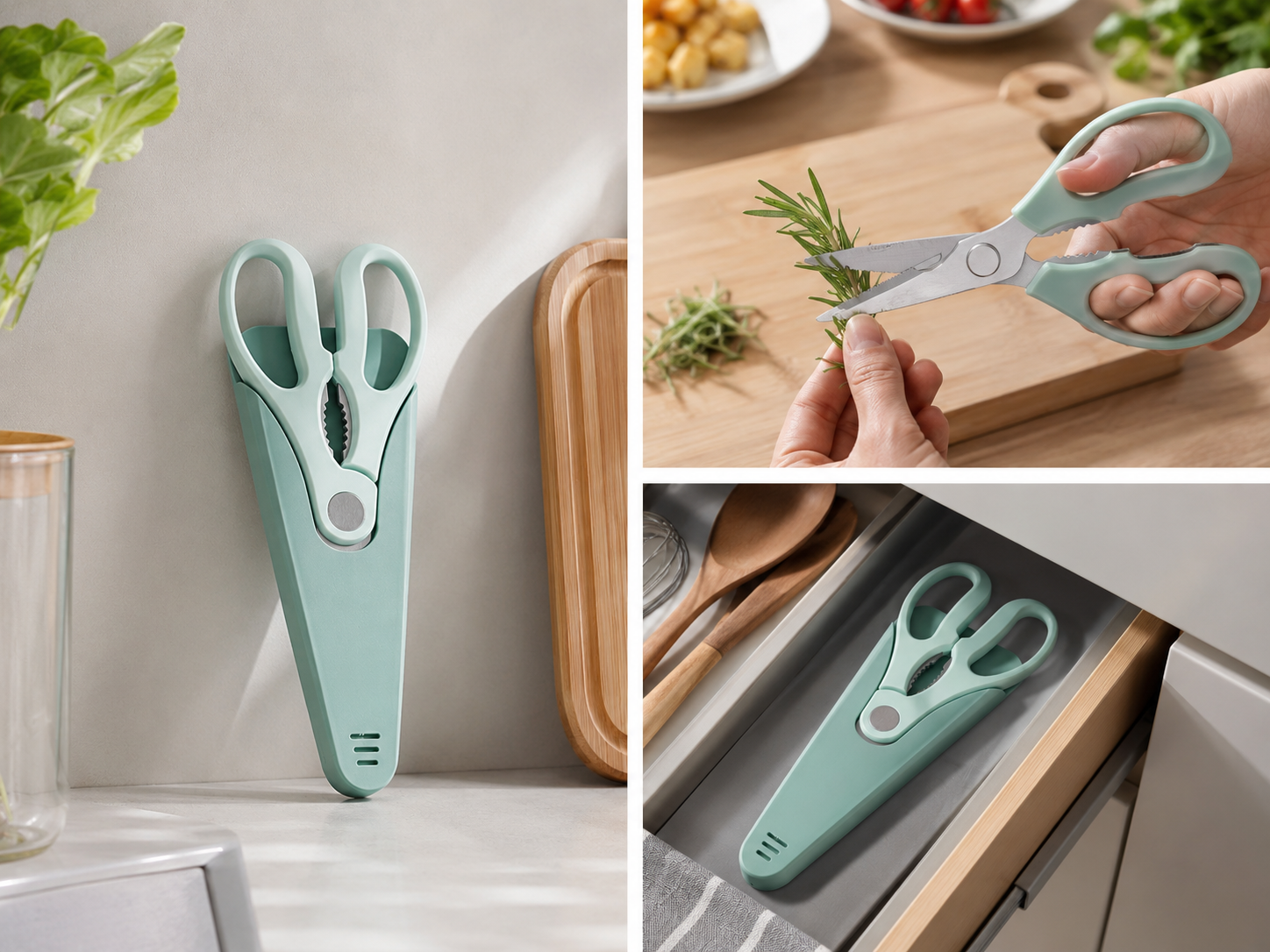
Kitchen scissors often come into contact with food residue, oil, herbs, or meat juices. The joint area can become a cleaning problem if the blades cannot be separated or if the pivot leaves narrow gaps that trap residue. Detachable kitchen scissors can be attractive for hygiene-focused retail lines, but they are not automatically better unless the lock-and-release structure is secure and easy to understand.
During sample evaluation, buyers should check whether the scissors separate smoothly, whether the blades reconnect without wobble, and whether the package or instruction card explains the cleaning method. For non-detachable models, review the pivot area carefully and ask whether the supplier can provide cleaning guidance suitable for retail packaging.
Comparison Checklist for Supplier Evaluation
| Evaluation Point | Risk in Low-Control Sourcing | What Buyers Should Ask |
|---|---|---|
| Blade edge | Sharp sample but inconsistent bulk cutting | How is edge grinding checked during production? |
| Blade alignment | Blades rub, separate, or fail to cut fully | What tolerance or inspection method is used? |
| Pivot structure | Loose or stiff action after repeated use | Is pivot tension tested before packing? |
| Handle comfort | Grip feels acceptable briefly but tiring in use | Are different handle materials or colors available? |
| Cleaning design | Food residue remains near the joint | Is the product detachable or designed for easier cleaning? |
| Packaging | Functions are not visible to shoppers | Can packaging show features and safe-use guidance? |
Multi-Function Features Should Be Useful, Not Decorative
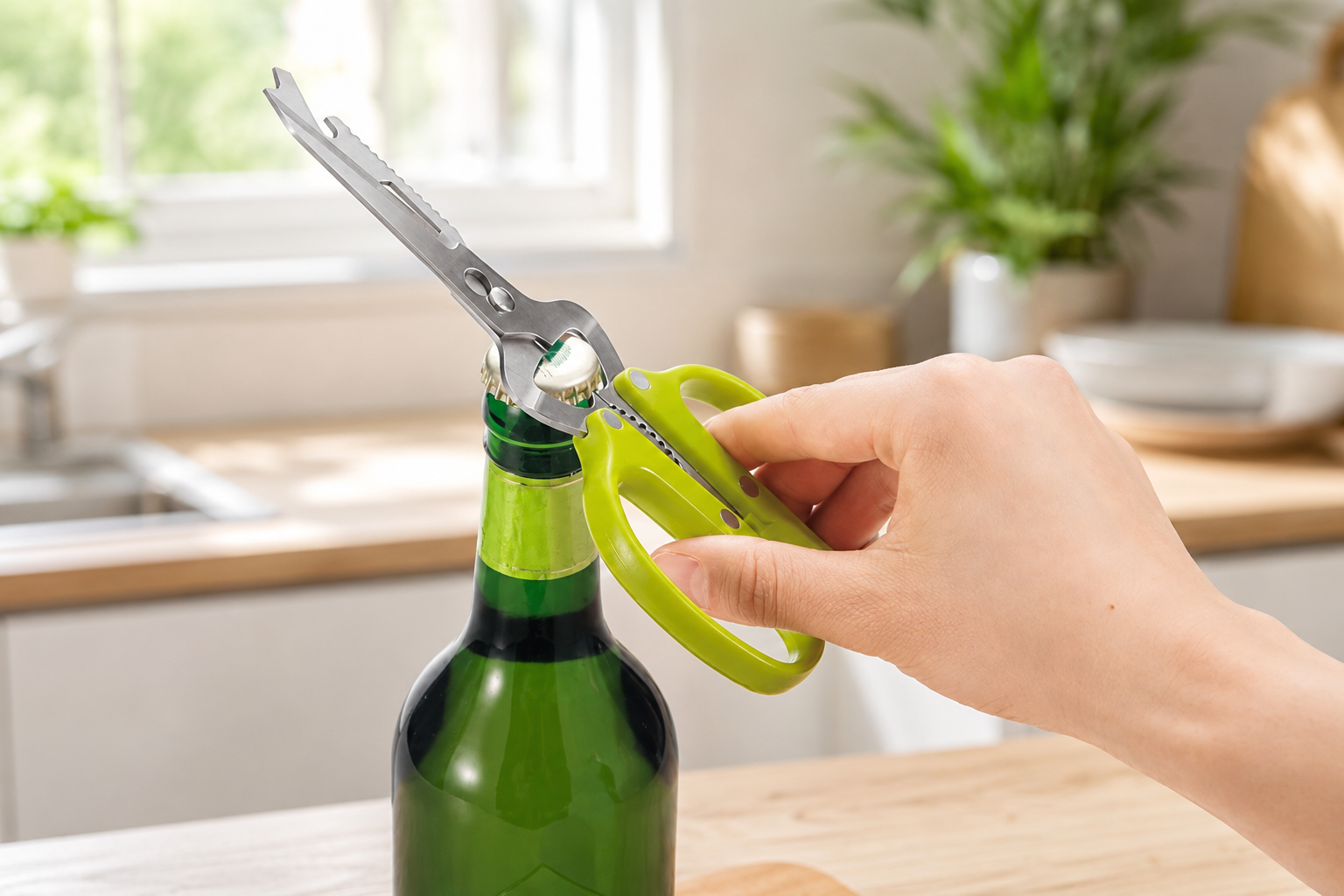
Some kitchen scissors include extra features such as a bottle opener, fish scaler, nutcracker-style grip, serrated cutting area, or notch for harder materials. BONET product information for multipurpose scissors highlights stainless steel blades, serrated cutting edges, bottle opener, fish scaler, and nutcracker-style functionality as common retail features. These details can improve product value, but only when they work reliably and are easy for shoppers to understand.
For bulk sourcing, test every advertised function. A fish scaler should have a usable shape, a bottle opener should engage securely, and a nutcracker-style area should be positioned safely. If a function is difficult to use, consider removing it or separating the product into basic and multi-purpose versions. Overloaded feature claims can create returns if the design does not match customer expectations.
Building a Retail-Ready Kitchen Scissors Line
A stronger purchasing plan usually separates kitchen scissors into clear retail tiers instead of treating every model as interchangeable. This helps buyers manage price points, packaging claims, and online product pages more effectively.
- Basic kitchen scissors: suitable for general food packaging and daily light kitchen cutting.
- Easy-clean or detachable shears: positioned for hygiene-conscious food preparation and easier washing.
- Multi-purpose kitchen shears: designed with additional features such as serrated sections, opener functions, scaler details, or nutcracker-style areas.
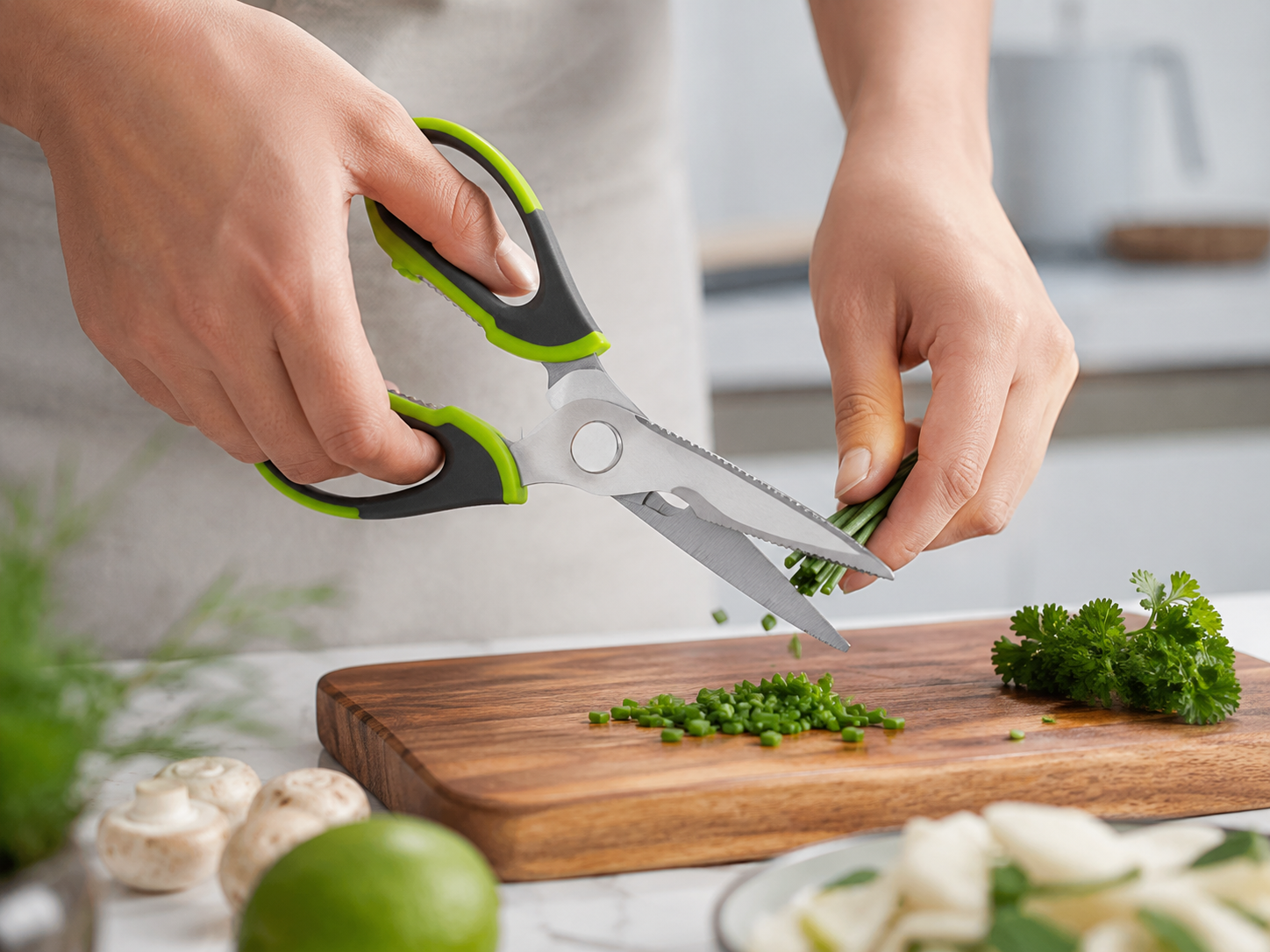
This structure makes assortment planning easier for supermarkets, online sellers, and distributors. It also gives buyers a clearer basis for comparing supplier quotes: a lower price may be acceptable for an entry model, while a higher-tier model needs stronger design, packaging, and inspection support.
Packaging and OEM Questions for B2B Buyers
Kitchen scissors are handled products, so packaging must protect the blade, show the handle shape, and communicate key functions quickly. Before confirming an OEM or wholesale order, ask the supplier whether they can support logo placement, color options, barcode needs, retail cards, blister packaging, hanging holes, instruction inserts, or carton labeling. Avoid assuming that every customization option is available at the same cost or order quantity.
Important commercial details should be confirmed directly with the supplier, including minimum order quantity, lead time, packaging artwork requirements, sample approval process, and any available inspection reports or compliance documents. If the destination market has specific food-contact, labeling, or safety expectations, raise those requirements before production rather than after shipment.
Quality Control Before Shipment
Pre-shipment inspection should include more than a visual check. Buyers should review cutting consistency, opening smoothness, blade alignment, pivot stability, handle strength, surface finish, rust-prevention condition, and packaging safety. It is also useful to test samples from different cartons rather than only from the top of one box.
For repeat orders, keep an approved reference sample and compare new shipments against it. If the supplier changes blade finish, handle material, packaging structure, or pivot design, request confirmation before mass production. Consistency is often what separates a short-term low-price purchase from a dependable retail kitchenware program.
FAQ
What makes kitchen scissors different from regular scissors?
Kitchen scissors are designed for food preparation and heavier kitchen tasks. They often need stronger blades, more stable pivots, washable structures, and handles that remain comfortable during repeated cutting.
Are detachable kitchen scissors better for retail programs?
They can be, especially when hygiene and easy cleaning are key selling points. However, the detachable joint must lock securely and reconnect without wobble, so buyers should test the structure carefully.
What should importers ask a kitchen scissors manufacturer before ordering?
Ask about blade material documentation, pivot inspection, cutting tests, packaging options, OEM logo or color support, sample approval, lead time, MOQ, and any compliance documents needed for the destination market.
How should buyers test kitchen scissors samples?
Test several pieces on herbs, food packaging, thicker plastic, cooked meat, or other target-use materials. Also check opening smoothness, handle comfort, cleaning access, and whether advertised functions work in practice.
