




Kitchen Utensil Supplier Guide for Retail Buyers
Kitchen utensils often appear easy to source. A sample spatula may look clean, a spoon may feel smooth, and a set may photograph well for an online listing. Problems usually appear later, when the products are used in real kitchens or displayed in retail channels. A spatula may bend too much near heat, tongs may lose grip tension, a peeler may twist under pressure, or packaging may fail to explain why the product is worth choosing.
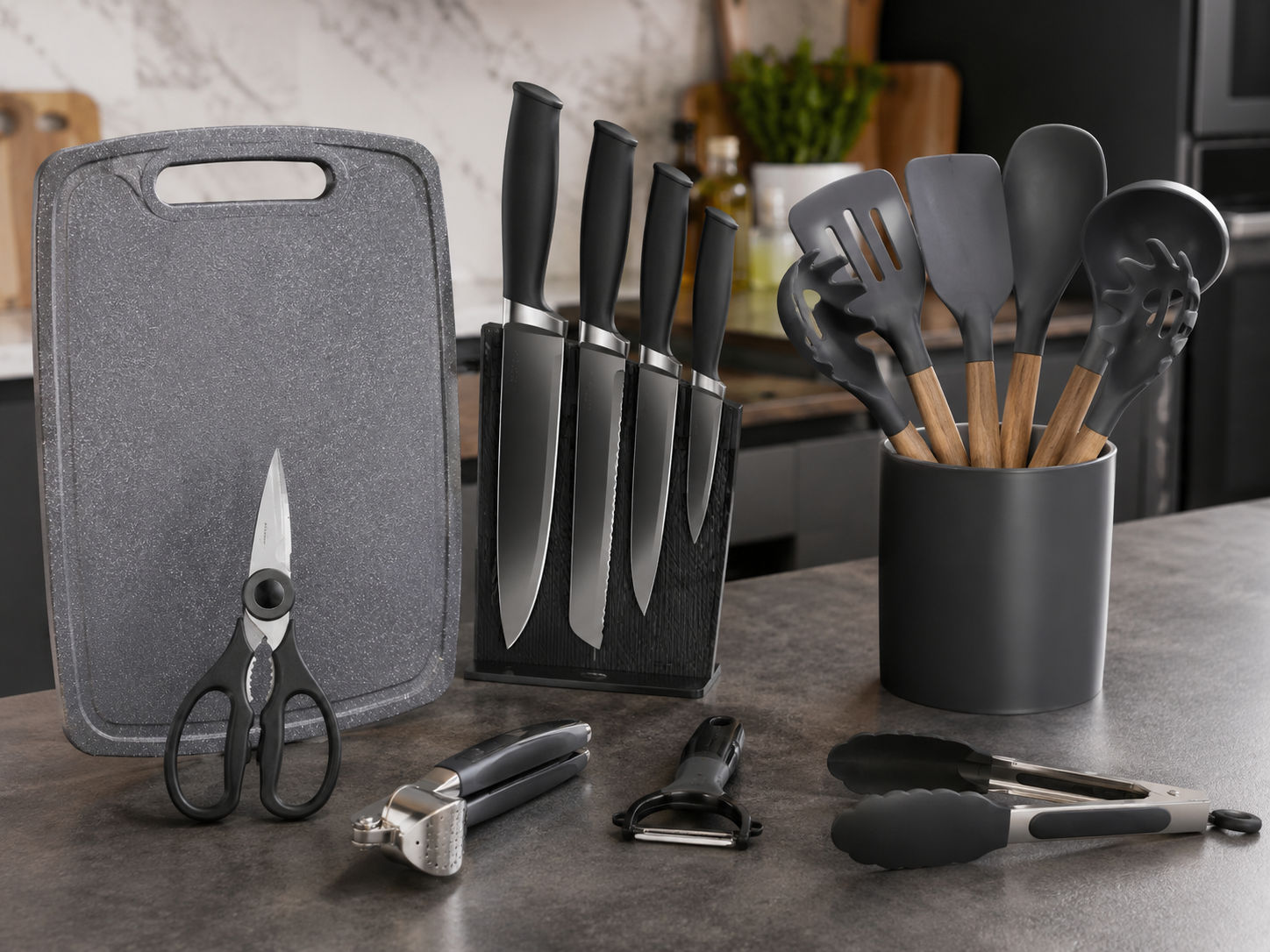
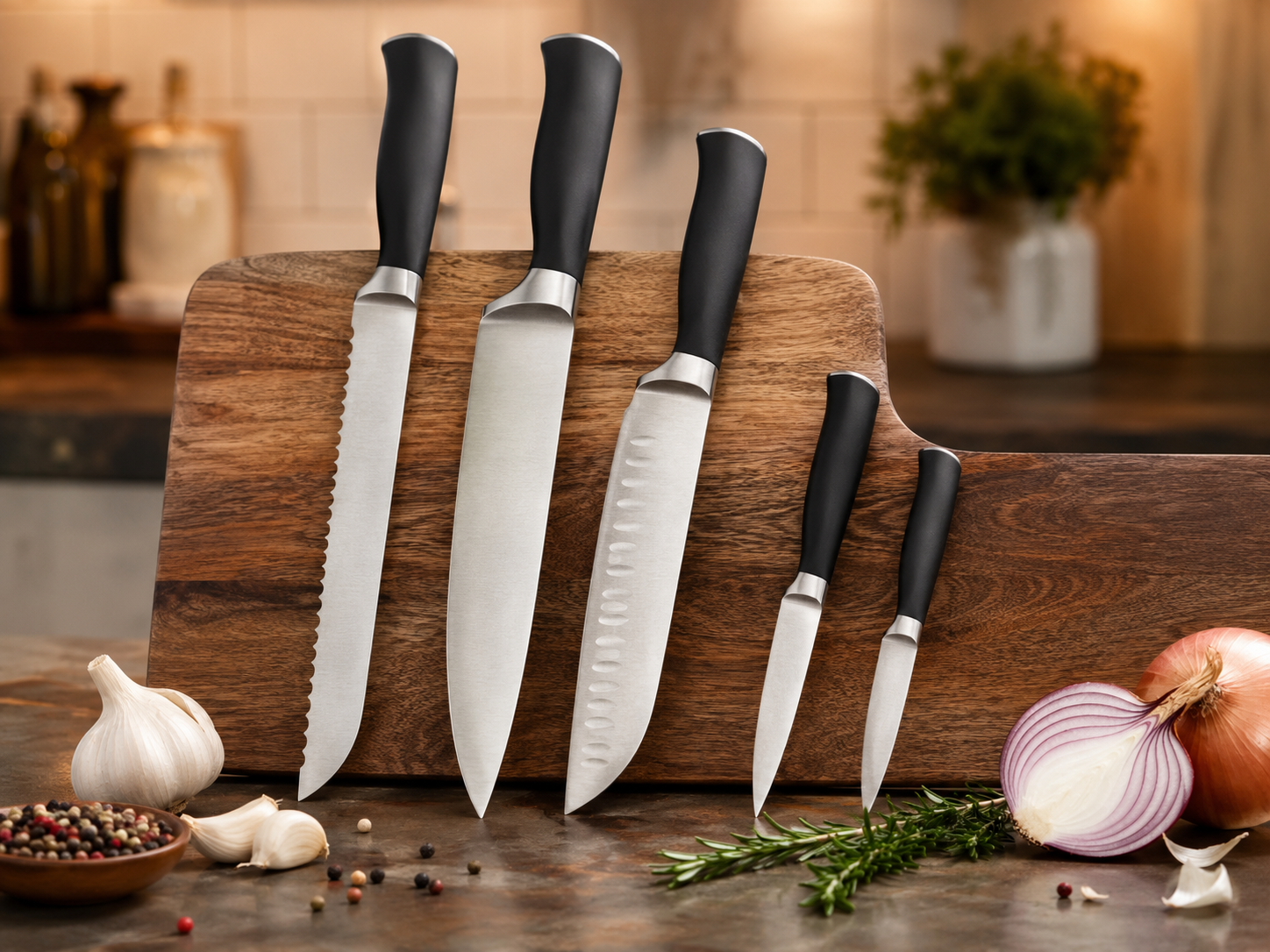
For importers, supermarkets, online sellers, and private-label buyers, selecting a kitchen utensil supplier is not only a price comparison. It is a review of material choices, tool-head design, handle comfort, quality control, packaging, and product-line logic. BONET HOUSEWARE CO.,LTD presents a product range around kitchenware, scissors, kitchen knives, kitchen utensils, chopping boards, and multi-functional tools, which can be useful for buyers planning coordinated kitchenware programs.
Key Takeaways
- Kitchen utensils should be evaluated by cooking task, not appearance alone.
- For non-stick cookware, tool-head edge softness and flexibility are important sourcing checks.
- Bulk quality should be confirmed through defined inspection points, not only a good first sample.
- Retail packaging should explain use, material, care, and set value clearly.
- Buyers should ask suppliers specific questions about customization, inspection, packaging, and repeat-order consistency.
Start With the Cooking Scenario
A reliable utensil starts with a clear use case. Frying, stirring, scraping, serving, peeling, grilling, and food preparation all place different pressure on the tool. A spoon used for sauce needs a different edge and bowl depth than a turner used for eggs. A peeler requires blade firmness and handle stability, while tongs need spring force and tip alignment.
Common kitchen utensil materials include silicone tool heads for cookware protection, stainless steel handles for strength and a clean appearance, PP or TPR handle materials for grip comfort, and nylon or plastic parts for lightweight daily-use tools. Buyers should not assume that all silicone, plastic, or stainless steel combinations perform the same. The important question is whether the selected material fits the actual cooking task and retail promise.
Material and Tool-Head Design for Non-Stick Cookware
For kitchen utensils for non-stick cookware, the tool head needs balance. It should be soft enough to reduce the risk of scratching cookware surfaces, but firm enough to lift food, stir thicker sauces, scrape bowls, or serve heavier portions. If the neck is too flexible, users may feel the utensil is weak. If the edge is too hard or poorly finished, it may feel uncomfortable or unsuitable for coated pans.
Material review also matters because utensils contact food, cookware, and preparation surfaces. Buyers should ask suppliers which food-contact material information can be provided for the target market and product type. Do not rely on vague claims such as “safe material” without supporting documentation, sample review, and clear labeling information.
Supplier Capability Matters More Than a Low First Price
A low unit price can be attractive, especially for promotional programs. However, kitchen utensils are handled repeatedly, washed often, and exposed to pressure during cooking. Weak tool-head support, rough edges, loose joints, unstable handles, inconsistent colors, or unclear packaging can create returns and poor reviews.
When comparing suppliers, buyers should review whether the supplier understands cookware compatibility, handle balance, surface finish, hanging-hole design, cleaning expectations, retail display needs, and set combinations. BONET’s website positions the company in Yangjiang and describes its business around kitchenware and precision cutting tools, including kitchen tools and kitchen utensils. This background may be relevant for buyers sourcing multiple kitchenware categories, but commercial details such as order quantity, lead time, packaging options, and testing documents should be confirmed directly with the supplier.
Comparison Checklist for Kitchen Utensil Suppliers
| Review Point | Risk With Basic Sourcing | What Buyers Should Ask |
|---|---|---|
| Material selection | Generic material used across many tools | Which material is recommended for each cooking task? |
| Tool-head design | Shape looks acceptable but performs poorly | Is the head designed for turning, scraping, serving, or stirring? |
| Non-stick use | Claim appears on packaging without design review | How are edges, flexibility, and surface finish controlled? |
| Handle comfort | Grip feels unstable during repeated movement | Can samples be tested for balance, anti-slip feel, and joint strength? |
| Bulk consistency | Good sample but uneven production quality | What inspection points are used before shipment? |
| Packaging | Packaging added after product selection | Does packaging explain use, care, and retail value clearly? |
Quality Control Points Before Bulk Orders
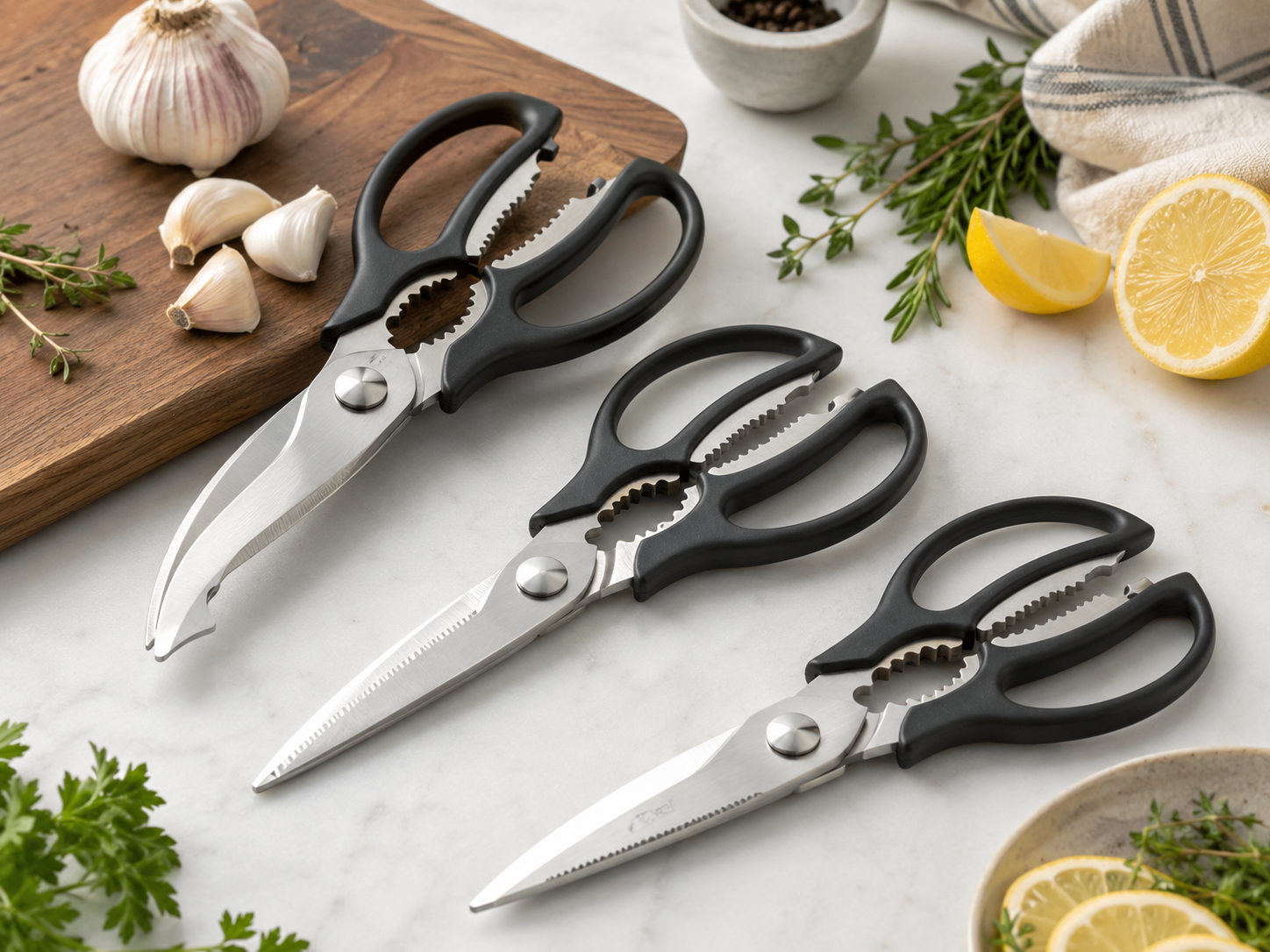
Quality control for kitchen utensils should go beyond surface appearance. Silicone tools should be checked for odor, smooth finish, consistent flexibility, color uniformity, and secure connection to the handle. Stainless steel handles should be checked for edge finishing, surface marks, wall consistency, and comfortable grip. Peelers should be reviewed for blade stability and assembly. Tongs should be checked for spring tension, alignment, and gripping force.
Buyers should request pre-production samples when changes are made to color, handle material, packaging, or logo placement. They should also define acceptable and unacceptable defects before bulk production. Useful inspection points may include product dimensions, weight range, edge smoothness, joint security, printed logo position, barcode accuracy, package sealing, and carton labeling. If a supplier mentions a quality system or compliance document, buyers should ask what it covers and whether it applies to the exact product being ordered.
Build a Retail Product Line, Not Random SKUs
A common mistake is selecting individual low-cost tools from different sources and combining them into a product line later. The result may lack a consistent story. Colors may not match, handles may feel unrelated, and shoppers may not understand whether the range is for non-stick cookware, compact kitchens, family cooking, or gift sets.
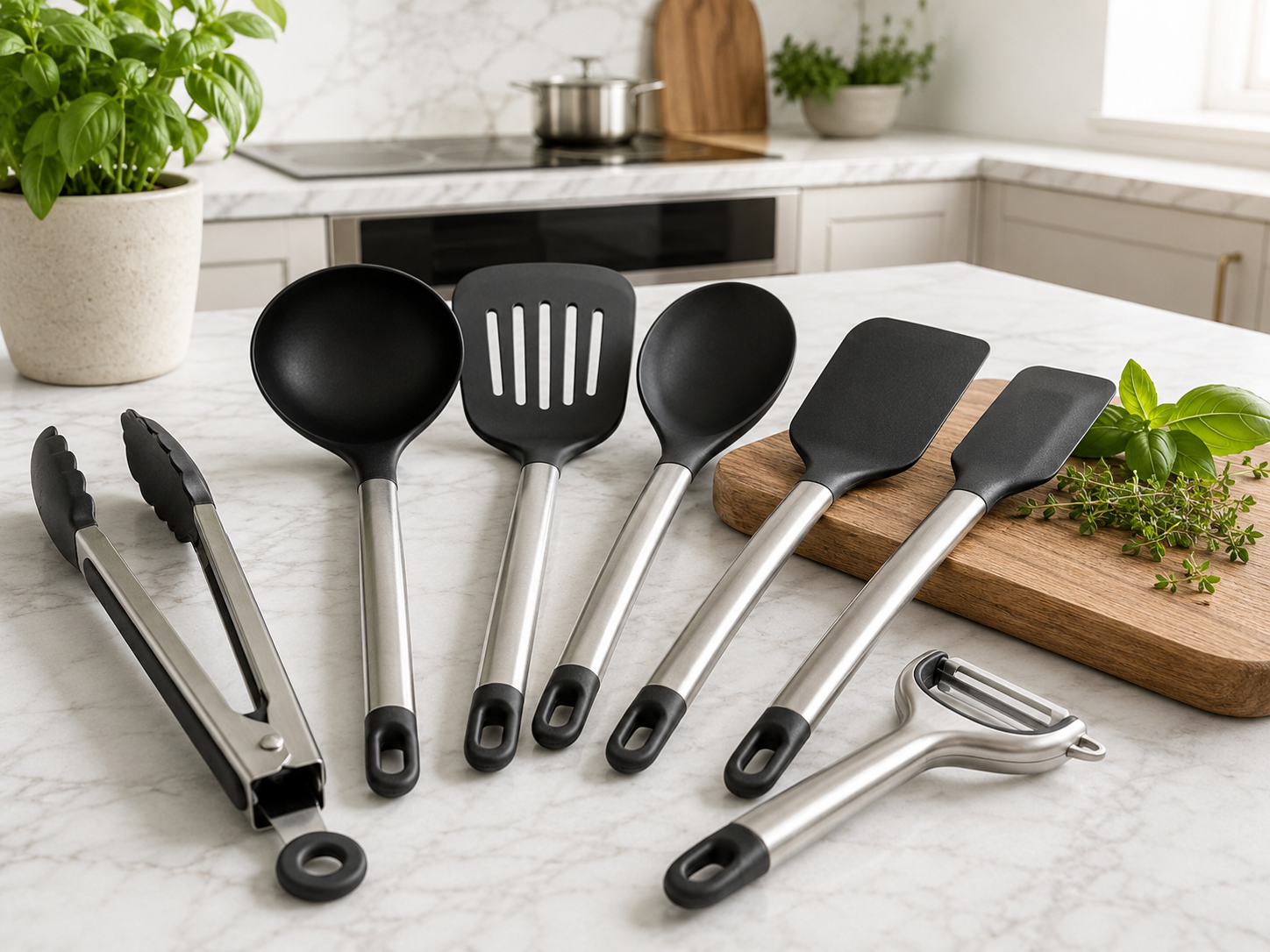
A stronger product-line plan starts with use scenarios. For example, silicone spatulas, spoons, and turners can support non-stick cookware programs. Ladles, pasta servers, and tongs can form a daily cooking group. Peelers, scrapers, brushes, and compact gadgets can support food preparation. Packaging can then use clear icons, material notes, care guidance, and set descriptions to help shoppers compare quickly.
Practical Questions to Ask a Supplier
- Which utensils are recommended for non-stick cookware, and why?
- What material information can be provided for the target market?
- Can the supplier support coordinated colors, handles, logos, and packaging?
- What inspection steps are used for samples, production, and shipment?
- How are rough edges, loose joints, odor, color variation, and packaging defects handled?
- What information should appear on retail packaging for safe and clear consumer use?
FAQ
Q: What products are usually included in a kitchen utensil sourcing program?
A: Common products include spatulas, turners, spoons, ladles, tongs, peelers, brushes, scrapers, pasta servers, and compact multi-functional kitchen tools.
Q: What is a common failure in low-cost kitchen utensils?
A: The most common issue is mismatch between material and real use. A spatula may be too soft, a handle may feel unstable, or a peeler may bend under pressure.
Q: Are kitchen utensils suitable for private-label retail programs?
A: Yes, many kitchen utensils can be planned for private-label programs through color direction, logo placement, packaging design, and set structure. Buyers should confirm available options directly with the supplier.
Q: How should buyers test utensils before ordering in bulk?
A: Test samples in realistic cooking movements: flipping, scraping, stirring, serving, peeling, washing, and hanging. Also check packaging clarity and carton protection.
Final Sourcing Advice
Choosing a kitchen utensil supplier should involve more than comparing spatula prices. Buyers need products that feel reliable in hand, suit the intended cookware, clean easily, and communicate clearly on retail shelves. A practical sourcing process reviews material fit, tool-head design, handle comfort, packaging, and quality controls before a bulk order is confirmed. The best utensil line is not the one with the most SKUs; it is the one where every tool has a clear purpose and consistent retail presentation.
