




Wholesale Fabric Scissors: A Practical B2B Buying Guide
Wholesale fabric scissors are a small product category with a large impact on sewing quality, workshop efficiency, and customer satisfaction. A pair of scissors that feels sharp on the first cut but becomes uncomfortable after repeated use can create problems for tailors, craft brands, garment repair shops, school supply buyers, and retail distributors. For B2B buyers, the goal is not only to find a low unit cost. The better goal is to source scissors that match the user, the fabric type, the packaging channel, and the expected service life.
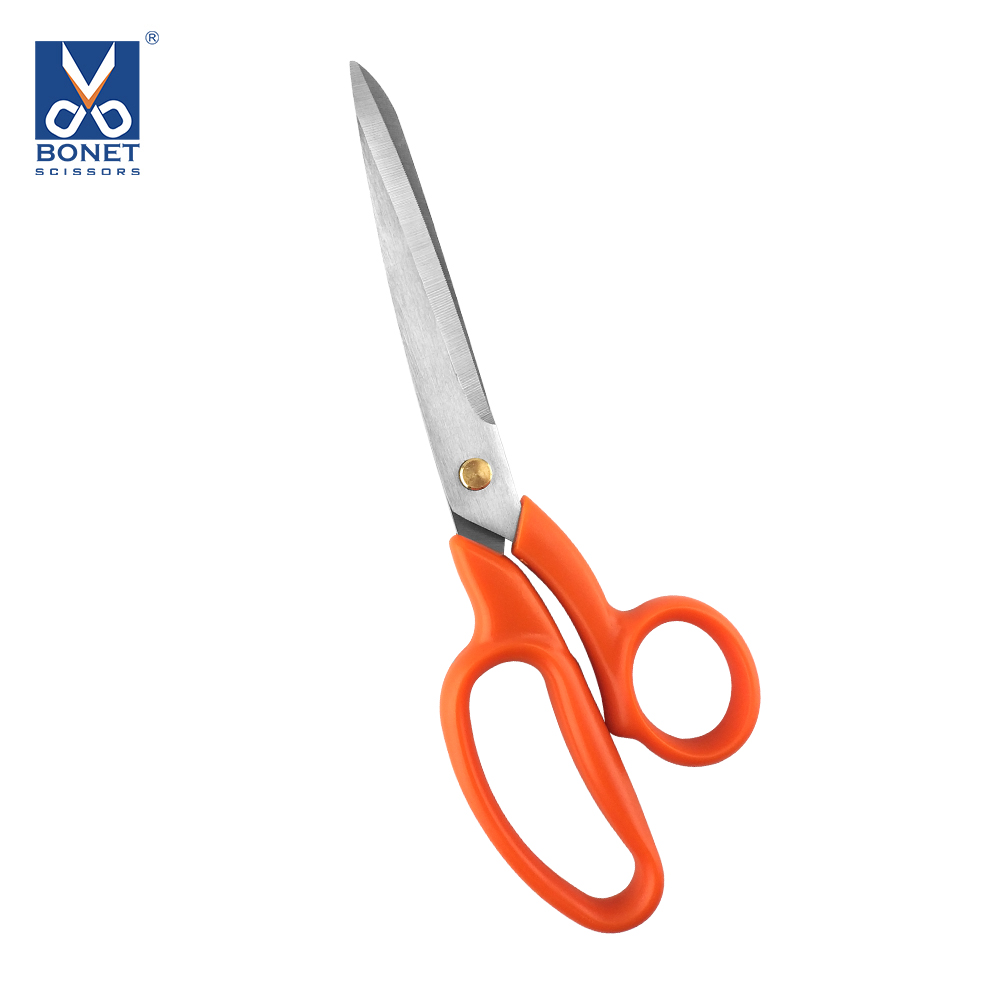
The original Bonet product article highlights fabric scissors with stainless steel blades, an ergonomic handle, an orange handle color, and a polished blade finish. Those are useful starting points, but professional sourcing should go further. Before placing a wholesale order, buyers should compare samples, ask clear technical questions, and confirm what the supplier can support for packaging, labeling, inspection, and repeat orders.
Key Takeaways
- Match the scissors to the end user: tailor, craft buyer, sewing student, retail customer, or workshop operator.
- Do not rely on appearance alone; test sample cutting performance, handle comfort, blade alignment, and finish consistency.
- Ask suppliers to confirm blade material, handle material, available sizes, packaging options, and whether OEM branding is supported.
- For wholesale orders, clarify commercial details such as MOQ, lead time, carton packing, labeling, and inspection process before payment.
Who Buys Wholesale Fabric Scissors?
Fabric scissors are purchased by many different business customers. Tailoring shops may need reliable daily-use scissors for cutting cloth accurately. Sewing schools may need durable student tools that are safe and consistent. Craft retailers may prioritize packaging and shelf presentation. E-commerce sellers may need clear product photos, barcode labeling, and stable stock. Garment workshops may look for a balance of cutting performance, comfort, and replacement cost.
Because the same product can serve different channels, buyers should define the market before requesting a quotation. For example, a retail gift-packaged scissor may require different packaging from a bulk workshop scissor. A sewing studio may care more about hand fatigue during long cutting sessions, while a distributor may focus on carton durability, SKU consistency, and reordering reliability.
Core Product Features to Check
The original product information mentions stainless steel blades and an ergonomic handle. These are important features, but buyers should ask for more detail instead of assuming performance. Stainless steel can vary by grade, hardness, thickness, and finishing method. If the supplier does not publish those details, ask directly and request a sample for verification.
For the handle, comfort is not just about shape. It also depends on opening size, edge smoothness, grip texture, and whether the handle fits the target user. The orange handle color can make the tool easy to identify in a sewing kit or workshop, but buyers should confirm whether other colors are available if building a private-label line.
- Check whether the blades open and close smoothly without excessive looseness.
- Cut several layers of common fabric used by your customers, not only paper.
- Inspect the blade tips for alignment and clean finishing.
- Hold the scissors for repeated cutting to evaluate handle comfort.
- Review the packaging for transit protection and retail readiness.
Comparison Checklist for Wholesale Buyers
A structured checklist helps buyers compare suppliers fairly. Use the table below when reviewing fabric scissors samples and quotations.
| Buying Factor | What to Check | Supplier Questions |
|---|---|---|
| Blade material | Material type, finish, thickness, sharpness, and corrosion resistance expectations | What blade material is used, and can you provide material details? |
| Cutting performance | Clean cuts on cotton, felt, denim, or the fabric types your customers use | Can samples be tested before a wholesale order? |
| Handle design | Comfort, grip opening, surface finish, and suitability for prolonged use | What handle materials and colors are available? |
| Packaging | Bulk pack, blister card, hanging card, inner box, carton protection | Can packaging be customized for retail or online sales? |
| OEM options | Logo position, color matching, label, instruction insert, barcode support | Do you support OEM branding, and what files are required? |
| Quality control | Blade alignment, cutting test, appearance inspection, carton check | What inspection steps are used before shipment? |
| Commercial terms | MOQ, lead time, payment terms, sample cost, reorder process | What is the current MOQ and production lead time? |
How to Evaluate Samples Before Ordering
Samples are essential when buying wholesale fabric scissors. A photo can show the general shape and handle color, but it cannot show cutting feel, balance, blade movement, or fatigue after repeated use. Request samples from shortlisted suppliers and test them under realistic conditions.
Start by cutting lightweight cotton, medium fabric, and a thicker material that represents your market. If your customers also use scissors for patterns or craft paper, test paper separately, but avoid judging fabric scissors only by paper performance. Look for fraying, dragging, uneven blade contact, and discomfort in the thumb or fingers. If multiple team members will use the scissors, ask more than one person to test them.
Document the results. Take notes on sharpness, handle comfort, finish quality, packaging condition, and any defects. This makes supplier comparison easier and creates a reference point for future inspection after bulk production.
OEM, Packaging, and Wholesale Sourcing Questions
For distributors, private-label brands, and retail buyers, commercial support can matter as much as the scissors themselves. Before confirming an order, ask whether the supplier can support your sales channel. If you need a logo on the handle, printed packaging, barcode labels, or carton marks, confirm what is possible and whether extra tooling, artwork, or lead time is required.
Important questions include: What is the minimum order quantity for standard stock? Is there a different MOQ for custom color or branded packaging? Can the supplier provide product photos or packaging dielines? How are samples charged? What is the estimated production lead time after artwork approval? What are the carton dimensions and gross weight? These details help buyers calculate landed cost, warehouse planning, and retail margin more accurately.
It is also wise to ask about after-sales handling. If a shipment includes damaged packaging or inconsistent blade alignment, how will the supplier review the issue? A clear claim process can reduce disputes and support long-term cooperation.
Use and Care Guidance for End Customers
Even well-made fabric scissors perform better when used correctly. If you sell scissors to tailors, sewing students, or craft customers, include simple care instructions. Recommend using fabric scissors mainly for cloth rather than rough materials that can dull the edge. Wipe blades dry after use, store scissors in a safe place, and avoid dropping them because impact can affect blade alignment.
For retail packaging or online listings, explain suitable applications clearly. If the product is intended for sewing, tailoring, office craft, or general cutting, say so without exaggerating. Clear guidance reduces returns and helps customers choose the right tool.
FAQ: Wholesale Fabric Scissors
What should I ask before buying fabric scissors wholesale?
Ask about blade material, handle material, available sizes, packaging, MOQ, sample policy, lead time, carton packing, and inspection process. If you need branding, ask whether OEM logo, custom color, or retail packaging is available.
Are stainless steel blades suitable for fabric scissors?
Stainless steel blades are commonly used in scissors and are mentioned in the original product information. However, buyers should still confirm the exact material details and test samples on the fabrics their customers use.
How can I compare two fabric scissors suppliers?
Use the same sample test for each supplier. Compare cutting quality, handle comfort, blade alignment, packaging, communication speed, commercial terms, and the supplier’s ability to support repeat orders.
Can wholesale fabric scissors be used for paper?
The original article mentions cutting multiple paper layers, but fabric scissors are usually purchased for cloth and sewing use. If your customers need dual-purpose cutting, test both fabric and paper before placing a bulk order.
What information should I provide for an OEM inquiry?
Share your target quantity, sales market, preferred handle color, logo requirements, packaging style, barcode or label needs, delivery destination, and any sample testing expectations. This helps the supplier quote more accurately.
Final Sourcing Advice
Wholesale fabric scissors should be selected through testing, not guesswork. The product image, orange ergonomic handle, stainless steel blades, and polished finish provide a useful starting point, but B2B buyers should verify performance with samples and ask direct commercial questions. A careful sourcing process helps reduce quality disputes, improve customer satisfaction, and build a more reliable sewing or craft product line.
