




Why wholesale kitchenware sourcing gets harder than it looks
Finding the right wholesale kitchenware supplier is not just a matter of comparing catalog photos. For sourcing managers and product teams, the real job is to line up product quality, presentation, price structure, and repeatability without creating avoidable risk. A kitchenware bundle can look simple on a screen — utensil holder, knife block, mixing bowls, measuring spoons, cutting board — yet the supply chain behind it can be a patchwork of materials, finishes, and manufacturing methods.
That matters because kitchenware sits in a crowded retail space. Consumers want coordinated sets that feel practical, modern, and safe. Retailers want products that photograph well, ship cleanly, and hold up after handling. Buyers want a commercial kitchenware supplier or private-label partner that can deliver consistent results across multiple SKUs, not just one attractive sample. The decision is less about chasing a low quote and more about avoiding mismatches in quality, packaging, and expected use.
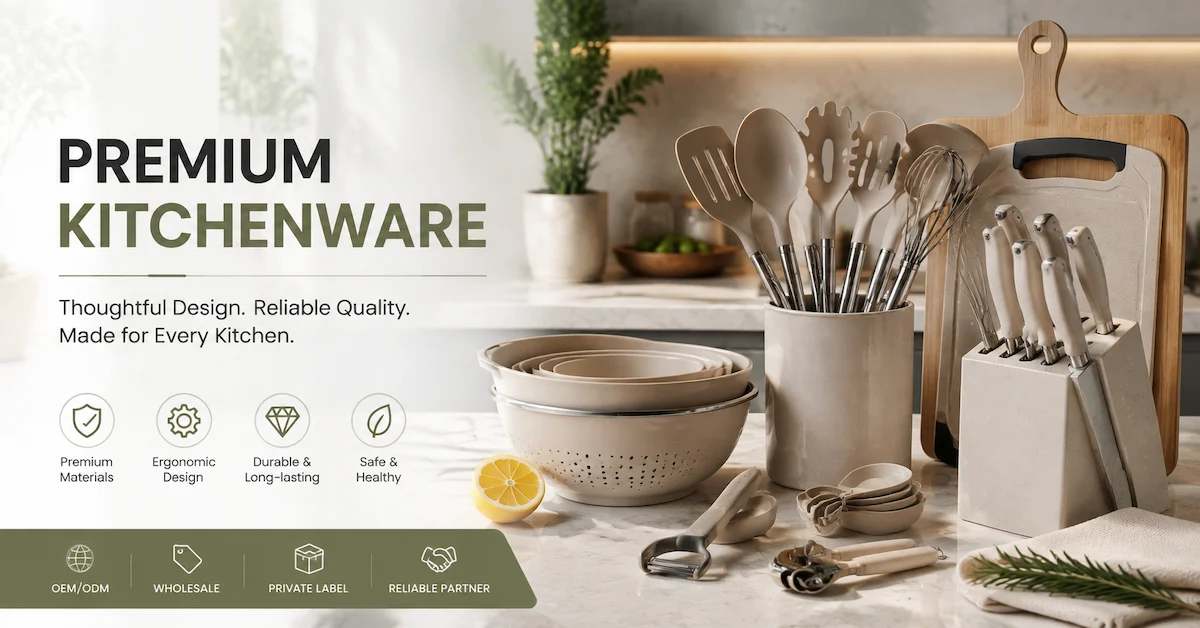
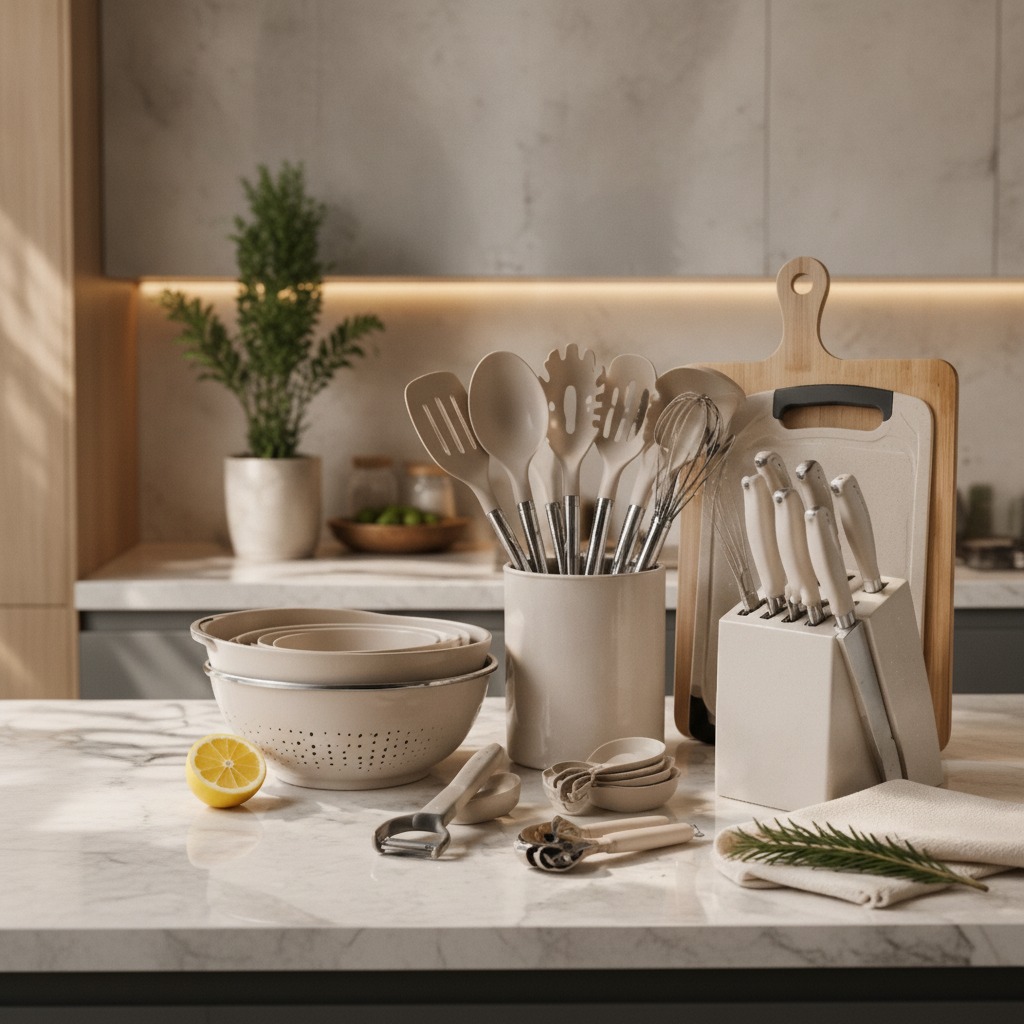
The product style shown in the supplied information points toward a neutral, minimalist bundle with beige, cream, taupe, and stainless-steel tones. That is useful commercially: it fits gift sets, home starter kits, and private-label retail programs. But the image also reminds buyers of a practical truth — the way a kitchenware set looks can be very different from how it performs once it reaches a real kitchen.
What buyers usually need from a kitchen tools wholesale program
In kitchen tools wholesale sourcing, most buyers are balancing four priorities at once: appearance, function, manufacturability, and margin. If one of those four breaks down, the whole program becomes harder to manage.
From the provided product details, the assortment appears to include utensil sets, mixing bowls, measuring spoons, knives, and a cutting or serving board display. That mix is useful because it covers food preparation, cooking, and presentation in one coordinated package. In retail terms, that can help a brand tell a simple story: one bundle, multiple daily-use tasks, and a consistent look across the counter.
Still, the buyer should separate the visual appeal from the sourcing reality. Utensils and knives may use different base materials and different production routes. Bowls may be ceramic, stoneware, or coated metal; the board could be wood, bamboo, or a wood-look composite. Those details affect weight, breakage risk, carton design, and customer satisfaction. A good wholesale partner should be able to speak clearly about each component rather than treating the set as one vague object.
Quick reference: what to check before you place an order
Product fit
Ask whether the set is meant for everyday home cooking, retail gifting, or promotional use. A display-friendly bundle may not be the best choice for a heavy-use commercial environment.
Material clarity
Do not assume all “premium materials” are equal. Confirm the material for the bowls, board, handles, and metal tools separately. It is a small step that prevents a lot of post-order confusion.
Finish and presentation
Neutral matte and satin finishes can look modern, but they also need to be consistent across the set. Mixed gloss levels can make a bundle feel cheaper than it is.
Packaging and merchandising
If the set is intended for retail, private label, or catalog use, the supplier should understand how the items will be packed together and how they will look on shelf or in digital listings.
How a wholesale kitchenware supplier should think about the set
A capable wholesale kitchenware supplier is not only selling objects; they are managing compatibility. A good set has visual unity, but it also avoids obvious weak points. The supplied details mention “OEM/ODM,” “WHOLESALE,” “PRIVATE LABEL,” and “RELIABLE PARTNER,” which signals the kind of service model many brands want. That usually means buyers are looking for more than an off-the-shelf assortment. They want a source that can adapt product mix, branding, and display direction.
For this kind of kitchenware bundle, the most useful supplier conversations tend to be very specific. For example: Are the utensils stainless-steel-looking only, or stainless steel? Are the knife handles molded plastic, wood-look, or another composite? Is the cutting board solid material or a lightweight board intended mostly for display and basic prep? None of these questions are glamorous, but they affect customer returns more than a polished sales sheet ever will.
The same applies to the bowls. A neutral nesting bowl set can sit at the center of a kitchen display, but buyers should confirm how the bowls are formed, whether they are meant for serving or mixing, and how they will be protected in transit. A beautiful cream finish can be fragile if the packing design is poor. That is the sort of detail retail teams discover the hard way if they do not ask early.
Where the manufacturing details matter most
Kitchenware spans several manufacturing methods, even within one bundle. The visible tools likely involve a mix of metal forming, handle production, and finishing. Utensils and knives often require careful shaping and joining. Bowls may be molded, cast, or formed from a coated material depending on the final specification. Boards may be machined from wood or wood-like stock and then finished for surface durability.
From a buyer’s point of view, the process matters because it affects consistency. For example, a set that includes both metallic utensils and light-colored handled knives needs finish coordination. If the handles vary too much in tone or texture, the bundle stops looking intentional. The same is true of the board: rounded corners and a hanging hole can help merchandising, but only if the edge finish is clean and repeatable.
There is also a practical caution here. Buyers sometimes focus on the “hero” item — usually the knives or the bowls — and under-specify the small items like measuring spoons or peelers. That is a mistake. In a retail bundle, the small components are often what customers touch first. If they feel flimsy, the whole set is judged harshly.
Selection criteria that help separate serious suppliers from casual traders
When comparing a commercial kitchenware supplier with a broker or catalog reseller, look for the evidence that the supplier understands product coordination. A real manufacturing partner should be able to discuss not only the individual pieces but also how they are grouped, packed, and presented.
Here are the criteria that usually matter most:
First, consistency across the set. The utensils, bowls, knives, and board should look like they belong together. That sounds basic, but many bundles fail at this stage. Color drift, mismatched sheen, or awkward proportions can weaken shelf appeal.
Second, practical ergonomics. The supplied visuals explicitly highlight “Ergonomic Design.” Buyers should treat that as a claim to test, not a slogan to repeat. Handles should be comfortable, the board should be easy to lift, and the bowls should nest without being annoying to separate.
Third, durability expectations. “Durable & Long-lasting” is a useful marketing phrase, but procurement teams need to translate it into handling requirements, packaging protection, and after-sale expectations. If the product is intended for gift sets or starter kits, durability still matters because first impressions travel fast in reviews.
Fourth, safety and use claims. The visual message includes “Safe & Healthy,” but a sourcing team should avoid assuming that phrase covers everything. Buyers still need to confirm food-contact suitability, cleaning guidance, and any use limitations that apply to specific components.
Common mistakes buyers make with kitchenware bundles
One of the most common mistakes is treating a staged display as a finished specification. A photography setup can show a coordinated collection, but it does not always prove the exact SKU contents, sizes, or materials. Buyers need item-level confirmation before they build a forecast around it.
Another mistake is overfocusing on the headline set while neglecting packaging engineering. Knives, bowls, and boards can be damaged in shipping if inserts and carton structure are not thought through. For private-label and retail programs, that problem quickly becomes expensive.
A third issue is assuming all kitchenware buyers want the same thing. A gift retailer may prioritize visual warmth and coordinated neutrals. A cookware brand may care more about functional density and replenishment. A foodservice buyer may reject the bundle entirely if it is too decorative. A good supplier should ask questions before quoting, not after production starts.
Practical advice for sourcing and private-label teams
If you are building a line with a kitchen tools wholesale partner, start with the end use. Decide whether the assortment is meant for home prep, retail gifting, or catalog sales. That choice drives materials, carton design, labeling, and even how many items belong in one package.
Then ask for a component breakdown. Separate the utensils, knives, bowls, measuring spoons, and board into individual specifications. This is the fastest way to expose weak assumptions. If the supplier cannot answer component questions clearly, that is usually a warning sign.
Next, check how the product will be merchandised. The neutral palette described in the supplied information is commercially useful, but it works best when the visuals are coherent. A display that mixes beige bowls, silver tools, and pale knife handles can look refined, yet only if the textures are intentionally balanced. Small differences become obvious on camera and on shelf.
Finally, think beyond the first order. OEM/ODM and private-label programs are strongest when the supplier can support repeatable sourcing, not just a one-time sample. If the set sells well, you will want consistency in finish, component availability, and replacement planning.
FAQ: questions buyers should ask before sourcing
Is this kind of set better for retail or foodservice?
From the supplied description, it looks more suited to retail home-kitchen use, starter bundles, and gift programs than to heavy foodservice applications.
Should I request item-level material confirmation?
Yes. That is one of the most important steps in any wholesale kitchenware order, especially when the set combines metal, board, and bowl components.
Does a coordinated neutral palette help sales?
Usually it does, especially for modern kitchen merchandising. But it should not replace functional verification.
What is the biggest sourcing risk here?
Probably the gap between how polished the set looks and how clearly the supplier can define each piece. Visual appeal is helpful; specification discipline is what protects the order.
What to do next
If you are comparing suppliers, use this kind of bundle as a test of how seriously they handle OEM/ODM detail, private label coordination, and component-level communication. The best wholesale kitchenware supplier will not just show a nice arrangement of utensils, bowls, knives, and a board. They will explain what each item is, how it is made, and how the set will be delivered without surprises.
That is the real decision for sourcing teams: not whether the product looks good in a staged kitchen, but whether the supplier can turn that look into a repeatable, sellable, and supportable program.
