




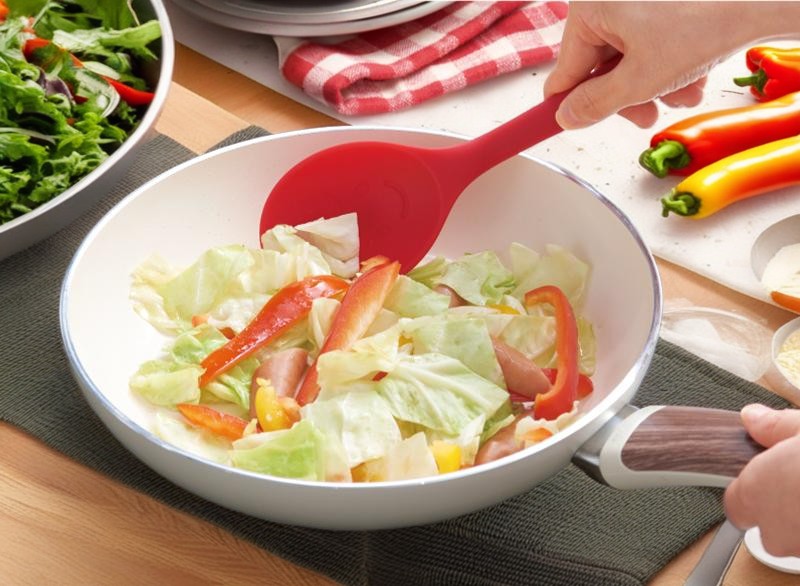
Why Silicone Cooking Utensils Matter in the Kitchen
Silicone cooking utensils have become common in home kitchens because they solve a practical problem: they are gentle on cookware while remaining useful for stirring, serving, and everyday meal preparation. The original article highlighted colorful silicone spoons, including a charming smile silicone spoon and a coral silicone cooking spoon, as examples of tools that combine a playful look with daily cooking function. This guide expands that idea into practical selection and care advice for anyone considering silicone spoons or similar kitchen utensils.
Silicone tools are often chosen for use with nonstick cookware, including ceramic-coated pans, because they are less likely to scratch delicate cooking surfaces than metal utensils. They can also be lightweight, comfortable to hold, and easy to store when designed with features such as a hanging loop. However, buyers should still check product details before purchasing, because heat ratings, dishwasher guidance, handle construction, and food-contact information can vary by product and supplier.
Key Takeaways
- Silicone utensils are useful for nonstick and ceramic-coated cookware because they help reduce surface scratching.
- Choose tools based on the task: spoons for stirring and serving, spatulas for turning, and ladles for soups or sauces.
- Do not assume every silicone utensil has the same heat resistance; check the stated heat rating and use instructions.
- Look for practical details such as grip comfort, edge thickness, hanging storage, and easy cleaning.
Why Silicone Works Well With Nonstick Cookware
One of the main reasons cooks choose silicone utensils is cookware protection. Metal spoons, forks, and turners can mark or scratch nonstick surfaces. Wood is gentler but can absorb stains and odors if not cared for properly. Silicone sits in a useful middle ground: it is soft enough to be cookware-friendly, yet firm enough for many everyday cooking jobs.
For ceramic-coated pans and other nonstick cookware, a silicone spoon can help stir sauces, fold ingredients, or serve food without dragging a hard edge across the cooking surface. This does not mean cookware becomes impossible to damage. Pressing too hard, cutting in the pan, or using damaged utensils can still create wear. But for routine stirring and serving, silicone is a sensible option.
Common Benefits of Silicone Cooking Utensils
The appeal of silicone utensils is not only about surface protection. Many cooks like them because they are lightweight and easy to handle during longer cooking tasks. A spoon with an ergonomic handle can feel more comfortable when stirring soup, sauce, porridge, or sautéed vegetables. A hanging loop can also make storage simpler in small kitchens where drawer space is limited.
The original article also mentioned colorful designs and an embossed smiley detail. These features do not change cooking performance, but they can help utensils feel more personal and easy to identify in a shared kitchen. Bright colors can also make it easier to find the right spoon quickly in a drawer or utensil holder.
Heat resistance is another frequently discussed benefit, but it should be handled carefully. Silicone is widely used for kitchen tools because it can tolerate cooking environments better than many plastics. Still, the exact safe temperature range depends on the product. Before leaving a utensil near a pan edge, resting it on hot cookware, or using it for high-heat cooking, check the product label or supplier information.
How to Choose the Right Silicone Spoon
A good silicone spoon should match the food you cook most often. For sauces and soups, a spoon with a rounded bowl is useful for stirring and serving. For thicker mixtures, such as batter or mashed vegetables, a firmer head may give better control. If you frequently cook in nonstick pans, inspect the edges of the spoon. Smooth, flexible edges are helpful because they reduce scraping pressure on the coating.
Handle design also matters. Some silicone utensils are one-piece designs, while others combine a silicone head with a separate handle material. The original article referred to ceramic-coated cookware with faux wood handles, but for utensils themselves, buyers should confirm the handle material and how it is joined to the head. Gaps or seams may trap food if they are difficult to clean.
- Check the stated heat rating and whether it applies to the head, handle, or entire utensil.
- Confirm whether the utensil is suitable for nonstick cookware.
- Look for a comfortable handle length for your pan depth and cooking style.
- Inspect the spoon edge for smoothness, flexibility, and thickness.
- Ask whether the utensil can be cleaned in a dishwasher, if that matters to you.
Comparison Checklist for Everyday Buyers
| Selection point | Why it matters | What to check before buying |
|---|---|---|
| Cookware compatibility | Helps protect nonstick and ceramic-coated surfaces | Look for guidance that the utensil is intended for nonstick cookware |
| Heat resistance | Prevents misuse near hot pans or simmering foods | Ask for the stated maximum temperature and use limits |
| Head shape | Affects stirring, scraping, and serving performance | Choose spoon, spatula, ladle, or turner based on cooking tasks |
| Handle comfort | Improves control during longer cooking sessions | Check length, grip shape, and balance in the hand |
| Cleaning design | Reduces food buildup and odor retention | Review seams, joints, and dishwasher guidance |
| Storage feature | Keeps tools accessible in small kitchens | Consider a hanging loop or slim profile for drawers |
Use and Care Tips for Longer Service
Silicone utensils are easy to live with when used correctly. Avoid using them as cutting tools, and do not scrape them against sharp pan edges or knives. If a silicone spoon becomes torn, sticky, cracked, or deeply stained, it may be time to replace it. Damaged surfaces can be harder to clean and less pleasant to use.
When cooking, avoid leaving any utensil resting directly on a hot burner or under a grill element. Even if the silicone head is heat-resistant, the handle or decorative details may have different limits. For tomato sauces, curry, or other strongly colored foods, rinse the spoon soon after use to reduce staining. If odor remains, wash with warm water and mild dish soap, then let the utensil dry fully before storage.
When Color and Design Are Worth Considering
Color is not only decorative. In a busy home kitchen, different colors can help separate utensils by use. For example, one color can be used for savory cooking and another for baking. Families may also prefer cheerful designs, such as the smile detail mentioned in the original article, because they make everyday cooking feel less routine.
However, design should not replace functional checks. A colorful silicone spoon should still have a practical bowl shape, a comfortable handle, a cleanable surface, and clear use guidance. If buying online, review product photos carefully and look for information about size, weight, temperature limits, and cleaning instructions. If those details are missing, ask the seller before ordering.
Practical FAQ
Are silicone utensils safe for nonstick pans?
Silicone utensils are commonly used with nonstick cookware because they are softer than metal and help reduce scratching. Still, always use gentle pressure and follow the cookware maker's care instructions.
Can I leave a silicone spoon in a hot pan?
It is better not to leave any utensil in a hot pan for a long time. Check the stated heat rating and remember that handles, seams, or decorative parts may have different limits from the silicone head.
Do silicone utensils stain?
They can stain when used with strongly colored foods such as tomato sauce, turmeric, or curry. Rinsing soon after use and washing with mild dish soap can help reduce discoloration.
What should I ask a supplier before buying silicone utensils?
Ask for the product's heat rating, food-contact information, cleaning instructions, material details, available colors, packaging options, and whether the design is suitable for nonstick cookware. If purchasing in bulk, also ask about lead time, sampling, and quality checks.
When should I replace a silicone cooking utensil?
Replace it when the head is torn, cracked, sticky, badly deformed, or difficult to clean. A damaged utensil may not perform well and can collect food residue.
