





Why Silicone is the Preferred Choice for Baby Feeding Gear
Choosing baby feeding gear is not only about color or shape. Parents need bowls, plates, spoons, cups and bibs that can handle daily washing, dropped meals, learning hands and sensitive gums. That is why silicone has become a common material in modern baby feeding products. It is flexible, soft to the touch and practical for the messy months when babies move from purees to finger foods.
However, not every silicone product is the same. A good buying decision should consider material information, design, cleaning method, suction performance and age suitability. This guide explains why silicone is popular for baby feeding gear and how to choose it carefully without relying on vague marketing claims.
Key Takeaways
- Silicone is widely used for baby bowls, divided plates, spoons, cups and weaning sets because it is soft, flexible and durable in everyday use.
- Parents should confirm product safety details, including whether the supplier can document food-contact compliance for the market where the item will be sold or used.
- Suction bases, rounded spoon edges and easy-clean shapes can make self-feeding less frustrating.
- Silicone still needs proper care: wash thoroughly, dry fully and inspect regularly for damage.
Why Silicone Works Well for Early Feeding
Early feeding involves spills, bites, throws and repeated cleaning. Compared with rigid materials, silicone has a flexible feel that is more forgiving when a baby bangs a spoon against a tray or presses a bowl with both hands. For parents supporting baby-led weaning, this flexibility can make utensils easier to handle and less intimidating for beginners.
Silicone feeding gear also tends to be lightweight. That matters when packing a diaper bag, preparing food for daycare or setting up meals outside the home. A silicone bowl or spoon can usually withstand ordinary drops better than glass, while feeling softer than many hard plastic alternatives.
Safety Questions Parents Should Ask Before Buying
Many silicone baby products are advertised as suitable for food contact, but parents should look beyond the headline. If a product listing states that it is BPA-free, food grade, dishwasher safe or microwave safe, check whether those statements are supported by clear packaging, instructions or supplier documentation. Avoid assuming that every silicone item has the same formulation or testing history.
Useful questions include:
- Is the product intended specifically for baby feeding and food contact?
- Does the seller provide care instructions for microwave, dishwasher, freezer or sterilizer use?
- Are there small detachable parts that could be unsuitable for younger children?
- Does the product have an odor out of the package, and does it disappear after washing and airing?
- Are age recommendations and warnings clearly shown?
For importers, retailers or private-label buyers, ask the supplier what test reports, material declarations and labeling support can be provided for your target market. Do not rely on generic claims alone.
Comfort for Gums, Teeth and Self-Feeding
Babies often chew spoons, cup rims and plate edges while learning to eat. Silicone’s soft, rubber-like texture can be gentler on gums than metal, glass or rigid plastic. Rounded spoon tips and flexible handles may also help reduce the chance of uncomfortable poking during self-feeding practice.
Design still matters. A spoon that is too deep may be difficult for a baby to clear with the lips. A cup that is too heavy may frustrate a toddler. Divided plates can help separate foods, while shallow bowls can make scooping easier. When selecting a feeding set, match the design to the child’s current stage rather than buying only the largest set available.
Durability and Mealtime Mess Control
One reason parents choose silicone baby bowls and plates is durability. Silicone does not shatter like glass, and it can bend without cracking under normal feeding use. This is helpful when bowls are dropped from high chairs or carried in bags with other baby items.
Many silicone feeding products include suction bases. A good suction base can help keep a bowl or plate in place on smooth high-chair trays and tables. Performance depends on the surface, how clean and dry the base is, and the shape of the product. For best results, press the item down firmly on a flat, non-textured surface before adding food. Suction may be weaker on wood grain, fabric mats or uneven trays.
Comparison: Silicone, Plastic and Glass
| Selection Factor | Silicone Feeding Gear | Plastic Feeding Gear | Glass Feeding Gear |
|---|---|---|---|
| Feel for baby | Soft and flexible, often comfortable for gums | Usually lightweight but more rigid | Hard, smooth and cool to the touch |
| Drop resistance | Handles ordinary drops well | Can crack, scratch or warp depending on quality | Can break or chip if dropped |
| Cleaning | Often easy to rinse; check dishwasher guidance | May stain or hold odors over time | Generally easy to clean but heavier |
| Suction options | Common on baby bowls and plates | Available on some designs | Less common due to weight and rigidity |
| Buying caution | Verify food-contact and heat-use claims | Check material type and BPA-free claims | Inspect for chips and breakage risk |
How to Choose a Silicone Baby Feeding Set
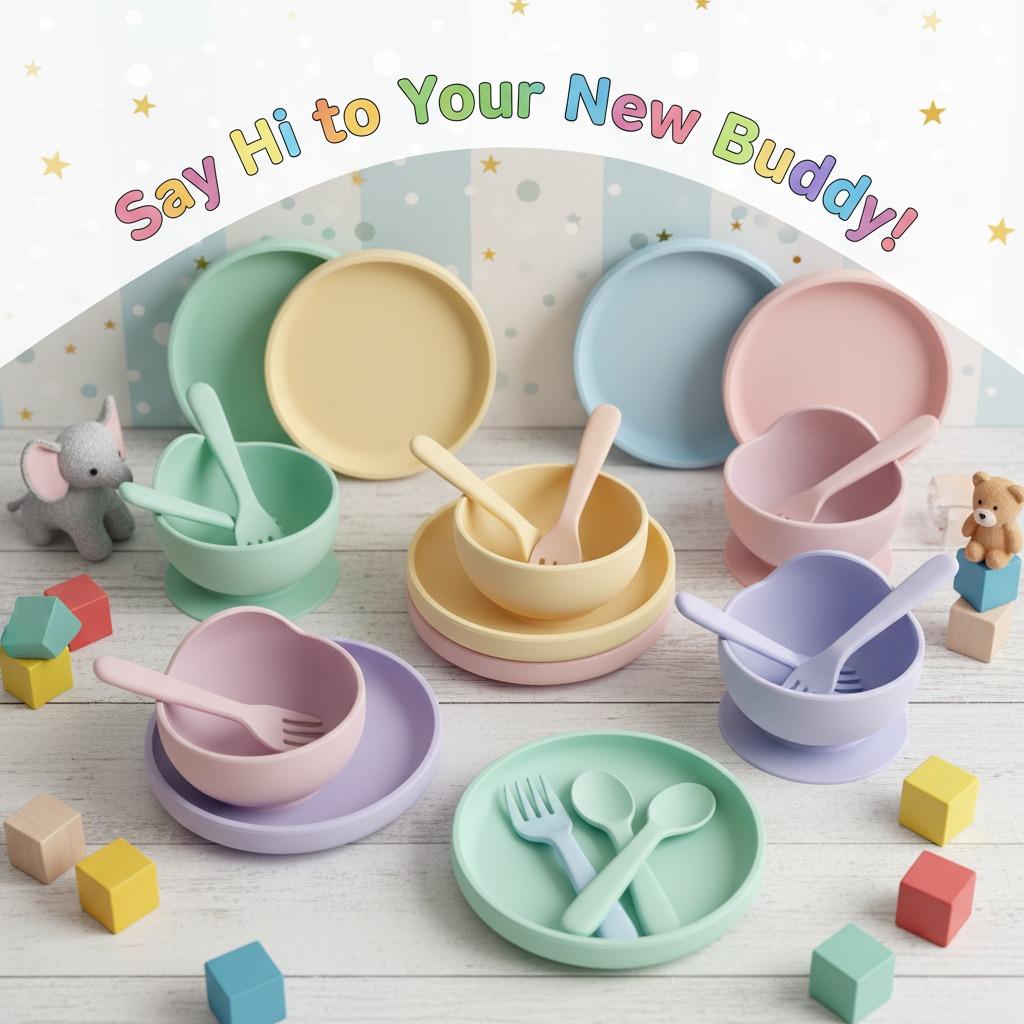
A 24-piece baby feeding set, for example, may include multiple bowls, divided plates, forks and spoons. Sets can be convenient for families who want enough pieces for home, daycare and travel. Still, quantity should not replace quality. Look for shapes that will actually be used every day.
- Check the essentials first: bowls, plates and spoons are usually more useful than novelty accessories.
- Review the surface finish: smooth designs with fewer seams are easier to clean.
- Consider grip and size: handles should suit small hands, and plates should fit the high-chair tray.
- Read the care label: confirm how the item should be washed, dried, stored and heated.
- Inspect regularly: replace any item with tears, deep cuts, loose pieces or persistent odors.
Use and Care Tips for Longer Service
Even durable feeding gear needs routine care. Wash silicone items before first use and after every meal. If food residue sits in corners or under suction bases, it can cause odor or hygiene problems. Use a mild dish soap and a soft sponge unless the product instructions say otherwise.
Tomato sauce, carrot puree and strongly colored foods may temporarily stain some materials. Washing soon after use can reduce this. To prevent trapped moisture, dry pieces fully before stacking them in a drawer. If the product is listed as dishwasher safe, place small utensils where they cannot fall onto heating elements or become trapped.
FAQ: Silicone Baby Feeding Gear
Is silicone better than plastic for baby feeding?
Silicone is often preferred because it is soft, flexible and resistant to ordinary drops. Plastic can still be useful, but parents should check the material type, condition and safety information carefully.
Can silicone baby bowls go in the microwave?
Some silicone feeding products are labeled for microwave use, but not all. Always follow the specific product instructions, and stir heated food thoroughly to avoid hot spots.
Why does a silicone bowl lose suction?
Suction works best on smooth, clean, dry and flat surfaces. Food residue, moisture, textured trays or uneven tables can reduce grip.
When should silicone utensils be replaced?
Replace them if you notice tearing, cracking, sticky texture, loose parts, deep knife marks or odors that remain after proper washing.
Final Thoughts
Silicone baby feeding gear is popular for good reasons: it is soft, practical, durable and well suited to the realities of weaning and toddler meals. The best choice is not simply the brightest set or the largest bundle, but the product that fits your child’s stage, is easy to clean and comes with clear safety and care information. Whether buying one suction bowl or a complete feeding set, careful selection will make daily meals easier for both baby and caregiver.
