




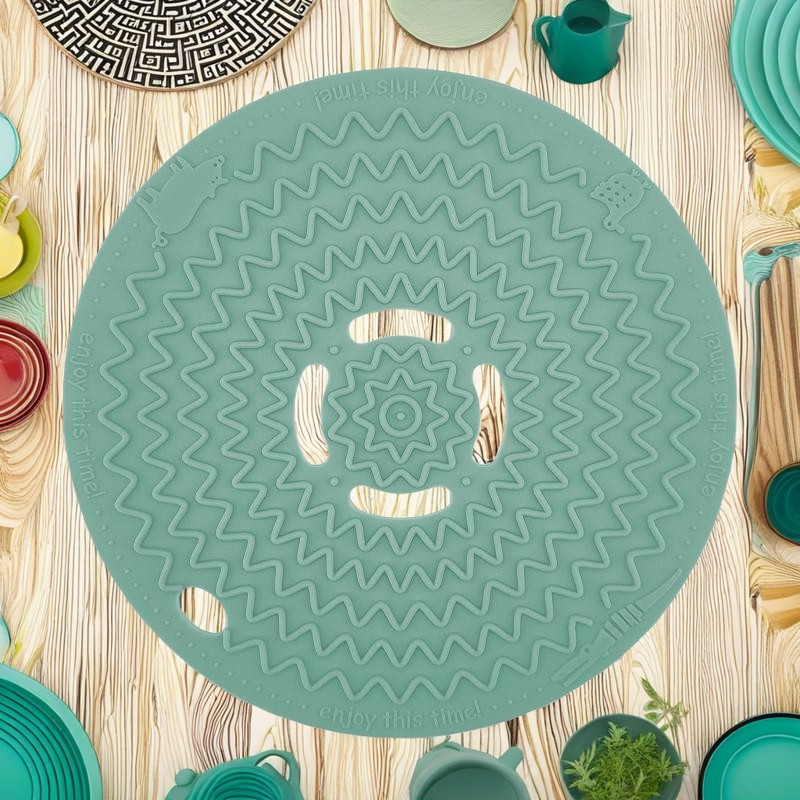
Why Silicone Kitchen Mats Are Essential for Modern Cooking
Silicone kitchen mats have become a practical everyday tool for home cooks, bakers, and busy kitchens that need a clean, reusable surface for common tasks. The original appeal is simple: one flexible mat can help line a baking tray, protect a countertop, provide grip, and simplify cleanup. Instead of treating the mat as a decorative accessory, it is more useful to understand where it performs well, how to choose one carefully, and how to maintain it so it stays reliable over time.
This guide focuses on product selection and use-and-care guidance for consumers. It preserves the key benefits commonly associated with silicone mats, including heat resistance, nonstick performance, easy washing, flexibility, compact storage, and multi-purpose use, while avoiding unsupported claims about exact temperature limits or material grades.
Key Takeaways
- A silicone kitchen mat is useful for baking, counter protection, jar opening, pastry prep, and handling hot cookware with care.
- Look for practical details such as size, surface texture, flexibility, storage needs, and whether the supplier states dishwasher suitability.
- Do not assume all mats have the same heat tolerance; check the product instructions before using one with hot pans or ovens.
- Reusable mats can reduce reliance on disposable liners, but proper cleaning and storage are needed for long service life.
What Is a Silicone Kitchen Mat Used For?
A silicone kitchen mat is a flexible sheet or pad designed for repeated kitchen use. Depending on its thickness, shape, and surface texture, it may be used as a baking tray liner, a countertop protector, a non-slip preparation surface, a trivet for warm or hot cookware, or a grip aid for opening jars. Some households keep several mats in different sizes: a larger mat for pastry rolling and baking prep, and smaller mats for mugs, pots, or daily countertop protection.
The main advantage is versatility. A mat that can move from baking to serving to cleanup reduces the need for several single-purpose items. It is also compact, easy to store, and flexible enough to fit into drawers or narrow cabinet spaces. For small kitchens, that matters as much as performance.
Benefits of Heat-Resistant Silicone Mats
One of the most valued features of a silicone mat is heat resistance. In daily cooking, this can mean placing a mat beneath cookware that has just left the oven or stovetop area, using it as a buffer between a hot container and the worktop, or handling warm cookware more securely. However, heat resistance is not unlimited. Consumers should always read the care label or supplier instructions to confirm the recommended temperature range and approved uses.
When used correctly, a heat-resistant silicone mat can help protect surfaces from direct contact with hot items. It can also make the kitchen workflow smoother because a safe landing area is ready when a tray, pan, or pot needs to be set down quickly. For households with stone, laminate, wood, or composite countertops, this protective function is a strong reason to keep a mat nearby.
Nonstick Performance and Easier Cleanup
Silicone kitchen mats are often valued for their nonstick surface. For baking, this can help cookies, pastries, roasted vegetables, or dough-based foods release more easily from the tray. For prep work, the surface can reduce sticking when working with certain doughs or sticky ingredients, although flouring or oiling may still be needed depending on the recipe.
Cleanup is another everyday benefit. The original article noted that silicone mats can often be rinsed or placed in a dishwasher. Because not every product is identical, check whether the specific mat is marked as dishwasher safe. If it is washed by hand, use warm water, mild dish soap, and a soft sponge. Avoid abrasive pads that may roughen the surface and make future cleaning harder.
One Tool, Many Kitchen Jobs
A multi-purpose silicone mat earns its place by solving small problems throughout the day. Its grip can help stabilize a mixing bowl, hold a cutting board in place, or assist when opening a tight jar lid. A textured or non-slip surface can also provide more control when rolling pastry or kneading small portions of dough. Because it is lightweight, it can be moved from one station to another without interrupting the cooking process.
Here are common ways to use a silicone kitchen mat:
- Line a baking tray to reduce sticking and make cleanup easier.
- Place under warm cookware as a protective layer, following product heat guidance.
- Use as a non-slip surface for bowls, jars, or prep tools.
- Roll pastry, knead dough, or prepare foods on a cleaner work surface.
- Open jars by using the mat as a flexible grip pad.
- Store between pans or trays to help reduce scratching during storage.
Comparison Checklist: How to Choose the Right Mat
Not all silicone mats are suited to the same kitchen tasks. Before buying, compare the details that affect daily use rather than relying only on color or price.
| Selection Point | What to Check | Why It Matters |
|---|---|---|
| Size and shape | Measure baking trays, counters, and storage space | A good fit prevents curling, sliding, or wasted surface area |
| Heat guidance | Read the supplier's stated temperature range and usage limits | Prevents misuse with very hot cookware or oven settings |
| Surface texture | Choose smooth for release or textured for grip | Different textures perform better for different tasks |
| Flexibility | Check whether it bends, rolls, or stores flat | Flexible mats are easier to store in compact kitchens |
| Cleaning method | Confirm hand-wash or dishwasher suitability | Proper cleaning helps extend usable life |
| Edge quality | Look for neat, even edges without weak spots | Good finishing reduces tearing and makes cleaning easier |
Use and Care Tips for Longer Life
Silicone mats are reusable, but they still need sensible care. Let hot cookware cool as recommended by the product instructions, especially if the mat has been exposed to repeated high heat. Wash the mat after contact with oils, sauces, dough, or strongly colored foods. Dry it fully before storing to avoid trapped moisture between surfaces.
- Wash before first use with mild soap and warm water.
- Avoid cutting directly on the mat unless the supplier clearly states it is safe to do so.
- Keep the mat away from open flames and direct contact with heating elements.
- Store flat or loosely rolled to prevent creases.
- Replace the mat if it becomes torn, sticky, badly stained, or difficult to clean.
These simple habits keep the mat more hygienic and help preserve its surface performance. They also reduce the chance of transferring odors or residue to food.
Style, Storage, and Everyday Practicality
Color and appearance can matter, especially if the mat is left on the counter or used during serving. The original article mentioned vibrant, modern colors as one reason silicone mats fit well into contemporary kitchens. Still, style should support function. A bright mat is easier to spot in a drawer, while a neutral mat may blend better with countertops. Choose based on how and where it will be used.
Storage is equally important. A flexible mat that rolls or hangs can work well in a small apartment kitchen, while a larger baking mat may be best stored flat with trays. If the mat is used daily, keep it in an accessible drawer rather than buried with rarely used tools. The more convenient it is, the more likely it will replace disposable liners or extra cleanup steps.
Practical FAQ
Can a silicone kitchen mat go in the oven?
Many silicone mats are used for baking, but you should confirm the specific product's oven guidance and temperature limit before use. Do not assume every mat is oven safe.
Can I use it as a trivet for hot pans?
A heat-resistant silicone mat can often be used beneath hot cookware, but follow the supplier's instructions. Avoid open flames, direct heating elements, and temperatures beyond the stated limit.
Is a silicone mat dishwasher safe?
Some silicone kitchen mats are described as dishwasher safe, while others may recommend hand washing. Check the product care instructions. Hand washing with mild soap is usually a safe routine.
Will food stick to a silicone mat?
Silicone mats are valued for nonstick performance, especially in baking. Very sticky doughs or sugary foods may still need recipe-specific handling, cooling time, or gentle removal.
When should I replace a silicone kitchen mat?
Replace it if it is torn, warped, permanently sticky, difficult to clean, or no longer lies flat enough for safe use. A damaged surface can reduce performance and hygiene.
A silicone kitchen mat is a small tool with broad value. Chosen carefully and maintained well, it can make baking, prep, heat protection, gripping, and cleanup easier without taking up much storage space.
