




Why Some Kitchen Knives Are Clad in Softer Steel
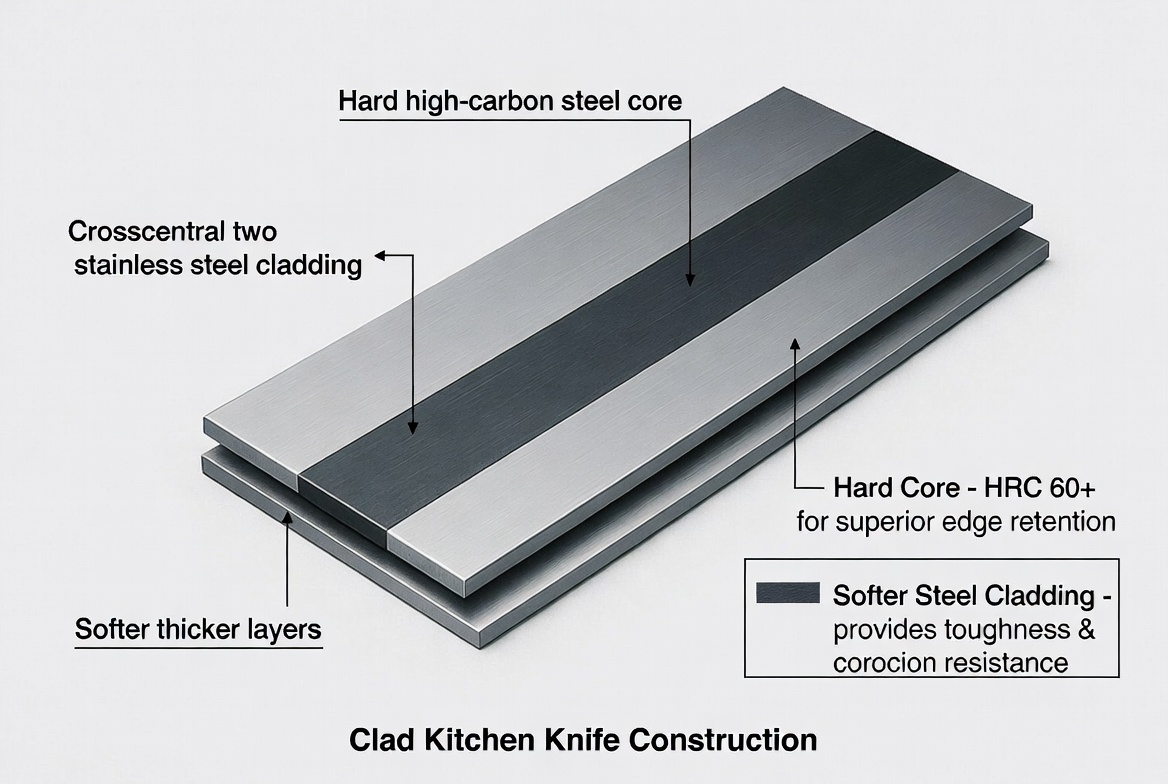
Many cooks notice a faint line running along the side of certain Japanese-style kitchen knives and wonder whether it is decorative or functional. In many cases, that line marks a transition between a hard cutting core and softer steel outer layers. This type of construction is commonly called clad construction, and a three-layer version is often referred to as sanmai.
The basic idea is simple: the steel at the edge is selected for sharpness and edge retention, while the outer layers are chosen to make the blade tougher, easier to maintain, or more forgiving in daily use. For buyers comparing chef knives, santoku knives, gyuto knives, or other kitchen knife styles, understanding cladding helps you choose a blade that fits how you actually cook.
How Clad Knife Construction Works
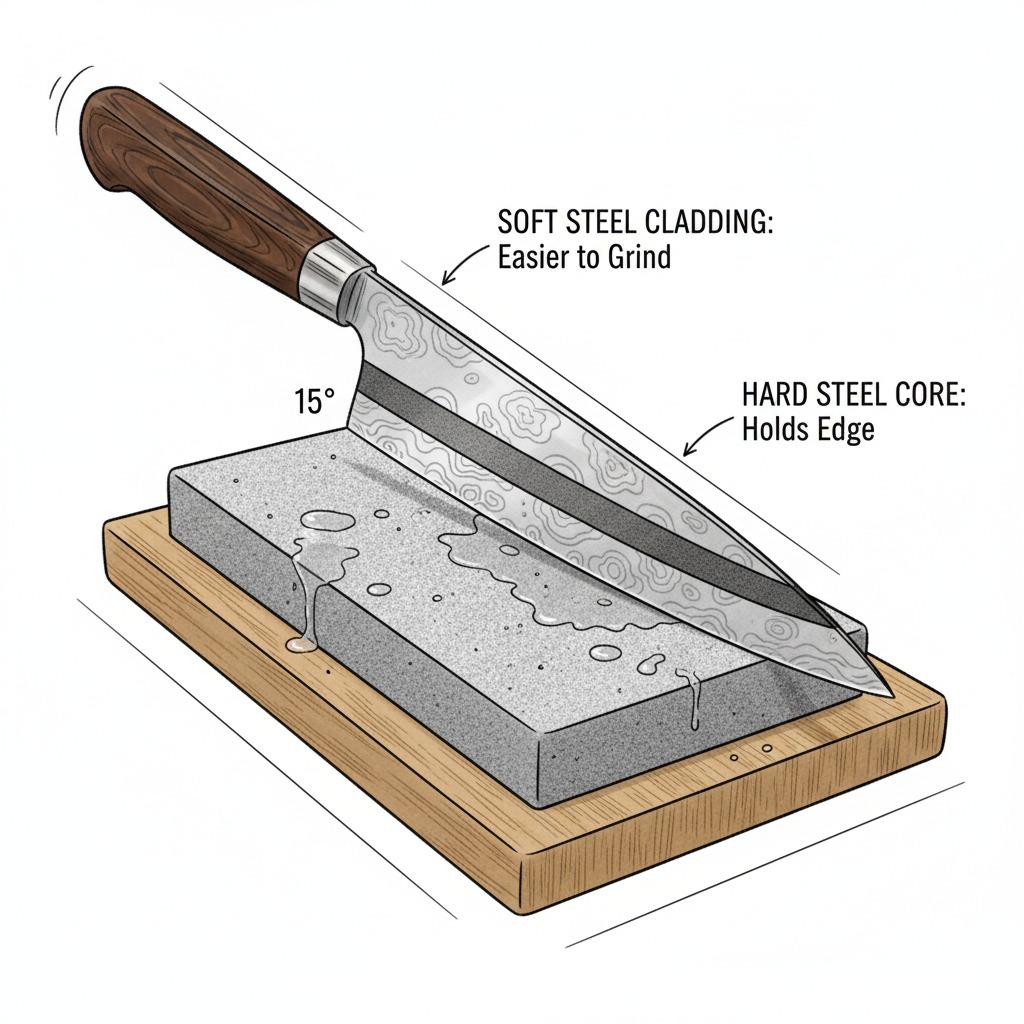
A typical clad kitchen knife is made from multiple layers forged or bonded together. The hard central layer forms the cutting edge. The softer side layers sit on either side of that core and support it through the body of the blade. In the original discussion of this topic, examples of hard core steels included VG-10, Aogami, and White #1 steel, while softer outer layers were described as often being 420-series stainless or mild iron.
Those examples are useful, but they are not universal. Every knife should be checked by its actual material statement. If a product listing does not say what the core and cladding are, ask the supplier before assuming a specific grade, hardness, or corrosion performance.
Why Use Softer Steel on the Outside?
Very hard steel can take a fine edge, but hardness alone does not make a practical kitchen knife. A blade also needs toughness, manageable maintenance, and a feel that suits repetitive prep work. Softer cladding helps in several ways:
- Impact tolerance: Softer outer layers can help absorb some stress when the knife meets a cutting board or dense ingredient.
- Support for the edge: The hard core does the cutting, while the surrounding steel supports the blade structure.
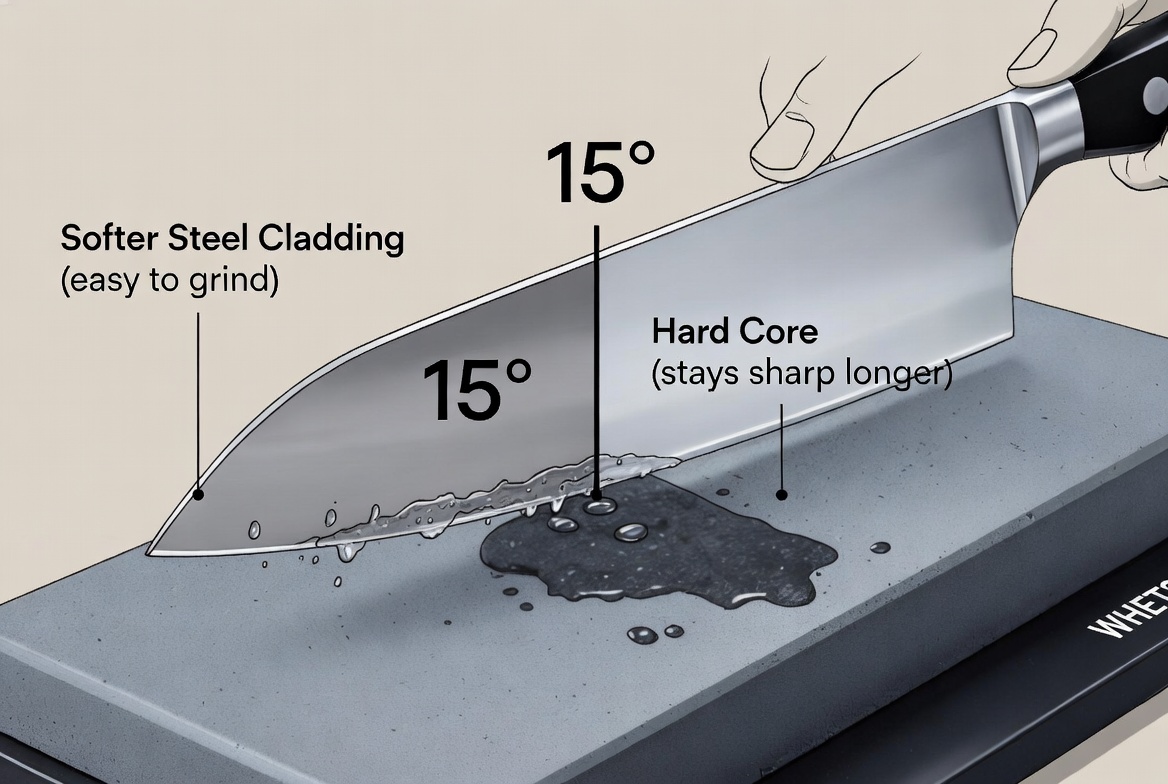
- Sharpening practicality: Softer steel is generally easier to abrade when thinning or maintaining the bevel area.
- Corrosion management: If stainless cladding is used around a reactive core, the sides of the blade may be easier to care for, though the exposed edge still needs attention.
- Material efficiency: High-performance edge steel is concentrated where it matters most: at the cutting edge.
This does not mean every clad knife is better than every monosteel knife. It means the design balances different material properties instead of relying on one steel to do everything.
Clad vs. Monosteel Kitchen Knives
The right choice depends on the cook, the kitchen environment, and the maintenance routine. Use this comparison as a practical checklist rather than a strict ranking.
| Selection Point | Clad Knife with Softer Steel | Monosteel Knife |
|---|---|---|
| Edge strategy | Hard core provides the cutting edge | One steel forms the full blade and edge |
| Toughness | Softer sides may add forgiveness | Depends entirely on the chosen steel and heat treatment |
| Sharpening | Can be easier to thin through softer outer layers | Consistent feel across the blade, but harder steels may take more effort |
| Corrosion care | Varies by cladding and exposed core material | Varies by the single steel used |
| Visual appearance | May show a cladding line or layered pattern | Usually simpler and more uniform |
| Best fit | Cooks who want high edge performance with added support | Cooks who prefer simple construction and predictable maintenance |
What the Cladding Line Tells You
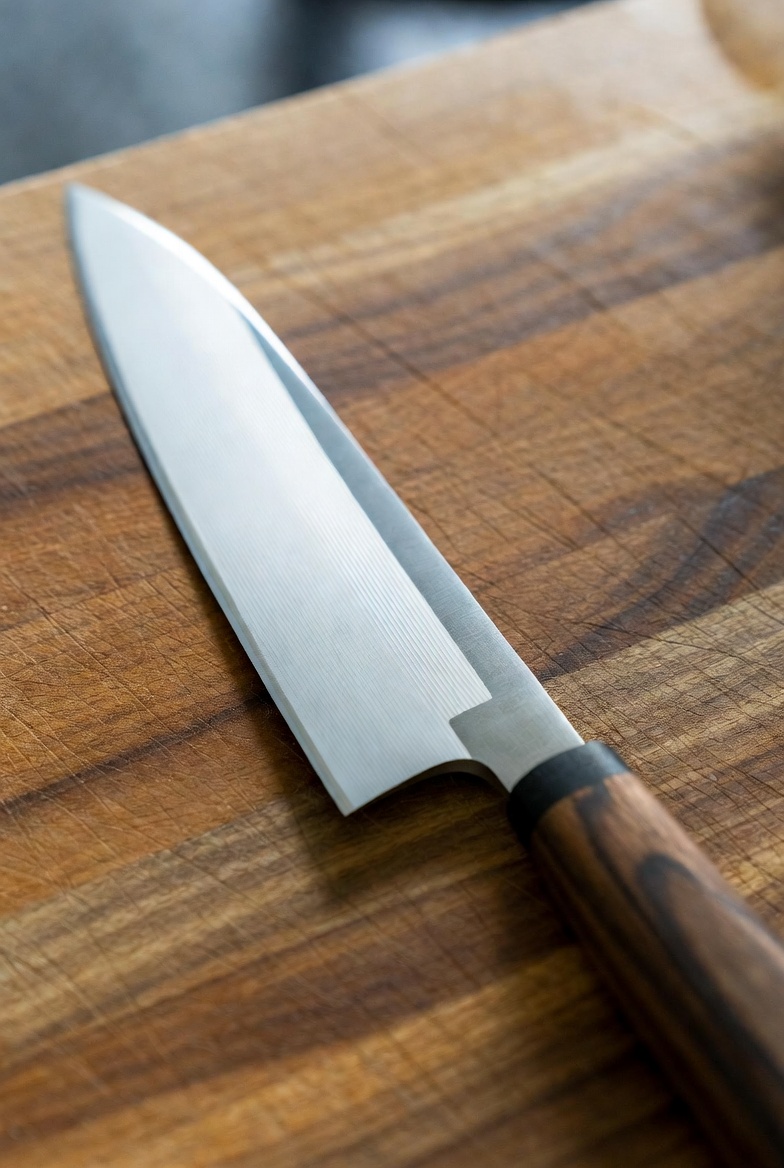
On many clad knives, a visible line appears above the cutting edge. It can look wavy, straight, subtle, or highly contrasting depending on the blade finish. This line is sometimes treated as an aesthetic feature, but it also helps show where the cladding meets the core steel.
Do not judge quality by appearance alone. A dramatic pattern does not automatically mean the edge is better, and a plain blade can still perform very well. More important questions include: Is the edge geometry suitable for your ingredients? Is the handle comfortable? Is the blade easy for you to sharpen? Does the care routine match your kitchen habits?
How to Choose a Clad Kitchen Knife
If you are selecting a clad knife for home or professional prep, start with use case rather than appearance. A thin gyuto may excel at vegetables and boneless proteins, while a santoku can feel compact and controlled for general chopping. Regardless of style, ask or check the following before buying:
- Core and cladding material: What steels are used, and which part of the blade do they form?
- Care requirements: Is any part of the blade reactive, and should it be dried immediately after washing?
- Sharpening angle guidance: Does the supplier recommend a specific edge angle or sharpening method?
- Intended tasks: Is the knife designed for vegetables, boneless meat, fish, or heavier work?
- Handle fit: Does the handle shape suit the grip and volume of prep you perform?
- After-sales support: Are care instructions, replacement guidance, or sharpening recommendations available?
For B2B buyers sourcing knives for retail, hospitality, or private label programs, the same questions should be documented with the supplier. Also ask how materials are described on packaging, whether samples can be reviewed before bulk ordering, and which performance or compliance documents are available for the target market. Avoid assuming MOQ, certifications, test results, or exact specifications unless the supplier provides them in writing.
Use and Care Tips for Clad Knives
Clad construction can make a knife more practical, but it does not make it maintenance-free. Use a wood or suitable synthetic cutting board rather than glass, stone, or ceramic. Wash by hand, dry promptly, and store the knife in a block, sheath, rack, or tray that protects the edge.
Avoid twisting the edge through hard ingredients, scraping the board with the cutting edge, or using a kitchen knife on bones, frozen food, or shells unless the knife is specifically designed for that work. When sharpening, remove metal gradually and keep the bevel even. If you are not confident thinning a clad blade, use a qualified sharpener and explain the knife construction.
Key Takeaways
- Clad kitchen knives often combine a hard cutting core with softer outer steel layers.
- Softer cladding can improve toughness, sharpening practicality, and everyday handling.
- Corrosion resistance depends on the actual materials used, not on cladding alone.
- The visible cladding line is useful, but it should not be the only buying criterion.
- Always confirm material, care, and sharpening details with the product listing or supplier.
FAQ
Is a clad kitchen knife always better than a single-steel knife?
No. Cladding is one design approach. A well-made monosteel knife can be excellent, and a poorly made clad knife can still disappoint. Compare geometry, heat treatment information, handle comfort, and care requirements.
Does softer cladding mean the edge is soft?
Not usually. In clad construction, the cutting edge is formed by the harder core steel. The softer steel is mainly on the sides of the blade.
Will a clad knife rust?
It depends on the steels used. Stainless cladding may reduce maintenance on the blade sides, but an exposed carbon steel core can still discolor or rust if left wet. Hand wash and dry promptly.
Can beginners use clad knives?
Yes, provided the knife matches the user’s tasks and care habits. Beginners should choose a practical size, use proper cutting boards, and learn basic sharpening or honing routines.
What should wholesale buyers ask suppliers?
Ask for the core steel, cladding steel, intended use, care instructions, packaging claims, sample availability, inspection criteria, and any documents needed for your market. Do not rely on visual appearance alone.
