




Fish Scale Kitchen Scissors Supplier Guide for Seafood Prep Buyers
A fish scale kitchen scissors supplier is usually considered when seafood prep teams want one compact tool for scaling, trimming, and light cutting tasks. The need is practical rather than decorative. Whole fish are slippery, prep areas are wet, and tools are used repeatedly during a shift. If scissors slip, bind at the pivot, or fail to grip fish skin, the operator loses time and control.
For sourcing managers, distributors, and product teams, the question is not simply whether the scissors look sharp in a catalog. The better question is whether the design fits seafood work: blade shape, serration, handle comfort, pivot feel, cleanability, and consistency from sample to production. A similar-looking product from another fish scale kitchen scissors manufacturer may perform differently once it is used with wet hands and cold fish.
Key Takeaways
- Fish scale kitchen scissors are best evaluated as seafood prep tools, not generic household scissors.
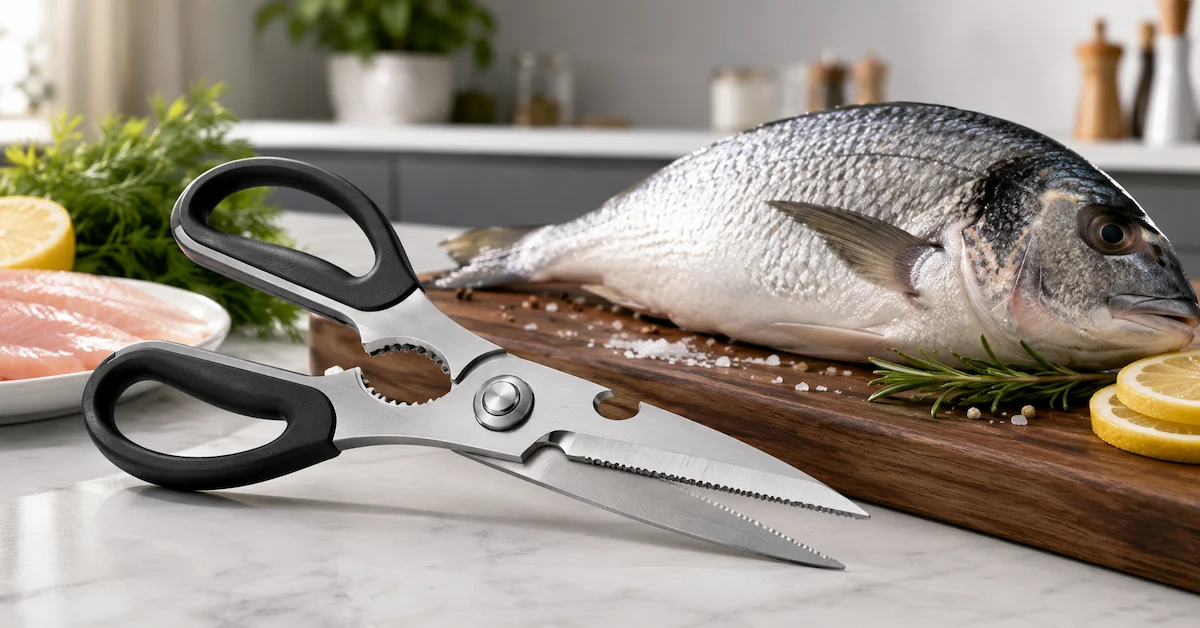
- Visible details such as serrated inner edges, pointed tips, black handle inserts, and a central pivot should be checked against real workflow needs.
- Buyers should confirm material grade, handle material, cleaning guidance, packaging, and production consistency with the supplier.
- Wholesale decisions should include sample testing under wet conditions before finalizing a purchase or private-label plan.
What Fish Scale Kitchen Scissors Are Designed to Do
This product sits within the kitchen scissors category, but its shape suggests a more specialized role. The visible design includes long metal blades, pointed tips, serrated inner edges, black handle inserts, and an integrated pivot. Those features point toward seafood preparation where grip and control matter.
In practical use, buyers may expect this type of tool to help with scaling fish, trimming fins, cutting fish skin, and handling light prep tasks. It should not be assumed to replace a fillet knife, heavy-duty fish shear, or separate scraper in every operation. The right positioning is a compact prep aid for teams that handle whole fish regularly and want a tool that can manage several smaller tasks efficiently.
Comparison Checklist for Buyers
Before comparing quotes, build a checklist that separates visible features from details that must be confirmed. Product photos can show shape, but they cannot prove material grade, sanitation suitability, or production consistency.
| What to Compare | Why It Matters | Question to Ask the Supplier |
|---|---|---|
| Blade geometry | Serrated edges may help grip slippery fish surfaces and scales. | Is the serration consistent across production units? |
| Tip shape | Pointed tips can support detail trimming but require careful handling. | What tasks is the tool intended and not intended for? |
| Pivot assembly | A loose pivot can reduce control; a tight pivot can cause fatigue. | How is pivot tension controlled during manufacturing? |
| Handle inserts | Grip feel is important when hands are wet or gloved. | What material is used for the black inserts? |
| Metal specification | A stainless-steel appearance is not the same as a confirmed grade. | What is the actual material specification? |
| Cleaning guidance | Seafood prep requires reliable cleaning routines. | What cleaning method does the supplier recommend? |
How the Design Supports Seafood Prep
The serrated inner edges are one of the most relevant visible features. Smooth blades can slide on wet skin, especially when fish are cold. Serration can add bite and improve control during scaling or trimming. That does not guarantee performance in every case, but it is a useful design signal for seafood work.
The pointed tips also matter. They may help with detail work such as fin trimming or starting cuts in tighter areas. However, buyers should be realistic about limits. This profile appears more suitable for seafood prep than for heavy bone cutting. If your operation regularly processes large fish or tough materials, ask whether a heavier companion tool is recommended.
Handle layout is another practical factor. Oval finger loops and black inserts suggest attention to grip and hand placement. In real use, the question is whether the scissors remain comfortable after repeated opening and closing. Sample testing should include wet hands or gloves, not only dry bench inspection.
Where This Tool Fits Best
Fish scale kitchen scissors are most relevant for seafood counters, restaurant prep rooms, fish markets, retail kitchenware lines, and home kitchens that prepare whole fish. For foodservice teams, the benefit is control during repeated small tasks. For retailers, the appeal is a clearly defined use case that customers can understand.
Still, the tool should be matched to the buyer’s environment. A high-volume seafood department may care most about durability, easy cleaning, and repeatable supply. A retail brand may also consider packaging, labeling, instructions, and how the product is explained to end users. A home cook may prioritize comfort, storage, and simple care guidance.
Supplier Questions for Wholesale and OEM Projects
When sourcing from a fish scale kitchen scissors supplier, ask practical questions before discussing branding or packaging. Similar products can differ in steel specification, pivot quality, handle material, and finishing. These differences affect the user experience more than small visual changes.
- What is the confirmed blade and body material specification?
- Are the black handle inserts plastic, rubberized material, or another material?
- Is the pivot riveted, screwed, adjustable, or fixed?
- What cleaning and drying method is recommended after seafood use?
- Can the supplier provide pre-production samples for approval?
- How are finished products inspected for blade alignment and pivot movement?
- What packaging, labeling, and carton options are available for wholesale orders?
- For private label, which elements can actually be customized?
Avoid assuming that a supplier can change handle color, add branding, alter packaging, or meet a particular compliance requirement unless it is confirmed in writing. If a certification, test report, or material declaration is important for your market, request the document rather than relying on general claims.
Common Buying Mistakes to Avoid
The first mistake is treating all kitchen scissors as interchangeable. General household shears may not give enough grip for fish scales, while a specialized seafood tool may not be ideal for delicate household tasks. Define the main job before comparing products.
The second mistake is judging by finish alone. A bright metal surface can look professional, but buyers still need to verify the material specification and corrosion-related care guidance. Seafood use exposes tools to water, salt, and repeated cleaning, so assumptions are risky.
The third mistake is skipping workflow testing. A sample that feels acceptable in an office may feel different after several rounds of scaling, rinsing, trimming, and reopening with wet hands. For bulk orders, test the tool as closely as possible to the way it will actually be used.
Use and Care Guidance for End Users
End users should rinse the scissors promptly after seafood prep, remove visible residue from the serrated edges and pivot area, and dry the tool before storage. If the supplier provides specific cleaning instructions, follow those first. Do not assume dishwasher suitability unless the supplier has stated it.
Use the scissors for appropriate prep tasks such as scaling support, fin trimming, and light cutting. Avoid twisting the blades through hard materials or using the pointed tips as a lever. Misuse can affect alignment and shorten service life, even on a well-made tool.
Practical FAQ
Are fish scale kitchen scissors only for scaling fish?
No. Based on the visible design, they may also support fin trimming, fish-skin cutting, and light seafood prep. They are best described as a seafood prep scissor rather than a single-purpose scaler.
Can they replace a fillet knife?
No. They can reduce knife use for some small tasks, but a fillet knife remains necessary for proper filleting and precision cuts.
What should wholesale buyers confirm before ordering?
Confirm material specification, handle material, pivot construction, cleaning guidance, packaging details, customization scope, and whether the approved sample will match mass production.
How should a sample be tested?
Test it with wet fish, wet or gloved hands, repeated opening and closing, rinsing, and the actual trimming tasks your team performs. Comfort and control are easier to judge in real use.
A Sensible Next Step
If you are evaluating fish scale kitchen scissors for a seafood operation, retail assortment, or OEM program, begin with a clear use case and a structured sample review. Compare blade grip, pivot feel, handle comfort, cleaning access, and packaging requirements before focusing on price alone.
The right fish scale kitchen scissors supplier should be able to answer practical sourcing questions without overpromising. In seafood prep, dependable handling, confirmed specifications, and consistent supply matter more than broad marketing claims.
