




Garlic Grinder Supplier Guide: What Buyers Should Check
Choosing a garlic grinder supplier is not only about comparing catalog images or unit prices. For retail, foodservice, promotional kitchenware, and private-label programs, the bigger question is whether the tool feels reliable in real kitchen use. A handheld garlic grinder or garlic press-style tool may look simple, but its value depends on small details: hinge movement, pressing force, finish quality, cleaning access, and consistency from one unit to the next.
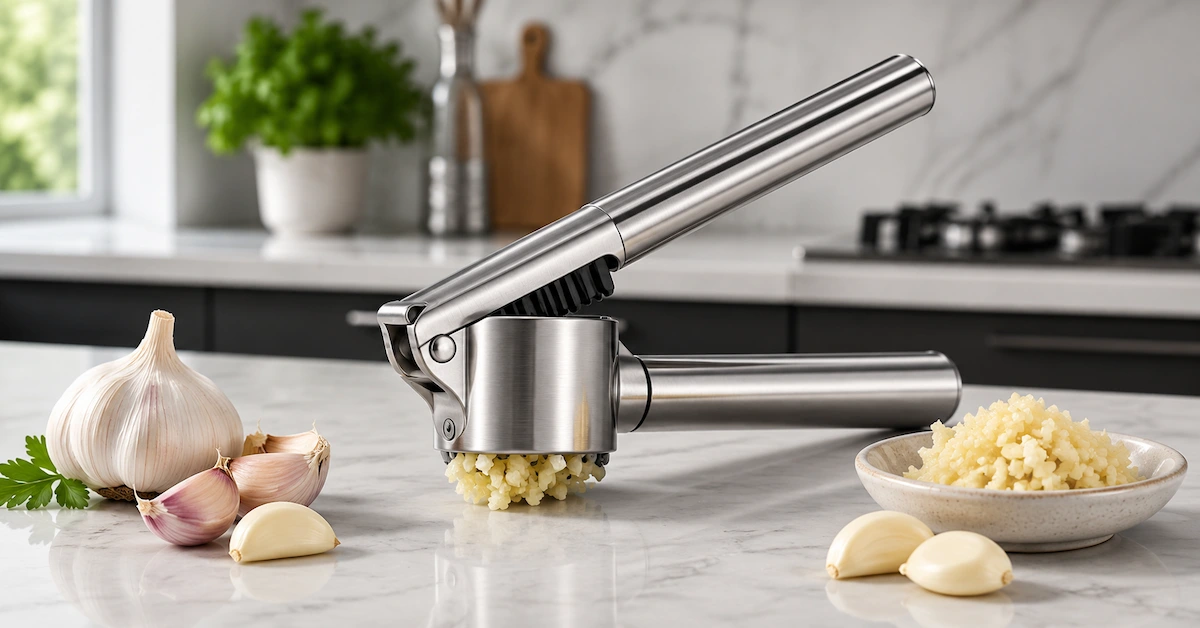
The product shown is a compact hand tool with a metal-looking body, a long handle, a hinged lever, and a front chamber used to crush or mince garlic. Buyers should avoid assuming exact material grade, production method, or performance claims from the image alone. Instead, use the sample stage to confirm whether the construction, cleaning experience, and user comfort match the needs of your sales channel.
Key Takeaways for Buyers
- Do not approve a garlic grinder only from a photo; test real garlic in the sample.
- Check the hinge for smooth movement, alignment, and side-to-side looseness.
- Inspect the chamber and internal ridges for residue traps and cleaning difficulty.
- Ask the supplier to explain materials, finishing steps, assembly checks, and packaging protection.
- Define a reference sample before a wholesale or OEM order so quality expectations are clear.
What This Garlic Grinder Is Designed to Do
A garlic grinder is generally used to crush, press, or mince garlic cloves without chopping by hand. In practice, buyers may see similar tools described as garlic presses, garlic crushers, garlic mincers, or garlic grinders. Those terms are often used loosely in kitchenware sourcing, so the first step is to confirm the actual mechanism and output before creating product listings or packaging copy.
The visible long handle suggests a design intended to multiply hand force. That matters because garlic can be firm, sticky, and uneven in size. If the handle geometry, hinge, and chamber do not work together, users may need excessive pressure or may leave too much garlic inside the tool. For home users, that creates frustration. For prep-heavy kitchens, it slows work and discourages repeat use.
Supplier Capabilities Worth Verifying
A capable garlic grinder manufacturer or supplier should be able to describe how the product is made and controlled without relying only on broad promises. You do not need to assume whether the tool is stamped, machined, welded, polished, or assembled in a specific way unless the supplier confirms it. However, you should ask enough questions to understand how unit-to-unit consistency is managed.
Useful questions include: What materials are used for the body, lever, hinge, and pressing area? What finishing steps are applied after forming or assembly? How is hinge alignment checked? Are sharp edges removed during finishing? How is the product packed to reduce scratches in transit? If branding is required, ask where a logo can be placed and whether the finish can support that process consistently.
For OEM or private-label sourcing, also ask whether the supplier can provide production samples that represent normal batch output. A highly polished show sample can hide issues that appear later in mass production, such as uneven finish, loose movement, or rough internal edges.
Comparison Checklist for Sample Evaluation
| Check Area | What to Look For | Why It Matters |
|---|---|---|
| Hinge and lever | Smooth opening, firm alignment, minimal side play | Affects pressing force, user confidence, and durability perception |
| Pressing chamber | Garlic passes through cleanly; limited trapped residue | Impacts cleaning time and end-user satisfaction |
| Surface finish | No obvious burrs, rough edges, or uneven polishing | Supports safer handling and better retail presentation |
| Handle feel | Comfortable pressure with different clove sizes | Determines whether users will actually keep using the tool |
| Packaging | Protection against scratches, rubbing, and movement | Reduces cosmetic complaints after shipping |
Where Wholesale Orders Often Go Wrong
The most common mistake is buying on appearance alone. A stainless-steel appearance can look attractive in a listing, but buyers should not treat appearance as proof of material grade, corrosion performance, or long-term durability. Confirm these points with the supplier and include them in your purchasing documents where relevant.
Another frequent issue is overlooking cleaning. Crushed garlic is sticky and can collect around ridges, corners, and hinges. During sample testing, rinse the tool immediately after use and again after garlic has been left inside for a short time. This shows whether the chamber can be cleared easily or whether users will need extra tools to remove residue.
Lever feel is also important. A tool may look strong but feel awkward when pressing larger cloves. Test several clove sizes and note whether the handle flexes, the hinge rubs, or garlic squeezes out in unintended areas. These small issues can become return reasons in retail channels.
How to Match the Product to Your Market
For consumer retail, shoppers usually care about convenience, easy cleanup, compact storage, and a cleaner way to handle garlic. Clear product instructions and realistic packaging claims matter. Avoid wording that promises performance the supplier has not verified.
For foodservice or catering buyers, repeated use matters more. The tool should feel stable under frequent pressing and should not require slow cleaning between tasks. If your target customer is a commercial kitchen, ask for more than one sample and test repeated cycles rather than a single demonstration.
For promotional or private-label kitchenware, consistency is often the main concern. A small variation in finish, logo position, or assembly feel may be noticeable when many units are displayed together. Establish a reference sample and ask how the supplier manages inspection before shipment.
Practical Sampling and Quality Control Steps
- Request samples that are described as normal production samples, not only display pieces.
- Test with real garlic, including small and larger cloves.
- Record the pressing feel, amount of residue, and cleaning time.
- Inspect edges, hinge movement, surface marks, and chamber alignment under good light.
- Agree on acceptable finish variation, assembly smoothness, packaging condition, and labeling before ordering.
If the order is for wholesale distribution, consider checking multiple samples from the same batch when possible. One good sample is useful, but several samples reveal whether the supplier can keep tolerances and finishing consistent.
Questions to Ask Before Placing an Order
Before confirming a garlic grinder supplier, ask direct, practical questions: What material grade is used? Which parts are metal and which are not? How is the hinge assembled and inspected? Can the supplier explain the cleaning method recommended for end users? What packaging options are available to protect the surface? Can the supplier provide a reference sample for approval? Are there known areas where garlic residue may collect?
These questions are not excessive. They help prevent unclear expectations, especially when sourcing for retail shelves, ecommerce listings, or private-label packaging.
FAQ for Garlic Grinder Sourcing
Is a garlic grinder the same as a garlic press?
Not always. The names are often used interchangeably, but the mechanism and final garlic texture can differ. Confirm the actual function before ordering or writing product copy.
What is the most important sample test?
Use real garlic and then clean the tool. This reveals pressing efficiency, residue buildup, handle comfort, and whether the chamber is practical for daily use.
Should buyers request material details?
Yes. Do not rely on appearance alone. Ask the supplier to confirm the material used for each key component and provide any documentation they normally support.
How can buyers reduce quality disputes?
Approve a reference sample, define inspection points, and document acceptable finish, hinge movement, packaging condition, and branding placement before production.
Final Sourcing Advice
A good garlic grinder sourcing decision comes down to practical performance, not just price. The right supplier should provide clear answers, realistic samples, and consistent assembly quality. Test the tool in the way customers will actually use it: press garlic, rinse it, inspect it, and repeat. If the product remains comfortable, cleanable, and consistent across samples, it is far easier to build a reliable wholesale, OEM, or retail program around it.
