




How to Choose a Professional Kitchen Tools Manufacturer?
A reliable professional kitchen tools manufacturer provides more than finished products. For kitchenware brands, retailers, wholesalers, and private-label companies, a qualified manufacturer should offer product development support, manufacturing control, customization capability, and consistent quality.
Professional kitchen tools are different from ordinary household products. They are designed for frequent use and require better performance in:
- Durability
- Functionality
- User comfort
- Product consistency
- Manufacturing precision
When sourcing professional kitchen tools, buyers should evaluate:
- Manufacturing experience
- Product categories
- Material capability
- Production processes
- Quality control systems
- OEM/ODM services
- Packaging solutions
Working with a direct manufacturer allows brands to better control product quality, customization, and long-term supply.
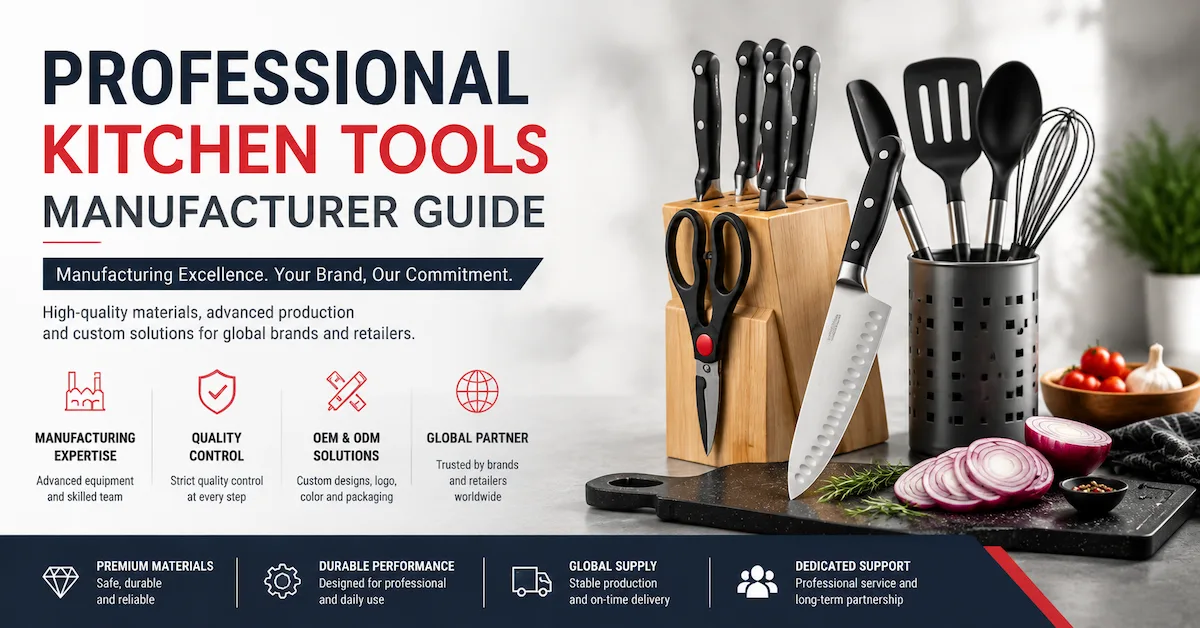
BONET provides kitchenware manufacturing solutions covering kitchen knives, kitchen scissors, utensils, chopping boards, multifunctional kitchen tools, and related products for global brands, retailers, distributors, and business buyers. BONET Products
What Does a Professional Kitchen Tools Manufacturer Do?
A professional kitchen tools manufacturer is responsible for transforming product concepts, designs, or specifications into finished kitchen products.
Unlike a simple trading company, a manufacturer manages key production stages such as:
- Material preparation
- Product forming
- Surface treatment
- Component production
- Assembly
- Quality inspection
- Packaging
For brands and retailers, manufacturing capability directly affects:
| Manufacturing Ability | Business Value |
|---|---|
| Production control | More stable quality |
| Custom development | Unique product solutions |
| Process management | Consistent output |
| Quality inspection | Reduced product risks |
| Packaging support | Better market presentation |
A strong manufacturing partner helps companies develop products that meet customer expectations and market requirements.
Why Brands Choose Professional Kitchen Tools Manufacturers?
Kitchenware brands increasingly need differentiated products instead of generic items.
A professional manufacturer helps brands achieve:
Better Product Control
Direct cooperation allows buyers to communicate:
- Product specifications
- Materials
- Design requirements
- Quality standards
More Customization Options
Manufacturers can support:
- Custom colors
- Product modifications
- Brand logos
- Packaging solutions
- New product development
Stable Supply Capability
For retailers and distributors, consistent supply is essential.
Manufacturing partners help support:
- Repeat orders
- Product consistency
- Market expansion
- Long-term cooperation
Professional Kitchen Tools Categories Manufactured by BONET
Professional kitchen tools cover multiple product categories for different applications.
Kitchen Knives
Kitchen knives are essential products for:
- Food preparation
- Household kitchens
- Professional cooking environments
Important manufacturing factors include:
- Blade quality
- Handle design
- Product balance
- Surface finishing
Kitchen Scissors
Kitchen scissors are widely used for:
- Food preparation
- Kitchen tasks
- Household applications
Manufacturers need to control:
- Blade alignment
- Cutting performance
- Handle comfort
- Assembly precision
Kitchen Utensils
Cooking utensils support:
- Stirring
- Mixing
- Serving
- Cooking processes
Important considerations:
- Material selection
- Ergonomic design
- Heat resistance
- User comfort
Chopping Boards
Chopping boards are important food preparation products.
Buyers should evaluate:
- Material quality
- Surface performance
- Product durability
- Retail presentation
Multifunctional Kitchen Tools
Multifunctional products provide:
- Convenience
- Space efficiency
- Multiple applications
They are suitable for modern kitchenware collections.
BONET's product range includes kitchen knives, scissors, utensils, chopping boards, multifunctional tools, and kitchen gadgets for global business buyers. BONET Kitchenware Products
Manufacturing Processes Behind Professional Kitchen Tools
Professional kitchen tools require controlled manufacturing processes to achieve reliable performance.
Typical production stages include:
Material Preparation
The first stage focuses on selecting suitable materials according to product requirements.
Considerations include:
- Strength
- Appearance
- Durability
- Application requirements
Forming and Processing
Manufacturing may include:
- Stamping
- Cutting
- Injection molding
- Component shaping
These processes determine product structure and consistency.
Surface Treatment
Surface processing improves:
- Appearance
- Smoothness
- Product quality
Processes may include:
- Grinding
- Polishing
Assembly and Inspection
Final assembly ensures:
- Component accuracy
- Product function
- User safety
BONET's manufacturing information describes processes including stamping, straight adjustment, heat treatment, grinding, polishing, injection molding, cleaning, assembly, quality inspection, final cleaning, protection, and packing for related cutting-tool products. BONET Manufacturing Process
Materials Used in Professional Kitchen Tools Manufacturing
Material selection affects product performance, appearance, and market positioning.
BONET supports various material solutions through OEM/ODM services, including stainless steel, silicone, plastic, wood, bamboo, aluminum alloy, and composite materials depending on project requirements. BONET OEM ODM Service
Stainless Steel
Commonly used for:
- Kitchen knives
- Scissors
- Metal kitchen tools
Advantages:
- Strength
- Durability
- Professional appearance
Silicone
Common applications:
- Cooking utensils
- Comfortable grip components
Benefits:
- Soft touch
- Flexible design
- Better user comfort
Plastic and Composite Materials
Used for:
- Handles
- Lightweight components
- Functional parts
Material selection should match:
- Product positioning
- Customer expectations
- Application environment
OEM and Private Label Kitchen Tools Manufacturing
Many brands work with manufacturers to develop private-label kitchen products.
A professional manufacturer can support:
- Product customization
- Logo application
- Color customization
- Packaging design
- Product combinations
- Product improvements
BONET's OEM/ODM services include production based on drawings or samples, material and color customization, logo printing or laser engraving, packaging customization, and product development support. BONET OEM ODM Solutions
OEM vs Private Label Manufacturing
| Model | Suitable For |
|---|---|
| OEM | Buyers with existing designs or specifications |
| Private Label | Brands creating their own product collections |
| ODM | Companies needing product development support |
Choosing the right manufacturing model depends on the brand's goals and product strategy.
Quality Control in Professional Kitchen Tools Manufacturing
Quality control is one of the most important factors when selecting a manufacturer.
Professional buyers should evaluate:
| QC Area | Purpose |
|---|---|
| Material inspection | Confirm product specifications |
| Appearance inspection | Maintain product quality |
| Function testing | Verify performance |
| Assembly checking | Ensure reliability |
| Packaging inspection | Protect products during shipment |
A professional manufacturer should establish clear quality requirements before mass production.
BONET states that its OEM/ODM workflow includes quality inspection covering appearance, function, assembly, packaging, and overall consistency before delivery. BONET OEM ODM Process
Applications of Professional Kitchen Tools
Professional kitchen tools serve different industries and customer groups.
Kitchenware Brands
Need:
- Unique product collections
- Custom designs
- Reliable manufacturing
Retailers
Need:
- Attractive products
- Stable supply
- Retail-ready packaging
Restaurant and Catering Suppliers
Need:
- Durable products
- Consistent quality
- Bulk purchasing support
E-commerce Brands
Need:
- Differentiated products
- Strong product presentation
- Brand customization
Private Label Companies
Need:
- Product development
- Branding support
- Long-term cooperation
How to Select a Professional Kitchen Tools Manufacturer?
Before cooperation, buyers should evaluate several key areas.
Manufacturer Evaluation Checklist
| Question | Importance |
|---|---|
| Is the company a direct manufacturer? | Better production control |
| Does it support OEM/ODM? | Product customization |
| Does it have quality procedures? | Quality stability |
| Can it provide packaging solutions? | Retail preparation |
| Can it support repeat orders? | Long-term partnership |
| Does it understand target markets? | Better product decisions |
The right manufacturer should combine production capability with product understanding.
Common Mistakes When Choosing a Kitchen Tools Manufacturer
Selecting Only Based on Price
Low-cost products may create:
- Quality issues
- Customer complaints
- Additional costs
Ignoring Manufacturing Capability
A supplier may have products but lack:
- Production control
- Customization ability
- Quality management
Not Defining Product Requirements
Buyers should confirm:
- Materials
- Specifications
- Colors
- Packaging
- Quality expectations
Skipping Product Samples
Samples help verify:
- Design
- Function
- Appearance
- Manufacturing accuracy
FAQ
What is a professional kitchen tools manufacturer?
A professional kitchen tools manufacturer produces kitchen products with controlled manufacturing processes, quality management, and customization capabilities.
What products can kitchen tools manufacturers produce?
Manufacturers commonly produce kitchen knives, scissors, utensils, chopping boards, multifunctional tools, and kitchen accessories.
What is the difference between a supplier and a manufacturer?
A manufacturer directly controls production, while a supplier may source products from different factories.
Can manufacturers provide OEM kitchen tools?
Yes. Many manufacturers provide OEM services including product customization, branding, packaging, and product development.
Can brands create private-label kitchen tools?
Yes. Private-label programs allow brands to develop customized kitchen product collections.
What materials are used in professional kitchen tools?
Common materials include stainless steel, silicone, plastic, wood, bamboo, aluminum alloy, and composite materials.
How do buyers evaluate kitchen tools manufacturers?
Buyers should review manufacturing capability, product quality, customization services, quality control, and communication.
Why work with direct kitchen tools manufacturers?
Direct manufacturers can provide better production control, customization flexibility, and consistent product quality.
What quality checks should buyers request?
Buyers should check materials, appearance, function, assembly, packaging, and consistency with approved samples.
Does BONET provide professional kitchen tools manufacturing services?
BONET provides kitchenware manufacturing, OEM/ODM customization, product development support, and packaging solutions for global business buyers. BONET Contact Us
Conclusion
Choosing the right professional kitchen tools manufacturer requires evaluating manufacturing capability, product quality, customization services, material knowledge, and quality control systems.
For global brands, retailers, and distributors, a reliable manufacturer provides more than products. It provides the production foundation needed to build competitive kitchenware collections.
BONET supports worldwide buyers with kitchen knives, scissors, utensils, chopping boards, multifunctional kitchen tools, OEM/ODM services, and customized kitchenware solutions.
Brands developing professional kitchen tool collections can explore BONET's products, manufacturing capabilities, OEM/ODM services, or contact the team to discuss sourcing requirements. BONET Products BONET Contact Us
