





138th Canton Fair Highlights: Bonet Houseware's Success
The 138th Canton Fair brought together international buyers, exporters, factories, and houseware suppliers in one of the world's most active trade environments. For Bonet Houseware Co., Ltd., participation was an opportunity to meet visitors face to face, present houseware tools, and discuss what professional buyers need when evaluating products for retail, distribution, private label, and wholesale programs.
This recap focuses not only on the event itself, but also on practical sourcing lessons. Buyers attending a major trade fair rarely make decisions based on display appearance alone. They compare product range, communication quality, sample handling, packaging options, commercial transparency, and supplier follow-up. Those points are especially important for everyday tools such as scissors, kitchen knives, shears, and can openers, where reliability, user comfort, and consistent production are central to long-term purchasing decisions.
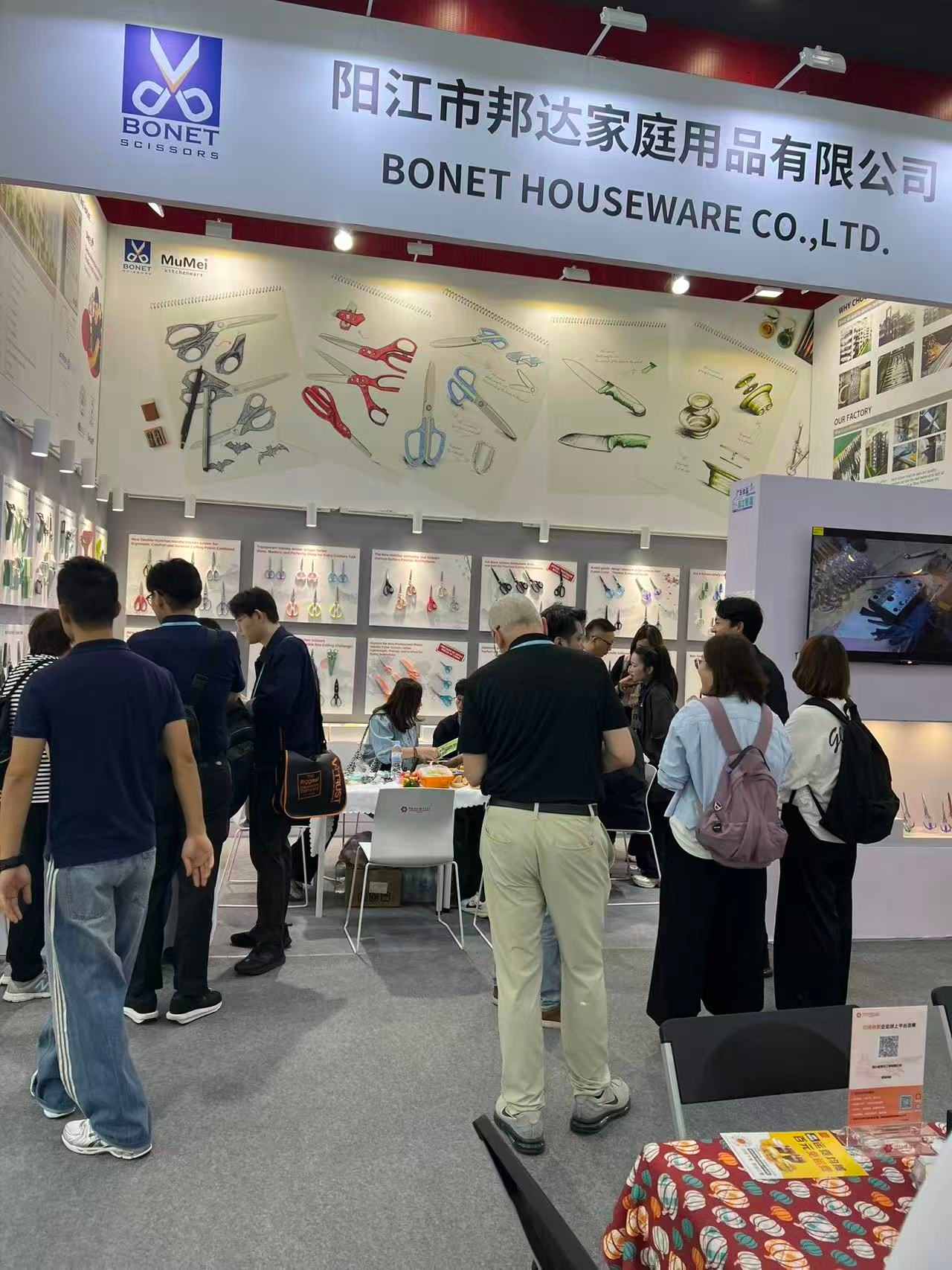
A Successful Showcase at the 138th Canton Fair
The Canton Fair is valuable because it allows buyers to move beyond catalog browsing. They can handle samples, compare finishes, ask about packaging, and understand how a supplier communicates under real business conditions. At the 138th Canton Fair, Bonet Houseware presented a selection of houseware tools and used the booth as a place for direct conversations with new and existing contacts.
For international sourcing teams, this type of in-person meeting can shorten the early evaluation process. A buyer can quickly determine whether a supplier's product focus matches their channel, whether the team understands export discussions, and which details need to be confirmed after the show. A successful exhibition is therefore not just about traffic at the booth; it is about collecting clear requirements, identifying suitable products, and planning accurate follow-up.
Products Visitors Could Review at the Booth
The original fair presentation highlighted several categories, including scissors, kitchen knives, can openers, and shears. These are practical houseware items used in homes, food preparation areas, and general utility settings. Because they are handled frequently, buyers should evaluate them with attention to grip comfort, edge performance, product balance, safety during storage and shipping, and packaging durability.
When reviewing scissors or shears, buyers may ask whether samples are available for cutting tests and whether different handle designs can be compared. For kitchen knives, buyers should verify material information, blade construction, edge retention expectations, care instructions, and packaging requirements before confirming an order. For can openers, it is worth testing turning comfort, cutting smoothness, and cleaning convenience. These checks help reduce misunderstandings between a display sample and a commercial shipment.
What Made the Booth Useful for B2B Buyers
A trade fair booth is most effective when it helps buyers make structured comparisons. Bonet Houseware's participation gave visitors a chance to see multiple tool categories together, which is useful for buyers building a coordinated houseware range. Instead of evaluating one item in isolation, buyers could consider how scissors, knives, shears, and can openers might fit into a broader product line.
For wholesalers and importers, range planning matters. A narrow assortment may be suitable for a focused promotion, while a wider mix may support supermarket, hardware, home goods, or e-commerce channels. Buyers should also discuss labeling, barcode needs, carton marks, retail packaging formats, and whether product information can be adapted for different markets. These points should be confirmed in writing after the fair because booth conversations are often fast and crowded.
Sourcing Checklist for Houseware Tools
Whether a buyer met Bonet Houseware at the Canton Fair or is reviewing suppliers online after the event, a clear checklist can make communication more efficient. The following table summarizes practical questions to ask before moving from interest to sampling or quotation.
| Evaluation Area | What Buyers Should Check | Why It Matters |
|---|---|---|
| Product sample | Ask for current samples and confirm whether they match the quoted product. | Samples help verify handling, finish, function, and packaging before purchase. |
| Material and construction | Request written material details instead of relying on verbal descriptions. | Accurate specifications support quality control and product positioning. |
| Packaging | Confirm retail pack type, carton quantity, labeling, and language needs. | Packaging affects shelf presentation, freight protection, and local compliance review. |
| Customization | Ask which logo, color, handle, or packaging changes are possible. | OEM or private label projects require clear limits and approval steps. |
| Quality control | Discuss inspection methods, acceptable defect criteria, and pre-shipment checks. | Defined standards reduce disputes and improve repeat-order consistency. |
| Commercial terms | Ask about MOQ, lead time, payment terms, and sample fees directly. | These details vary by product and should not be assumed from a fair display. |
How to Follow Up After the Canton Fair
The days after the fair are important. Buyers often return with many brochures, name cards, photos, and sample notes. To avoid confusion, the first follow-up message should be specific. Include the booth conversation context, product category, target market, expected packaging, approximate quantity range, and any timeline. If photos were taken at the booth, attach them and ask the supplier to confirm the item reference.
A practical follow-up process may include:
- Shortlisting the exact items discussed at the booth.
- Requesting a quotation with product description, packaging details, and carton information.
- Confirming sample availability and shipping method.
- Asking for written specifications, care instructions, and labeling options.
- Clarifying whether OEM or private label requirements are feasible.
- Setting a timeline for sample review, quotation revision, and order decision.
This approach helps both sides. Buyers receive clearer information, while the supplier can respond with fewer assumptions. For tools such as scissors and knives, it is especially important to connect the quotation to a specific sample, because small design differences can affect cost, user experience, and market positioning.
Key Takeaways
- The 138th Canton Fair gave Bonet Houseware a platform to present houseware tools and meet international buyers in person.
- Displayed categories included scissors, kitchen knives, can openers, and shears, according to the original fair recap.
- Buyers should verify materials, packaging, sample consistency, customization options, and quality expectations before ordering.
- Post-fair follow-up should be written, specific, and tied to photos, samples, or product references discussed at the booth.
Practical FAQ for Buyers
What should I ask first after meeting a houseware supplier at the Canton Fair?
Start by confirming the exact products you discussed. Send photos or notes from the booth and ask for a quotation that includes product description, packaging, carton details, sample availability, and expected lead time.
Can I assume the display sample and production order will be identical?
No. Always ask the supplier to confirm whether the sample represents current production. If you approve a sample, keep a signed or clearly referenced version for comparison during inspection.
What should buyers check for scissors, shears, and kitchen knives?
Check grip comfort, cutting performance, edge condition, finish, safety, packaging, and written material information. For market-specific requirements, consult your compliance adviser or importer before placing an order.
How should OEM or private label buyers prepare?
Prepare logo files, packaging concepts, color requirements, target price range, estimated order quantity, and destination market details. Then ask the supplier what customization is possible and what costs or timelines may change.
Why is trade fair follow-up so important?
Fair conversations are useful but often brief. Written follow-up turns interest into a clear sourcing file, helping both buyer and supplier confirm specifications, samples, pricing, and next steps accurately.
Looking Forward After the Fair
The value of the 138th Canton Fair continues after the exhibition closes. For Bonet Houseware, the event created opportunities to continue discussions with visitors interested in practical houseware tools. For buyers, it provided a starting point for supplier evaluation, sample review, and product range planning.
The best next step is careful communication. Buyers should ask direct questions, request written details, and compare options based on product suitability rather than booth presentation alone. With clear follow-up, a fair meeting can become a more reliable sourcing conversation and, when requirements align, a long-term business relationship.
