




BBQ Scissors Supplier Guide for Wholesale Kitchen Buyers
Wholesale buyers looking for a BBQ scissors supplier are usually solving a practical problem, not adding a novelty utensil to a catalog. In grill stations, catering kitchens, buffet service, and retail barbecue sets, staff need a tool that can cut cooked meat, trim poultry, portion roast items, and handle quick prep tasks without constantly switching to a knife.
BBQ scissors sit between ordinary kitchen shears and heavier butchery tools. They are not a replacement for a cleaver, boning knife, or dedicated poultry shear, but the right design can save time during service. For sourcing teams, the goal is to judge whether the product is suitable for repeated foodservice use, easy enough to clean, and comfortable enough that staff will actually use it.
Key Takeaways
- BBQ scissors are best evaluated by cutting control, leverage, grip comfort, and cleaning access.
- Do not assume all kitchen scissors are suitable for grilled meat or foodservice stations.
- Ask suppliers about material, pivot design, packaging, care guidance, and intended applications before placing wholesale orders.
- Test samples on the real foods your customers or staff will cut, not only on paper or packaging.
What BBQ Scissors Are Designed to Do
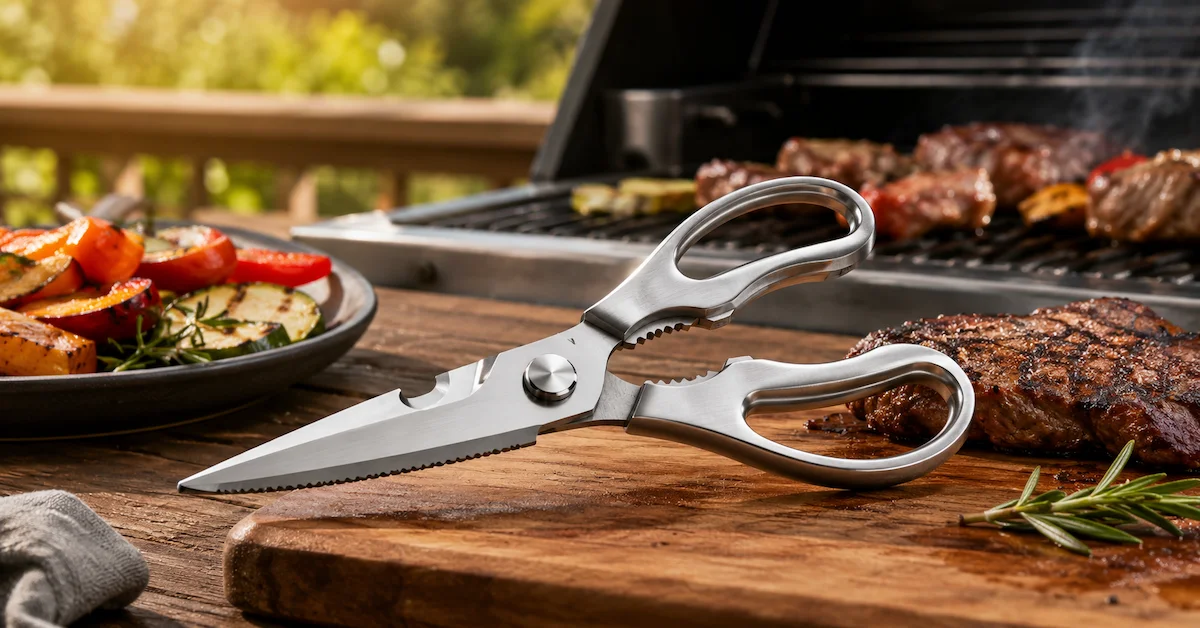
The product shown in the original article is a heavy-duty kitchen and BBQ scissors style tool with a metallic stainless-steel-like construction, long straight blades, serrated inner cutting edges, and oval finger loop handles. These visible features suggest a practical cutting tool for grilled foods and general food prep rather than a decorative barbecue accessory.
The serrated cutting area is especially relevant in barbecue applications. Cooked meat, poultry skin, oily surfaces, and sauced foods can slip under a smooth blade. Serration can help grip the food while cutting, improving control. The longer blade profile may also help with portioning larger pieces, while the oval loops offer a broader hand position than narrow craft-style scissors.
However, buyers should be careful with the term “heavy-duty.” It does not automatically mean the scissors are suitable for frozen food, thick bones, or industrial butchery. Those claims must be confirmed by the supplier with clear product guidance.
Best-Fit Applications for Wholesale Buyers
BBQ scissors can serve several buyer groups, including restaurant suppliers, outdoor cooking retailers, catering equipment distributors, and private-label kitchenware programs. Their value is highest when the end user needs speed and control for small-to-medium cutting tasks.
| Application | Good Fit? | Buyer Notes |
|---|---|---|
| Grilled chicken, steak, or roast portioning | Yes | Test cutting action on cooked foods with realistic temperature and moisture. |
| Catering and buffet service | Yes | Check comfort for repeated use and whether handles work with gloves. |
| Herbs, packaging, and light prep | Usually | Useful as a secondary function, but not the main reason to source BBQ scissors. |
| Frozen food cutting | Usually no | Ask the supplier before using on dense or frozen items. |
| Heavy bone cutting | No | Use a dedicated cleaver, poultry shear, or butchery tool instead. |
Construction Details to Check Before Sourcing
Product photos help, but they are not enough for wholesale purchasing. A buyer should confirm the construction details that affect safety, service life, and customer satisfaction. The visible full-metal design may support durability and simpler wiping, but it does not prove dishwasher safety, steel grade, or corrosion resistance. Those details should come directly from the supplier.
Important questions include:
- What material is used for the blades and handles?
- Is the pivot fixed, adjustable, or designed for disassembly?
- How should the scissors be cleaned around the joint?
- Are the edges serrated along the full blade or only in selected sections?
- What food tasks does the supplier recommend, and what tasks should be avoided?
- What packaging options are available for wholesale, retail, or OEM programs?
These questions are not excessive. They are basic due diligence for any BBQ utensil supplier serving commercial or retail buyers. If a supplier cannot explain the intended use and care method, the product may create avoidable complaints later.
How BBQ Scissors Differ from Standard Kitchen Shears
Standard kitchen shears are often used for herbs, light poultry trimming, twine, and packaging. BBQ scissors are expected to work closer to the grill, carving board, or serving line. That difference changes the buying criteria. Cutting leverage, blade length, handle size, and grip stability become more important than decorative features.
In real service, the user may hold tongs in one hand and scissors in the other. The tool must open and close smoothly, align cleanly, and avoid twisting under moderate pressure. A weak pivot or uncomfortable handle can make the scissors feel unreliable even if the blades look strong.
For retail buyers, this distinction also affects merchandising. BBQ scissors should not be positioned only as ordinary household scissors. They fit better with grilling tools, meat preparation items, outdoor cooking accessories, and practical kitchen prep ranges.
Supplier Evaluation Checklist
When comparing barbecue scissors wholesale options, sourcing teams should combine sample testing with supplier interviews. A low unit price is not useful if the product feels loose, stains easily, traps residue, or receives poor feedback from end users.
- Sample performance: Cut cooked chicken, steak, herbs, and packaging to see where the product performs best.
- Hand comfort: Test with different hand sizes and, for foodservice buyers, with disposable gloves.
- Cleaning access: Inspect the pivot area after cutting sauced or oily foods.
- Edge consistency: Check whether multiple samples cut similarly, not just one display sample.
- Packaging suitability: Confirm whether packaging fits retail display, distributor cartons, or private-label needs.
- Use guidance: Ask the supplier to clearly state recommended and non-recommended applications.
Common Procurement Mistakes
One common mistake is treating all food scissors as interchangeable. A light kitchen shear may work for herbs but disappoint customers who expect a barbecue tool for meat. Another mistake is focusing only on blade length. Long blades can help with reach and leverage, but they do not compensate for a weak pivot or awkward handle geometry.
Buyers should also avoid making unverified claims in product listings. Unless the supplier provides reliable information, do not advertise a specific steel grade, dishwasher-safe status, professional certification, or bone-cutting capability. Clear and conservative product descriptions are better than promises that generate returns.
Practical Buying Advice for OEM and Wholesale Orders
For OEM, private-label, and wholesale projects, begin with the target channel. A restaurant supply program may prioritize durability, cleaning guidance, and carton efficiency. A retail barbecue kit may care more about presentation, user instructions, and compatibility with other grilling tools. An online marketplace seller may need strong product photography and accurate use limits to reduce disputes.
Before confirming an order, ask the supplier about sample availability, branding options, packaging structure, lead time, inspection process, and after-sales handling. If these details are not listed, treat them as questions rather than assumptions. A capable supplier should be able to discuss the product in practical terms: how it cuts, how it should be maintained, and where it fits within a kitchenware or barbecue range.
FAQ for Sourcing Teams
Are BBQ scissors only for grilled meat?
No. They are commonly used for grilled and cooked meat, but they may also handle poultry, herbs, packaging, and light prep tasks. The best use depends on the blade design and supplier guidance.
What makes BBQ scissors different from ordinary kitchen scissors?
They usually emphasize stronger cutting leverage, longer blades, serrated cutting edges, and handles suited to food preparation or service. Buyers should verify each feature with the supplier.
Can BBQ scissors cut bones?
Do not assume they can. Some scissors may handle small cartilage or light poultry tasks, but heavy bone cutting requires a dedicated tool. Ask the supplier for clear use limits.
What should buyers request before ordering?
Request samples, material information, cleaning instructions, packaging details, recommended applications, and any available product specifications. For private-label projects, also ask about branding and carton requirements.
Next Step for Buyers
Choosing a BBQ scissors supplier is less about finding the most aggressive product claim and more about matching the tool to real work. Start with the foods your customers cut, the environment where the scissors will be used, and the cleaning routine after service. Then compare samples for grip comfort, cutting control, pivot stability, and supplier transparency. A well-selected pair of BBQ scissors can become a dependable small tool in the right kitchen, grill station, or retail product line.
