




Can Opener Supplier Guide: How to Choose the Right Manual or Electric Option
Choosing a can opener supplier can look simple at first. The product is small, familiar, and easy to compare in catalog photos. In practice, buyers often find that two openers with similar appearances can perform very differently. One may grip the rim cleanly, another may slip, and another may feel uncomfortable after repeated use.
For retail, wholesale, OEM, or food-service sourcing teams, those differences matter. A can opener is a mechanical kitchen tool, not just a display item. It has to combine leverage, grip, head alignment, turning action, and packaging that protects the working parts. This guide explains how to compare manual and electric options, what to check in samples, and which questions to ask before committing to an order.
What Type of Product Are You Actually Sourcing?
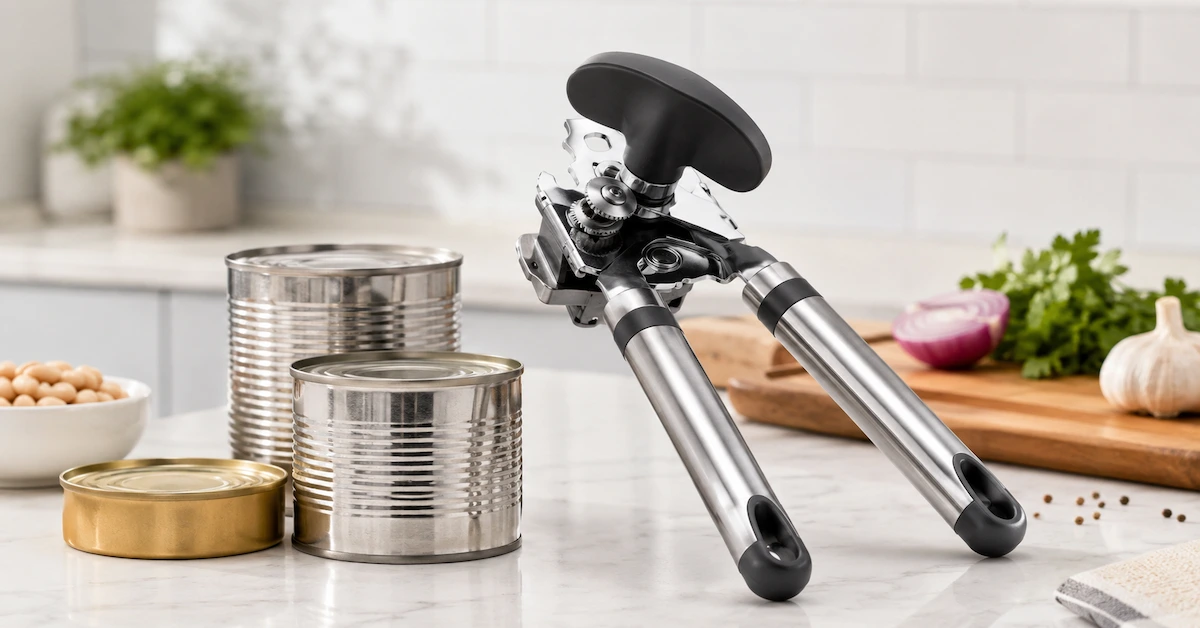
The product shown is a manual can opener with long tubular handles, black grip ends, and a compact cutting head. It appears to be a plier-style hand tool designed to clamp onto a can rim while the user turns the head or knob mechanism. The image suggests a combination of metal body parts and black plastic or rubber-like grip components, but buyers should confirm exact materials with the supplier rather than assume a grade, coating, or finish.
The important sourcing point is that this is a leverage-based tool. Comfort, cutting consistency, and durability depend on how the handles, gears, head, and grips work together. A small difference in head alignment or handle stiffness can change the user experience more than a polished product photo suggests.
Manual vs. Electric Can Opener Supplier: Which Fits Your Channel?
Manual and electric can openers serve different buyer needs. A manual can opener supplier is usually a better match for compact kitchenware assortments, emergency-preparedness kits, catering tool sets, and general household ranges. Manual tools do not need power, are easier to store, and usually have fewer technical failure points.
An electric can opener supplier may be more relevant when the target market values reduced hand effort, accessibility, or countertop convenience. However, electric models introduce additional sourcing questions around motors, power compatibility, switches, stability, cleaning, packaging protection, and after-sales expectations. Buyers should not choose electric only because it appears higher value; the use environment must justify the added complexity.
| Decision Point | Manual Can Opener | Electric Can Opener |
|---|---|---|
| Best fit | Home kitchens, kits, catering, light commercial use | Convenience-focused or accessibility-focused users |
| Power requirement | No power source required | Requires power or batteries, depending on design |
| Main sourcing risk | Head alignment, grip comfort, handle strength | Motor reliability, electrical design, cleaning, controls |
| Sample testing focus | Leverage, smooth turning, rim grip, repeated use | Opening consistency, stability, noise, user safety features |
| Packaging concern | Protect cutting head and finish from scuffs | Protect motor housing, accessories, and instructions |
Build Quality Checks for Manual Can Openers
When evaluating a manual can opener sample, focus on how it works in the hand. The visible design includes long handles that should improve leverage, but handle length alone does not guarantee easy use. Buyers should test the tool on several can sizes and observe whether it locks onto the rim without excessive force.
- Cutting head stability: Check for wobble, loose gears, or uneven movement during turning.
- Handle rigidity: Handles should not flex so much that cutting pressure is lost.
- Grip finish: Black grip ends should feel secure with dry and slightly damp hands.
- Turning action: The knob or turning mechanism should feel controlled, not gritty or inconsistent.
- Surface finish: Inspect for burrs, sharp edges, scuffs, or areas that may trap residue.
- Storage and handling: Confirm that the tool is not awkwardly oversized for the intended retail or user market.
Do not assume a smooth-edge cutting result, stainless steel grade, dishwasher suitability, or corrosion performance unless those details are provided and supported by the supplier. If these features are important for your channel, make them part of the sample review and supplier questionnaire.
Supplier Vetting for Wholesale, OEM, and Private Label Buyers
A simple kitchen gadget can still create sourcing problems if supplier vetting is shallow. For OEM and private label projects, buyers should understand whether the supplier can maintain the same feel, finish, and function across a production run. The first sample may be acceptable, but consistency is the real test.
Ask how the metal body is formed, how the head is assembled, and how grip components are attached. If the supplier offers customization, clarify which elements can actually be changed: packaging, color, logo placement, handle finish, or product structure. Avoid assuming that every visual detail is customizable without tooling, cost, lead-time, or performance implications.
Commercial details such as minimum order quantity, production lead time, packaging options, inspection process, and compliance requirements should be requested directly from the supplier. Do not rely on generic category claims. A reliable sourcing discussion should be specific to the model, market, and intended use.
Sample Testing Before You Approve an Order
Samples should be tested in realistic conditions, not only inspected at a desk. Use several can diameters and can heights if available. Ask multiple people to try the opener because hand size and strength affect perception. For a food-service or catering channel, repeat the opening process enough times to identify fatigue, slipping, or heat spots in the hand.
For electric models, sample testing should also include stability on the counter, lid release, cleaning access, cord or battery arrangement, and how the unit behaves if the can is slightly dented. Buyers should also check the instruction sheet and packaging copy for clarity, especially if the product will be sold through retail channels.
Packaging and Presentation Matter More Than They Seem
Can openers are small, but the cutting head and grips can be damaged or scuffed in transit. Packaging should protect the working mechanism while also matching the sales channel. A wholesale carton for a food-service distributor may prioritize efficient packing and protection. A retail program may need hang cards, blister packaging, cartons, or other presentation formats. Buyers should ask what packaging has been used for similar products and whether drop protection, barcode placement, labeling, or multilingual instructions are required for the target market.
Key Takeaways
- Start with the use case: household, catering, light commercial, accessibility, or convenience.
- Manual can openers are usually simpler to source, but head alignment and grip comfort are critical.
- Electric can openers may suit specific users, but they add technical and after-sales considerations.
- Confirm materials, mechanism type, packaging, and customization options with the supplier.
- Test samples through repeated real use before approving wholesale or OEM production.
Practical FAQ
Is the pictured can opener manual or electric?
It is presented as a manual hand tool with long handles and a compact cutting head. Buyers should confirm the exact mechanism with the supplier.
Can I assume this opener creates a smooth edge?
No. The cut style cannot be confirmed from the image alone. Ask for samples, product documentation, or a clear explanation of the cutting mechanism.
What should I ask a can opener supplier first?
Ask about the opener type, materials, cutting mechanism, sample availability, packaging options, expected use case, and quality-control checks.
Is a manual opener suitable for commercial use?
It may be suitable for catering or light commercial use, but suitability depends on construction, repeated-use performance, and the demands of the environment.
Should price be the main deciding factor?
Price matters, but it should not be reviewed before function. A low-cost opener that slips, flexes, or wears quickly can create returns and damage buyer confidence.
Next Step for Sourcing Teams
Before choosing a can opener supplier, define the target user and sales channel. Then compare manual and electric options against real operating needs. Request samples, test repeated use, inspect packaging, and ask direct questions about materials, assembly, customization, and order terms. For a small kitchen tool, disciplined sourcing is still the best way to reduce complaints and build a dependable product range.
