




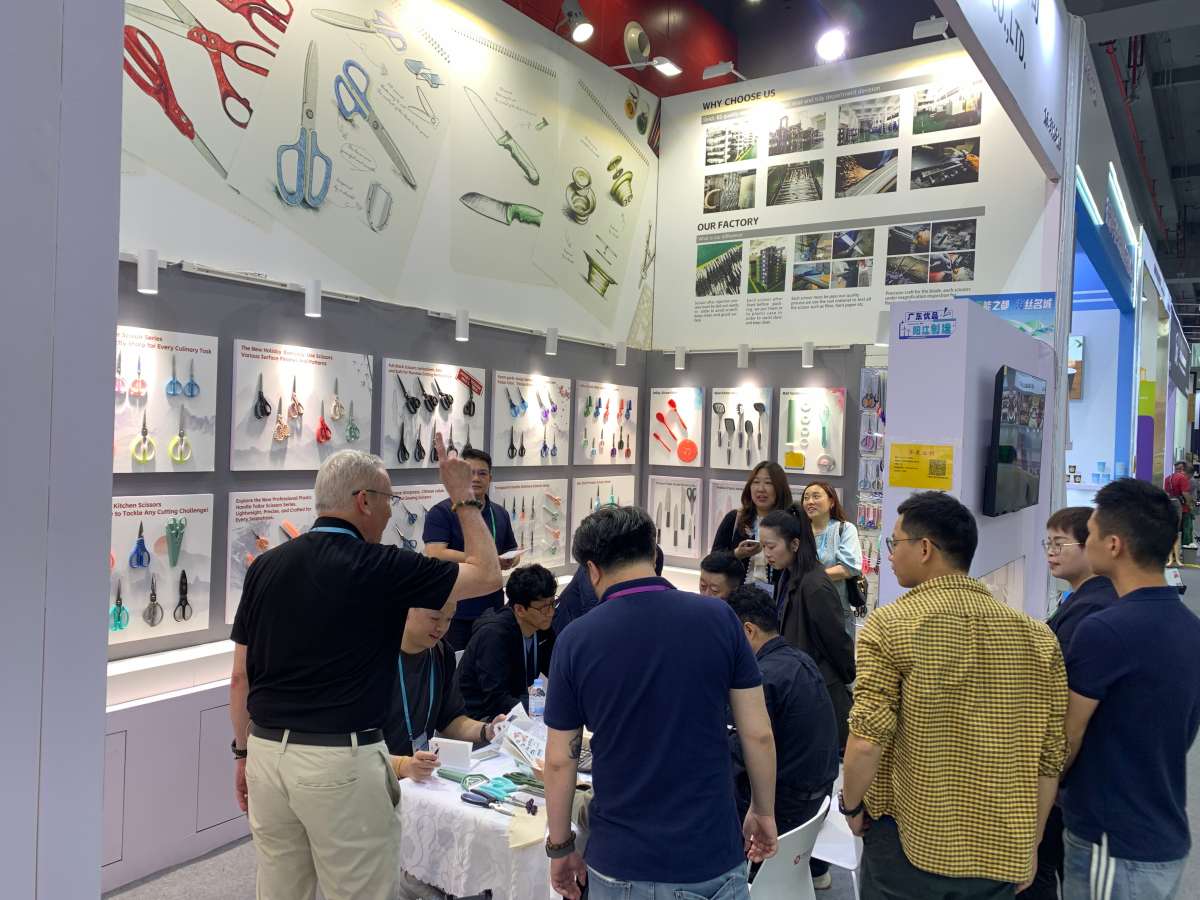
Canton Fair 2025: Achievements and Business Opportunities
Canton Fair 2025 is more than a large trade exhibition. For importers, distributors, retailers, and brand owners, it is a structured opportunity to compare suppliers, inspect product categories in person, and start commercial conversations that can continue long after the exhibition closes. The fair has built its reputation over decades by connecting international buyers with Chinese exporters across a wide range of industries. Its achievements are not only measured by transactions, but also by the business relationships, market access, and product development discussions it enables.
For buyers interested in houseware, kitchen tools, cutlery, or scissors, the event can be especially useful because many products are easier to judge by hand than by catalog alone. Weight, finish, grip comfort, packaging quality, and sample consistency are all details that can be assessed more effectively face to face.
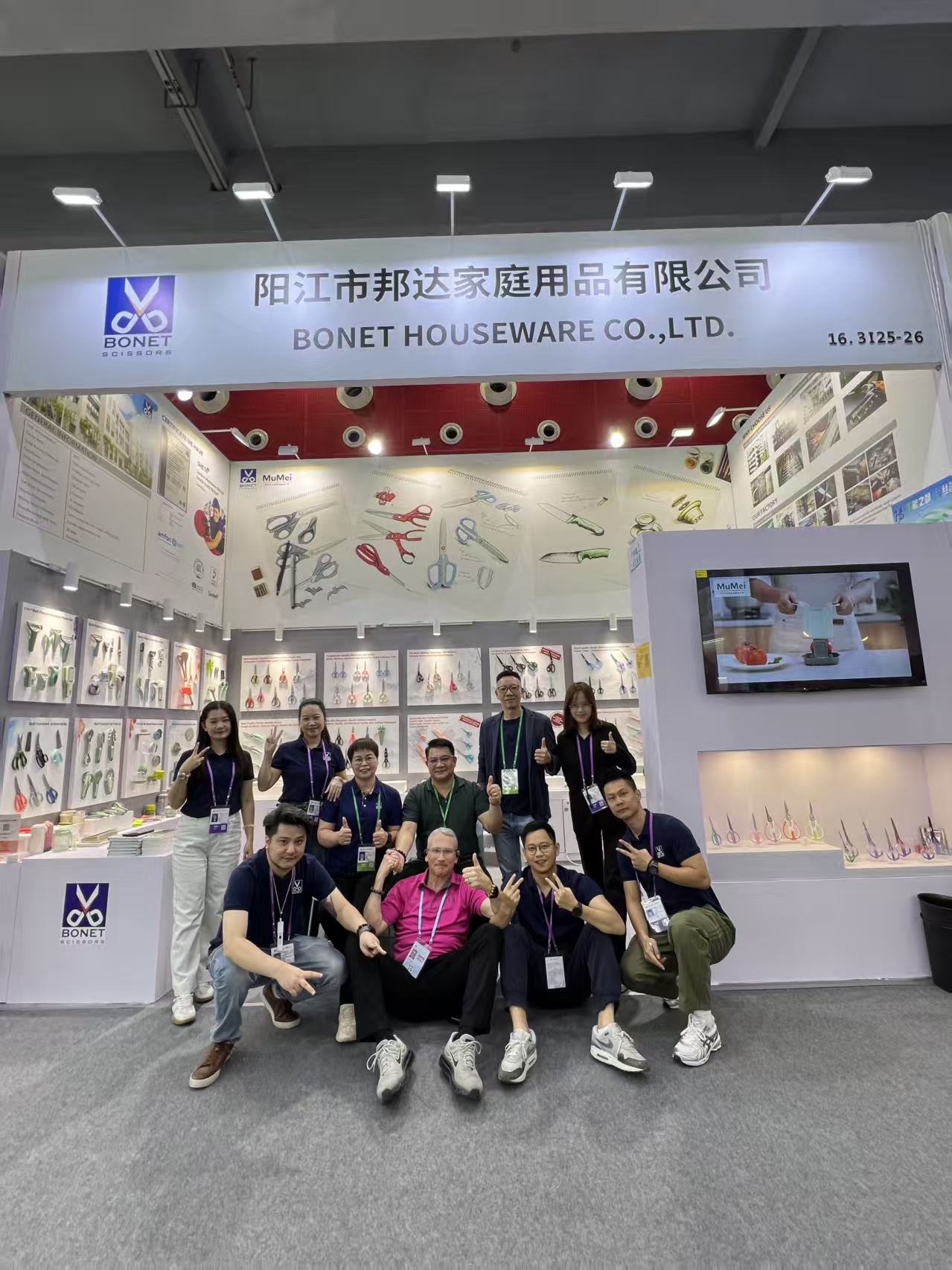
Why Canton Fair 2025 Matters for Global Buyers
The China Import and Export Fair, widely known as the Canton Fair, remains one of the best-known international sourcing events. Its scale allows buyers to explore competing product offers within a short period, while direct booth meetings make it possible to ask detailed questions that are often difficult to resolve through email alone.
For B2B buyers, the main value is efficiency. A well-planned visit can help a sourcing team identify potential suppliers, collect samples, compare quotations, understand packaging options, and discuss private label or OEM requirements. It also provides a real-time view of product trends, from practical kitchenware improvements to changes in retail-ready packaging and merchandising formats.
Achievements Beyond Order Volume
When people discuss Canton Fair achievements, they often focus on deal-making. However, the fair’s broader contribution is the way it supports trust-building in international trade. A buyer can meet sales representatives, review displayed products, and ask how the supplier handles production coordination, inspection, documentation, and after-sales communication.
For suppliers, the fair provides exposure to buyers from different markets. Conversations at a booth can reveal what importers need in terms of materials, labeling, packaging sizes, price positioning, and compliance documentation. Even if a buyer does not place an order immediately, the meeting can become the starting point for sample development, quotation review, and future cooperation.
Sourcing Kitchenware, Cutlery, and Scissors at the Fair
Kitchenware and cutting tools are categories where small differences matter. A pair of scissors, kitchen shears, or household cutting tool may look simple, but buyers should examine usability, blade alignment, handle feel, finishing, and packaging presentation. If a product is intended for wholesale, retail, promotional, or private label use, the evaluation criteria may differ.
Before visiting booths, buyers should prepare a clear product brief. This helps suppliers understand whether the buyer is looking for existing stock designs, customized packaging, logo application, or broader OEM development. Avoid relying only on visual appeal. Ask practical questions about sample lead time, available packaging formats, quality control process, carton details, and whether the supplier can provide documentation required by the buyer’s target market.
- Bring target product photos or reference samples for comparison.
- Prepare estimated annual demand, but avoid unrealistic forecasts.
- Ask which product details can be customized and which cannot.
- Clarify whether samples are available during or after the fair.
- Record booth numbers, contact names, and discussion points immediately.
Supplier Evaluation Checklist
A busy trade fair can create pressure to make quick decisions. A checklist helps buyers compare suppliers consistently instead of relying on memory or booth presentation alone.
| Evaluation Area | What to Check | Questions to Ask |
|---|---|---|
| Product sample | Finish, operation, appearance, packaging condition | Can you provide the same sample after the fair for testing? |
| Commercial terms | MOQ, price basis, payment terms, lead time | What is the MOQ for standard items and customized packaging? |
| Customization | Logo, color, packaging, assortment options | Which changes require tooling, artwork approval, or extra lead time? |
| Quality control | Inspection steps and defect handling | How do you check goods before shipment? |
| Export support | Documents, labeling, carton marks | What export documents can you normally provide? |
| Communication | Response speed and clarity | Who will manage follow-up after the exhibition? |
How to Prepare Before Arriving
Preparation determines whether a fair visit becomes productive or overwhelming. Start by defining your purchasing goal. Are you searching for new suppliers, comparing product categories, negotiating repeat orders, or exploring OEM possibilities? Each goal requires different meeting questions.
Create a shortlist of product types and acceptable price ranges before traveling. For scissors and kitchen tools, note the intended sales channel: supermarket, discount retail, online marketplace, hospitality supply, industrial use, or promotional gift. A supplier can only recommend suitable products when the buyer explains the intended market clearly.
It is also wise to prepare a simple supplier scorecard. Include product match, sample quality, communication, packaging ability, quotation clarity, and follow-up reliability. After visiting many booths, a scorecard can prevent confusion and help your team decide which suppliers deserve deeper review.
What to Discuss at the Booth
At the booth, use your time to move beyond general introductions. Ask for the supplier’s main product categories, current export markets, and experience with your type of order. Do not assume that every exhibitor offers the same services. Some may focus on ready-made wholesale goods, while others may be more suitable for customized projects.
For kitchenware and scissors sourcing, useful questions include: What materials are available for this product? What packaging options have been used for export orders? Can the supplier share a quotation after reviewing quantity and packaging requirements? What is the normal process from sample approval to production? Are third-party inspections accepted if the buyer requires them?
These questions do not require the supplier to make unsupported claims at the booth. Instead, they encourage a transparent conversation about process, capability, and the information needed for a reliable quotation.
Follow-Up After Canton Fair 2025
The most important work often happens after the fair. Within a few days, organize business cards, booth photos, sample notes, and quotation requests. Send suppliers a concise email that repeats the discussed product, quantity, packaging, destination market, and any customization needs. This reduces misunderstanding and helps suppliers respond accurately.
When quotations arrive, compare them carefully. A lower unit price may not include the same packaging, carton strength, inspection expectations, or customization work. Request product photos, sample confirmation, and written clarification of lead time, MOQ, payment terms, and shipment terms before making decisions.
Key Takeaways
- Canton Fair 2025 is valuable because it combines product discovery, supplier meetings, and market insight in one place.
- For houseware, cutlery, and scissors, in-person sample evaluation can reveal details that catalogs may miss.
- Buyers should prepare product briefs, target quantities, packaging expectations, and supplier questions before attending.
- Commercial details such as MOQ, lead time, customization cost, and documentation should be confirmed directly with each supplier.
- Strong follow-up after the fair is essential for turning booth conversations into workable sourcing projects.
FAQ
Is Canton Fair 2025 useful for small and mid-sized buyers?
Yes, it can be useful if buyers arrive with clear product goals and realistic order expectations. Smaller buyers should ask suppliers about MOQ, standard product options, and whether mixed assortments or existing packaging are available.
What should I bring when sourcing scissors or kitchen tools?
Bring reference products, target price ranges, packaging examples, and notes about your sales channel. If safety, labeling, or documentation is required in your market, prepare those questions in advance.
Can I confirm an OEM project at the fair?
You can start the discussion at the fair, but OEM projects usually require drawings, samples, artwork, cost review, and written confirmation after the event. Ask the supplier about the development process and timeline.
How should I compare suppliers after the fair?
Compare product match, sample consistency, quotation details, communication quality, customization ability, and willingness to answer technical and commercial questions. Do not choose only by the lowest price.
What information should I request before placing an order?
Ask for final specifications, packaging details, MOQ, payment terms, lead time, shipment terms, quality control process, and any documents needed for your destination market. Confirm all key points in writing.
