





Classic Kitchen Scissors: Versatility and Durability
Classic kitchen scissors remain one of the most practical cutting tools in home kitchens, food-prep areas, catering operations and retail houseware assortments. Unlike single-purpose gadgets, a good pair of kitchen shears can handle herbs, packaging, vegetables, seafood, poultry preparation and other daily cutting jobs with minimal setup. For buyers comparing products from a kitchen scissors factory, OEM kitchen shears supplier or wholesale houseware source, the goal is not simply to find the lowest price. The better question is whether the scissors are comfortable, safe, durable enough for repeated use and consistent across production batches.
Why Classic Kitchen Scissors Still Matter
Classic kitchen scissors are valued because they shorten many small food-prep tasks. They can snip scallions directly over a bowl, trim excess fat, open stubborn bags, cut parchment paper and portion smaller ingredients without reaching for a knife and board every time. In professional or semi-professional environments, that convenience can support faster prep and cleaner workflow when the tool is used correctly.
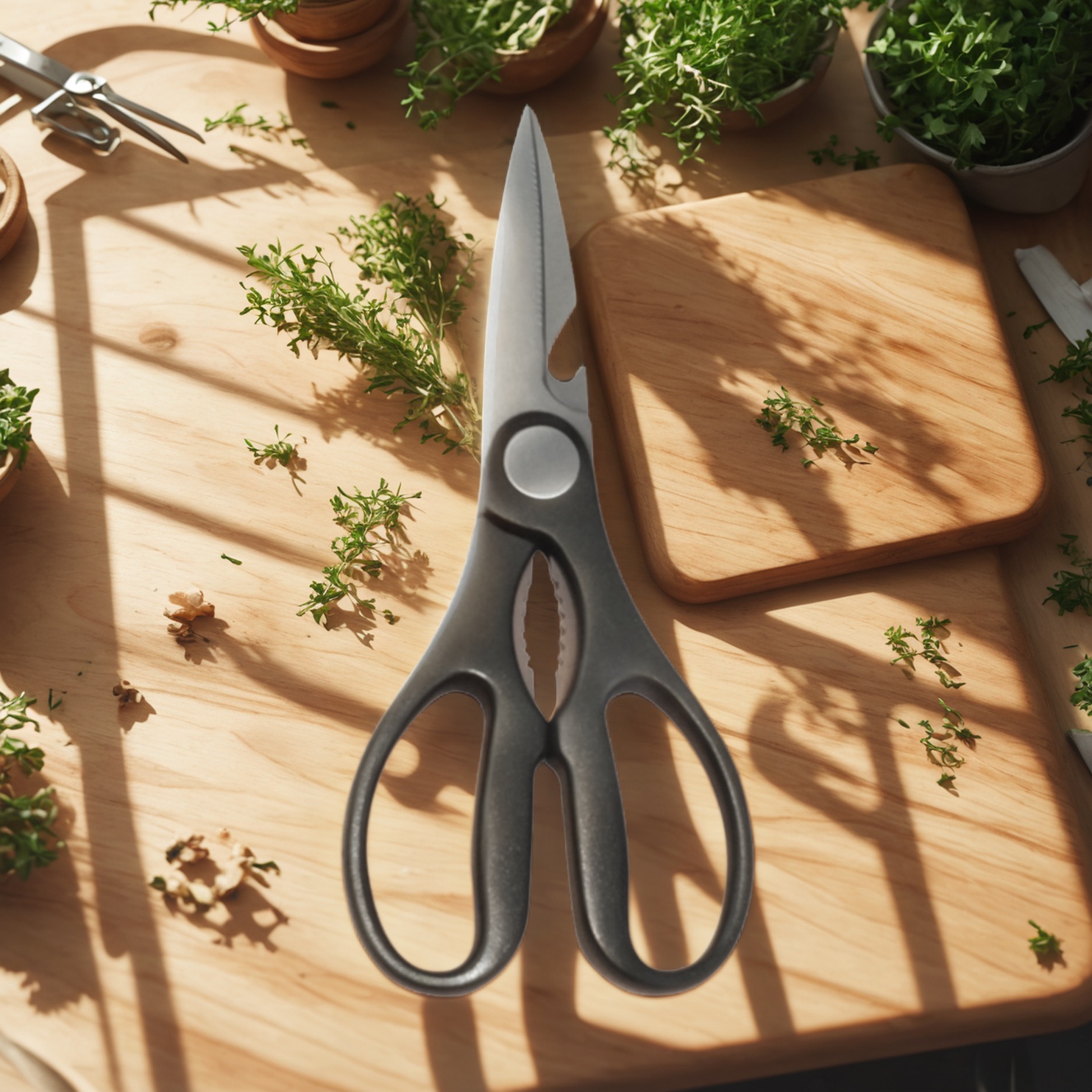
The original product description highlights a familiar format: stainless steel blades, a serrated edge, a robust notch, matte black handles and a built-in bottle opener. These are common design elements buyers often compare when selecting classic kitchen shears. However, sourcing teams should confirm the exact material grade, dimensions, finish, packaging and test expectations directly with the supplier instead of assuming they apply to every production order.
Key Takeaways
- Classic kitchen scissors are useful for many everyday cutting tasks, from herbs and packaging to poultry preparation.
- For B2B sourcing, evaluate blade alignment, handle comfort, safety, packaging and repeatable quality, not only appearance.
- Ask suppliers clear questions about material, customization, samples, inspection standards, lead time and after-sales support.
- Proper washing, drying and storage help maintain cutting performance and reduce premature wear.
Core Features to Evaluate Before Buying
When reviewing samples from a kitchen shears manufacturer, start with the basic cutting experience. Open and close the scissors repeatedly. The movement should feel smooth, not loose or gritty. Blades should meet evenly from pivot to tip, because poor alignment can crush food or slip on packaging instead of cutting cleanly.
Next, examine the serrated edge if the model includes one. A serrated section can help grip slippery foods or tougher materials, but it should not feel rough in a way that tears soft ingredients unnecessarily. The notch mentioned in the original product description may be useful for tougher kitchen tasks, but buyers should clarify intended use and limits with the supplier. Kitchen scissors should not be marketed beyond their proven capability.
Handle design also matters. Matte black handles can offer a clean, simple appearance, but comfort depends on shape, inner edge smoothness, opening size and balance. Ask several users with different hand sizes to test the same sample. A tool that feels acceptable for one quick cut may cause discomfort during longer prep sessions.
B2B Sourcing Checklist for OEM and Wholesale Buyers
Kitchen scissors are often ordered for retail programs, promotional sets, private label houseware lines, hospitality supply or ecommerce assortments. Before confirming an OEM kitchen shears order, create a written checklist so both buyer and supplier understand the same requirements.
| Checkpoint | What to Review | Questions to Ask the Supplier |
|---|---|---|
| Blade material | Stainless steel type, thickness, hardness targets if available | What material grade is used, and can it be verified for this order? |
| Cutting performance | Blade alignment, serration quality, pivot tightness | What sample tests are performed before shipment? |
| Handle comfort | Grip shape, surface feel, hand clearance, left/right-hand usability | Can handle color, material or logo placement be customized? |
| Multifunction details | Notch, bottle opener or other added functions | Which functions are standard, optional or design-dependent? |
| Packaging | Retail card, box, barcode, instructions, carton protection | What packaging files and approvals are required before production? |
| Commercial terms | MOQ, sample fee, lead time, payment, replacement policy | What are the confirmed terms for this exact model and order size? |
How to Compare Samples Fairly
One common sourcing mistake is comparing samples without a consistent process. A premium-looking sample may not perform better than a simpler design. To compare fairly, use the same materials and tasks for every pair: cut fresh herbs, thin plastic packaging, cardboard, parchment and a suitable food item. If poultry or bones are part of your target use case, ask the supplier for recommended limits and test only within safe, realistic conditions.
- Record the model name or sample code before testing.
- Check for visible defects, burrs, uneven edges or handle gaps.
- Cut the same materials with each sample in the same order.
- Note hand comfort after repeated cuts, not just first impressions.
- Wash and dry the scissors, then check for water traps or difficult-to-clean areas.
- Summarize results in a score sheet before discussing price.
This process helps purchasing teams avoid decisions based only on photos or a single attractive feature.
Use and Care Guidance for End Users
Even durable classic kitchen scissors need basic care. End users should wash blades after contact with food, especially meat, seafood or sticky ingredients. Drying is important because moisture left around the pivot can affect long-term performance. If the product is dishwasher safe, that should be confirmed in the supplier’s instructions; if not confirmed, hand washing is the safer general recommendation.
Users should also avoid twisting the scissors while cutting hard items, as twisting can stress the pivot and affect blade alignment. Store the shears in a drawer organizer, sheath or tool rack where the blades are protected. If the scissors become noticeably dull, loose or damaged, continued use can be unsafe and inefficient.
What Retailers Should Communicate on Packaging
Packaging should set realistic expectations. If the scissors include a bottle opener, notch or serrated edge, show these features clearly with accurate illustrations or short text. Avoid vague claims such as “cuts anything” unless supported by clear testing and legal review. More useful packaging explains recommended uses, cleaning steps, safety warnings and whether the item is intended for general kitchen use or specific heavy-duty tasks.
For private label projects, ask the supplier what print area is available for logos, instructions, barcodes and multilingual text. Confirm artwork requirements early to prevent delays. Buyers should also request pre-production packaging samples when packaging quality is important for retail display or ecommerce shipping.
Practical FAQ
Are classic kitchen scissors different from office scissors?
Yes. Kitchen scissors are designed for food-prep and packaging tasks, while office scissors are generally intended for paper and light materials. Kitchen shears often have stronger handles, different blade geometry and added functions such as a notch or bottle opener, depending on the model.
What should OEM buyers confirm before placing an order?
Confirm the exact material, dimensions, blade finish, handle material, logo method, packaging, MOQ, sample approval process, inspection criteria, lead time and after-sales handling. Do not rely only on a catalog photo.
Is stainless steel always rust-proof?
No. Stainless steel is corrosion-resistant, but performance depends on grade, finish, cleaning and storage conditions. Buyers should ask the supplier to identify the material used and provide care instructions suitable for the product.
Can one pair of kitchen scissors replace all knives?
No. Kitchen scissors are excellent for many quick cutting jobs, but knives remain better for slicing, chopping and precision work on a cutting board. The best kitchen setup uses both tools appropriately.
How can a buyer judge supplier reliability?
Review sample consistency, communication speed, documentation clarity, packaging execution and willingness to answer technical questions. For larger programs, discuss inspection arrangements and order-specific quality requirements before production begins.
Final Buying Advice
Classic kitchen scissors are simple tools, but good sourcing requires careful evaluation. Look beyond appearance and compare how each sample cuts, feels, cleans and fits your target market. A dependable kitchen shears supplier should be able to answer practical questions about materials, functions, customization and quality control without exaggeration. For wholesalers, retailers and OEM buyers, that disciplined approach leads to a product that is easier to position, easier to use and less likely to disappoint customers after purchase.
