




How to Compare Kitchen Knife Set Suppliers?
For brands, retailers, and importers, choosing the right kitchen knife set supplier is an important decision that affects product quality, customer satisfaction, and long-term business growth.
Many suppliers can provide similar-looking knife sets, but differences in:
- Material quality
- Manufacturing capability
- Quality control
- Customization ability
- Delivery reliability
can significantly impact the final product performance.
Understanding how to compare kitchen knife set suppliers helps global buyers identify reliable manufacturing partners and reduce sourcing risks.
BONET provides kitchen knife manufacturing and OEM/ODM solutions for global brands, retailers, wholesalers, and private-label companies, offering customized kitchen knife sets and professional production support. BONET Products
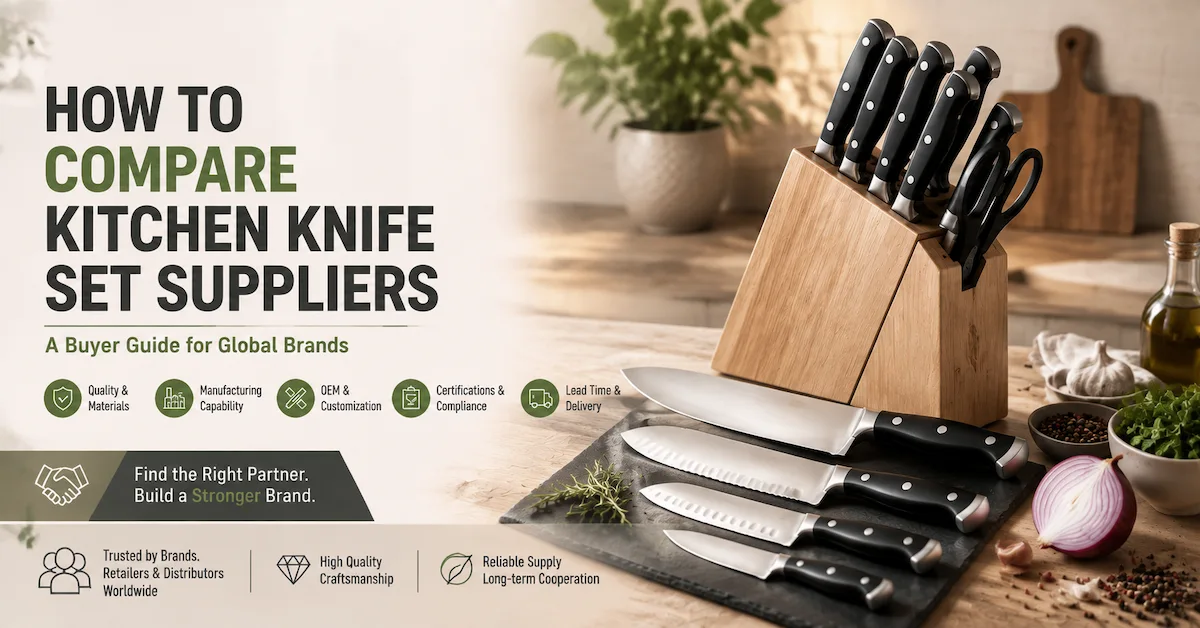
Why Supplier Comparison Matters for Kitchen Knife Buyers
Kitchen knife sets are often sold as complete product collections, which means consistency across multiple products is essential.
A reliable supplier should provide:
- Stable product quality
- Consistent materials
- Professional manufacturing processes
- Flexible customization options
- Reliable delivery schedules
For B2B buyers, selecting a supplier only based on price may lead to problems such as:
- Inconsistent quality
- Higher defect rates
- Customer complaints
- Delayed deliveries
- Limited product development ability
A complete supplier evaluation should consider both product performance and business cooperation capability.
Compare Kitchen Knife Set Suppliers by Manufacturing Capability
Manufacturing capability is one of the most important factors when evaluating suppliers.
Buyers should consider:
Production Experience
Experienced manufacturers usually have better control over:
- Product design
- Material selection
- Production processes
- Quality standards
Important questions:
- How long has the supplier produced kitchen knives?
- Does the factory specialize in cutting tools?
- Can they handle large-volume orders?
Production Equipment and Processes
Professional kitchen knife manufacturing requires:
- Blade forming
- Heat treatment
- Grinding
- Polishing
- Handle assembly
- Quality inspection
A supplier with complete production processes can provide more stable quality.
BONET's manufacturing capabilities include processes such as stamping, heat treatment, grinding, polishing, assembly, quality inspection, cleaning, protection, and packing for cutting-tool products. BONET Manufacturing Process
Evaluate Kitchen Knife Set Materials and Quality
Material selection directly affects knife performance.
When comparing suppliers, buyers should evaluate:
Blade Materials
Common options include:
| Material | Advantages |
|---|---|
| Stainless Steel | Corrosion resistant and easy to maintain |
| Carbon Steel | Excellent sharpness and cutting performance |
| High Alloy Steel | Premium durability and performance |
For most commercial kitchen knife sets, stainless steel remains a popular choice because it balances:
- Durability
- Maintenance
- Cost
- Market acceptance
Handle Materials
The handle influences:
- Comfort
- Safety
- Product appearance
Common materials include:
- PP plastic
- ABS plastic
- TPR rubber
- Composite materials
A good supplier should provide suitable material combinations based on product positioning.
Compare Kitchen Knife Set Suppliers by Quality Control
Quality control separates professional manufacturers from basic suppliers.
Buyers should review:
Incoming Material Inspection
Suppliers should verify:
- Steel specifications
- Handle materials
- Component quality
Production Inspection
Important checks include:
- Blade shape
- Cutting performance
- Handle assembly
- Surface finishing
Final Product Inspection
Before shipment, suppliers should inspect:
- Appearance
- Function
- Packaging
- Quantity accuracy
A reliable quality control system helps reduce:
- Product returns
- Customer complaints
- Market risks
Evaluate OEM and Private Label Capabilities
For brands and retailers, OEM capability is a key supplier comparison factor.
A professional supplier should support:
Product Customization
Options may include:
- Knife designs
- Blade styles
- Handle colors
- Material selection
Branding Solutions
Including:
- Logo engraving
- Custom packaging
- Product sets
- Retail-ready solutions
New Product Development
Experienced suppliers can help transform ideas into market-ready products.
BONET supports OEM/ODM kitchenware projects, including product customization, material selection, packaging solutions, and manufacturing support for global buyers. BONET OEM ODM Service
Compare Kitchen Knife Set Suppliers by Certifications and Compliance
For international buyers, compliance requirements are important.
Suppliers should understand:
- Product safety requirements
- Target market standards
- Testing documentation
Buyers can evaluate:
| Evaluation Item | Why It Matters |
|---|---|
| Material compliance | Product safety |
| Quality documentation | Supplier reliability |
| Testing reports | Market approval |
| Factory management | Production consistency |
Certifications alone do not guarantee product quality, but they can help buyers evaluate supplier professionalism.
Compare MOQ, Lead Time, and Supply Ability
Commercial buyers should also evaluate business terms.
Important factors include:
| Factor | Buyer Concern |
|---|---|
| MOQ | Is the order quantity suitable? |
| Production capacity | Can supplier support demand? |
| Lead time | Can delivery meet schedules? |
| Inventory support | Can supplier handle repeat orders? |
A supplier with strong production planning can support long-term business growth.
Compare Kitchen Knife Set Suppliers by Product Development Support
Beyond manufacturing, strong suppliers can provide product development assistance.
This includes:
- Design suggestions
- Material recommendations
- Sample production
- Packaging improvements
- Market-oriented solutions
For brands entering new markets, supplier expertise can reduce product development time.
Kitchen Knife Set Supplier Comparison Checklist
Before cooperation, buyers can use this checklist:
| Evaluation Area | Questions to Ask |
|---|---|
| Manufacturing | Does the supplier have factory capability? |
| Materials | What blade and handle materials are available? |
| Quality Control | What inspection process is used? |
| Customization | Can they support OEM projects? |
| Delivery | Can they meet production schedules? |
| Communication | Can they provide professional support? |
A complete evaluation helps buyers choose suppliers based on long-term value instead of short-term price.
Common Mistakes When Choosing Kitchen Knife Set Suppliers
Selecting Only the Lowest Price
Low pricing may affect:
- Material quality
- Production consistency
- Product lifespan
Ignoring Manufacturing Experience
A supplier may sell kitchen knives without having strong production capability.
Not Checking Samples
Samples help buyers evaluate:
- Cutting performance
- Appearance
- Comfort
- Overall quality
Overlooking After-Sales Support
Long-term cooperation requires:
- Fast communication
- Problem solving
- Continuous improvement
How BONET Supports Global Kitchen Knife Buyers
BONET focuses on providing reliable kitchenware manufacturing solutions for global business customers.
Capabilities include:
- Kitchen knife production
- Kitchen scissors manufacturing
- OEM/ODM customization
- Product development
- Packaging solutions
For brands, retailers, and distributors, BONET helps create kitchen products that match different markets and customer requirements. BONET About Us
FAQ
How should buyers compare kitchen knife set suppliers?
Buyers should compare suppliers based on manufacturing capability, material quality, quality control, OEM support, certifications, delivery ability, and communication.
What makes a good kitchen knife supplier?
A good supplier should provide reliable quality, professional manufacturing, customization capability, and stable supply support.
Should buyers choose kitchen knife suppliers based only on price?
No. Price should be evaluated together with product quality, manufacturing ability, and long-term cooperation value.
What materials should buyers look for in kitchen knife sets?
Common materials include stainless steel blades and durable handle materials such as PP, ABS, and TPR.
Can kitchen knife suppliers provide private label services?
Yes. Many professional suppliers support logo customization, packaging design, product sets, and OEM development.
How important is quality control when choosing a supplier?
Quality control is essential because it affects product consistency, customer satisfaction, and brand reputation.
What should importers ask kitchen knife manufacturers?
Importers should ask about production capability, materials, MOQ, lead time, quality inspection, and customization options.
Does BONET provide OEM kitchen knife sets?
Yes. BONET provides OEM/ODM kitchen knife solutions, customized designs, manufacturing support, and packaging solutions for global buyers. BONET Contact Us
Conclusion
Knowing how to compare kitchen knife set suppliers helps brands, retailers, and importers make better sourcing decisions.
The best supplier is not always the cheapest option. A reliable kitchen knife partner should provide strong manufacturing capability, consistent quality, suitable materials, customization support, and dependable service.
For businesses looking to develop kitchen knife sets, BONET offers professional kitchenware manufacturing, OEM/ODM solutions, and customized product support to help global brands build competitive product collections. BONET Products BONET Contact Us
