




Experience Innovation at the 128th Canton Fair Booth
The 128th Canton Fair brought together international buyers, trading teams, and manufacturers looking for practical product ideas and reliable supply partners. For Bonet Houseware, the booth was an opportunity to present kitchenware and culinary tools in a setting where buyers could compare design, handling, materials, packaging concepts, and supplier communication face to face.
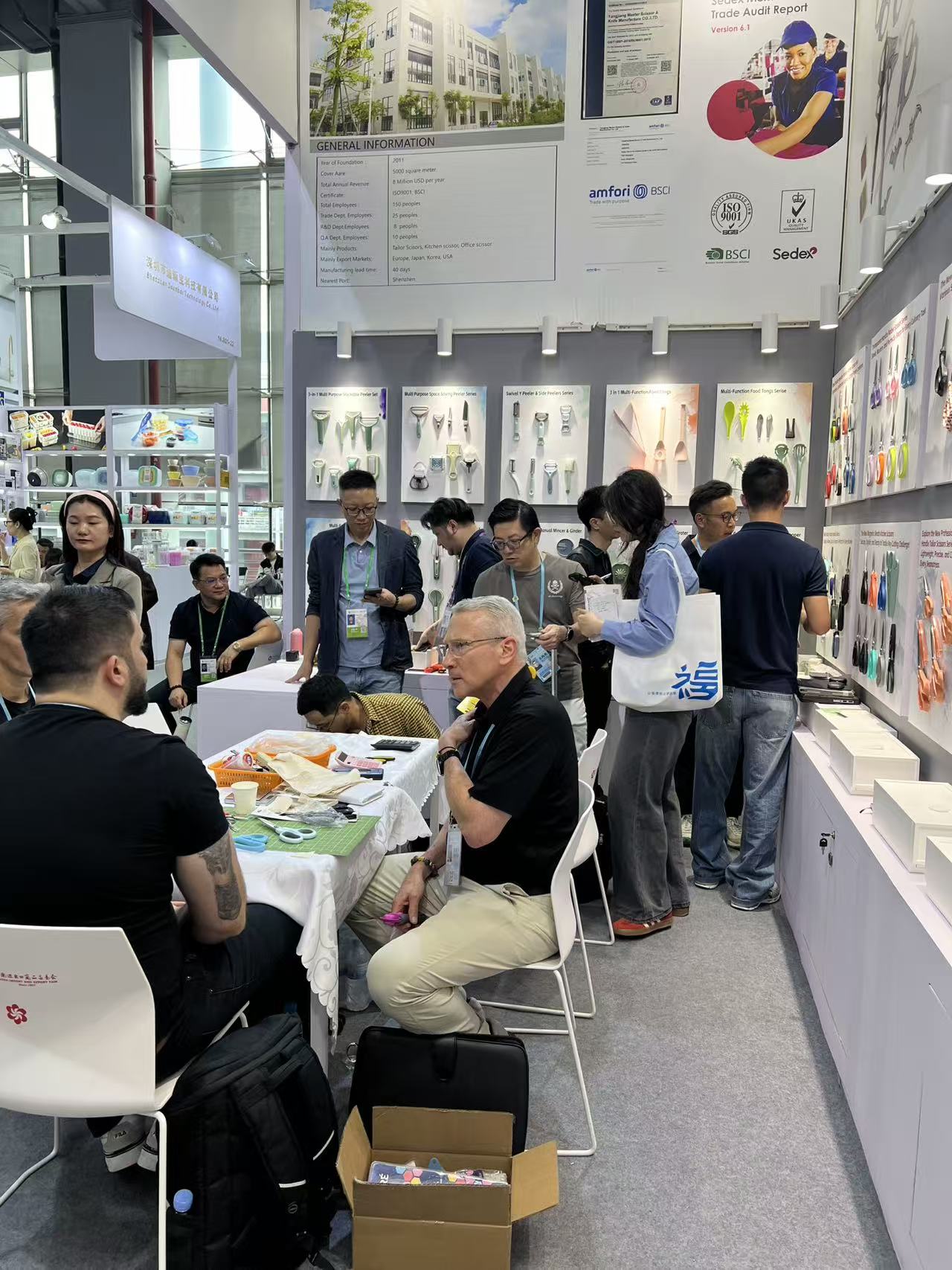
For importers, distributors, retail buyers, and OEM sourcing managers, a busy trade fair booth is more than a display. It is a place to ask disciplined questions, test whether a product line fits the target market, and decide which suppliers deserve deeper follow-up after the show. This review reframes the original booth story into a practical sourcing guide for buyers evaluating kitchenware and scissors manufacturers at Canton Fair events.
Key Takeaways
- The 128th Canton Fair booth highlighted kitchenware, culinary tools, and scissors-related manufacturing expertise.
- Buyers should treat booth visits as the first step in supplier qualification, not as a final purchasing decision.
- Useful questions include material options, packaging, OEM support, sample timing, inspection process, and after-sales communication.
- Hands-on evaluation matters for tools such as peelers, salad tongs, and scissors because comfort and usability affect repeat sales.
What Buyers Could Learn from the Booth
The original booth presentation emphasized a broad kitchenware range, including items such as ergonomic peelers, salad tongs, colorful kitchen gadgets, and scissors. The display was designed to help visitors quickly understand the product direction: everyday culinary tools with attention to appearance, hand feel, and practical kitchen use.
For B2B buyers, this type of booth layout is useful because it shows how a supplier organizes related categories. A buyer can ask whether the products are sold as individual SKUs, coordinated assortments, seasonal displays, private-label lines, or mixed container programs. The more clearly a supplier explains category logic, the easier it is for a buyer to judge whether the range fits supermarkets, home goods chains, online stores, gift channels, or promotional programs.
Evaluating Kitchenware Beyond Appearance
Color, shape, and shelf presentation attract attention at a fair, but sourcing decisions should go further. Kitchen tools are handled repeatedly, washed often, and expected to perform simple tasks reliably. When evaluating a peeler, scissors, tong, or gadget, buyers should consider how the product feels in the hand, whether the grip suits different users, and whether the tool is easy to clean and store.
The original article mentioned durable, food-safe materials such as BPA-free plastics and rust-resistant stainless steel. Because product specifications may vary by model, buyers should verify the exact material, finish, and compliance documentation for the specific item they plan to order. Do not assume that one sample on a booth represents every product in a catalog.
Checklist for Canton Fair Supplier Discussions
A trade fair conversation moves quickly. The checklist below helps buyers turn a booth visit into a structured supplier review.
| Topic to Check | Why It Matters | Questions to Ask |
|---|---|---|
| Product scope | Confirms whether the supplier fits your category plan. | Which scissors, peelers, tongs, and kitchen gadgets are current core items? |
| Materials | Affects safety, durability, weight, and market positioning. | What materials are used for this exact model, and what alternatives are available? |
| OEM or branding | Important for private label and retail programs. | Can packaging, color, handle design, or logo placement be customized? |
| Quality control | Reduces shipment risk and customer complaints. | What inspection steps are used before shipment, and can buyers arrange third-party checks? |
| Commercial terms | Determines whether the supplier fits your purchasing model. | What are the MOQ, sample process, lead time, payment terms, and carton details? |
| Documentation | Supports import, retail listing, and internal compliance review. | What test reports, declarations, or product documents can be provided for the destination market? |
Connecting with Scissors Manufacturers
The original article described Bonet Houseware’s booth as a destination for buyers interested in scissors and related kitchen tools. Scissors are a category where small differences can matter: blade alignment, handle comfort, cutting feel, pivot smoothness, packaging protection, and consistency from batch to batch.
If you are sourcing kitchen scissors or household scissors, ask to compare several samples rather than relying on one display piece. Cut different materials when appropriate, check whether the blades close evenly, and ask how the supplier controls sharpness and assembly consistency. If the product is intended for food preparation, confirm the exact intended use and cleaning recommendations for the model under discussion.
How to Compare Booth Samples After the Fair
Many buyers collect brochures and samples during Canton Fair, but the real evaluation often happens after returning to the office. Create a simple scoring sheet for each supplier. Include product fit, price competitiveness, response speed, documentation readiness, packaging quality, and communication clarity. This helps your team avoid choosing only the booth with the most attractive display.
- Photograph each sample with the supplier name and booth notes.
- Record the quoted model number or product reference immediately.
- Ask for a digital catalog and confirm which items are available for export.
- Request written confirmation of materials, packaging, MOQ, and sample fees if applicable.
- Compare two or three suppliers before opening OEM discussions.
Questions for OEM and Wholesale Buyers
For OEM, private-label, and wholesale programs, early clarity saves time. Buyers should ask whether the supplier can support the required packaging format, barcode placement, instruction language, color matching, and carton labeling. If your sales channel requires hang cards, color boxes, blister packaging, or e-commerce-ready cartons, provide reference files and ask what can be produced without new tooling.
It is also sensible to discuss development steps. Who approves artwork? How are pre-production samples handled? What happens if a sample differs from the approved version? Can the supplier share photos during production? These are normal questions and should be answered before a purchase order is placed.
Practical FAQ
What should I bring when visiting a kitchenware booth at Canton Fair?
Bring your target price range, preferred packaging style, destination market, expected order size, and examples of products you already sell. This allows the supplier to recommend suitable models more accurately.
Can I decide on a supplier during the fair?
You can shortlist suppliers at the fair, but final selection should wait until you receive written quotations, samples, documentation, and clear commercial terms.
What should I verify for scissors products?
Check blade alignment, handle comfort, cutting performance, packaging protection, materials for the exact model, and the supplier’s quality control process.
How should buyers discuss compliance?
Explain the destination market and sales channel, then ask what documents are available for the specific product. Do not rely on general claims without reviewing relevant paperwork.
What is the best follow-up after meeting at the booth?
Send a concise email with product photos, model references, quantity estimates, packaging needs, and questions about samples, lead time, MOQ, and customization options.
Final Thoughts
The 128th Canton Fair booth gave buyers a focused look at kitchenware, scissors, and culinary tools in a live sourcing environment. For professional buyers, the value of such a booth is not only in seeing new products, but in starting a structured conversation about quality, usability, customization, and supply reliability. With the right questions and careful post-fair comparison, a booth visit can become the beginning of a stronger sourcing decision.
