




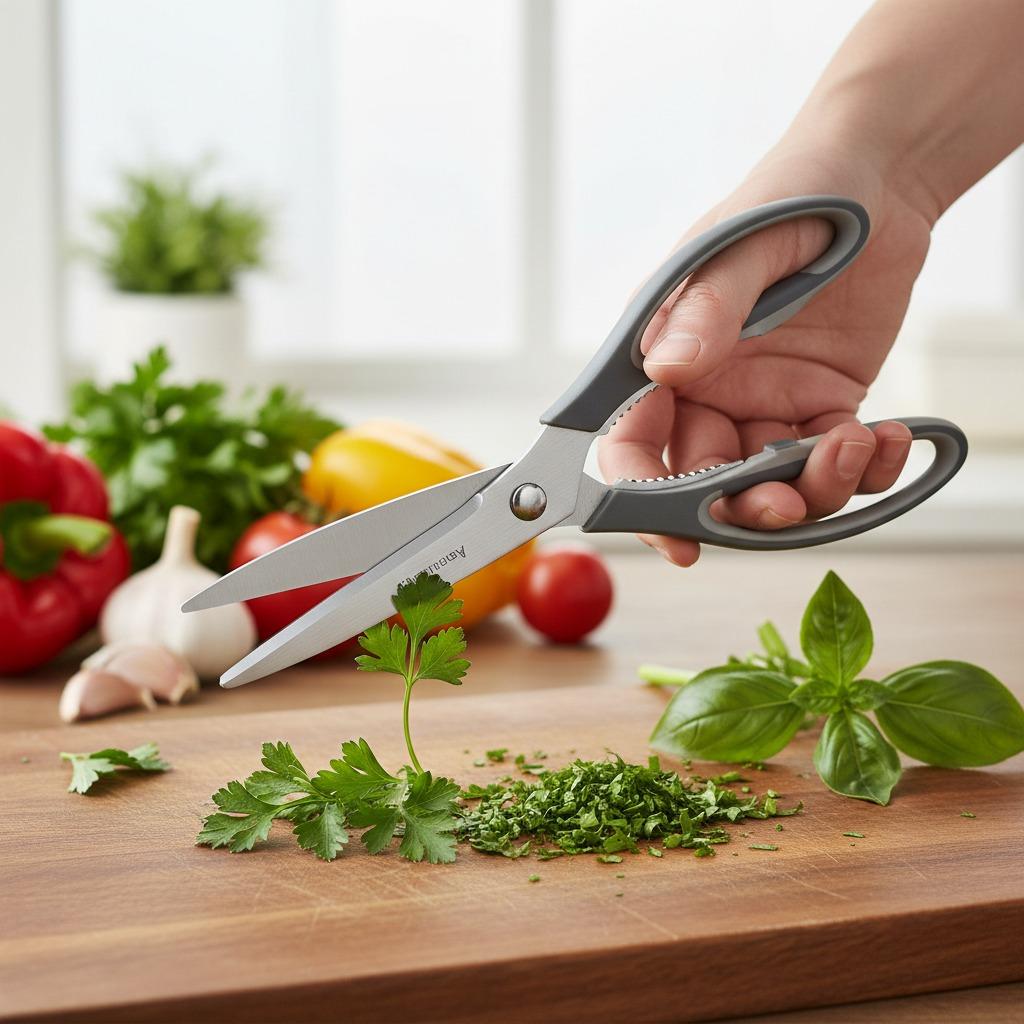
From Herbs to Poultry: 10 Tasks Your Kitchen Scissors Can Handle
Kitchen scissors, often called kitchen shears, are useful far beyond opening a bag of frozen vegetables. A good pair can help with small, precise cuts, slippery foods, and quick prep jobs where a knife and cutting board feel inconvenient. They are not a replacement for every knife, but they can make many everyday kitchen tasks faster, tidier, and easier to control.
This guide explains 10 practical ways to use kitchen scissors, how they compare with common alternatives, what features to look for when choosing a pair, and how to clean them after handling raw foods.

Key Takeaways
- Kitchen scissors are best for controlled snipping, trimming, portioning, and opening packaging.
- Use separate tools or wash thoroughly between raw meat and ready-to-eat foods to reduce cross-contact risk.
- For poultry, choose sturdy shears intended for heavier cutting rather than light household scissors.
- Easy cleaning matters: removable blades can help, but buyers should verify care instructions with the supplier.
10 Everyday Tasks Kitchen Scissors Can Handle
- Snipping fresh herbs: Basil, cilantro, parsley, dill, chives, and rosemary can be cut directly over a bowl, pan, or serving plate. This avoids pulling out a cutting board for a small garnish.
- Cutting scallions and green onions: Scissors make quick rings for noodles, soups, fried rice, salads, and omelets. They are especially helpful when you want small pieces without chasing slender stems around a board.
- Trimming poultry: Heavy-duty kitchen shears can help remove excess skin, trim wing tips, or cut along joints. For breaking down a whole chicken or spatchcocking, use shears designed for poultry rather than light-duty scissors.
- Cutting pizza, quesadillas, and flatbreads: Scissors can slice through soft crusts and toppings without dragging cheese across the surface. They are also convenient for children’s portions or lunch boxes.
- Opening tough packaging: Vacuum bags, pouches, twist ties, and plastic food packaging can be easier to open with scissors than with a knife. Keep the blades clean if the packaging surface has touched raw ingredients.
- Trimming fat and silver skin: Scissors offer good control when removing small pieces of fat from meat. They can reduce slipping compared with using a knife on wet or uneven surfaces.
- Cutting bacon, ham, or prosciutto: Raw bacon can be slippery on a board. Snipping it directly into a pan or bowl saves time and can reduce mess.
- Shaping pastry, dough, and pasta sheets: Use clean scissors to trim pie dough, cut strips of fresh pasta, or tidy the edge of parchment paper.
- Preparing seafood: Scissors can cut shrimp shells, fish fins, squid, or crab packaging. For hard shells, confirm the shears are suitable before forcing the blades.
- Cutting kitchen twine and garnishes: Keep a clean pair nearby for butcher’s twine, parchment, herbs, edible flowers, or quick finishing touches.
Kitchen Scissors vs. Other Tools
Scissors are useful because they combine cutting force with control. Still, the best tool depends on the job. The table below shows where kitchen scissors perform well and where another tool may be better.
| Task | Kitchen Scissors | Knife or Other Tool | What to Check |
|---|---|---|---|
| Herbs and scallions | Fast, clean snipping over the dish | Knife is better for large bundles | Sharp tips and comfortable handles |
| Poultry trimming | Good for joints, skin, and small bones if designed for it | Chef’s knife or cleaver may be needed for heavy work | Heavy-duty construction and secure grip |
| Pizza and flatbread | Controls toppings and portion size | Pizza wheel is faster for large pies | Blade length and easy cleaning |
| Packaging | Safer than using a knife in many cases | Utility knife may suit cartons | Avoid cross-contact with food surfaces |
| Pastry and pasta | Precise trimming without board pressure | Bench scraper or knife suits straight cuts | Smooth blade movement |
How to Choose Kitchen Scissors
When comparing kitchen scissors, focus on fit, cleaning, and intended use rather than claims that sound overly broad. A lightweight pair may be excellent for herbs and packaging but frustrating for poultry. A heavier pair may cut poultry well but feel awkward for delicate garnishes.
- Blade strength: Ask whether the scissors are intended for general food prep, poultry, seafood, or packaging.
- Grip comfort: Handles should feel stable when wet. If possible, test whether they suit both small and large hands.
- Blade separation: Some shears come apart for cleaning. Confirm this feature before buying if hygiene and easy washing are priorities.
- Tip shape: Pointed tips help with shrimp shells and precise cuts, while rounded tips may feel safer for general household use.
- Care instructions: Verify whether hand washing or dishwasher cleaning is recommended by the supplier.
Food Safety and Cleaning Tips
Kitchen scissors touch many different foods, so cleaning is not optional. This is especially important after cutting raw poultry, meat, or seafood. If your household cooks often, consider keeping one pair for raw proteins and another for herbs, cooked foods, and packaging.
- Rinse off visible food immediately after use so residue does not dry around the hinge.
- Wash with warm water and dish soap, paying attention to the pivot area and handle edges.
- If the blades separate, clean both sides fully and dry them before reassembling.
- Dry thoroughly to help prevent spots, odor, or corrosion.
- Store in a drawer, sheath, or utensil holder where the blades are protected from damage.
Do not force scissors through frozen food, thick bones, or hard shells unless the product instructions say they are designed for that type of cutting. Forcing the blades can damage the edge or make the tool unsafe to use.
Selection Guidance for Home and Food-Service Buyers
For home kitchens, one multi-purpose pair may be enough if it is comfortable, easy to wash, and sharp enough for herbs, packaging, pizza, and light meat trimming. Families that cook poultry often may prefer a sturdier second pair for raw proteins.
For restaurants, caterers, cafeterias, or wholesale buyers, selection should be more structured. Ask suppliers practical questions before placing a bulk order: What foods are the shears designed to cut? Can samples be tested in your prep workflow? Are care instructions available for staff training? Are replacement or after-sales terms clear? Can packaging, labeling, or handle color be customized if needed? Avoid assuming capacity, certifications, minimum order quantity, or material grade unless the supplier provides documentation.
Practical FAQ
Can kitchen scissors replace a chef’s knife?
No. They are excellent for snipping, trimming, and portioning, but a chef’s knife is still better for chopping vegetables, slicing large foods, and making long straight cuts.
Are kitchen scissors safe for raw chicken?
They can be used for raw chicken if they are strong enough for the task and cleaned thoroughly afterward. Wash and dry them carefully, especially around the hinge.
Should I buy removable-blade kitchen shears?
Removable blades can make cleaning easier, particularly after raw meat or sticky foods. Check that the locking mechanism feels secure when assembled.
How do I keep kitchen scissors sharp?
Use them only for appropriate foods and packaging, avoid hard bones or frozen items unless approved, wash and dry them promptly, and follow the supplier’s sharpening guidance.
What is the best pair for herbs and poultry together?
Look for multi-purpose shears with a comfortable grip and sturdy blades, but consider using separate pairs if you frequently switch between raw proteins and ready-to-eat ingredients.
