




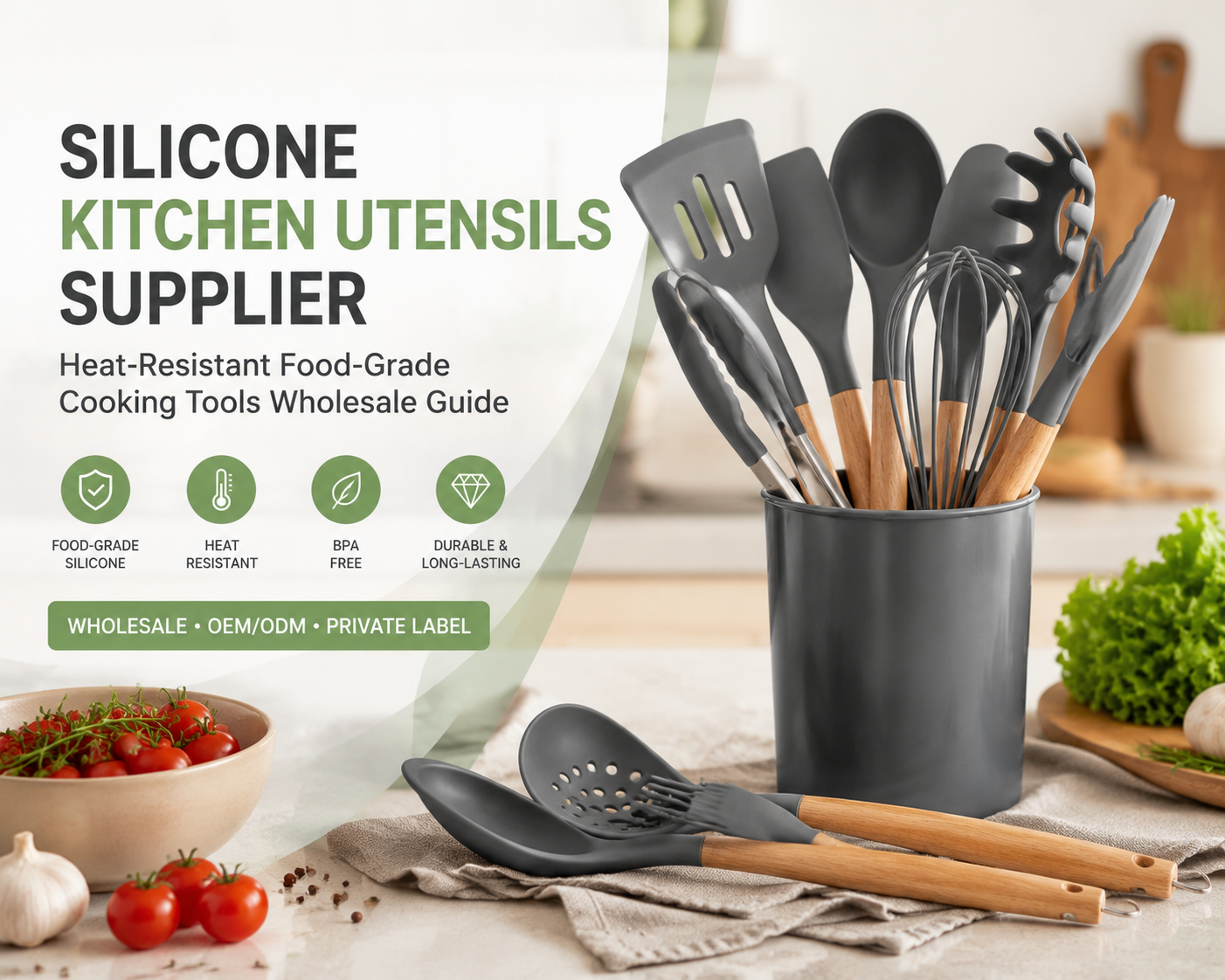
Silicone Kitchen Utensils Supplier: Wholesale and OEM Buying Guide
Silicone cooking tools remain a popular category for kitchenware importers, online sellers, distributors and retail brands because they are flexible, suitable for non-stick cookware, easy to clean and commonly promoted for heat-resistant cooking use. For B2B buyers, however, the main challenge is not only finding a low unit price. The more important task is choosing a silicone kitchen utensils supplier that can provide consistent products, clear material documentation, practical packaging options and reliable communication before bulk production.
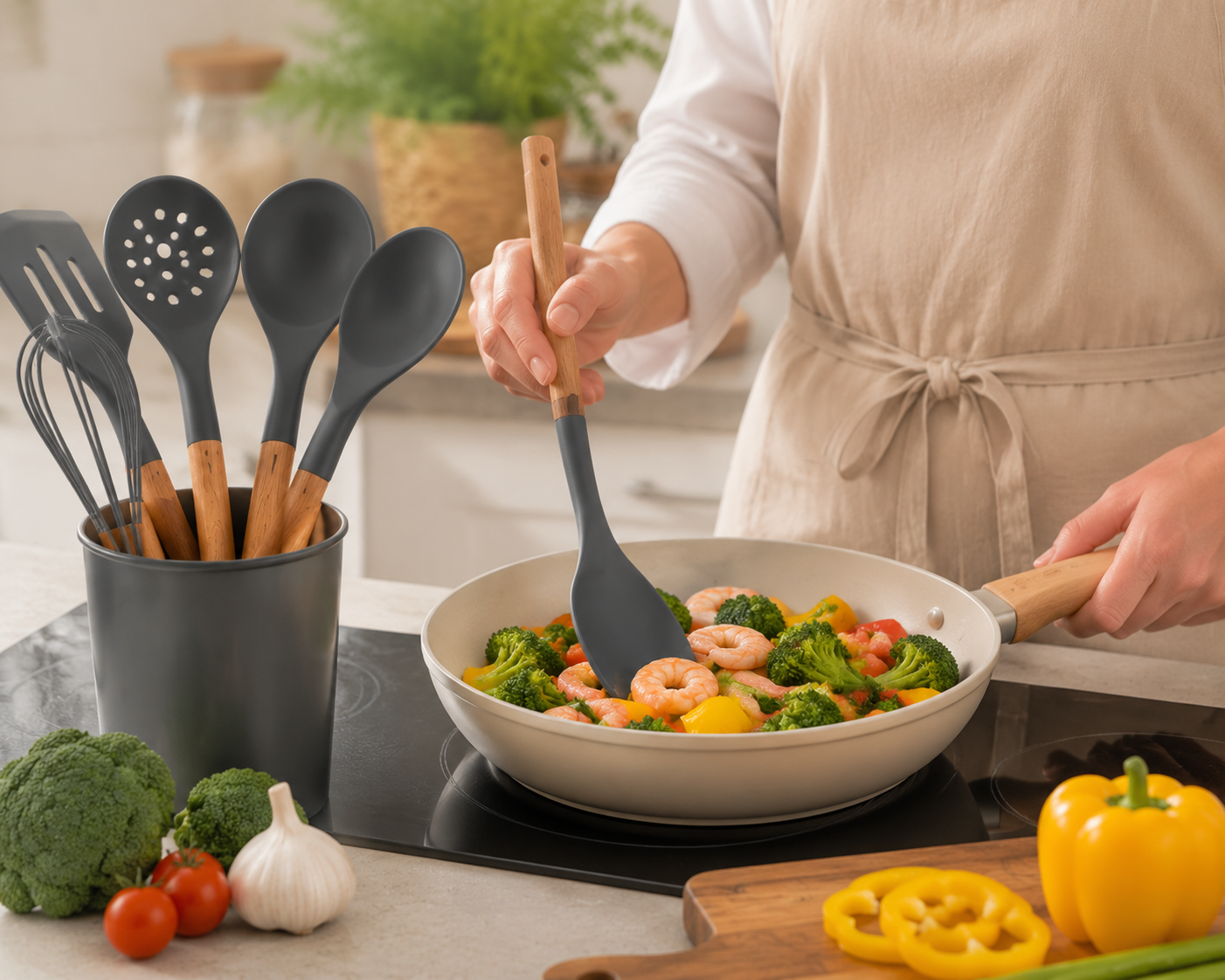
This guide explains how to evaluate suppliers for wholesale, OEM and private label projects without relying on unsupported claims. Use it as a checklist when comparing quotations, samples and production proposals.
Key Takeaways
- Ask suppliers to confirm the exact silicone material, heat-resistance range and applicable food-contact documentation.
- Evaluate the whole program: utensils, handles, set composition, packaging, labeling and carton packing.
- Request pre-production samples before approving a large wholesale or OEM order.
- Do not assume MOQ, certification, testing or delivery terms; confirm them in writing for your project.
What a Silicone Kitchen Utensils Supplier Should Provide
A capable supplier should do more than list spatulas and spoons. For wholesale buyers, the supplier’s role is to help turn individual cooking tools into a market-ready product line. That may include product sourcing or production coordination, set planning, color matching, logo options, packaging discussion and export packing support.
Common silicone utensil categories include spatulas, turners, cooking spoons, tongs, whisks, baking tools and scrapers. Some buyers order single tools in bulk, while others need multi-piece utensil sets for online marketplaces, supermarkets or promotional channels. Before requesting a quote, prepare a clear brief showing the tool types, quantity target, packaging style, destination market and any artwork or labeling needs.
Material and Food-Contact Questions to Ask
The original article notes typical buyer concerns such as food-grade material control, BPA-free positioning, odor control and heat resistance often stated around 230°C–250°C. These points are important, but buyers should not treat them as automatic. Ask each supplier to provide written confirmation and relevant documents for the exact items being quoted.
- What silicone material is used for the cooking head or full utensil?
- Is there any nylon, stainless steel, wood or other material in the handle or core?
- What heat-resistance range is claimed for this item, and how was it verified?
- Can the supplier provide current food-contact test reports or declarations for your target market?
- Does the product have noticeable odor after unpacking, and how is this controlled?
If you sell in markets with specific compliance requirements, confirm the required test standards with your importer, retailer or compliance adviser before placing a production order.
Product Range and Set Planning
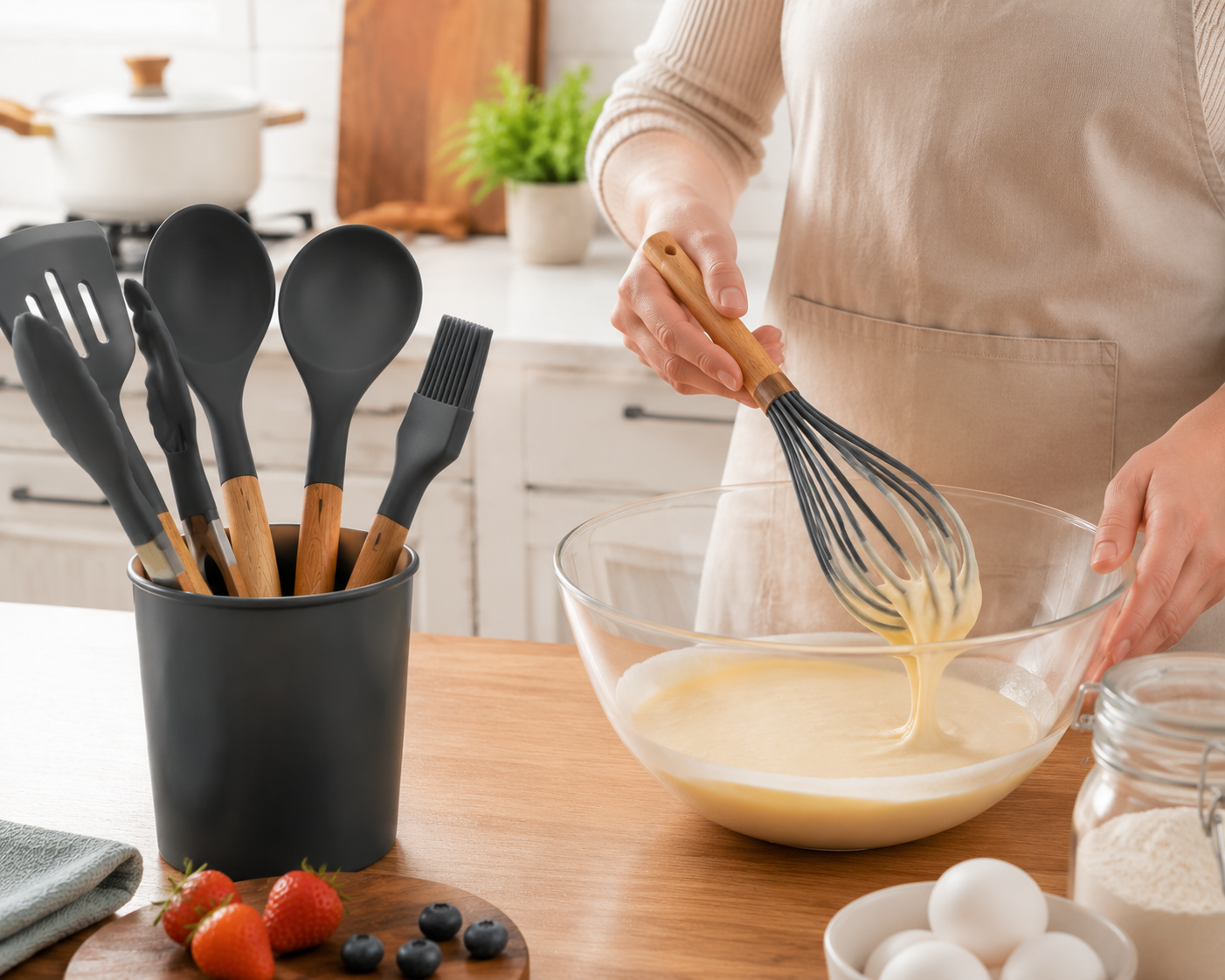
Silicone kitchen utensils can be built into different product programs. A small online seller may prefer a focused set of best-selling tools, while a distributor may require multiple colors, hanging-card single items and boxed sets. The right structure depends on your sales channel.
When planning a set, avoid adding tools only to increase the piece count. Each item should have a clear use: flipping, stirring, scraping, serving, baking or gripping. Also check whether the dimensions, handle weight and hanging holes are consistent across the set. A visually matched set is easier to merchandise and may reduce customer confusion.
OEM, Private Label and Packaging Options
OEM and private label service can include logo placement, custom colors, set combinations and retail packaging. The practical details matter. For example, logo printing on a handle may require a different process from molded branding, and custom color matching may need a confirmed sample before production.
Packaging choices should match the channel. Hanging cards can suit retail peg displays, color boxes may work for giftable sets, and bulk cartons may be enough for wholesale distribution. For online sales, ask how the product will be protected in transit and whether the inner packaging is suitable for fulfillment handling.
Useful information to request from a supplier includes packaging dielines, carton dimensions, gross weight, labeling options, barcode placement and whether the packaging artwork must meet any material or printing limitations.
Supplier Comparison Checklist
| Checkpoint | What to Review | Why It Matters |
|---|---|---|
| Material confirmation | Silicone type, other components, food-contact documents | Helps reduce compliance and quality risk |
| Sample quality | Finish, odor, flexibility, handle comfort, color accuracy | Shows what buyers may actually receive |
| Heat-resistance claim | Stated temperature range and supporting information | Prevents unclear marketing claims |
| OEM capability | Logo method, color matching, set configuration | Supports brand consistency |
| Packaging support | Retail box, hanging card, gift box or bulk carton | Affects shelf appeal and shipping protection |
| Commercial terms | MOQ, lead time, payment, sample cost, inspection process | Must be confirmed for each order |
How to Evaluate Samples Before Bulk Orders
Samples are essential for silicone kitchen utensils because photos cannot show grip comfort, tool stiffness, odor or balance. Test samples in realistic conditions: stirring thick mixtures, scraping bowls, turning food in a pan and washing repeatedly. If the tool is promoted as dishwasher safe, ask the supplier whether that claim applies to the full product, including any handle material or logo decoration.
Check details that often affect customer reviews: rough seams, uneven edges, weak connection points, color inconsistency, packaging damage and unclear care instructions. If you find problems, report them with photos and ask whether they are sample-only issues or production risks.
Wholesale Terms Buyers Should Confirm
MOQ, lead time and pricing can vary by tool type, color, packaging and customization level. Instead of assuming a standard quantity, ask for tiered quotations based on your expected order volume. Confirm whether the quoted price includes logo work, inner packaging, export cartons, inspection, molds or sample charges.
For larger programs, discuss whether the supplier can support repeat orders with consistent color and packaging. Also clarify how changes will be handled if a component, box material or colorant becomes unavailable. Good sourcing decisions depend on clear written terms, not verbal estimates.
FAQ
Q1: Are silicone kitchen utensils safe for cooking?
A: They can be suitable for cooking when made from appropriate food-contact silicone and used as directed. Buyers should request documentation for the exact product and market.
Q2: What heat resistance should I expect?
A: Many silicone utensils are marketed with heat resistance around 230°C–250°C, but the exact range should be confirmed by the supplier for the specific item.
Q3: Can I customize color, logo and packaging?
A: Many suppliers offer OEM options such as custom colors, branding and retail packaging. Confirm available methods, costs, lead time and sample approval steps.
Q4: What MOQ should wholesale buyers expect?
A: MOQ depends on the utensil type, packaging and customization. Ask for written MOQ options for stock colors, custom colors and private label packaging.
Q5: What should I check before approving production?
A: Review samples, material documents, packaging artwork, carton information, production timeline, inspection plan and final commercial terms.
Final Sourcing Advice
A reliable silicone kitchen utensils supplier should help buyers make informed decisions, not simply push a catalog. Compare suppliers by their answers, samples and documentation as much as by price. If you are developing an OEM or wholesale program, prepare your product brief, request samples and ask direct questions about material, packaging, lead time and quality control before moving to bulk production.
