




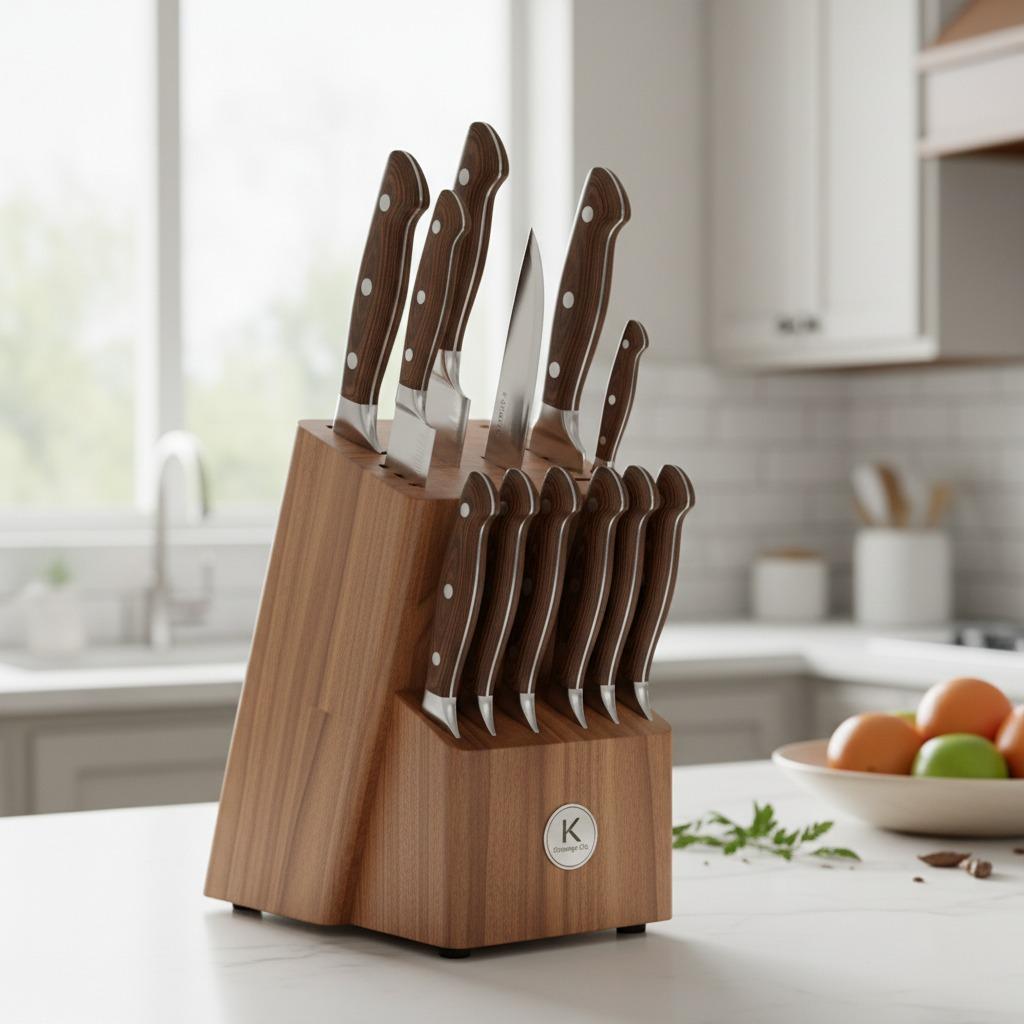
How to Store Your Knives to Keep Them Sharper for Longer
Good knife storage is not just about keeping a kitchen tidy. It directly affects edge retention, safety, hygiene, and the service life of a blade. When knives are left loose in a drawer, their cutting edges can knock against forks, spoons, handles, and other blades. That repeated contact can roll, dull, or chip the edge, even when the knife is made from quality steel.
Whether you use a chef’s knife every day, keep a few paring knives for prep work, or buy kitchen knives in bulk for a retail or hospitality program, the same principle applies: protect the edge, keep the blade dry, and separate knives from hard contact.

Key Takeaways
- Never store knives loose with other utensils; edge contact is one of the fastest ways to dull a blade.
- Dry knives completely before storage to reduce the chance of spotting, rust, or moisture damage.
- Magnetic strips and open racks offer strong airflow, while drawer organizers and guards provide protected storage.
- Ceramic knives need non-magnetic, cushioned storage because they are hard but brittle.
- For wholesale, OEM, or hospitality sourcing, ask suppliers about packaging, blade protection, cleaning guidance, and storage compatibility.
Why Knife Storage Affects Sharpness
A sharp knife edge is thin and precise. Even light impact against a hard object can deform that edge on a microscopic level. Over time, these small impacts lead to a knife that feels dull, drags through food, or requires extra force. More force can increase the chance of slipping, which is why knife sharpness and safe storage are closely connected.
Moisture is another concern. A knife placed into a damp sheath, dirty block, or closed drawer before it is fully dry can be exposed to trapped humidity. This is especially important for high-carbon steel knives, but stainless steel knives also benefit from being cleaned, dried, and stored in a well-maintained space.
Comparison of Common Knife Storage Methods
The best storage method depends on your kitchen layout, knife materials, cleaning routine, and whether the knives are used at home, in a commercial kitchen, or for transport and resale.
| Storage Method | Strengths | Limitations | Best Use Case | Care Checklist |
|---|---|---|---|---|
| Knife block | Organized, easy to access, protects edges when used correctly | Slots can collect crumbs or moisture; uses counter space | Home kitchens with stable counter space | Insert clean, dry knives only; clean slots regularly |
| Magnetic strip | Good airflow, visible blades, saves drawer and counter space | Requires secure installation; not for non-magnetic ceramic knives | Home or professional kitchens needing quick access | Mount firmly; wipe the strip often; place knives carefully |
| In-drawer organizer | Keeps blades separated and hidden; good edge protection | Requires drawer space; less visible during busy prep | Small kitchens, minimalist layouts, family homes | Keep drawer dry; avoid overcrowding |
| Blade guard or sheath | Individual blade protection; useful for storage and transport | Less convenient for rapid daily access | Travel, retail packaging, wholesale storage, occasional-use knives | Use only on dry blades; wash or wipe guards as needed |
| Wall-mounted rack | High visibility, strong workflow support, easy to clean if open | Needs installation and safe placement | Commercial kitchens and shared prep areas | Check mounting; clean surfaces frequently |
Best Knife Storage for Home Kitchens
For everyday home cooking, convenience matters. If knives are hard to access, people often leave them on counters or return them to crowded drawers. A knife block can work well when the slots fit the knives and the block is kept clean and dry. Avoid forcing wide blades into tight slots, because rubbing along the edge can cause unnecessary wear.
A magnetic strip is a good option when counter space is limited. It keeps knives visible and allows air to circulate around the blade after washing and drying. Place the spine of the knife against the strip first, then roll the blade gently into place. When removing it, reverse the motion to avoid scraping the cutting edge across the magnet.
For households with children or limited wall space, an in-drawer organizer may be the safer and cleaner choice. The key is separation: each knife should have its own slot or protected channel so blades do not touch each other.
Storage Guidance for Different Knife Materials
Knife material affects the storage decision. High-carbon steel knives are valued by many cooks, but they can be more reactive to moisture. For these knives, drying is essential, and storage with good airflow is preferred. Avoid leaving them in damp blocks or sheaths.
Stainless steel knives are generally more forgiving, but they should still be stored dry and separated. Water spots, residue, and contact damage can still reduce appearance and performance over time.
Ceramic knives require special care. Ceramic is non-magnetic, so magnetic strips will not hold these blades. It is also brittle compared with steel, so impact protection is important. Use an individual guard, a cushioned drawer organizer, or a dedicated slot that prevents knocking and dropping.
Practical Routine to Keep Knives Sharp Between Sharpening
- Wash by hand after use. Avoid leaving knives in a sink where they can strike other dishes or become a hidden safety hazard.
- Dry immediately and completely. Pay attention to the handle, heel, and any joint where water may remain.
- Store knives separately. Use a block, strip, organizer, rack, or guard so the cutting edge is not exposed to random contact.
- Keep storage clean. Wipe magnetic strips and drawer trays; remove crumbs from blocks where possible.
- Use the right cutting surface. Storage helps, but glass, stone, or metal cutting surfaces can still dull edges quickly.
- Transport with guards. When moving knives to events, classes, commercial kitchens, or storage rooms, cover each blade.
B2B and Wholesale Sourcing Considerations
For buyers sourcing knives, blade guards, knife blocks, or storage sets for wholesale, retail, hospitality, or OEM projects, storage should be part of the purchasing discussion. Do not evaluate the knife alone; consider how it will be packed, displayed, shipped, stored, and used after sale.
Useful questions to ask a supplier include:
- What storage method is recommended for this knife material and blade profile?
- Does the product include a blade guard, sleeve, block, or retail-safe packaging?
- How are knives protected from edge contact during bulk shipping?
- Are cleaning and care instructions included for end users?
- Can packaging be adapted for retail display, e-commerce shipment, or hospitality procurement?
- What information is available about handle care, corrosion prevention, and safe storage?
These questions help buyers reduce returns caused by transit damage, unclear care instructions, or mismatched storage accessories. If specific claims such as material grade, testing, certification, MOQ, or packaging performance are important, request written confirmation from the supplier rather than assuming them.
Common Knife Storage Mistakes to Avoid
The most common mistake is placing knives loose in a drawer. Even if the knife is sharp after sharpening, it can lose performance quickly when the edge repeatedly contacts hard objects. Another mistake is storing a knife while it is still damp. Moisture trapped in a sheath, block, or crowded drawer can create avoidable maintenance issues.
Also avoid overfilling a knife block or using slots that do not match the blade. If a blade scrapes each time it is inserted or removed, the storage method is working against the knife. Finally, do not place magnetic strips where knives can be bumped by elbows, children, or swinging cabinet doors.
FAQ
What is the safest way to store kitchen knives?
The safest method is one that keeps blades separated, stable, dry, and out of accidental reach. In many homes, this means an in-drawer organizer or a properly placed knife block. In professional kitchens, securely mounted magnetic strips or racks may be more practical.
Are magnetic strips bad for knives?
Magnetic strips are not automatically bad for knives. The risk comes from careless placement or removal. Put the spine on the strip first and avoid dragging the cutting edge across the surface.
Should knives be stored in a sheath?
A sheath or blade guard is useful for transport, drawer storage, and wholesale packing. However, the knife must be clean and fully dry before the guard is fitted.
Can I store all knife types the same way?
No. Steel knives may work with blocks, strips, racks, or drawers. Ceramic knives should not be stored on magnetic strips and need protection from impact and chipping.
How often should knife storage be cleaned?
Wipe open storage such as magnetic strips regularly. Drawer organizers should be cleaned whenever crumbs or moisture appear. Knife blocks should be kept dry and cleaned according to their design and care instructions.
