








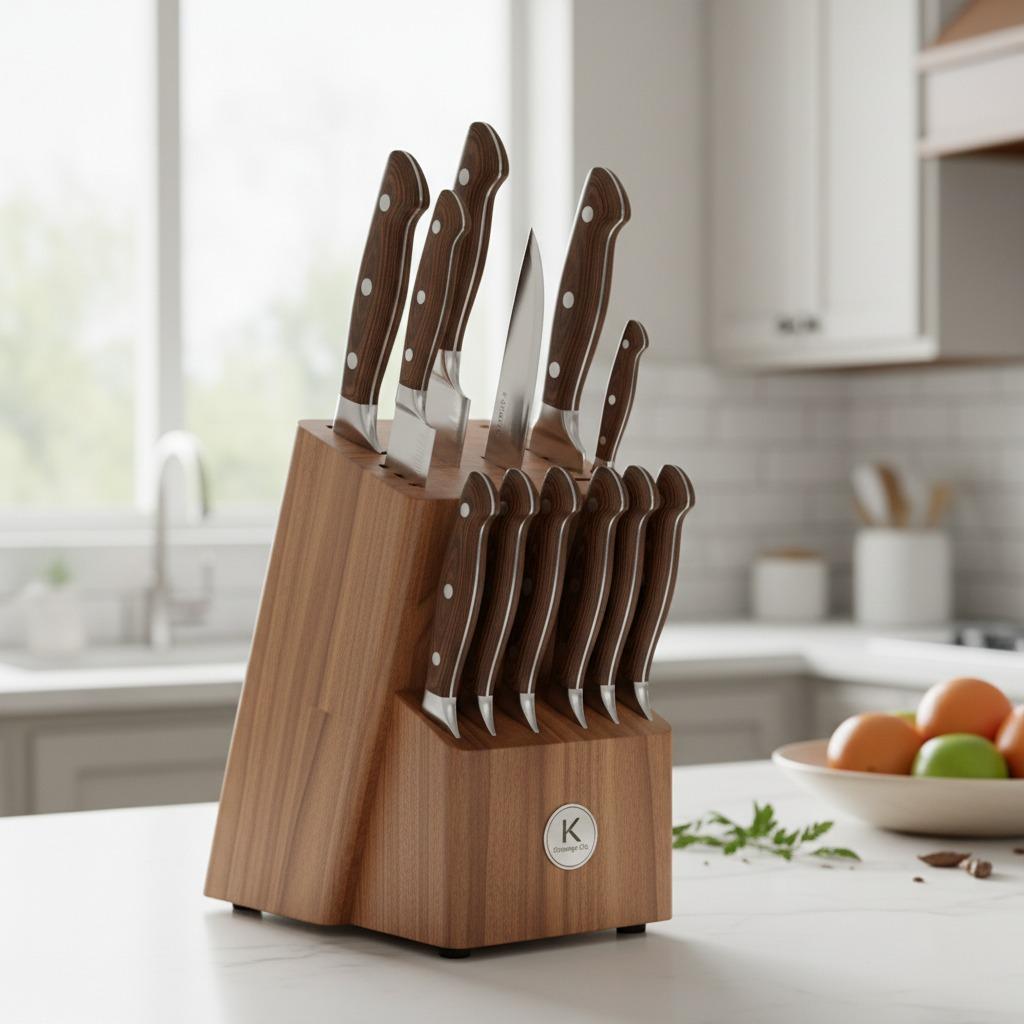
How to Store Your Knives to Keep Them Sharper for Longer
Proper knife storage is one of the most overlooked yet effective ways to maintain sharpness, extend blade life, and ensure safety in the kitchen. A high-quality knife is a serious investment — whether it's a Japanese gyuto, a German chef's knife, or a versatile paring knife — and how you store it directly impacts its performance and longevity.

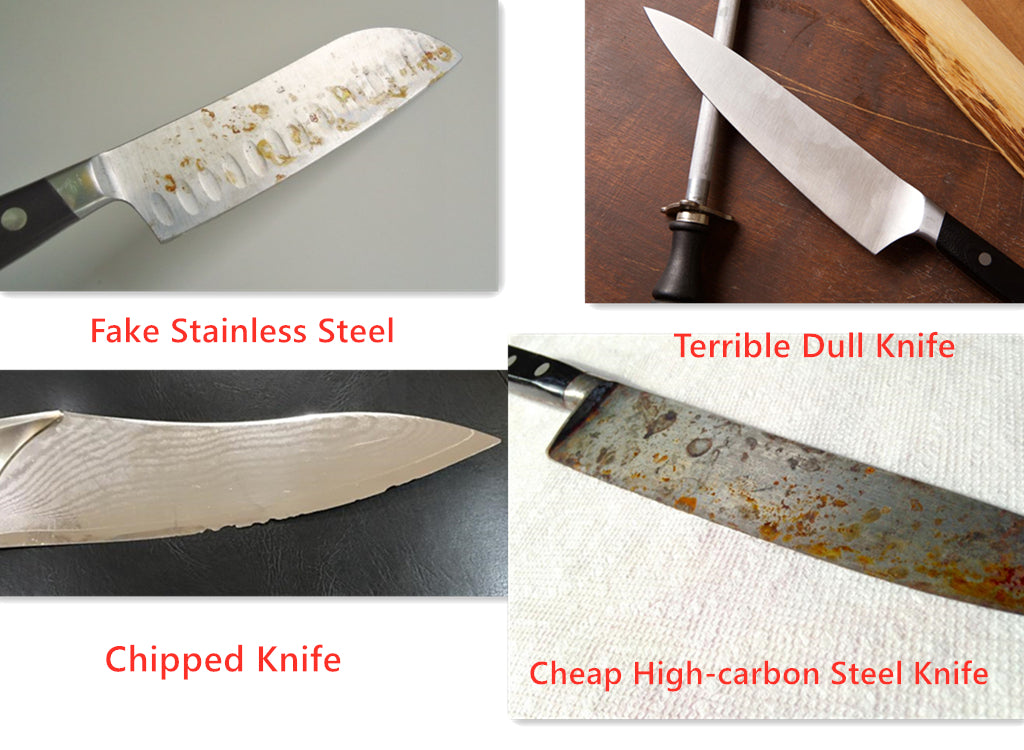
Storing knives loosely in a drawer or jumbled in a pile causes microscopic edge damage from contact with other utensils. Moisture trapped in blocks or sheaths can lead to rust and pitting. The right storage solution protects the delicate cutting edge, reduces the need for frequent sharpening, and keeps your knives ready for precise, effortless work.
Why Proper Knife Storage Matters: Impact on Lifespan
A well-maintained knife can last decades with proper care. Poor storage, however, accelerates wear:
- Edge rolling and chipping — Blades dull faster when they knock against each other or hard surfaces.
- Corrosion — Especially on high-carbon steels.
- Increased sharpening frequency — Leading to faster steel removal and shorter overall life.
Studies and chef feedback show that proper storage can double or even triple a knife's effective lifespan by minimizing edge damage and oxidation. A sharp knife is also safer — it requires less force, reducing slip risks.
Popular Knife Storage Solutions: Product and Method Comparison
Here’s a clear comparison of the most common storage options:
| Storage Method | Pros | Cons | Best For | Hygiene & Maintenance | Cost Range |
|---|---|---|---|---|---|
| Knife Blocks | Attractive display, organized slots, good protection | Can collect dust/bacteria in slots; takes counter space | Home kitchens | Medium (clean slots regularly) | Low–High |
| Magnetic Strips | Space-saving, quick access, excellent airflow (dries fast) | Risk of dropping; not suitable for all materials | Home & professional | High (easy to wipe) | Medium |
| In-Drawer Organizers | Hidden, safe from accidents, excellent edge protection | Requires drawer space; less visible | Home & small commercial | High (easy clean) | Low–Medium |
| Individual Blade Guards/Sheaths | Maximum individual protection, portable, stackable | Less convenient for daily use | Wholesale, travel, storage | Very High | Low |
| Wall-Mounted Racks | Professional look, high capacity | Installation required | Commercial kitchens | Very High | Medium–High |
:max_bytes(150000):strip_icc()/Magnetic_Knife_Holders_Schmidt_Brothers_Acacia_Magnetic_Wall_Bar_HeroHorizontal-c157cd2134b04ec996234481bdc27291.jpg)
Magnetic knife strips are widely praised for airflow and visibility.

In-drawer organizers excel at protecting edges in compact spaces.

Blade guards and sheaths offer the best individual protection.
Applicable Scenarios Comparison
Home Kitchens Prioritize convenience, aesthetics, and limited space. A universal knife block or magnetic strip works well for 4–8 knives. In-drawer organizers suit minimalist or small kitchens. Focus on solutions that are easy to clean and look good on display.
Commercial Kitchens Emphasize speed, hygiene, durability, and high volume. Professional chefs often prefer heavy-duty magnetic strips or stainless-steel wall racks for quick grab-and-go access during busy services. They must withstand frequent wiping, high humidity, and heavy use. In-drawer options are less common due to workflow needs.
Wholesale Procurement / Bulk Buying Focus on cost-efficiency, stackability, and protection during transport/storage. Individual blade guards or sheaths are ideal for distributors and retailers. They prevent damage in shipping, allow compact storage, and are easy to inventory. Magnetic strips or modular racks suit restaurant supply houses.
Adaptability to Different Knife Materials
Not all storage methods suit every blade material:
- High-Carbon Steel & Damascus — Prone to rust and oxidation. Prefer magnetic strips or open racks for maximum airflow. Always ensure knives are completely dry before storing. Avoid wooden blocks that can trap moisture.
- Stainless Steel — Most forgiving. Works well with any method (blocks, drawers, magnets). Still benefits from good airflow to prevent minor spotting.
- Ceramic Knives — Extremely hard but brittle. Do not use magnetic strips (ceramic is non-magnetic). Use soft-slotted drawer organizers or individual guards to prevent chipping. Never drop them into blocks with hard dividers.
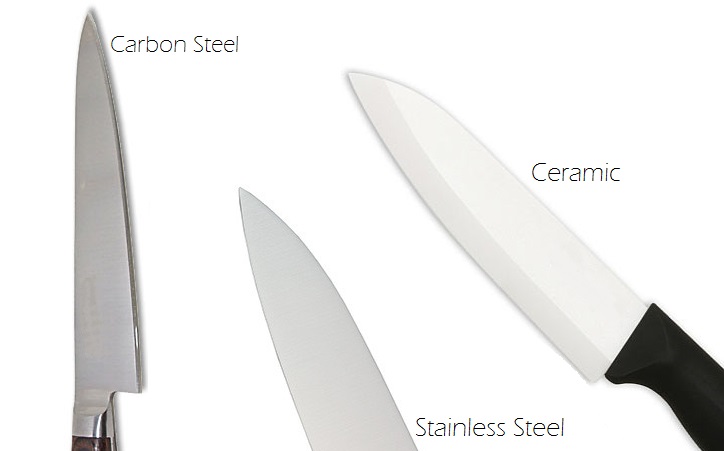
Material compatibility tip: Always match storage to your knife collection. A mixed set often performs best with a combination of magnetic strips (for steel) and dedicated guards (for ceramic).
Professional and Industry Perspectives
Professional chefs and knife makers consistently emphasize storage as part of knife care:
- Many Michelin-starred kitchens use magnetic systems for workflow efficiency and to keep blades visible and ready.
- Knife manufacturers (such as those producing high-end Japanese and German blades) recommend against loose drawer storage and stress the importance of dry, separated blades.
- Industry experts note that proper storage reduces sharpening frequency by 50–70%, preserving the factory edge longer and saving money on professional sharpening services.
“Treat your knives like precision tools,” say many blade craftsmen. “The edge is the heart of the knife — protect it at all times.”
Best Practices for Long-Term Sharpness
- Clean and dry thoroughly — Never store wet knives.
- Store edge-up or protected — Avoid edge-down contact.
- Separate from other utensils — No jumbled drawers.
- Regular maintenance — Wipe magnetic strips and blocks weekly.
- Climate control — In humid environments, consider silica gel packets near storage.
- Travel/Storage — Always use blade guards for transport.
