




Kitchen Knife Supplier Guide for Professional Prep Knives
Choosing a kitchen knife supplier is not just a catalog decision. For retailers, foodservice distributors, brand owners, and sourcing teams, the real test is whether the knife performs consistently in daily preparation work and whether the supplier can answer practical questions before an order is approved.
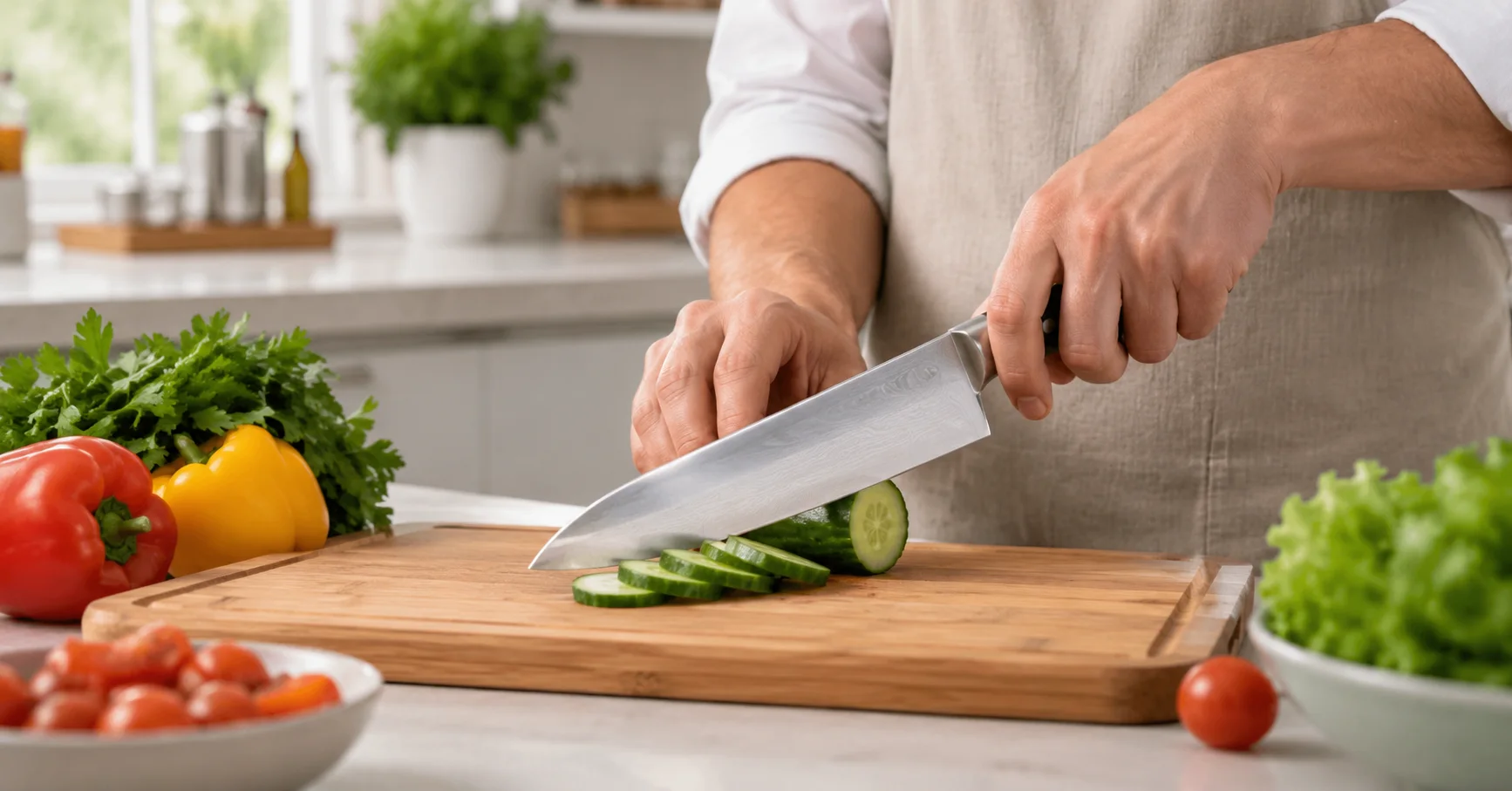
The knife shown in the original article is a broad kitchen prep knife with a pointed tip, a straight cutting edge, a stainless-looking blade, and a dark full-grip handle. From the image, it appears suited to general vegetable and herb preparation, but details such as steel grade, production method, handle material, hardness, or edge angle cannot be confirmed visually. A responsible sourcing process should treat those points as supplier questions, not assumptions.
Key Takeaways
- Start with the intended prep task before comparing appearance, packaging, or price.
- Confirm blade material, handle construction, sharpening method, and inspection standards with the supplier.
- Approve samples only after real cutting tests on the ingredients end users handle most often.
- For OEM, wholesale, or private-label programs, batch consistency is as important as the first sample.
Define the Knife’s Job Before You Source
A professional prep knife should be evaluated by how it behaves on a cutting board, not by how strong it looks in a product photo. A broad blade can help guide cuts and move chopped ingredients. A pointed tip supports trimming and detail work. A straighter edge can be useful for push cutting vegetables and herbs, depending on the user’s cutting style.
Before contacting suppliers, define the primary use case. Is the knife for home cooks, light commercial kitchens, culinary kits, retail sets, or foodservice replacement programs? Will users slice vegetables, chop herbs, trim produce, or perform mixed prep tasks? The answers influence blade profile, handle shape, weight balance, packaging expectations, and target cost.
This step prevents a common sourcing problem: selecting a knife that looks acceptable but feels wrong during repetitive work. A handle that is too slim, a blade that wedges in firm vegetables, or a balance point that tires the wrist can create complaints even when the knife appears well finished.
What to Compare Before Placing an Order
Many kitchen knives look similar in supplier photos. Useful differences usually appear during sample review and supplier questioning. Use the table below to keep comparisons practical.
| Comparison Point | What to Check | Questions to Ask the Supplier |
|---|---|---|
| Blade shape | Width, tip shape, edge line, board contact | What prep tasks is this profile designed for? |
| Blade material | Confirmed steel type, finish, corrosion-care guidance | Can you specify the blade material rather than only saying stainless steel? |
| Edge preparation | Sharpness out of box, edge consistency, ease of resharpening | How is the final edge applied and inspected? |
| Handle design | Grip comfort, texture, shape, attachment method | What is the handle material and construction? |
| Batch consistency | Appearance, balance, edge, handle fit across samples | How do you control variation between production runs? |
| Packaging | Blade protection, transit safety, retail or bulk format | How is the edge protected during shipping? |
Supplier Questions for OEM, Wholesale, and Private Label Buyers
When the purchase involves wholesale supply, OEM development, or a private-label program, supplier communication becomes part of risk control. Do not rely on broad phrases such as “premium stainless steel” or “professional quality” unless they are supported by clear specifications and samples.
Useful questions include:
- What is the confirmed blade material, and can it be written into the specification sheet?
- Is the knife forged, stamped, or made by another process?
- What is the handle material, and how is it attached to the blade?
- What tolerances or inspection checks are used for edge, handle fit, and finish?
- Can pre-production samples match the final packaging and protection method?
- What customization options are available for logo, packaging, or set configuration?
- What commercial details should be confirmed, such as MOQ, lead time, payment terms, and sample policy?
These questions do not require the supplier to make exaggerated claims. They simply move the discussion from presentation to verifiable order requirements.
How to Test a Sample Knife in Real Prep Work
Sample approval should include actual use, not only visual inspection. A short trial can reveal whether the knife suits its intended market. Test it on the ingredients your customers or end users are likely to prepare: cucumbers, onions, carrots, herbs, leafy greens, or other common produce.
During testing, pay attention to how the blade enters the food, whether it wedges in firm ingredients, and whether the edge feels consistent from heel to tip. Check if the handle remains comfortable after repeated cuts. Look for slipping, pressure points, or awkward wrist position. Wash and dry the knife according to normal kitchen habits, then inspect the handle area and blade finish.
If several samples are supplied, compare them side by side. A single strong sample is encouraging, but consistency across samples is more meaningful for B2B purchasing. If one handle feels different from another or one edge performs noticeably worse, ask how production variation will be managed.
Common Sourcing Mistakes to Avoid
One mistake is buying on appearance alone. A polished blade and dark handle can look familiar and marketable, but performance depends on geometry, balance, edge preparation, and build consistency. Another mistake is over-focusing on one specification while ignoring usability. A dramatic material claim is less useful if the knife feels tiring during repeated vegetable prep.
Buyers also run into problems when they approve samples without defining the end user. A knife for a home kitchen gift set may have different priorities than a knife for a culinary training kit or light commercial prep station. Retail presentation, blade protection, handle durability, and ease of maintenance should be weighted differently depending on the channel.
A final issue is leaving important details out of the purchase agreement. If material, finish, handle construction, packaging, or logo placement matters, it should be documented before production begins. Clear specifications reduce disputes and help the supplier understand what must remain consistent.
Building a Practical Supplier Shortlist
A useful shortlist should include more than price comparisons. Review how clearly each supplier communicates, how quickly they answer technical questions, and whether their sample matches the proposed product. For professional kitchen knives, the supplier should be able to discuss intended use, blade profile, handle comfort, packaging protection, and inspection steps in plain language.
Ask each supplier to identify which details are fixed and which can be customized. For example, buyers may need to confirm whether blade finish, handle color, logo application, packaging, or set combinations can be adjusted. Avoid assuming customization is available until the supplier confirms it.
For private-label programs, also ask how approval samples are controlled. The sample that receives buyer approval should become the reference point for future production, along with written specifications and agreed packaging details.
FAQ
Is the knife in the image definitely a chef knife?
It appears consistent with a general-purpose kitchen prep or chef-style knife, but the exact subtype cannot be confirmed from the image alone. Buyers should verify dimensions, blade profile, and intended use with the supplier.
Can buyers assume the blade is stainless steel?
The blade has a stainless-looking finish, but material grade is not confirmed by appearance. Ask the supplier for the exact blade material and include it in the specification sheet if it matters to the order.
What matters most when comparing kitchen knife suppliers?
For B2B sourcing, focus on use case, sample performance, handle comfort, blade consistency, packaging protection, and the supplier’s ability to confirm specifications clearly.
Should a buyer request samples before a wholesale order?
Yes. Samples help verify cutting feel, balance, finish, and packaging. For larger or private-label orders, compare multiple samples and document the approved reference standard.
What commercial details should be confirmed before ordering?
Ask about MOQ, lead time, payment terms, sample cost, customization options, packaging format, inspection process, and how quality issues are handled. These details should come directly from the supplier.
Next Step
If you are evaluating a kitchen knife supplier for a retail line, wholesale program, or private-label project, begin with the real prep tasks the knife must handle. Then request clear specifications, test samples under normal kitchen conditions, and document the approved standard before production. That approach is more reliable than choosing by catalog language alone.
