








A good kitchen knife supplier does more than ship boxes of blades. For sourcing managers, product teams, and foodservice buyers, the real question is whether the supplier can deliver knives that hold up in daily prep, feel comfortable in hand, and stay consistent from order to order. That sounds simple until the knives start showing up with uneven edges, loose handles, or a shape that looks fine on paper but feels awkward on a cutting board.
The search is usually driven by a practical problem: kitchens need tools that make repetitive work easier. When a knife is used for slicing vegetables, chopping herbs, or dicing produce through a long prep shift, small design flaws become expensive. A handle that slips. A blade that drags instead of cuts. A profile that is too thick for clean slicing. Buyers do not just need a product; they need a dependable source of professional kitchen knives that fit the user, the menu, and the budget.
What the knife has to do in real kitchens
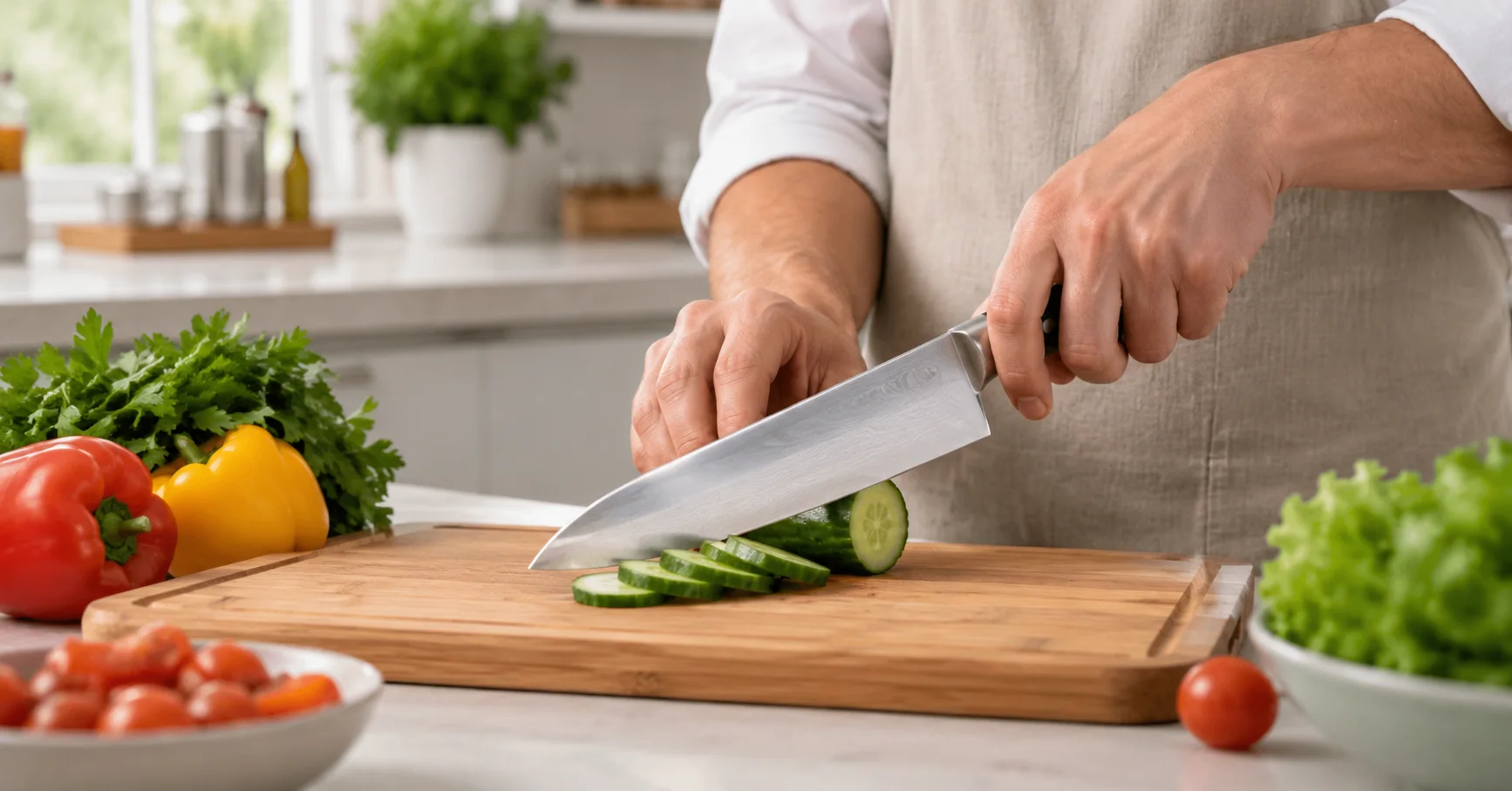
The knife described here is a broad, flat kitchen chef knife with a pointed tip, a straight cutting edge, and a dark handle designed for a full grip. In practical terms, that points to a general-purpose prep tool for vegetables and herbs. It is the kind of knife you expect to see on a cutting board in a home kitchen, a test kitchen, or light commercial food prep.
That matters because buyers often get distracted by branding language and overlook the job itself. For repeat vegetable prep, a knife needs enough blade surface to guide the cut, enough weight to feel stable, and a handle shape that reduces fatigue over time. A polished or satin stainless-steel blade is common in this category because it offers a clean, familiar look and usually fits standard kitchen expectations. The exact steel grade is not visible here, so it should be treated as a likely material rather than a confirmed specification.
If you are evaluating a chef knife supplier or comparing catalog options, start with use case first. Is this knife mainly for produce prep, protein work, all-purpose slicing, or a mix of tasks? That answer changes the blade geometry, handle style, and price tier far more than many buyers expect.
Quick reference: what to compare before you place an order
Different suppliers may offer knives that look similar at first glance. The useful differences tend to show up in these areas:
Blade shape
A broad blade helps with scooping, guiding, and repeated slicing on a board. A pointed tip adds versatility for trimming and detail work. A straight cutting edge can support clean push cuts, which many prep teams prefer for vegetables.
Blade material
Stainless steel is common for kitchen knives because it is familiar to buyers and generally easier to maintain than high-carbon options. Still, stainless steel is not a specification by itself. You should ask the supplier how the blade is finished, how it is produced, and what kind of sharpening process is used.
Handle feel
The visible handle here appears dark-colored and full-sized, which suggests a conventional ergonomic grip. That is a practical selling point in food prep, where the knife may be used repeatedly through a shift. A handle that fills the hand without feeling bulky is often better than one that looks sleek but tires the wrist.
Production method
This type of knife may be forged or stamped, but that cannot be verified from the image alone. Buyers should ask directly, because manufacturing route affects cost, balance, and perceived quality. Some kitchens only care about cutting performance. Others care about consistency across large batches, which makes production details more important.
Problem-solution: what usually goes wrong in knife sourcing
The sourcing problem is not usually finding a knife. It is finding one that performs consistently and survives normal kitchen abuse without becoming a complaint item.
One common mistake is buying only on appearance. A knife can look polished and substantial while still feeling clumsy in use. Another is assuming that a “chef” label automatically means the knife will suit every prep task. It often will not. Some teams need a true all-purpose chef knife. Others actually want a knife closer to a produce-first prep blade, especially if the work is mostly vegetables.
There is also the issue of hidden variation. Small differences in blade thickness, edge angle, or handle balance can change how a knife behaves more than a buyer might expect. That is why a kitchen knife supplier should be able to talk about geometry and manufacturing consistency, not just finish and packaging.
Choosing between supplier options
When comparing suppliers, it helps to sort the decision into three layers: performance, consistency, and commercial fit.
1. Performance on the board
For a knife used to slice cucumber, cut herbs, or prep mixed produce, the blade should move cleanly through soft and firm ingredients without excessive wedging. A broad blade surface can help with workflow, especially when the cook is moving ingredients from board to pan or bowl. The knife should feel stable rather than twitchy.
2. Consistency across batches
Even a decent sample knife means little if the next shipment varies. Sourcing teams should ask how the supplier controls blade finishing, handle attachment, and final inspection. If the knives will be sold under a private label or supplied to multiple sites, visual and functional consistency matters more than buyers sometimes admit at the start.
3. Commercial fit
The right supplier is not necessarily the one with the most features. It is the one whose product level matches the market. A home-kitchen line and a light-commercial line do not always need the same edge retention story or the same packaging approach. Some buyers want a straightforward, durable product. Others want presentation and shelf appeal. Be honest about which one you are buying.
What to ask a kitchen knife supplier before sample approval
You do not need a lab report to ask smart questions. You do need a short checklist that keeps the conversation grounded.
Ask what the blade material is, and whether the supplier can confirm the steel family rather than only calling it “stainless.” Ask whether the knife is forged or stamped, if that distinction is relevant to the line. Ask how the handle is constructed and what material is used, even if the image suggests a wood-like or synthetic finish. Ask how the supplier handles sharpening, final inspection, and packaging protection during transit.
For professional kitchen knives, one useful question is simple: how does the knife behave after repeated use? A supplier who knows their own product should be able to speak plainly about balance, comfort, and common wear points. If they only repeat marketing phrases, that is worth noting.
Common buyer mistakes that create headaches later
A few errors come up again and again.
The first is over-specifying what does not matter. Some teams spend too much time chasing a dramatic steel claim and too little time on handle comfort or blade geometry. The second is under-specifying what does matter, such as how the knife will be used, who will use it, and how often it will be washed and resharpened. The third is failing to match the knife to the kitchen environment. A busy prep station and a home demo kitchen are not the same buying situation, even if the knife looks identical in a catalog.
Another small but costly problem: sample approval without real use testing. A knife should be tested on the actual ingredients the end user handles most often. Cucumber is not a stress test, but it is useful for checking whether the edge glides cleanly or starts to feel grabby.
Practical advice for sourcing teams and product managers
If you are building a shortlist, ask the supplier for a sample that reflects the actual market position of the knife. Then put it through a short, realistic trial. Use it for vegetables, herbs, and whatever produce your customers handle most often. Watch for comfort, blade clearance, and control on the board. Also look at how the knife cleans up and how it feels after a few rounds of use.
For retail programs, the visual side still matters. A polished blade and dark handle can read as traditional and trustworthy, which is often useful. For foodservice, durability and ease of handling matter more than shelf language. There is no single best answer, and that is where a competent kitchen knife supplier earns their margin.
If you need a line that sits between home use and light commercial prep, a broad general-purpose knife like the one described here is a practical starting point. It is not a specialty tool, and that is the point.
FAQ
Is this definitely a chef knife?
Not with certainty. The visible shape is consistent with a general-purpose kitchen chef knife, but the exact subtype cannot be confirmed from the image alone.
Is stainless steel the safe assumption?
It is a likely assumption for this style of knife, but buyers should still confirm the blade material with the supplier rather than relying on appearance.
What should buyers focus on first?
Start with the intended prep task, then check blade shape, handle comfort, and production consistency. Those factors usually matter more than brochure language.
Why are professional kitchen knives harder to source than they look?
Because small differences in balance, edge profile, and handle feel change performance quickly. Two knives that look similar can behave very differently in real prep work.
Next step
If you are comparing a kitchen knife supplier for a new line, sample approval, or private-label program, start with real use conditions rather than catalog descriptions. Ask for clear material confirmation, production details where available, and a sample that can be tested on actual prep tasks. That is the shortest route to a knife that works in the hand, not just in the product photo.
