




What Is a Kitchen Scissors Manufacturer?
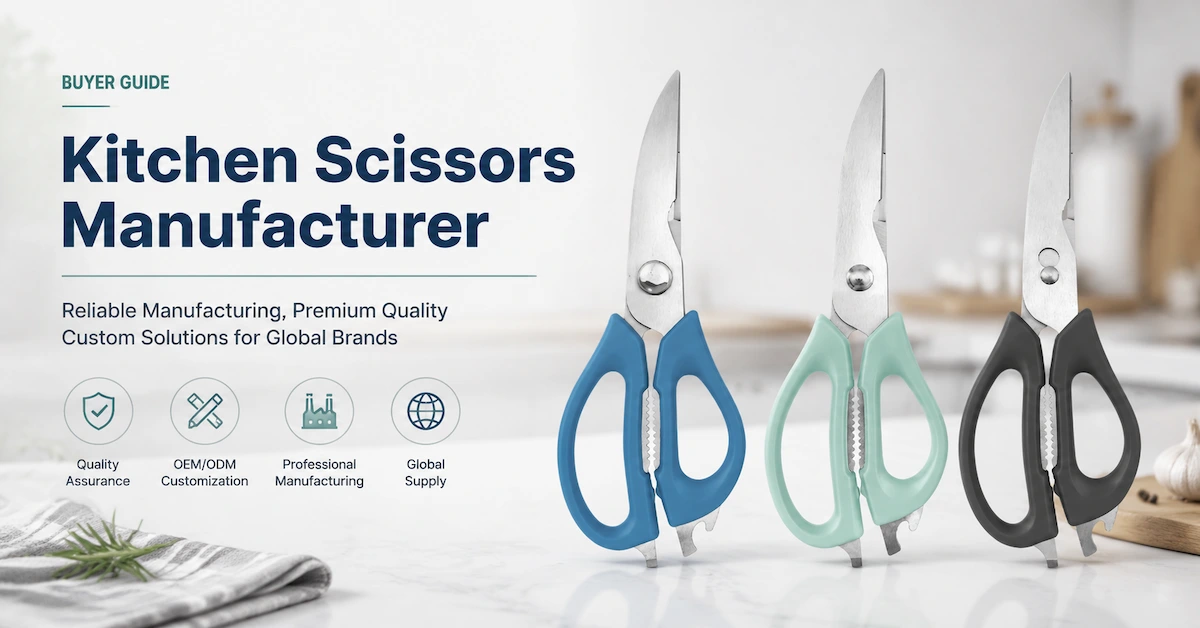
A kitchen scissors manufacturer is a professional producer that designs, develops, and manufactures kitchen scissors for brands, retailers, wholesalers, and distributors.
Unlike general trading companies, a reliable manufacturer controls key production stages, including:
- Material selection
- Product design
- Blade processing
- Handle manufacturing
- Assembly
- Quality inspection
- Packaging
For global kitchenware buyers, choosing the right manufacturer is essential because supplier capability directly affects:
- Product quality
- Cost control
- Delivery reliability
- Product differentiation
- Long-term business growth
BONET provides kitchenware manufacturing solutions for global brands, retailers, and distributors, supporting kitchen scissors, kitchen tools, knives, and customized product development. BONET Products
Why Choose a Professional Kitchen Scissors Manufacturer?
When sourcing kitchen scissors, many buyers focus only on price. However, professional manufacturing capability plays a more important role in long-term cooperation.
A reliable kitchen scissors manufacturer can help buyers achieve:
Stable Product Quality
Professional manufacturers have controlled production processes to maintain consistency across bulk orders.
Important quality factors include:
- Blade sharpness
- Cutting performance
- Handle strength
- Surface finishing
- Product durability
Better Cost Control
Working directly with manufacturers can reduce unnecessary supply chain costs.
Benefits include:
- Factory-direct pricing
- Flexible customization
- Better production planning
- Faster communication
Stronger Product Differentiation
For brands and retailers, unique products help improve market competitiveness.
Manufacturers can support:
- Custom designs
- Different handle styles
- Product combinations
- Packaging solutions
Types of Kitchen Scissors Manufactured for Global Markets
A professional kitchen scissors supplier usually provides different product categories based on customer requirements.
Standard Kitchen Scissors
Standard kitchen scissors are widely used for everyday household applications.
Common features:
- Stainless steel blades
- Comfortable handles
- Reliable cutting performance
Suitable for:
- Supermarkets
- Retail stores
- Household product brands
Detachable Kitchen Scissors
Detachable kitchen scissors feature removable blade structures for easier cleaning and maintenance.
Advantages include:
- Better hygiene
- Easier cleaning
- Unique product positioning
They are suitable for brands looking for differentiated kitchen tools.
Multifunctional Kitchen Scissors
Multifunctional scissors combine several functions in one product.
Possible features:
- Food cutting
- Herb cutting
- Packaging opening
- Bottle opening
These products are attractive for:
- Online retailers
- Amazon sellers
- Kitchen gadget brands
Poultry and Heavy-Duty Kitchen Scissors
Professional users may require stronger cutting tools.
Applications include:
- Meat preparation
- Restaurant kitchens
- Food processing environments
These products require stronger materials and precise manufacturing.
Materials Used by Kitchen Scissors Manufacturers
Material selection directly affects product performance and customer experience.
Stainless Steel Blades
Stainless steel is one of the most common materials for kitchen scissors.
Advantages:
- Corrosion resistance
- Durability
- Easy maintenance
- Professional appearance
For most kitchenware markets, stainless steel provides a good balance between performance and cost.
Handle Materials
Handles influence comfort and usability.
Common materials include:
- PP plastic
- ABS plastic
- TPR materials
- Composite materials
A professional manufacturer should provide suitable handle solutions according to:
- Product positioning
- Target customers
- Price range
Food-Safe Material Considerations
For kitchen products, buyers should evaluate:
- Material safety
- Product durability
- Surface treatment
- Manufacturing standards
Kitchen Scissors Manufacturing Process
A professional manufacturing process ensures product consistency.
Typical production steps include:
Material Preparation
Manufacturers select suitable materials according to product requirements.
Considerations include:
- Blade performance
- Product application
- Market positioning
Blade Processing
Important processes include:
- Cutting
- Grinding
- Sharpening
- Heat treatment
These processes influence:
- Sharpness
- Strength
- Service life
Handle Production
Handle manufacturing focuses on:
- Ergonomic design
- Comfortable grip
- Assembly accuracy
Assembly and Testing
Final production stages include:
- Blade alignment checking
- Functional testing
- Appearance inspection
- Packaging inspection
BONET focuses on kitchenware manufacturing processes including production control, quality inspection, assembly, and packaging solutions for global buyers. BONET Manufacturing Process
How to Evaluate a Kitchen Scissors Manufacturer?
Choosing the right supplier requires a complete evaluation process.
Manufacturing Capability
Buyers should check:
- Production experience
- Factory capability
- Equipment
- Production capacity
A capable manufacturer should support both standard products and customized projects.
Product Development Ability
For brands, product development capability is important.
Evaluate whether the supplier can provide:
- New product design
- Sample development
- Product improvement suggestions
- Custom solutions
Quality Control System
A reliable manufacturer should have clear inspection procedures.
| QC Stage | Key Inspection |
|---|---|
| Material inspection | Steel and component quality |
| Production inspection | Process consistency |
| Functional testing | Cutting performance |
| Final inspection | Appearance and packaging |
Communication and Service
Long-term cooperation requires:
- Fast response
- Clear production updates
- Problem-solving ability
- Professional support
OEM Kitchen Scissors Manufacturing Solutions
For brands that want exclusive products, OEM manufacturing provides more opportunities.
A professional OEM kitchen scissors manufacturer can support:
Custom Product Design
Options include:
- Blade shapes
- Handle designs
- Product functions
- Material combinations
Brand Customization
Including:
- Logo engraving
- Custom colors
- Packaging design
- Retail solutions
Private Label Development
Suitable for:
- Kitchenware brands
- Amazon sellers
- Supermarket brands
- Distributors
BONET supports OEM/ODM kitchenware projects, helping customers develop customized kitchen scissors and kitchen tools for different markets. BONET OEM ODM Service
Kitchen Scissors Supplier Selection Checklist
Before choosing a supplier, buyers can evaluate:
| Evaluation Factor | Questions |
|---|---|
| Manufacturing | Does the supplier own production capability? |
| Materials | Are materials suitable for target markets? |
| Quality | Are inspection processes available? |
| Customization | Can products be customized? |
| Delivery | Can the supplier support bulk orders? |
| Experience | Does the supplier understand export markets? |
A reliable supplier should provide both product quality and business support.
Common Mistakes When Choosing Kitchen Scissors Manufacturers
Selecting Only Based on Price
The cheapest supplier may create risks:
- Poor quality
- Higher defect rates
- Customer complaints
Ignoring Product Testing
Samples help buyers verify:
- Cutting ability
- Comfort
- Appearance
- Durability
Choosing Suppliers Without OEM Capability
For brands, customization ability creates stronger market advantages.
Overlooking Long-Term Cooperation
A good supplier should support:
- Product improvement
- Repeat orders
- Market expansion
Why Global Brands Choose Kitchen Scissors Manufacturers
Working directly with manufacturers provides advantages:
Better Product Control
Brands can participate in:
- Material selection
- Design decisions
- Quality standards
Faster Product Development
Manufacturers can support:
- Sampling
- Modification
- Production launch
Stronger Brand Value
Customized kitchen scissors help brands create unique product collections.
FAQ
What does a kitchen scissors manufacturer do?
A kitchen scissors manufacturer designs, produces, tests, and supplies kitchen scissors for brands, retailers, and distributors.
How do I choose a reliable kitchen scissors manufacturer?
Evaluate manufacturing capability, product quality, OEM support, quality control, communication, and export experience.
What materials are commonly used for kitchen scissors?
Stainless steel blades and durable plastic or composite handles are commonly used in kitchen scissors production.
Can kitchen scissors manufacturers provide OEM services?
Yes. Professional manufacturers can customize designs, colors, logos, packaging, and product features.
Are stainless steel kitchen scissors good for retail markets?
Yes. Stainless steel kitchen scissors are popular because they provide durability, corrosion resistance, and easy maintenance.
What is the MOQ for custom kitchen scissors?
MOQ depends on product design, customization requirements, materials, and production plans.
How do manufacturers control kitchen scissors quality?
Manufacturers use material inspection, production monitoring, functional testing, and final quality checks.
Does BONET manufacture custom kitchen scissors?
Yes. BONET provides kitchen scissors manufacturing, OEM/ODM customization, and kitchenware production solutions for global buyers. BONET Contact Us
Conclusion
Choosing the right kitchen scissors manufacturer is an important step for brands, retailers, and distributors developing kitchen tool product lines.
A reliable manufacturer should provide:
- Stable production capability
- Quality materials
- Professional manufacturing processes
- OEM customization
- Consistent quality control
For businesses sourcing kitchen scissors, working with an experienced kitchenware manufacturer can help reduce supply risks and create competitive products for global markets.
BONET supports global buyers with kitchen scissors manufacturing, OEM/ODM solutions, and customized kitchenware production services. BONET Products
