




Kitchen Shears Bulk Supplier Guide for Buyers
Choosing a kitchen shears bulk supplier is different from buying one pair for a home drawer. For restaurants, caterers, commissaries, retailers, and distributors, kitchen shears become part of a repeatable workflow. They are used for herbs, greens, twine, food packaging, and other quick cutting tasks that need to be done safely and consistently.
Bulk buyers usually need more than an attractive product photo. They need to know whether the shears feel comfortable in repeated use, whether the blades cut cleanly, whether the pivot stays aligned, and whether future shipments will match the approved sample. This guide focuses on practical selection and supplier evaluation rather than broad product claims.
What these kitchen shears are designed to do
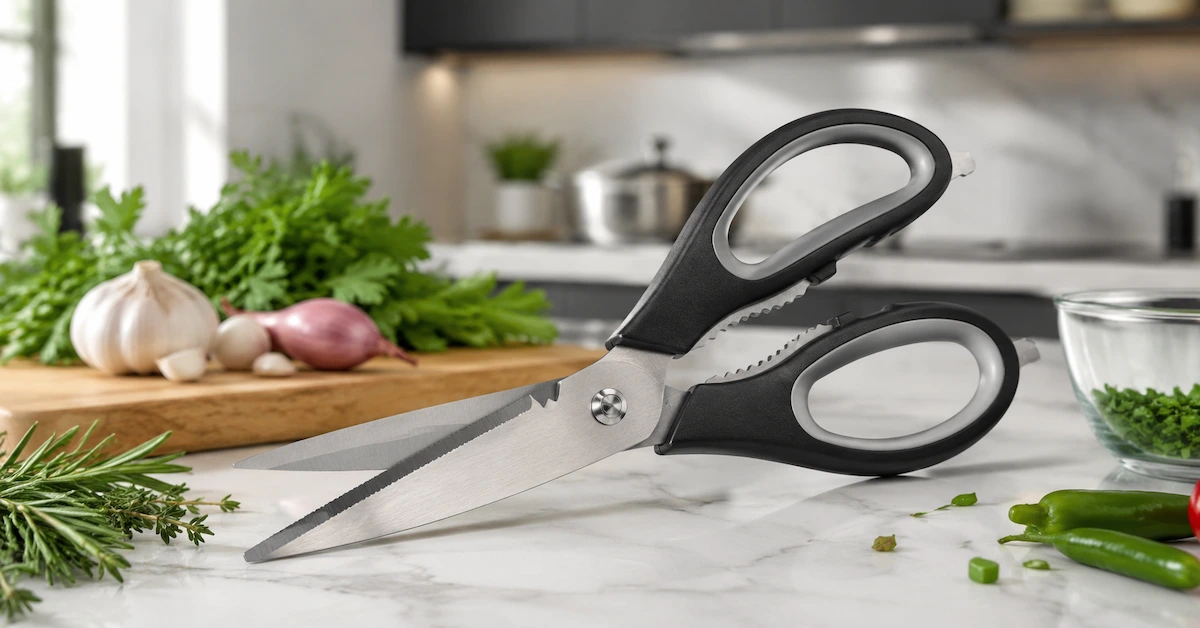
The product shown is a standard two-blade kitchen shear with a stainless-steel-looking blade finish and molded black-and-gray handles. The visible format is familiar: two handle loops, a central pivot, and a blade shape suitable for general kitchen cutting. One blade appears to include a serrated section, which may help grip materials such as twine, packaging, or tougher food items.
This type of shear is best understood as a general-purpose kitchen tool. It can support everyday prep tasks such as cutting herbs, trimming greens, opening food packaging, and handling light utility work around a prep station. It should not automatically be treated as a specialty poultry shear, heavy-duty workshop scissor, or medical-grade cutting tool unless those uses and specifications are confirmed by the supplier.
Key Takeaways
- Bulk kitchen shears should be evaluated by real-use cutting performance, not appearance alone.
- Blade alignment, pivot tension, and handle comfort affect user satisfaction quickly.
- Retail, foodservice, and distributor buyers may need different packaging and replenishment support.
- Material, cleaning guidance, compliance details, MOQ, and customization options should be verified directly with the supplier.
Comparison checklist for bulk sourcing
Before placing a large order, use a simple checklist to compare samples and supplier responses. This helps sourcing teams avoid choosing a product that looks acceptable but fails in daily use.
| Evaluation area | What to check | Questions to ask the supplier |
|---|---|---|
| Blade performance | Clean cutting on herbs, greens, packaging, and twine | What is the blade material and edge process? |
| Pivot quality | Smooth opening, stable alignment, no excessive looseness | How is pivot consistency controlled across batches? |
| Handle comfort | Grip with dry, damp, and gloved hands | What handle material is used, and are dimensions fixed? |
| Cleaning and care | Resistance to normal kitchen moisture and cleaning routines | Are there specific care instructions or dishwasher limitations? |
| Wholesale readiness | Carton packing, labeling, reorder stability | What packaging, MOQ, lead time, and private-label options are available? |
How foodservice buyers should assess samples
Foodservice buyers should test kitchen shears in the same conditions where staff will use them. A desk inspection can show finish and appearance, but it cannot reveal how the tool behaves during repetitive cutting. Ask kitchen staff to cut herbs, trim packaging, open bags, and use the shears with damp hands. If the handle feels cramped or the pivot drags after repeated opening and closing, those issues will become daily complaints.
It is also useful to compare several samples from the same supplier, not just one pair. In bulk sourcing, consistency matters as much as the best sample. Check whether blade alignment, handle fit, and cutting feel are similar from piece to piece. If there is wide variation during sampling, ask how the supplier manages batch inspection before shipment.
What retail and wholesale buyers should consider
Retail buyers often need to evaluate both product usability and shelf presentation. A practical kitchen shear may sell well if it looks clear in packaging, communicates its intended use, and fits the retailer’s price and assortment strategy. However, packaging should not hide poor ergonomics or weak assembly. Returns and customer complaints often come from basic performance problems, not from packaging design.
Distributors and wholesalers usually focus on repeatability. They need a product that can be reordered with stable specifications, predictable packing, and consistent labeling. If the item is part of a larger kitchenware range, confirm whether the supplier can maintain the same product appearance and packaging format over time. Do not assume that future batches will match the first shipment unless this is clearly discussed.
Supplier questions before placing a bulk order
A reliable sourcing discussion should be specific. Instead of asking whether the product is “high quality,” ask for details that can be checked. For example:
- What is the blade material, and is the serrated section standard on all units?
- What material is used for the molded handle?
- How is the pivot assembled, and how is tension checked?
- What care instructions should be provided to end users?
- Are food-contact, safety, or market-specific compliance documents available if required?
- What are the MOQ, carton details, lead time, sample policy, and reorder process?
- Can packaging, labeling, or private-label requirements be supported?
These questions are especially important for OEM, private-label, and wholesale programs. Buyers should avoid assuming material grade, dishwasher safety, certifications, testing results, or compliance status unless the supplier provides clear documentation.
Common mistakes when buying kitchen shears in bulk
One common mistake is treating all kitchen shears as interchangeable. Similar-looking products can differ in blade sharpness, pivot stability, handle size, and overall balance. Another mistake is selecting only by appearance. A clean metallic finish and molded handle may look professional, but they do not prove cutting quality or long-term comfort.
Buyers also sometimes overlook the difference between general-purpose and specialty tools. If the end user needs to cut poultry bones or very tough materials, verify whether this product type is suitable. A general kitchen shear can be useful in many settings, but it should be matched to realistic tasks.
Finally, do not ignore logistics. Carton quantities, barcode needs, labeling, inner packing, and documentation can affect total procurement cost. A product that performs well can still create operational friction if it does not fit your warehouse, retail, or distribution requirements.
Practical FAQ
Are these shears only for food prep?
They are suitable for general kitchen tasks such as herbs, greens, twine, and packaging, based on the visible product style. Buyers should confirm suitability for any heavier or specialized use.
Does a serrated blade guarantee better cutting?
No. Serration can help grip some materials, but overall performance also depends on blade geometry, edge quality, and pivot alignment.
Can buyers assume the shears are dishwasher safe?
No. Dishwasher suitability and cleaning limits are not confirmed in the source information. Ask the supplier for care instructions before purchase.
What should be tested before approving a bulk order?
Test cutting performance, handle comfort, pivot smoothness, sample-to-sample consistency, packaging, labeling, and documentation.
Are these suitable for private-label programs?
They may be, but buyers should confirm available packaging, labeling, artwork process, MOQ, lead time, and whether specifications can remain stable across reorders.
A sensible next step for sourcing teams
If you are comparing kitchen scissors wholesale options, start with a structured sample review. Test the shears in realistic prep conditions, record feedback from actual users, and compare that feedback with supplier answers on materials, packing, customization, and reorder support. For follow-up questions, buyers can contact a supplier through the usual sourcing inquiry process.
The best bulk choice is rarely the most decorative option. It is the product that performs consistently, fits the intended channel, and gives buyers enough supplier transparency to purchase with confidence.
