




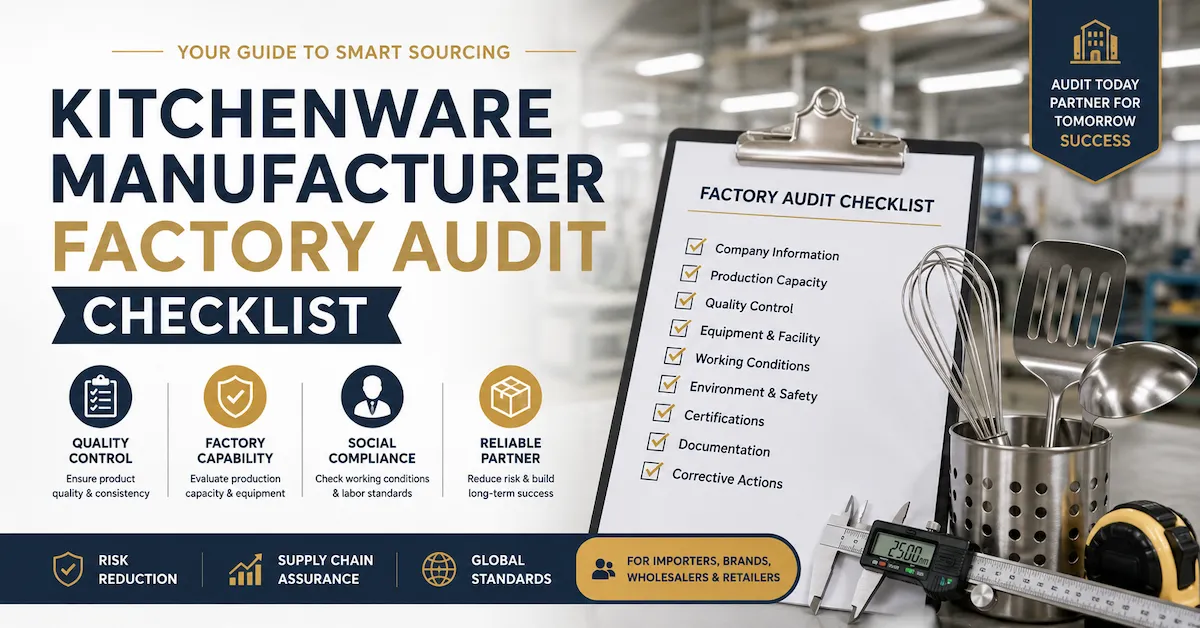
When a buyer starts searching for a kitchenware manufacturer in China, the first working document should not be a quotation spreadsheet. Start with fit and proof. A useful shortlist shows that the supplier can make the exact product family, explain its materials and process, control the approved sample, inspect the production lot, and pack the order for the buyer's real sales channel. A cheap line item can still become an expensive project when the factory is wrong, the specification is vague, or the package has never faced a transport test.
The intended reader might run a brand, import for a regional distributor, buy for a retailer, or handle sourcing inside a small team. All of them need a comparison that another colleague can understand six months later. This guide also explains what belongs in an RFQ, so factories can answer without filling every blank with a guess. The goal of a kitchenware supplier audit is not to produce a decorative checklist. It is to reach a defensible decision and leave a clear record for quality teams and management.
Buyer takeaway: audit the match between product, process, evidence, and order conditions. A capable kitchenware manufacturer China sourcing teams can rely on should be able to explain what it controls, what it buys from partners, what must be tested, and what remains subject to final project confirmation.
Why the search for a kitchenware manufacturer in China is harder than it looks
On paper, the phrase describes one search. In purchasing, several jobs are stacked together. There is the product source itself, perhaps scissors or knives, perhaps prep tools, utensils, boards, or a mixed shelf assortment. Then comes the development route. A stock design with a new color and logo is not the same project as a new mechanism, handle, mold, or material combination. Finally, somebody has to build a supply process that repeats the approved result after the sample leaves the meeting room.
That is why a broad company description is not enough. A supplier may be experienced in molded plastic but have limited knowledge of blade geometry. Another may make excellent scissors yet depend on outside partners for a knife block, silicone component, printed carton, or surface treatment. Outsourcing is not automatically a problem. Hidden outsourcing is. The buyer needs to see the production map, including the points where responsibility moves from one party to another.
China also contains manufacturing clusters with quite different strengths. BONET operates from Yangjiang in Guangdong, where metal kitchen tools, knives, scissors, molds, and supporting suppliers form a familiar local industry. The address is relevant when a project depends on blade work or mixed metal-and-plastic construction. It is not proof by itself. The model, material, process, sample, inspection plan, and packaging still need their own checks.
The 12 checks that make a supplier comparison useful
1. Start with product-family fit
Ask the supplier to show a product map before asking for its lowest price. The map should separate product families, construction types, materials, and use cases. Do not put all scissors in one box. Kitchen shears, poultry shears, detachable models, magnetic-storage designs, household scissors, stationery scissors, tailor scissors, and school scissors ask different things of the factory. Kitchen tools need the same treatment: a knife line is not a peeler line, and neither one automatically proves experience with grinders, utensils, prep devices, or boards.
The purpose is to discover where the supplier has depth. Ten variations built around a known blade and pivot platform can indicate more useful engineering experience than a catalog containing hundreds of unrelated items. Look at how many models share a manufacturing logic, which processes are handled repeatedly, and whether the supplier can discuss failure modes without returning to slogans.
BONET's current online catalog is particularly deep in scissors and multifunctional kitchen tools. That makes scissors, mixed metal-and-plastic tools, and selected kitchen assortments logical subjects for detailed discussion. It does not mean every object described by the word "kitchenware" is automatically an in-house strength. A responsible factory conversation should identify the strong categories, the partner-sourced categories, and the items that are outside the current range.
2. Distinguish a manufacturer, an integrator, and a trading source
Buyers sometimes treat these labels as a moral ranking. That is not useful. A focused manufacturer may control its main process and still purchase handles, screws, cartons, or specialty finishes. An integrator may coordinate several qualified plants and provide strong project management. A trading company may be the right choice for a small mixed order. The risk appears when the commercial presentation does not match the actual chain.
Work through the chain with plain questions. Who owns the tooling? Who purchases the raw material? Where are parts formed or stamped, and where do heat treatment and sharpening happen? Name the assembly point, the person or team that approves color, the final inspector, and the packing location. Put those answers into a simple process flow. During a video call or visit, compare the drawing with what is actually visible. If a key process happens elsewhere, review that partner's controls and the release method for incoming parts.
There is no need to force the answer into "everything is in one building." What matters is whether a defect has an owner, a trail, and a workable correction route.
3. Build a small but credible evidence pack
A good evidence pack is not a folder full of logos. It is a set of documents that supports the exact claims used to sell the project. Company registration and address information establish identity. A product specification establishes what is being made. Material declarations, test reports, inspection records, and approved samples support technical statements. Factory images and process videos help show where work occurs, but they should be dated and linked to the relevant process.
A supplier may cite ISO 9001, BSCI, Sedex, or another audit. Read the less glamorous details: legal entity, address, scope, issue date, and validity. A management system certificate or social-audit report is not a food-contact approval for the product in your hand. In the same way, a general material sheet does not show that the finished item passed a market-specific test. Keeping those evidence categories separate prevents claims from growing beyond the documents behind them.
At the first shortlist stage, keep the packet lean. Ask only for material that can change the decision: company identity, a production map, relevant products, an example specification, a sample inspection record, a packaging example, and the certificates that genuinely apply. Once the project route is clear, request the deeper file.
4. Test the supplier with the quality of your brief
A vague inquiry produces vague offers. "Please quote your best kitchen scissors" leaves the factory to guess the blade length, steel grade, handle material, target market, cutting task, packaging, quantity, labeling, test requirements, and acceptable price range. Two suppliers can respond to that sentence with different products and both appear competitive. The comparison is false.
A useful brief states the sales channel and user before describing the color. A supermarket private-label program may prioritize retail packaging, barcode control, drop resistance, repeat orders, and consistent shelf appearance. A professional food-service distributor may care more about cleanability, grip, repeated operation, and replacement availability. An ecommerce launch may need stronger image differentiation, compact packaging, and a controlled pilot quantity.
Include reference photos, intended tasks, dimensions, material preferences, restricted substances, target market, logo method, color standard, packaging format, estimated order quantity, target launch date, and the tests that must be considered. Then ask the supplier to identify missing decisions. The quality of the questions you receive is part of the audit.
5. Audit the sample as a controlled document, not a souvenir
Samples often pass because everyone looks at them differently. The salesperson sees an attractive prototype. The buyer sees a market opportunity. The engineer notices dimensions. The quality inspector notices measurable tolerances. Unless these observations are captured, the approved sample becomes a memory rather than a production control.
Create a sample approval sheet. Record the model or project code, revision, date, dimensions, weight if relevant, materials, colors, surface treatment, logo location, functional observations, packaging components, and known deviations. Add photographs of the approved sample from consistent angles. Mark any feature that must not change without written approval. If there are several samples, explain which one controls production and what happened to the earlier versions.
On a kitchen-scissors project, begin with overall and blade length, tip shape, handle material, and pivot construction. Then record opening resistance, closing feel, agreed cutting tasks, magnet or sheath retention, surface appearance, marking, and packaging. Choose the test around the intended use rather than backfilling a method after the sample is finished. A casual cutting demonstration must not turn into a lifetime claim.
6. Verify materials at the level that affects the product
Material names can create false confidence. There is no single, universal substance called "stainless steel"; grade and condition matter. The same is true of polymers. PP, ABS, TPR, nylon, and silicone change with formulation, color system, recycled content, supplier, and intended contact. A correct material name is only one input. Thickness, geometry, heat treatment, edge preparation, molding, assembly, and the user's task all shape the finished result.
Ask the factory to connect the material statement to a purchase specification or controlled bill of materials. Decide whether incoming certificates, supplier declarations, identity testing, or third-party testing are required. For a product intended for food contact, confirm the target market and the exact regulation or buyer standard before selecting tests. Do not assume that a material accepted in one context automatically covers every color, component, temperature, or market.
The product page for BONET model SKI101 lists 420 stainless steel with PP+TPR handle materials. That is useful catalog information. For a private-label order, the buyer should still confirm the grade specification, surface condition, color, component scope, and the tests attached to the final configuration.
7. Make functional testing resemble the user's task
Functional tests should answer a purchase question. Can the product complete the intended task consistently? Does performance change after repeated operation? Can users grip it safely? Does the packaging protect the critical feature? A test that is easy to perform but unrelated to use can produce reassuring data with little commercial value.
For kitchen shears, a test plan may include defined cutting media, a fixed number of cycles, visual edge inspection, pivot condition, handle condition, corrosion exposure where relevant, cleaning observations, and a record of failures. The media should match the claim. Cutting paper does not prove suitability for poultry joints. Cutting one herb stem does not prove long-term edge retention. A bone-cutting model and a general food-preparation model may require different fixtures and acceptance rules.
For utensils, the test plan could address deformation, joint security, surface condition, color transfer, and cleaning. Temperature belongs there only when a defined method and material specification support it. A board asks for a different inspection: dimensions and flatness first, then surface, odor, edges, color, package, and any application-specific requirement. For every test, ask the awkward follow-up: what will the team do if it fails?
8. Define quality control before the order starts
"We inspect every product" is pleasant to hear and almost useless on its own. Turn it into a real plan. Name the characteristic, the inspection point, the method, the sample size or frequency, and the response to a failure.
Keep incoming checks apart from production checks, final inspection, and packing control. At receipt, the team might review material identity, bought-in parts, color, dimensions, or certificates. On the line, attention moves to forming, molding, assembly, alignment, edge preparation, surface treatment, and the first approved piece. Final inspectors look at appearance, dimensions, function, marks, assortment, quantity, and pack. The inspection level should follow the product risk, the customer's standard, and the order size.
Ask for the inspection checklist before production. Review the defect categories. A loose pivot, sharp plastic flash, unreadable barcode, wrong carton mark, and minor cosmetic variation do not carry the same risk. Agree on critical, major, and minor defects where appropriate. Also agree on containment, rework, reinspection, and approval authority. A report without a response plan is only a photograph of the problem.
9. Audit the package before it becomes a last-minute problem
The package has several jobs at once. It restrains sharp parts, carries labels, survives freight, presents the item on a shelf or screen, and shapes the first customer impression. Yet teams often approve it late, when the launch date leaves little room for correction. Put packaging into sample development instead.
For sharp or pointed tools, check how the blade and tip are restrained. For a hanging retail pack, verify hole position, board strength, visibility, tamper resistance, and the way the product sits after transport. For ecommerce, test the product inside the shipping system, not only the retail box. For sets, make sure parts cannot rub, shift, or leave the insert. Confirm barcode type and scan quality, country-of-origin marking, warnings, translations, artwork revision, carton marks, quantities, and pallet or container assumptions.
Ask the supplier to quote packaging separately when alternatives are being evaluated. A low unit price based on a thin, generic pack cannot be compared fairly with a quotation that includes a tested retail structure and full artwork control.
10. Compare MOQ, cost, and lead time as a system
MOQ is not a single factory personality trait. It is the result of material purchase quantities, color runs, machine setup, labor, tooling, packaging print quantities, component sourcing, and the supplier's willingness to absorb complexity. The same product can have different minimums for a stock color, a Pantone-matched handle, a custom printed box, and a new mold.
Do not accept one unexplained MOQ number. Ask where the minimum comes from. The product run, molded color, logo method, and printed package may each create a different threshold. When the box is the constraint, a standard carton with a label or sleeve can make a pilot practical. When a Pantone-matched handle is the constraint, the first market test might use an existing color. These choices are part of commercial design, not merely bargaining.
Lead time should also be split into sample, tooling, material preparation, production, inspection, packaging, and transport. Request the assumptions behind the schedule and the date on which the clock begins. An estimate made before artwork, sample approval, deposit, or testing is complete may be useful for planning, but it is not a confirmed production commitment.
11. Look for disciplined communication and change control
Many sourcing failures begin as small, reasonable changes. The buyer adjusts a logo. The factory changes a screw supplier. Packaging artwork receives a last-minute translation. A handle color is approved in a phone message. Weeks later, the teams remember different versions.
Use a project code and revision system from the first brief. Put open questions in a shared action list with an owner and due date. Confirm decisions in writing. Keep the specification beside the artwork, sample approval, and a short change history. Before approving a change, stop and ask what it does to cost, timing, tooling, tests, and any material already bought.
During supplier evaluation, notice whether answers refer to a revision and whether attachments are named clearly. Ask the team to summarize a meeting. A factory that handles small information controls well is more likely to handle a complicated production handoff well.
12. Make the final decision on total execution risk
A scorecard is useful only if it reflects the project. A buyer sourcing a single kitchen shear for a supermarket has different risk from a startup developing a patented mechanism or a wholesaler buying a mixed container. Weight the factors accordingly.
Product and process fit should normally carry more weight than catalog size. Sample accuracy, evidence quality, QC planning, packaging control, communication, capacity for the expected volume, and commercial transparency should all appear. Price can be a weighted factor, but compare equivalent specifications. Add a separate note for unresolved risks instead of hiding them inside an average score.
| Audit area | Evidence to request | Typical warning sign |
|---|---|---|
| Product fit | Relevant models, process map, comparable project | A broad catalog with no technical discussion |
| Specification | Controlled spec, drawing, bill of materials | Quotation based mainly on a photo |
| Sample | Revision, approval sheet, deviation list | No record of which sample controls production |
| Quality | Inspection checklist, methods, defect rules | "100% inspection" without criteria |
| Packaging | Dieline, pack sample, marks, transport checks | Packaging postponed until production |
| Commercial | MOQ breakdown, assumptions, schedule | Lowest price with unclear inclusions |
Four questions to ask when auditing different product types
Kitchen scissors and shears
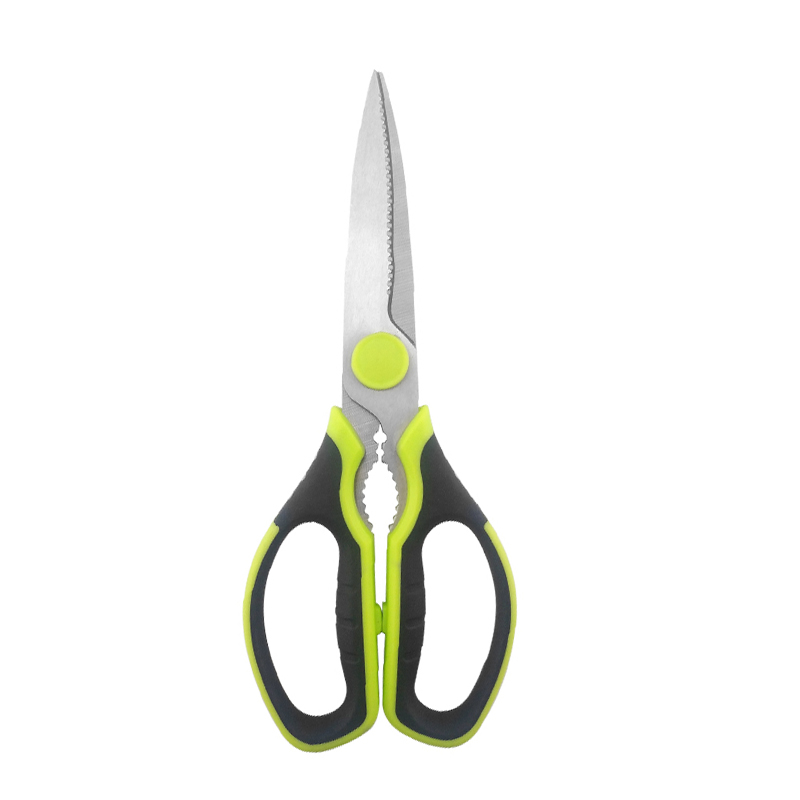
Ask which cutting task defines the model. Start with the blade and pivot, then check the handle, tip, edge, fixed or detachable construction, and cleaning guidance. Connect each product claim to a test. A magnet, sheath, opener, or serrated section needs its own check; it should not disappear inside a general cutting trial. "Multifunction" is useful only when the named functions and their limits are clear.
Knife sets
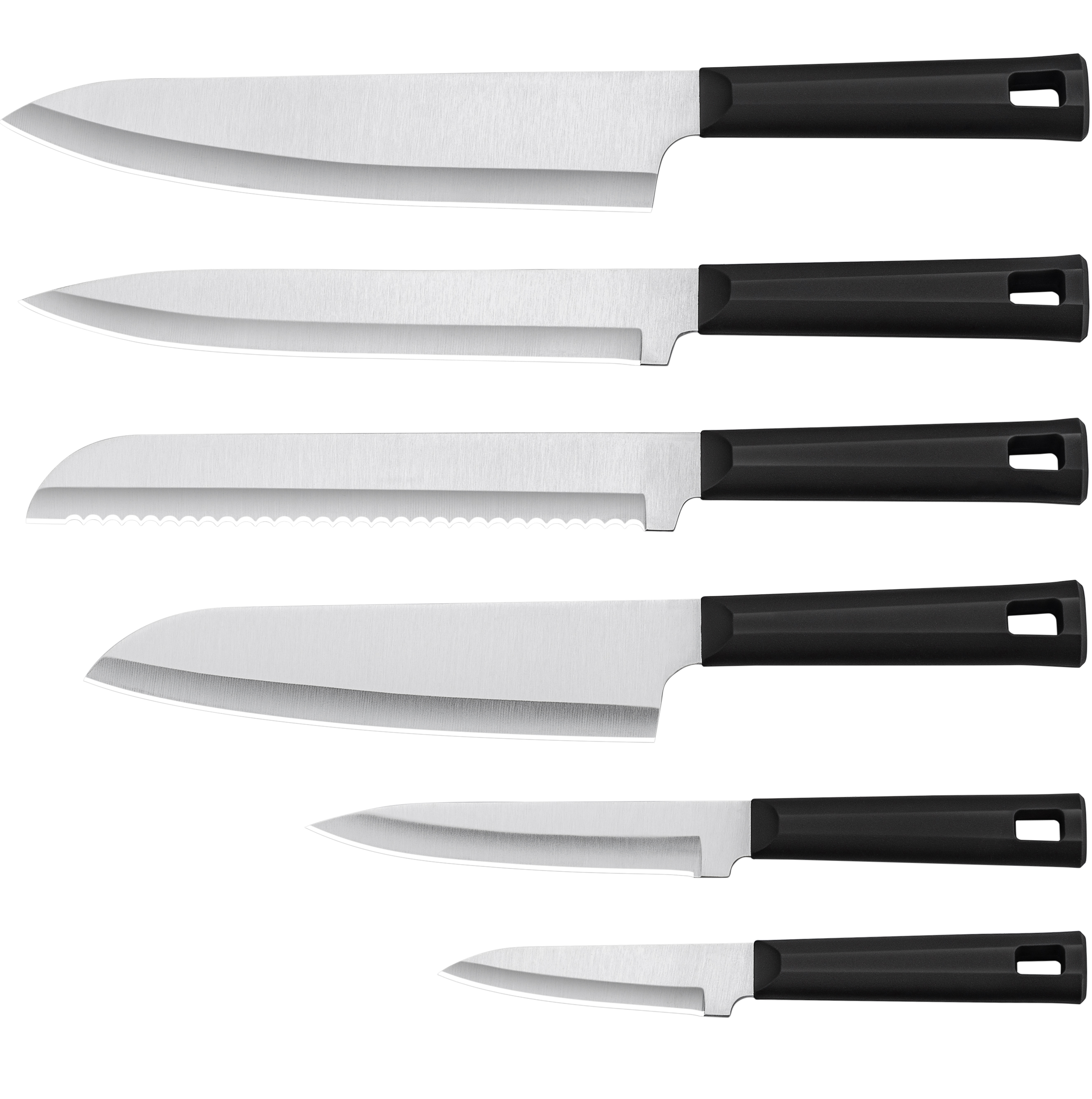
Confirm the assortment, steel, construction, handle, edge, storage system, inner protection, marking, and test scope. A set may draw parts from several production streams. Inspect each item, then look across the group for finish and color consistency. Count control deserves extra attention: one missing or mixed knife makes the entire retail unit wrong.
Utensils: put boundaries around material claims
List the food-contact surfaces one by one. Note any internal support, the color system, how parts are joined, the expected odor and finish, and the intended cleaning method. Match compliance work to the destination market. A temperature statement needs both a defined method and evidence for the material actually used; a number copied from a general raw-material article does not belong in the finished-product specification.

Boards and mixed assortments
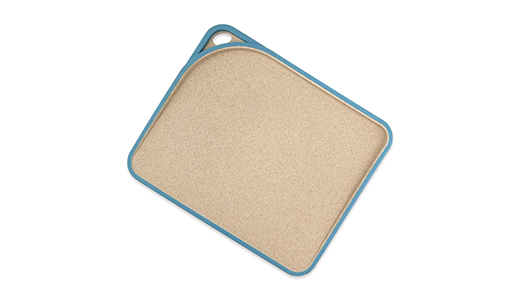
For a board, confirm polymer or wood type, dimensions, thickness, surface, flatness, edge condition, color, odor, intended use, labeling, and pack. For mixed assortments, identify which factory controls each item and who owns the final inspection. A single purchase order does not automatically create a single manufacturing system.
How to write an RFQ that produces comparable answers
Give the factory a form it can answer line by line; a long email paragraph is easy to misread. Open with the commercial setting. Name the destination country, buyer, channel, launch window, and likely quantity. Product requirements come next, followed by customization, pack, tests, and documents. Version every attachment. The supplier may suggest an existing platform to reduce risk, but the alternative should be labeled rather than quietly quoted as if it matched the original brief.
- Project: product family, target user, market and channel.
- Configuration: dimensions, materials, functions and reference model.
- Customization: color, logo method, surface, artwork and pack.
- Compliance: target market, customer standard and required reports.
- Quality: intended tasks, test expectations and inspection method.
- Commercial: estimated quantity, target date, quotation terms and sample quantity.
- Response format: unit price assumptions, MOQs, sample route, tooling, timing, exclusions and open questions.
Ask suppliers to quote against the same revision. If they propose changes, require a separate line showing the alternative and the reason. This avoids comparing a strong quotation to a cheap but different product.
Common sourcing mistakes and the practical correction
Mistake: starting with a target price and no product definition. Correction: define the user's task and the minimum acceptable construction first. Then let cost engineering work against a known target.
Mistake: asking for every certificate in the market. Correction: identify the target country, channel, material, and claim, then request the documents and tests that apply. More paperwork is not the same as better evidence.
Mistake: approving appearance but not function. Correction: create an approval sheet that includes performance observations, test media, packaging, and deviations.
Mistake: treating the first order as the end of development. Correction: review production results, complaints, returns, inspection data, and user feedback. Update the specification before replenishment.
Mistake: choosing the supplier with the fastest answer. Correction: reward clear assumptions and useful questions. A thoughtful clarification may prevent a month of rework.
Where BONET may fit in a sourcing shortlist
BONET HOUSEWARE CO., LTD operates in Yangjiang, Guangdong. The online catalog shows unusual depth in scissors: kitchen, household, stationery, tailor, and school ranges sit beside multifunctional kitchen tools and a smaller selection of knives and utensils. BONET describes its project route as a sequence from product discussion and sampling through quotation, production, inspection, branding, packing, and delivery.
That mix may suit a buyer looking for deep scissors options, mixed kitchen-tool development, metal-and-plastic construction, private-label changes, or a coordinated assortment. The exact product still decides the fit. Ask for the closest model, its controlled specification, the sample route, applicable evidence, MOQ conditions, package plan, and current timing.
There will also be projects that do not fit. The item may sit outside BONET's confirmed network, the requested material or document may be unavailable, or the quantity and schedule may not support the proposed route. Finding that out early is a good outcome of the audit, not a failed sales call.
Start a fact-based supplier review
Send the destination market and channel first, followed by the product, likely quantity, material preference, logo, package, tests, and launch window. BONET can then compare three practical starting points: an existing design, a limited OEM change, or a broader ODM development project.
Questions buyers often raise during a shortlist
What belongs in the message before I request samples?
Confirm the relevant product family, the proposed model or development route, materials, dimensions, intended use, target market, customization, packaging, testing, estimated quantity, and timing. Ask the supplier to list assumptions and missing decisions. A sample made from an incomplete brief may be attractive but impossible to compare or reproduce.
How do I check what the supplier actually manufactures?
Begin with the legal entity and operating address. Ask for a process map and mark the steps completed on site. Review live or dated production evidence, then follow one relevant item from incoming material or components to inspection and packing. The point is to understand responsibility and control, not to insist that every screw and carton comes from one building.
Is the lowest MOQ always the best option for a new brand?
No. A low minimum can help a pilot, but the buyer should examine what has been standardized to achieve it. Stock colors, existing molds, generic packaging, or limited customization may be sensible compromises. The decision should protect the features that matter to the target customer.
How many suppliers should be included in the final comparison?
There is no universal number. Three properly qualified sources can teach a team more than twenty quotations built on different assumptions. Keep the final group small enough for a real audit, but retain at least one credible alternative if the preferred route falls apart.
Can one China kitchenware factory supply a complete mixed range?
Some suppliers can coordinate mixed ranges, but the buyer should identify which products are made directly, which are sourced from qualified partners, and who controls final quality. A complete collection is a supply-chain project. It needs ownership, specifications, consistent packaging, and a release process across all items.
What is the most useful first message to send BONET?
Send the product type or reference, target country and channel, intended user, quantity estimate, material or function priorities, color and logo needs, package format, required tests, target launch date, and any non-negotiable requirement. BONET can then identify relevant catalog models and the questions needed for an OEM or ODM review.
