




Nutcracker Kitchen Scissors Supplier Guide for Buyers
Choosing a nutcracker kitchen scissors supplier is not only about finding a tool that cuts. For importers, distributors, retail buyers, and private-label teams, the real question is whether the product is practical enough for daily kitchen use and clear enough to position honestly in the market. A pair of kitchen scissors with a notched or serrated area near the pivot can look more versatile than standard shears, but buyers still need to confirm what that extra section is designed to do.
Kitchen scissors are often used for opening packaging, trimming herbs, cutting food, and handling quick prep jobs where a knife is less convenient. When a model also includes a nutcracker-style or gripping feature, expectations rise. The product should not be treated as a novelty unless the target market accepts that positioning. A better sourcing approach is to check the cutting performance, handle comfort, pivot stability, and realistic function of the notched section before committing to a bulk order.
What the Product Appears to Offer
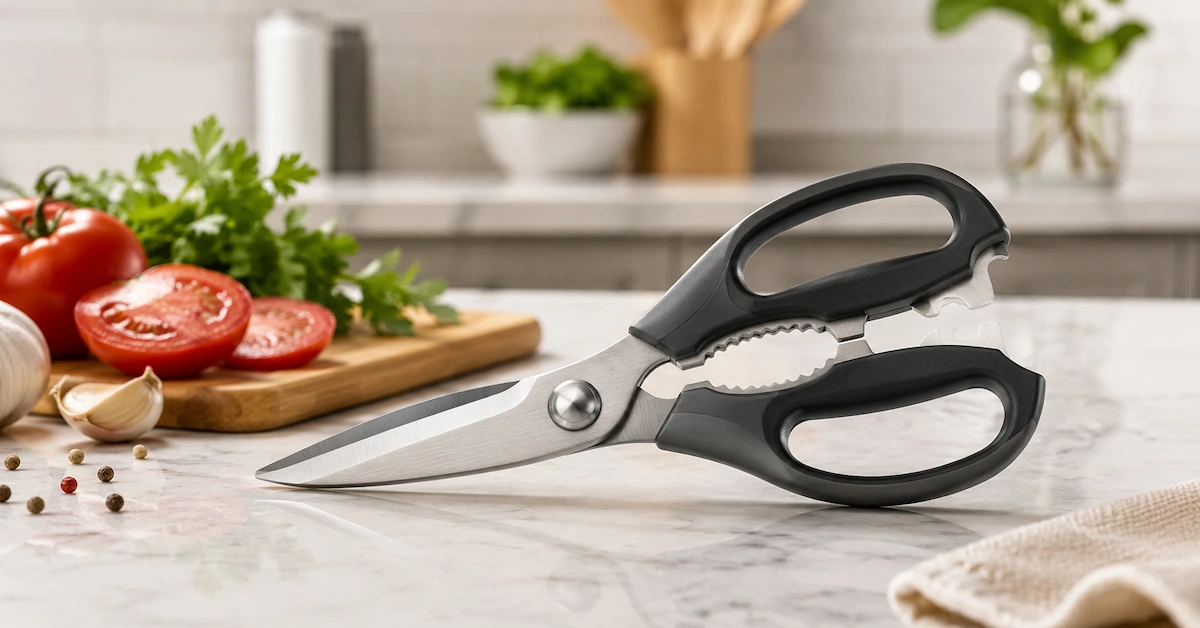
Based on the original product image and description, this item appears to be a heavy-duty style kitchen scissor with full-length metal blades, a brushed silver finish, black molded handle grips, and a central pivot rivet. The handle area includes a serrated or notched section near the pivot, which may be intended for gripping, light cracking, or leverage during certain food-preparation tasks.
Those details place the product in a multi-purpose kitchen tool category rather than a basic scissor category. However, buyers should avoid assuming material grade, load strength, corrosion resistance, or dishwasher suitability unless the supplier provides written details. A strong product photo can show shape and finish, but it cannot confirm steel composition, edge retention, or long-term durability.
Buyer Checklist Before Shortlisting a Supplier
Before comparing prices, sourcing teams should define what they need the product to do. A retail buyer may prioritize shelf appeal and packaging clarity, while a wholesale distributor may focus on consistent quality across repeat orders. An OEM or private-label buyer may also need logo placement, packaging artwork support, and clear product descriptions.
- Ask what material is used for the blade and handle, and request written confirmation.
- Request samples for cutting tests, grip comfort checks, and pivot stability review.
- Clarify whether the notched section is intended for gripping, light cracking, or another purpose.
- Check whether packaging options match your sales channel, such as carded, boxed, or set packaging.
- Confirm how the supplier describes the product so marketing claims do not exceed actual function.
Comparison Table: What to Evaluate
| Area to Check | What Buyers Should Review | Questions to Ask the Supplier |
|---|---|---|
| Blade section | Edge alignment, cutting feel, blade thickness, finish consistency | What blade material and production process are used? |
| Pivot assembly | Smooth opening, controlled tension, no obvious wobble | How is the pivot assembled and checked during production? |
| Handle grip | Loop size, comfort, surface texture, hand fit | What handle material is used, and is it designed for repeated kitchen handling? |
| Notched function | Whether it grips or cracks effectively without overpromising | What is the intended use of the serrated inner section? |
| Packaging | Retail explanation, barcode space, safety information, display method | Which packaging formats are available for wholesale or private label? |
How the Design Serves Real Kitchen Work
In use, kitchen scissors are valued because they are quick. They can cut open food bags, trim vegetables, portion herbs, and handle small kitchen tasks without pulling out a knife and board every time. The large handle loops visible in the image suggest a design meant for controlled hand pressure, while the metal blade section gives the product a more substantial appearance than lightweight household scissors.
The nutcracker-style feature should be described carefully. It may help with light gripping or cracking tasks, but buyers should not market it as a full replacement for a dedicated nutcracker unless the supplier provides clear performance information. This is especially important for ecommerce listings, where exaggerated claims can quickly lead to negative reviews and returns.
Supplier Evaluation for Wholesale and OEM Orders
When sourcing from a kitchen scissors supplier, compare more than the unit appearance. Ask how the supplier controls consistency from sample to production. A sample may feel smooth, but bulk goods need the same blade alignment, pivot tightness, and finish quality. If the buyer is planning private-label packaging, the supplier should also be able to explain what product claims are supportable and what information still needs confirmation.
Useful commercial questions include whether samples are available, what packaging choices can be quoted, what customization options are possible, and what inspection criteria are normally used before shipment. Do not assume MOQ, lead time, certification, or compliance status unless those details are provided by the supplier for the specific order and market.
Common Sourcing Mistakes to Avoid
One common mistake is buying only from a product photo. The brushed metal finish and black grips may look reliable, but the actual user experience depends on cutting edge quality, pivot alignment, balance, and handle shape. Another mistake is treating the notched inner section as a guaranteed nutcracker function without testing it on the intended use case.
Buyers should also avoid vague retail copy. If the product is best described as multi-purpose kitchen scissors with a gripping or light cracking feature, say that. Clear positioning reduces the risk of customer disappointment. For private-label programs, the safest approach is to create packaging text after sample testing, not before.
Key Takeaways
- A nutcracker kitchen scissors supplier should be evaluated on function, consistency, and claim accuracy.
- The notched section near the pivot needs a clear intended use, not just a marketing label.
- Samples should be tested for cutting feel, handle comfort, pivot stability, and cleaning practicality.
- Buyers should confirm material, packaging, customization, and inspection details directly with the supplier.
Practical FAQ for Buyers
Is this product different from standard kitchen scissors?
Yes, the visible notched or serrated area near the pivot suggests an added gripping or nutcracker-style function. Buyers should confirm the intended use with the supplier before writing product claims.
Can it replace a dedicated nutcracker?
Not necessarily. It may support light cracking or gripping tasks, but a dedicated nutcracker is designed specifically for that job. Ask the supplier for functional guidance or test samples before making replacement claims.
What should I test first when samples arrive?
Start with blade alignment, cutting smoothness, pivot tightness, handle comfort, and whether the notched section performs as described. Also check how easy the scissors are to clean after food contact.
What should private-label buyers ask before ordering?
Ask about material details, packaging options, logo or branding support, sample availability, order terms, and any documentation needed for your target market. Confirm all claims in writing.
Next Step for Sourcing Teams
If this product fits your channel, request samples and a clear functional description before comparing final quotations. Then test the scissors in realistic kitchen tasks and review whether the added notch provides value for your buyers. The right nutcracker kitchen scissors supplier should be able to answer practical questions clearly, without relying on exaggerated claims.
