

Kitchen Scissors OEM vs ODM: Private-Label Buyer Guide
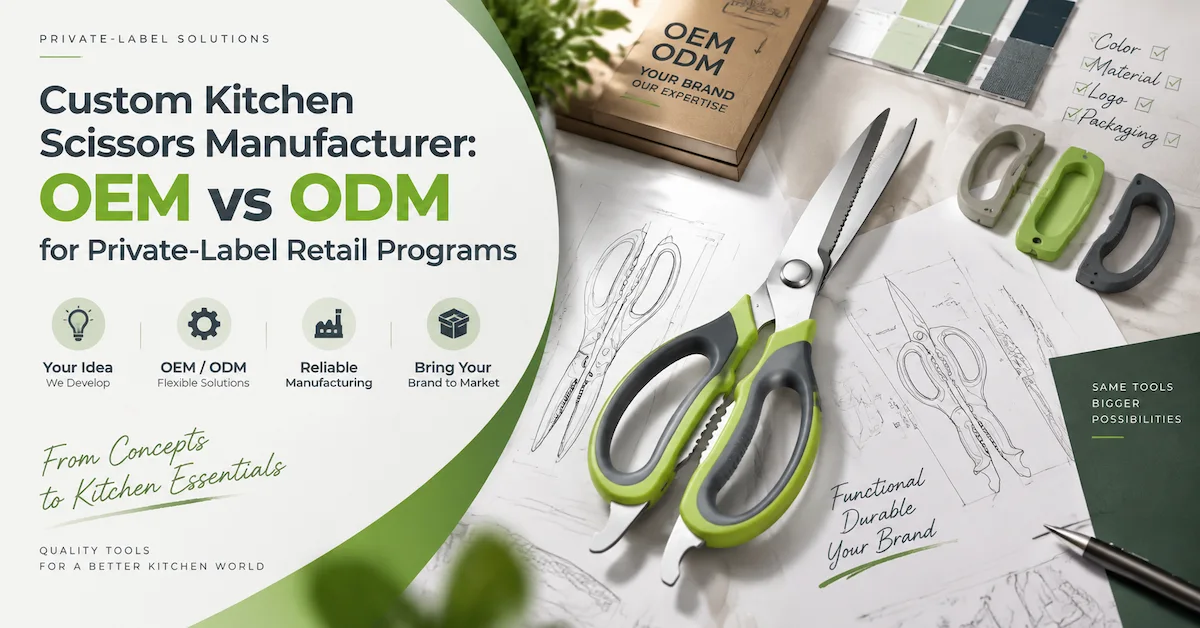
Quick answer: Use OEM when a proven model meets the task and the main work is branding or packaging. Use ODM when the supplier must develop selected structure or function. Record the boundary in the RFQ. The source distinguishes OEM, ODM and hybrid routes. Exact design ownership, tooling, cost, MOQ, sample timing, production capacity and legal terms are To be confirmed for each project.
Choose the route from the product brief
Use OEM when a proven model meets the task and the main work is branding or packaging. Use ODM when the supplier must develop selected structure or function. Record the boundary in the RFQ. See BONET kitchen scissors collection for the related BONET range.
Separate ownership and tooling
List which drawings, molds, artwork and test records belong to the buyer, supplier or both. Do not assume a custom handle or tool is owned simply because it was paid for. See BONET scissors manufacturing process for the related BONET range.
Stage samples by risk
Approve a functional sample before cosmetic changes, then approve a production-intent sample with logo, color and pack. Each stage should have named acceptance points. See BONET OEM and ODM service for the related BONET range.
Normalize the commercial scope
Compare product, tooling, logo, packaging, inspection, carton and logistics assumptions on the same revision. MOQ and timing may differ by route and must be confirmed.
Control hybrid repeat orders
Keep one released specification for the proven blade/pivot platform and any developed component. Reapprove after a design, material, tooling or pack change.
Evidence checklist: kitchen scissors OEM vs ODM
| Buyer checkpoint | Evidence to retain |
|---|---|
| Choose the route from the product brief | Use OEM when a proven model meets the task and the main work is branding or packaging. Use ODM when the supplier must develop selected structure or function. Record the boundary in the RFQ. |
| Separate ownership and tooling | List which drawings, molds, artwork and test records belong to the buyer, supplier or both. Do not assume a custom handle or tool is owned simply because it was paid for. |
| Stage samples by risk | Approve a functional sample before cosmetic changes, then approve a production-intent sample with logo, color and pack. Each stage should have named acceptance points. |
| Normalize the commercial scope | Compare product, tooling, logo, packaging, inspection, carton and logistics assumptions on the same revision. MOQ and timing may differ by route and must be confirmed. |
| Control hybrid repeat orders | Keep one released specification for the proven blade/pivot platform and any developed component. Reapprove after a design, material, tooling or pack change. |
FAQ: kitchen scissors OEM vs ODM
When is OEM a better fit for kitchen scissors?
OEM is usually more efficient when an existing model already meets the cutting and handling brief and only controlled branding or packaging changes are needed.
When does ODM add value?
ODM can help when the buyer has a user problem or range gap that needs structural or functional development, but the scope and ownership must be written.
Can OEM and ODM be combined?
Yes, a hybrid project can retain a proven platform while developing selected components; keep separate approvals for each change.
Request a kitchen scissors OEM vs ODM review
Share the required cutting tasks, existing model or development brief, brand assets and target pack with BONET so BONET can map the appropriate route. See BONET kitchen scissors collection | BONET scissors manufacturing process | BONET OEM and ODM service.
