




Silicone Cooking Utensils Wholesale: What Buyers Should Know
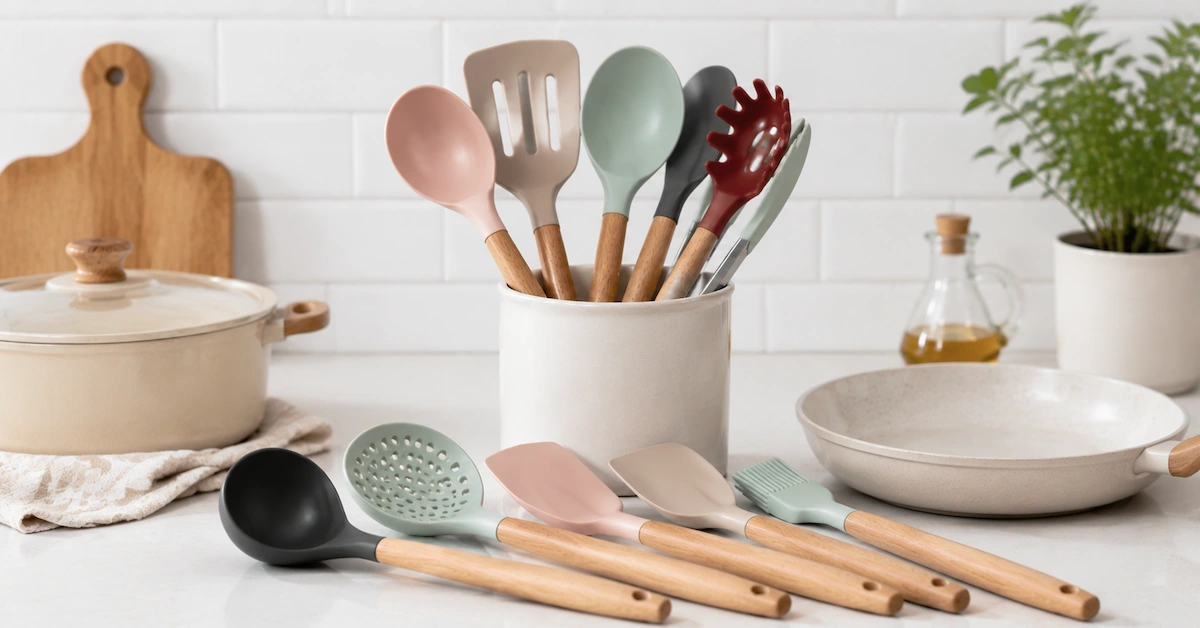
Sourcing silicone cooking utensils wholesale is not only about finding an attractive spoon set. For retail buyers, ecommerce sellers, restaurant supply distributors, and promotional product teams, the real question is whether the set can support everyday cooking tasks, present well in the sales channel, and avoid common quality problems after delivery.
The product style shown here combines matte pastel silicone working ends with light wood handles and visible metal connectors on some pieces. That mixed-material look can help a utensil set feel warmer and more coordinated than basic all-plastic tools. However, it also creates more details for buyers to inspect, including handle alignment, finish consistency, attachment strength, and packaging presentation.
This guide explains how to evaluate wholesale silicone utensils before placing a bulk order, with practical checks that sourcing teams can use when comparing suppliers.
Key Takeaways
- Start with the utensil assortment and confirm the exact piece count instead of relying on photos.
- Mixed silicone-and-wood construction can improve presentation, but it requires closer inspection than one-piece tools.
- Ask the supplier to confirm material details, heat resistance, compliance information, and assembly method rather than assuming them.
- Match the set to the channel: retail, ecommerce, restaurant supply, and gifting each prioritize different details.
- Packaging, storage, and photography readiness matter when selling bulk silicone kitchen utensils online or in stores.
Why Buyers Source Silicone Cooking Utensils in Bulk
Silicone cooking utensils are often selected because their working ends are commonly used with coated cookware. That makes them relevant for buyers selling frying pans, nonstick cookware, kitchen starter kits, or general cooking accessories. A coordinated set can cover several basic tasks at once, including stirring, flipping, serving, scooping, scraping, and straining.
For wholesale buyers, the appeal is also commercial. A set is easier to merchandise than single utensils because it offers a complete solution. It can be listed as a kitchen tool bundle, displayed near cookware, or used as part of a giftable kitchen assortment. The pastel silicone heads and wood handles seen in this product type may also photograph well for ecommerce, where visual consistency affects customer perception.
Still, a good-looking set is not automatically a good sourcing choice. Buyers should compare function, construction, packaging, and supplier communication before confirming an order.
What a Wholesale Silicone Utensil Set Usually Includes
A general-purpose silicone utensil set normally includes tools for daily cooking and serving. Based on the product type shown, buyers may expect a combination of spoons, spatulas, turners, ladles, strainers, pasta servers, and smaller finishing tools such as a brush-like utensil. The exact contents should always be confirmed with the supplier.
When reviewing an assortment, consider whether each piece has a clear job. A broad spoon may be useful for serving but less effective for scraping. A slotted turner may work for lighter foods but should still feel controlled in the hand. A ladle should have a practical bowl shape for soups and sauces. A set with too many similar tools may look large but offer less real value.
- List each utensil in the proposed set.
- Identify the cooking task each piece supports.
- Remove redundant items if they do not improve the offer.
- Check whether the final set matches your target customer and price point.
Material Mix and Construction Points to Inspect
The visible style of this product uses silicone heads with wood handles. Silicone working ends are commonly chosen for cookware-friendly handling, while wood handles can improve the perceived quality and shelf appearance of the set. This combination can be effective, but it also creates sourcing questions that are not visible in a hero image.
Buyers should ask the supplier how the silicone head is attached to the handle. If a metal connector or stem is part of the design, it should look consistent across pieces and feel secure during handling. The transition between materials should be neat, without obvious gaps, twisting, rough edges, or uneven alignment.
Do not assume the wood species, silicone grade, maximum heat resistance, or compliance status unless the supplier provides written confirmation. If your market requires specific testing, labeling, or food-contact documentation, request the relevant information before ordering and verify whether it applies to the exact product being purchased.
Comparison Checklist for Wholesale Evaluation
| Evaluation Area | What to Check | Questions for the Supplier |
|---|---|---|
| Assortment | Exact tools, piece count, and task coverage | What is included in one complete set? |
| Construction | Head-to-handle connection, alignment, and finish | How are the silicone heads assembled to the handles? |
| Materials | Supplier-confirmed silicone, wood, and connector details | Can you provide material specifications for this exact item? |
| Use Claims | Nonstick suitability, heat resistance, and care instructions | What claims are supported by your documentation? |
| Packaging | Retail box, countertop holder, labeling, or bulk packing | What packaging options are available for wholesale orders? |
| Visual Consistency | Color tone, surface texture, and handle finish across pieces | Can you share photos or samples from current production? |
Channel Fit: Retail, Ecommerce, Restaurant Supply, and Gifting
Different buyers value different features in wholesale silicone utensils. A cookware retailer may want the set to sit naturally beside nonstick pans and kitchen accessories. In that case, packaging, color consistency, and clear use messaging are important.
An ecommerce seller may care more about photography, shipping protection, and customer return risk. A coordinated pastel set with a storage container can look complete in product images, but the listing must accurately describe what is included. Avoid showing props or packaging arrangements that could confuse customers.
A restaurant supply distributor may prioritize durability, practical shapes, and repeatable availability over decorative presentation. For this channel, ask whether the utensils are intended for household use, light commercial use, or another defined application, and request supplier guidance before making channel-specific claims.
For gifting or promotional programs, visual coordination matters, but it should not replace basic usability. The set still needs to feel balanced, cleanly finished, and logical as a kitchen assortment.
Common Sourcing Mistakes to Avoid
One common mistake is choosing the set with the largest number of pieces without checking whether all pieces are useful. Another is accepting a polished product photo without asking for individual images, samples, or current production references. Mixed-material utensils can look excellent in a single image while still having inconsistent handles or uneven connectors in bulk.
Buyers should also avoid making unsupported claims in sales copy. If the supplier has not confirmed material grade, heat rating, dishwasher suitability, or regulatory documentation, those details should be treated as open questions. Unsupported claims can create customer complaints and compliance problems, especially in cross-border sales.
Practical FAQ for Wholesale Buyers
Are silicone cooking utensils suitable for nonstick cookware?
Silicone working ends are commonly chosen for use with coated cookware, but buyers should confirm the exact product specifications and supported claims with the supplier before using that statement in listings or packaging.
Are wood-handled silicone utensils better than all-silicone tools?
Not always. Wood handles can improve presentation and perceived value, but they add more variables, such as finish consistency, assembly quality, and care requirements. The best choice depends on your sales channel and customer expectations.
What should I request before placing a bulk order?
Ask for the exact set contents, material details, packaging options, care instructions, supported use claims, and photos or samples from current production. If compliance documents are needed for your market, request them early.
How can I reduce return risk for ecommerce sales?
Use accurate photos, list the exact piece count, avoid unsupported claims, and inspect samples for rough handles, loose connectors, uneven color, or overly flexible working ends before approving a bulk shipment.
Final Sourcing Advice
Silicone cooking utensils wholesale can be a strong category when the set is practical, visually consistent, and clearly matched to the buyer’s channel. Focus first on function, then construction, then presentation. Ask specific supplier questions instead of relying on assumptions from the image.
A reliable wholesale utensil set should be easy to explain, easy to inspect, and useful across everyday cooking tasks. If the assortment, assembly, packaging, and supplier documentation all support your market needs, the product is better positioned for retail, ecommerce, restaurant supply, or gifting programs.
