








Why buyers look for silicone cooking utensils wholesale in the first place
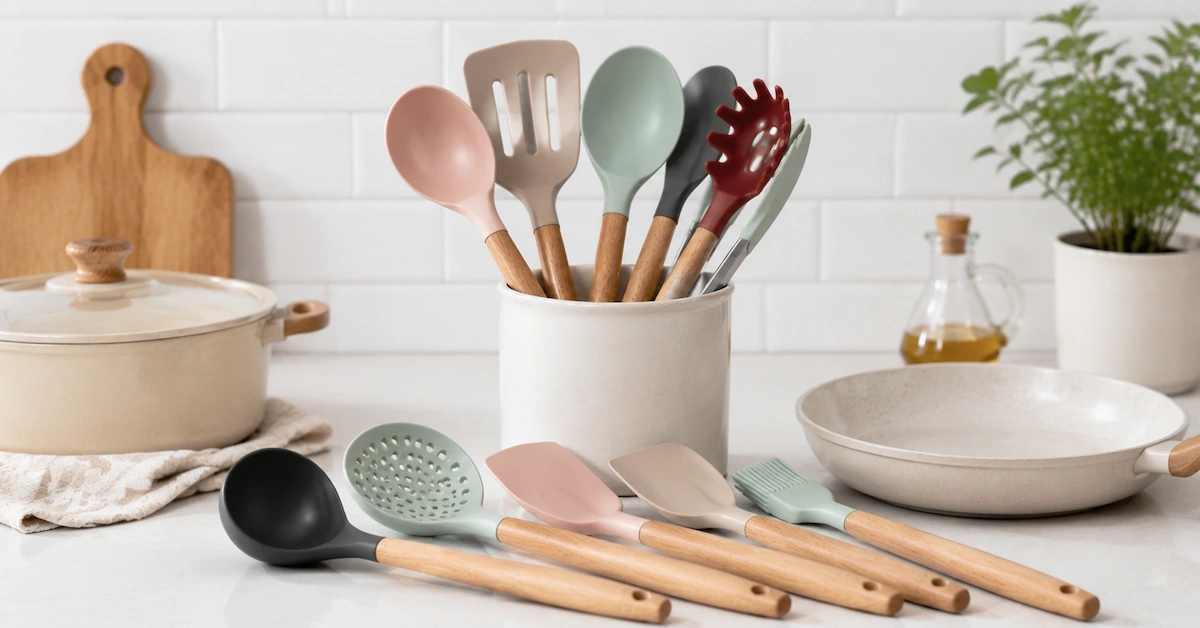
When sourcing silicone cooking utensils wholesale, most buyers are not just looking for a prettier spoon set. They are trying to solve a practical kitchen problem: how to stock utensils that work across stirring, flipping, serving, scraping, and scooping without damaging coated pans or looking cheap on the shelf. That matters whether you are a cookware retailer building an accessory line, a restaurant supplier filling mixed kitchen orders, or an ecommerce team trying to offer a coordinated bundle that photographs well and ships cleanly.
The appeal is straightforward. Silicone working ends are widely used for nonstick-safe handling, and the mixed-material format with wood-style handles gives the set a warmer, more premium look than all-plastic tools. For buyers, that combination can be useful. It sits in the middle ground between basic utility and giftable presentation, which is often exactly where kitchenware sells best.
There is a catch, though: not every wholesale utensil set is built the same way. Mixed materials can mean better shelf appeal, but they can also mean more points to inspect during sourcing. Handle joining, finish consistency, head rigidity, and packaging all affect how the product performs and how it is perceived by the customer.
What is typically included in a bulk silicone kitchen utensils assortment
A coordinated kitchen utensil assortment usually covers several common prep and cooking tasks. Based on the product type here, the set is designed around stirring, serving, flipping, scooping, straining, and scraping. That is the right functional spread for a general-purpose kitchen line.
In a typical assortment like this, buyers may see:
Core cooking tools
A spoon or spatula for mixing and folding, a slotted turner for flipping and draining, a perforated spoon or skimmer for lifting food out of liquid, and a ladle for soups and sauces. A pasta server or similar serving tool often rounds out the set.
Smaller prep and finishing tools
Some sets include a brush-like utensil for glazing or basting. That detail matters more than it looks like. Small tools are often what make a set feel complete, especially in consumer packaging or gift bundles.
The visible product style described here uses matte pastel silicone heads and light wood handles, with at least one visible metal connector near the head. That mixed construction can look more finished than a one-piece molded tool, but it also means the buyer should pay attention to alignment and fit between parts.
Why the material mix matters for buyers and end users
The silicone-and-wood combination is not just cosmetic. It changes how the product is used, handled, and merchandised.
Silicone working ends are often chosen because they are gentler on coated cookware than metal tools. For buyers selling into home kitchens or cookware bundles, that is an easy value message. The broad, flexible heads also help with scraping bowls and pans, which makes the tools more useful than a narrow-use utensil.
Wood-style handles, on the other hand, add visual warmth and can improve the perceived quality of the set. They also help distinguish the product from the flood of all-black silicone tools that dominate many marketplaces. In retail, differentiation matters. On a crowded shelf, muted pastel heads with wood handles can photograph better and feel less generic.
There is a practical caution here: mixed-material tools need closer inspection than simple monolithic designs. Buyers should ask how the handle is joined to the head, whether the connector is visible by design, and how the finish holds up after repeated washing and handling. Even if a tool looks attractive, sloppy assembly can undermine the whole set.
Where silicone cooking utensils wholesale fits best
This product category has a fairly wide channel fit, which is one reason it remains popular in bulk sourcing.
For cookware retailers, it is a natural add-on to nonstick pans, fry pans, and cookware sets. The sell is obvious: if the pan is coated, the utensils should be compatible with it.
For restaurant supply distributors, the value is more functional. A coordinated set simplifies purchasing for small kitchens, cafes, and catering operations that need a broad range of hand tools without building each order piece by piece.
For ecommerce sellers, the visual presentation is important. Countertop storage and a coordinated color palette create a ready-to-use look that reads well in product images. This can support both standalone utensil listings and bundled kitchen starter kits.
For gifting and promotional programs, the material mix helps. Wood handles and pastel tones tend to feel more intentional than plain utility tools. That does not make them premium by default, but it does make them easier to position.
How to compare wholesale silicone utensils before you place an order
A good sourcing decision starts with function, then moves to presentation, then to production detail. Too many buyers reverse that order.
1. Check the working end shape against the use case
A set can look complete and still be weak for real cooking. A broad spoon may be fine for serving but poor for scraping. A slotted turner may work well on eggs and fish but feel too flexible for heavier foods. Ask whether the shapes cover the actual tasks your customers are trying to solve.
2. Inspect the handle construction
Wood-handled utensils are attractive, but buyers should confirm how the silicone head and handle connect. If a metal stem or connector is visible, that is not necessarily a problem, but it should be uniform and secure. Uneven joins are a warning sign, especially for ecommerce where returns are costly.
3. Look at finish consistency across the set
Because this kind of product is sold as an assortment, variation between pieces can show up quickly. Color tone, surface texture, and handle finish should look consistent enough to read as one family. A set with one odd-looking piece can weaken the whole presentation.
4. Think about packaging and storage
The countertop container shown with this style of set is not a small detail. It helps the product present as a complete kitchen station rather than a loose collection of tools. If you are selling online, storage presentation can be part of the perceived value.
Common mistakes when sourcing in bulk
The most common mistake is buying on appearance alone. A utensil set can look strong in a photo and still disappoint if the heads are too soft, the handles feel rough, or the assembly looks inconsistent.
Another mistake is overestimating how many pieces a buyer actually wants. Bigger is not always better. In kitchenware, a tight, useful assortment often sells more easily than a bloated one with redundant tools.
A third mistake is ignoring the end market. A restaurant buyer may care most about function and durability. A retail buyer may care more about color, packaging, and shelf appeal. A gift buyer may value the coordination of the whole set. The same product can work for all three, but not in the same way.
And one practical aside: if the set is intended for nonstick cookware, make sure that message is clear in listing copy and in sales conversations. Buyers often assume it is obvious, but it is better to state the use case plainly than to invite confusion.
Questions to ask a supplier before ordering wholesale silicone utensils
You do not need a long questionnaire, but you do need the right one.
Ask what the set includes. Exact piece count matters, and it is not always safe to assume from a photo.
Ask how the silicone heads are made and assembled to the handles. The product description suggests molded silicone heads with wooden handles and possible metal connectors on some pieces, but the exact process should be confirmed by the supplier.
Ask about material details that are not visible in the image. For example, the wood species, silicone grade, compliance statements, and heat resistance should all be confirmed by the manufacturer rather than guessed by the buyer.
Ask for photos of each piece, not just the hero image. This is especially useful when a set is intended for bulk silicone kitchen utensils sales through marketplaces or retail channels. One polished image can hide too much.
FAQ for buyers
Is this type of set suitable for nonstick cookware?
That is the most likely use case, yes. Silicone working ends are commonly chosen for that reason. Still, buyers should verify the exact product specs with the supplier before making claims.
Are wood-handled utensils always better?
Not always. They usually improve presentation, but they can introduce more variation in finish and assembly. The right choice depends on the buyer’s channel and price target.
What makes wholesale silicone utensils easier to sell?
A complete assortment, a coordinated color palette, and visible usefulness. Products that solve multiple kitchen tasks in one set are easier to position than one-off tools.
Should I favor utility or aesthetics?
For most wholesale buyers, the best answer is both, but with utility first. Attractive kitchenware sells better when the shapes genuinely support daily cooking.
A practical next step for sourcing teams
If you are comparing silicone cooking utensils wholesale options, start by narrowing the product to the channel. Retail, restaurant supply, and gifting all reward slightly different versions of the same basic set. Then confirm the non-obvious details: head-to-handle assembly, consistency of finish, actual assortment contents, and packaging.
A good wholesale utensil set should be easy to explain in one sentence and easy to trust after the first inspection. If it looks coordinated, covers the main cooking tasks, and avoids obvious construction issues, it has a real chance of moving well. If not, the pretty colors will only carry it so far.
