




Silicone Kitchen Utensil Manufacturer Guide for Buyers
Sourcing from a silicone kitchen utensil manufacturer is not only about choosing a color, set size, or attractive product photo. For B2B buyers, the larger question is whether the utensil set can be produced consistently, packed safely, and perform as expected in everyday kitchens. A good sample is useful, but repeatable production quality is what protects a retail program.
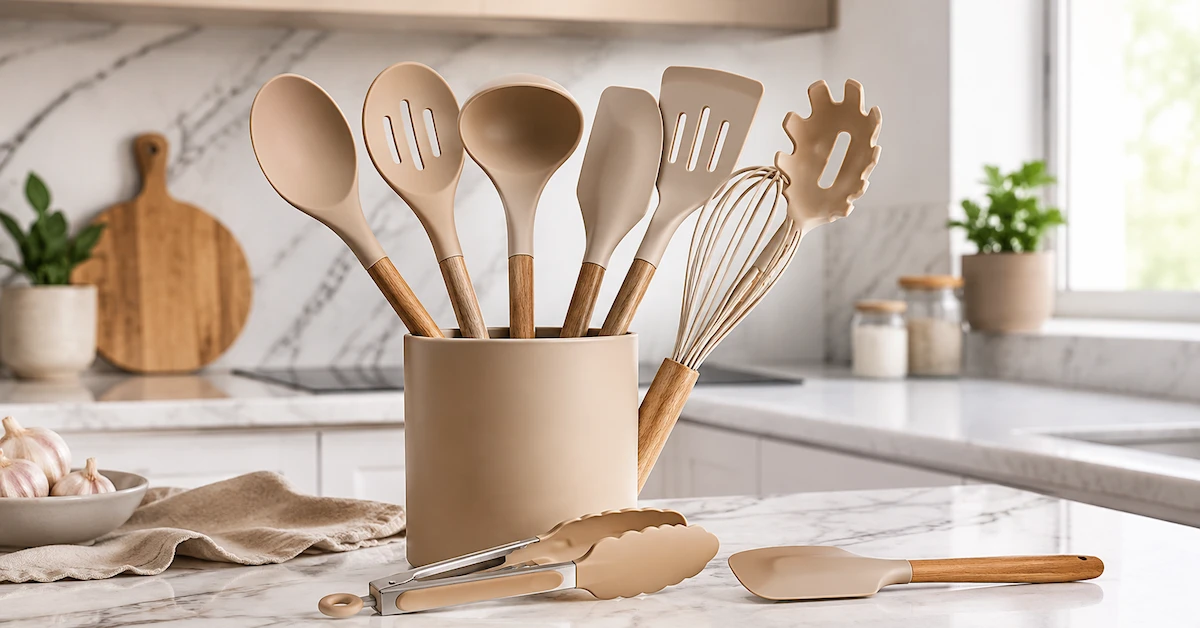
The product shown is a coordinated silicone kitchen utensil set displayed in a countertop holder. It appears to include assorted cooking tools with silicone working heads, light wood handles, and a matching storage container. The visible set is designed for common kitchen tasks such as stirring, scraping, serving, turning, whisking, and countertop organization.
Key Takeaways
- Evaluate a utensil set as a complete system, not just as individual tools.
- Confirm material descriptions, handle attachment methods, and intended heat use before writing retail claims.
- Inspect finish consistency, color matching, holder stability, and packaging readiness.
- Ask suppliers specific questions instead of relying on broad brochure language.
Why Silicone Utensil Sets Remain Strong Retail Products
Silicone kitchen utensils continue to earn shelf space because they serve broad consumer needs. Home cooks often want tools that can be used with saucepans, mixing bowls, baking trays, and nonstick-style cookware surfaces. Bakers value flexible edges for scraping batter from bowls. Meal-prep users like having several tool shapes in one set rather than buying each item separately.
There is also a strong visual reason for the category’s popularity. A coordinated set with neutral silicone heads and light wood handles can sit on a counter as part of the kitchen environment. The included holder changes the product from a bundle of utensils into a storage-ready countertop solution. For buyers, that improves merchandising potential, but it also raises the standard for consistency: when all pieces are displayed together, mismatched finishes and uneven assembly become easy to notice.
What Buyers Can See in This Utensil Set
The image shows a range of utensil shapes, including spoon and spatula styles, slotted tools, a ladle-like spoon, a whisk, tongs, and a scraper. This mix covers many daily cooking and baking tasks, which makes it suitable for private-label kitchenware collections, retail giftable sets, and general home-use assortments.
Several visible details matter for sourcing review. The working heads appear matte rather than glossy. The handles appear to be light wood. The set includes a holder for upright storage. However, buyers should avoid making claims that are not confirmed by supplier documents. The exact silicone type, heat limit, wood species, coating, attachment method, and cleaning instructions are not visible from the photo alone. Those details should be verified before product listing copy, packaging, or compliance files are finalized.
How Silicone Kitchen Utensils Are Commonly Made
In this category, silicone parts are usually formed through molding, then trimmed or finished so edges are smooth and consistent. When a utensil uses a separate handle, the head and handle must be joined securely. That joint is often one of the most important quality points because customers notice wobbling, gaps, glue marks, or loose fit quickly during use and washing.
Wood-handle utensil sets need particular attention because wood and silicone behave differently around moisture, heat, and repeated handling. A joint that looks clean in a pre-production sample should still be reviewed under normal-use conditions. Buyers should ask how the supplier checks joint strength, handle alignment, surface smoothness, and visible finish defects.
The whisk in the image appears different from the silicone-head tools because it uses wire loops. Mixed-material sets can be appealing, but they require separate review for each component. Do not assume that one approval sample represents every tool in the set.
Buyer Checklist: What to Compare Before Ordering
| Review Area | What to Check | Questions to Ask the Supplier |
|---|---|---|
| Material description | Clear identification of silicone, handle material, and any mixed components | What materials are used for each utensil part, and how are they documented? |
| Heat use | Stated intended use and any verified temperature guidance | What heat-use limits can be supported with product specifications or tests? |
| Handle joint | No looseness, gaps, rough edges, or visible excess adhesive | How is the handle attached, and what inspection is performed at the joint? |
| Set consistency | Matching color, similar finish, aligned handles, and balanced appearance in holder | How is color and finish consistency controlled across a production run? |
| Holder and packaging | Stable storage, clean presentation, and protection during shipping | Can packaging be reviewed with final samples before mass production? |
Selection Criteria That Matter More Than Piece Count
A larger set is not automatically a better product. Many buyers focus on the number of pieces because it is easy to compare in a quote sheet, but consumers judge the tools by daily performance. The spatula must scrape well. The spoon should feel stable. The tongs should open and close smoothly. The holder should not tip easily when several tools are removed.
For private-label and wholesale sourcing, prioritize these criteria:
- Functional assortment: Choose tool shapes that support the customer’s real cooking habits.
- Consistent molding: Look for clean edges, even thickness, and no obvious defects on the silicone heads.
- Comfortable handles: Check for rough grain, sharp transitions, inconsistent coating, or poor balance.
- Realistic product claims: Confirm any heat, food-contact, dishwasher, or cookware-compatibility statements before publishing them.
- Retail-ready presentation: Review the set inside the holder and in its final packaging, not only as loose samples.
Common Sourcing Mistakes to Avoid
One frequent mistake is approving a set based only on appearance. The neutral color palette and countertop holder may make the product look organized, but buyers still need to examine each tool closely. A spatula, spoon, whisk, scraper, and tongs each have different use stresses and different production risks.
Another mistake is using unverified marketing claims. Silicone utensils are often associated with non-scratch use and heat resistance, but exact performance depends on material, design, thickness, and testing. If the supplier has not provided support for a claim, treat it as a question, not a product feature.
Packaging is also easy to underestimate. A set like this sells partly through visual coordination. If the tools shift badly in transit, if the holder is unstable, or if the colors do not match the product photo, the consumer experience weakens before the first use.
Questions to Ask a Silicone Cooking Utensils Supplier
Before placing an order, ask direct sourcing questions that reveal process control. Useful questions include:
- Which parts of the set are silicone, wood, metal, or other materials?
- How are the silicone heads molded and finished?
- How are the handles attached, and what defects are checked during inspection?
- What heat-use guidance is supported by supplier documentation?
- Can final packaging samples be reviewed before production approval?
- How does the supplier manage color matching across different utensil shapes?
- What quality checks are performed for the holder, tongs, and whisk?
These questions help separate a general trading offer from a more controlled utensil program. The goal is not to make sourcing complicated; it is to reduce uncertainty before a shipment is produced.
Practical Advice for Private-Label and Retail Teams
For private-label teams, this category works best when the product promise is simple and supportable: a coordinated utensil set for everyday cooking and baking, supplied with countertop storage. Avoid overloading packaging with claims that have not been confirmed. Instead, focus on the assortment, practical storage, neutral appearance, and verified care instructions.
For retail buyers, request samples that match the intended final product as closely as possible. Review the set upright in the holder, laid flat, and packed as it would ship. Check whether the handles line up visually, whether the silicone colors remain consistent, and whether the most-used tools feel comfortable in hand. Small inconsistencies can look minor during sourcing but become visible when customers use the set daily.
FAQ
Is this type of silicone utensil set suitable for home kitchens?
Yes. The visible assortment is designed around common home cooking and baking tasks, and the holder supports countertop storage. Exact care and heat-use guidance should still be confirmed with the supplier.
Can silicone utensils be used with nonstick cookware?
Silicone utensils are commonly selected for use with delicate cookware surfaces, but buyers should verify the material, edge finish, and any non-scratch claims before using that language in retail copy.
What should buyers inspect first in a sample?
Start with the most-used pieces: spatula, spoon, scraper, and tongs. Check the working head, handle joint, balance, surface finish, and how the tools sit in the holder.
Should the holder be treated as part of the quality review?
Yes. The holder affects storage, presentation, and customer satisfaction. It should be checked for stability, finish, size, and packaging protection.
Choosing the Right Manufacturing Partner
The right silicone kitchen utensil manufacturer is not simply the one that can provide an attractive sample. It is the supplier that can explain materials clearly, control assembly details, maintain visual consistency, and prepare the set for retail or private-label requirements. When commercial details such as MOQ, lead time, customization options, testing, and packaging formats are important, buyers should ask for written confirmation rather than relying on assumptions.
For a utensil set like the one shown, the strongest sourcing approach is to review the product as a complete system: tools, handles, whisk, tongs, holder, packaging, and product claims. That process gives buyers a clearer basis for comparison and helps build a kitchenware program that is practical, credible, and easier to repeat across future orders.
