








Why buyers get picky about silicone spoons
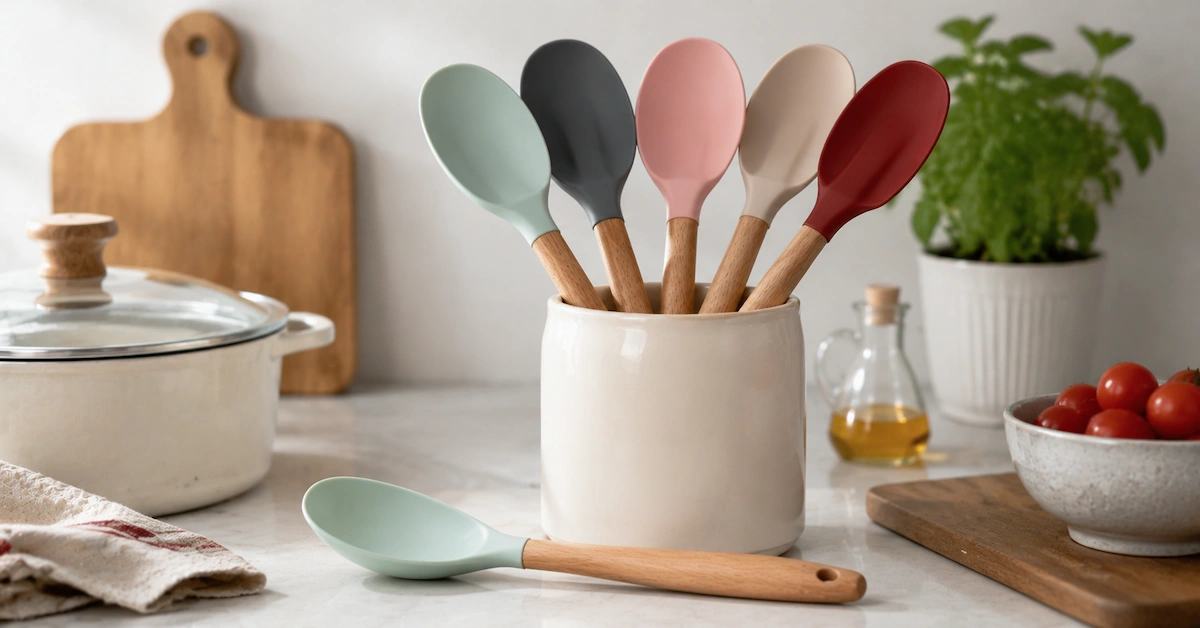
Finding a reliable silicone spoon supplier sounds simple until you have to compare actual product samples, packaging claims, and retail expectations side by side. On paper, a silicone cooking spoon is a basic kitchen utensil. In practice, it sits at the intersection of material safety, heat performance, finish quality, and visual merchandising. That mix matters whether you are buying for a private-label kitchen line, a home goods catalog, or a retail shelf that needs color, consistency, and a price point that still leaves room for margin.
The decision is not just about who can quote the lowest unit cost. It is about which silicone spoon manufacturer can deliver repeatable quality, a clean look, and enough specification transparency that your team can sign off without second-guessing the samples.
What the product is really doing in the kitchen
A silicone cooking spoon does several jobs at once. It stirs sauces, folds batters, scrapes bowls, moves ingredients, and serves food without chewing up the surface of nonstick pans. That last part is usually the commercial hook. Buyers want an utensil that performs like a standard spoon but is gentler on coated cookware and more heat-tolerant than cheap plastic.
The product style described here is especially familiar in retail: a rounded spoon head paired with a straight wood-finish handle, with multiple colors such as mint green, gray, pink, beige, and red. That matters because visual variety sells kitchenware. A practical spoon becomes a giftable item when it looks coordinated on a counter or hangs neatly from a rack.
There is also a small but important design cue: the hanging hole at the handle end. It sounds minor, but many shoppers notice it. It helps with storage and makes the utensil easier to merchandise on peg displays. Little details like that can shift a product from “generic tool” to “displayable set.”
What to confirm before you place an order
When sourcing from a silicone spoon supplier, do not stop at photos. A polished listing image can hide weak construction or vague material claims. The visible product family here suggests silicone heads and wood handles, but the exact material grade is not confirmed. That means your procurement checklist should focus on the facts that affect both compliance and end-user experience.
Material questions that matter
Ask whether the spoon head is made from food-contact silicone and whether the supplier can state the relevant food-safety documentation for your market. If the spoon is meant for cooking, you also need clear heat-resistance information. Without that, the product may still look attractive, but it is hard to position confidently for serious home cooks or commercial resale.
The handle deserves equal attention. A natural wood finish has strong shelf appeal, but wood can vary more than buyers expect. Ask how the handle is finished, whether the grain or color will vary from batch to batch, and whether the supplier uses a solid wood or wood-like substrate. If that detail is vague, the sample may not tell you much about production consistency.
Construction questions that save headaches later
One-piece utensil form is a positive sign when it reduces obvious joints and fasteners. Still, buyers should ask how the silicone head is joined to the handle, because the interface is where many kitchen tools fail first. If the joining method is not robust, the spoon may loosen over time, especially in repeated washing and daily use. It is not the sort of defect that shows up in a showroom sample, which is why sourcing teams need to probe.
Also check whether the product is intended for hand washing, dishwasher use, or both. If the supplier does not state this clearly, do not assume. Wood-finish handles and repeated high-heat washing can be a bad combination, and a retailer will hear about it faster than the factory will.
Silicone spoon supplier: what good sourcing looks like
A dependable silicone spoon supplier should be able to answer three questions quickly: what the product is made of, how it is made, and how consistently it can be repeated. That sounds basic, but it is often where sourcing breaks down.
A strong supplier relationship usually includes more than one sample round. The first sample helps you judge appearance. The second sample, or at least a detailed spec sheet, helps you judge repeatability. Pay attention to the feel of the silicone surface, the firmness of the spoon head, and whether the handle finish looks even across colors. A matte surface may read as premium, but only if it stays uniform.
For buyers handling kitchen assortments, color control matters more than people admit. A spoon set that looks coordinated in one photograph can arrive with slight color drift in production. In a home goods category, that can make a set look cheap even if the materials are fine.
Where silicone cooking spoon wholesale orders can go right
In silicone cooking spoon wholesale programs, the commercial advantage is usually assortment. Multiple colors let buyers build kitchen sets, seasonal bundles, or simple retail displays without redesigning the whole line. One basic form can serve several channels: cookware boutiques, online marketplaces, gift shops, and private-label home brands.
That flexibility is useful, but it can also tempt buyers into over-ordering variants too early. A better approach is often to start with the best-selling color group, then expand once the response is clear. The product is versatile enough that a small color run can tell you a lot about demand.
Another advantage is compatibility with nonstick cookware, provided the supplier’s heat and material specs support that use. That compatibility is one reason the category has stayed relevant even as kitchen trends change. People still want utensils that look modern, clean up easily, and do not scratch expensive pans.
Common mistakes buyers make
The first mistake is treating every silicone spoon as interchangeable. They are not. The same product category can range from decorative low-cost utensils to more durable kitchen tools with better silicone quality and more stable handles.
The second mistake is skipping usage testing. A spoon can look good in a photo and still feel awkward in the hand. Handle length, grip comfort, balance, and spoon bowl shape all affect daily use. Your sample review should include actual stirring and scraping, not just a visual check.
The third mistake is overlooking packaging. If you are buying for retail, packaging is part of the product. A tidy utensil set with coherent colors and a clear hanging or gift-ready presentation tends to sell better than loose items in a plain bag. This is where many sourcing programs lose value: the item itself is acceptable, but the presentation is not ready for the customer.
Quick buyer checklist
Before approving a silicone spoon manufacturer, review the following in practical terms:
Function
Does the spoon stir, scoop, and scrape well enough for the intended cooking tasks?
Material transparency
Has the supplier clearly identified the silicone grade and handle material, or are those details still implied?
Heat and safety claims
Are temperature resistance and food-contact suitability documented rather than assumed?
Visual consistency
Do the colors, surface finish, and wood tone hold up across samples?
Merchandising readiness
Is the hanging hole, set presentation, or packaging usable for your sales channel?
When a lower price is not really lower
There is a temptation to chase the cheapest offer in silicone cooking spoon wholesale buying. That can work for short-term promotions, but it is risky for a line you want to repeat. Low-cost kitchenware often saves money by simplifying the finish, reducing material thickness, or loosening control over color matching. Any of those can be acceptable in the right context; they are not acceptable when your brand promise is durability and clean design.
A practical buyer should compare landed value, not just unit price. A slightly higher quote from a more responsive supplier can be worth it if the samples are consistent, the information is clearer, and the product arrives ready for a retail shelf without awkward surprises.
What to ask next
If you are shortlisting a silicone spoon supplier, ask for samples, material specifications, color options, and packaging details together rather than one at a time. That gives you a better picture of how the product will actually ship and sell. If the supplier can support a matching set of kitchen utensils, so much the better, but do not assume the full assortment will behave the same way as one spoon sample.
The right sourcing decision here is rarely about finding the flashiest utensil. It is about finding a supplier who can produce a simple product with enough discipline that your customers do not notice the manufacturing effort behind it. That is usually the best sign you picked well.
