




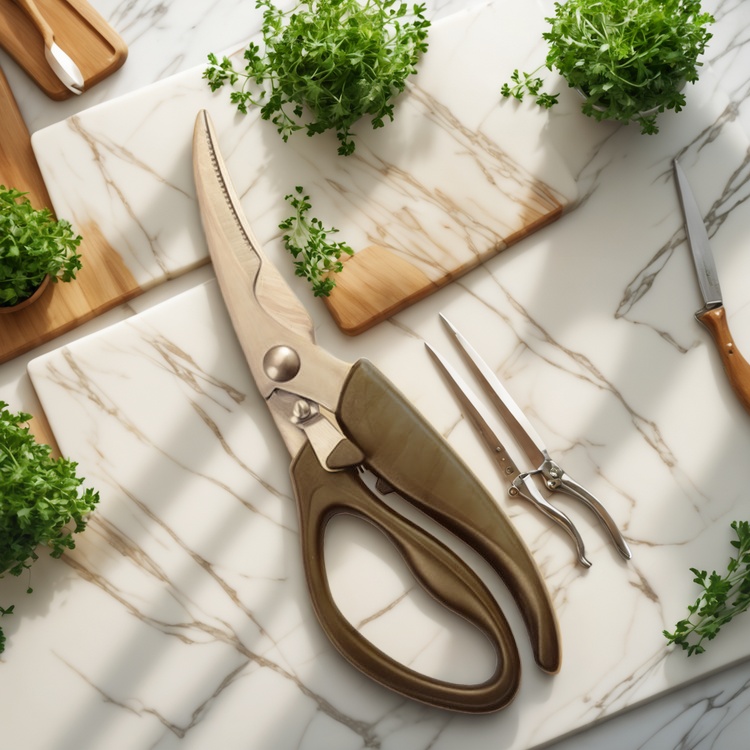
The Ultimate Guide to OEM Poultry Shears
OEM poultry shears are a focused kitchen tool for cutting chicken, trimming meat, and handling small bones more safely than a standard knife in many preparation tasks. For importers, distributors, private-label brands, and kitchenware buyers, the sourcing decision is not only about sharp blades. It also involves ergonomics, cleaning design, packaging, quality consistency, and how clearly a supplier can answer technical and commercial questions.
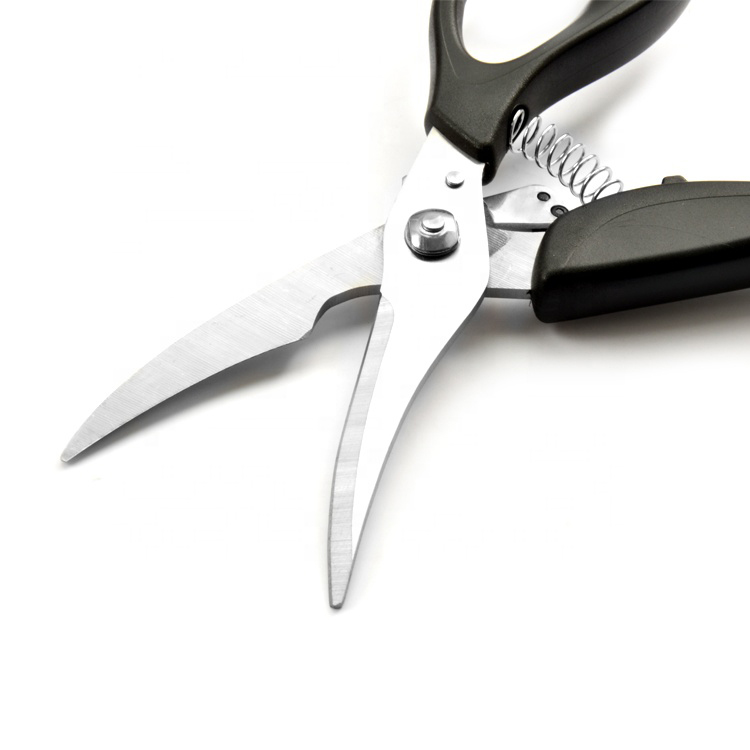
The original product description highlights several useful features: stainless steel blades, ergonomic non-slip grips, suitability for left- and right-handed users, finely serrated blades, an integrated bone notch, a built-in bottle opener, and a design that can be disassembled for cleaning. This guide explains how buyers can evaluate those features in a practical OEM or wholesale purchasing process without relying on vague claims.
Key Takeaways
- OEM poultry shears should be assessed as a cutting tool, a cleaning item, and a private-label product at the same time.
- Stainless steel blades, serration, a bone notch, and non-slip handles are useful only when the sample performs consistently under real kitchen tasks.
- Disassembly can support cleaning, but buyers should check how secure the hinge feels after repeated opening and closing.
- Before placing an order, ask the supplier about available customization, inspection methods, packaging options, lead time, and any test documentation they can provide.
What OEM Poultry Shears Are Designed to Do
Poultry shears differ from general kitchen scissors because they are intended for tougher food preparation jobs. A good pair should cut through poultry skin, cartilage, joints, and small bones with control. The user should not need to twist the wrist excessively or apply unsafe pressure. For restaurants, meal-prep operations, and home kitchen channels, the value comes from repeatable cutting performance and a design that is easy to clean after contact with raw meat.
In an OEM context, the product must also support branding and retail requirements. Buyers may need a specific handle color, logo position, blister card, gift box, instruction insert, barcode label, or master carton arrangement. These details should be discussed early because they affect cost, sampling time, and inspection standards.
Blade Design: Stainless Steel, Serration, and Bone Notch
The source article states that the shears use stainless steel blades. For sourcing purposes, buyers should ask the factory which stainless steel type is available, how the blade is heat-treated if applicable, and what hardness range the supplier targets. Do not assume a material grade unless it is clearly confirmed in the supplier's specification sheet or test report.
Finely serrated blades can improve grip on slippery poultry skin and reduce sliding during cutting. However, serration quality matters. In sample testing, check whether the teeth bite cleanly or tear the meat unevenly. The integrated bone notch is another practical feature. It helps position a small bone or joint closer to the pivot area, where cutting leverage is stronger. Buyers should test the notch with realistic poultry tasks rather than judging it by appearance alone.
Handle Comfort and User Control
The original article mentions ergonomic, non-slip grips and use by both left- and right-handed users. These are important selling points, but they should be verified with hands-on trials. A handle that looks comfortable in a catalog may feel narrow, rigid, or unbalanced during repeated cuts. If the target market includes professional kitchens, the handle should remain comfortable during longer prep sessions. If the product is intended for home retail, it should feel intuitive for occasional users as well.
Ask whether the handle material, texture, and color can be customized. Also ask how the supplier checks handle bonding or assembly strength. A poultry shear can fail not only because the blade dulls, but also because the handle loosens, cracks, or becomes slippery when wet.
Cleaning, Hygiene, and Disassembly
Because poultry shears contact raw meat, cleaning is a central product-selection issue. The source article states that the shears can be disassembled for cleaning. This can help users reach the pivot area, where food residue often collects. During evaluation, open and close the sample repeatedly after disassembly to confirm that the mechanism remains secure and easy to reassemble.
Buyers should avoid making unsupported dishwasher-safe or hygiene claims unless the supplier provides clear documentation and the product has been evaluated for that use. Instead, product copy can give practical cleaning guidance, such as washing promptly after use, cleaning around the hinge area, drying thoroughly, and storing the shears in a safe place away from children.
Comparison Checklist for OEM Buyers
| Evaluation Area | What to Check | Questions to Ask the Supplier |
|---|---|---|
| Blade performance | Cuts poultry skin, joints, and small bones cleanly | What blade material and hardness options are available? |
| Serration | Grips slippery food without excessive tearing | Can serration pattern be adjusted for OEM orders? |
| Bone notch | Holds small bones near the pivot for leverage | Is the notch included in all versions or only selected models? |
| Handle design | Comfortable, non-slip, suitable for left- and right-handed users | What handle colors, textures, and materials can be customized? |
| Cleaning | Disassembles and reassembles smoothly | What cleaning instructions should be printed on packaging? |
| Packaging | Protects sharp edges and supports retail display | What private-label packaging formats are available? |
| Quality control | Consistent sample-to-bulk performance | What inspection steps are used before shipment? |
How to Evaluate a Kitchen Scissors Factory
When selecting a kitchen scissors factory, start with documentation and sampling. Request a current product specification, available customization options, packaging templates, and sample lead time. If the product will be sold in a regulated market, ask what documents the supplier can provide and have them reviewed by your compliance team or testing partner. Do not rely on broad statements such as "highest standards" unless they are supported by specific procedures or reports.
For OEM projects, communication is also a quality signal. A reliable supplier should be able to explain trade-offs clearly: for example, how handle material affects grip, how packaging affects unit cost, or how logo placement affects production. If answers are vague during sampling, problems may increase during bulk production.
Sample Testing Before Wholesale Orders
Before committing to a wholesale order, test multiple samples rather than one perfect showroom piece. Use the shears on similar tasks to the target customer use case. Cut raw poultry, trim fat, test the bone notch, open and close the hinge repeatedly, disassemble and reassemble the tool, and wash and dry it several times. Look for blade looseness, rust spots, handle movement, uncomfortable pressure points, or uneven cutting.
- Define the target market and expected retail positioning.
- Request written specifications and available OEM options.
- Test samples with real poultry preparation tasks.
- Confirm packaging, labeling, and cleaning instructions.
- Agree on inspection criteria before bulk production begins.
Practical FAQ
What makes poultry shears different from ordinary kitchen scissors?
Poultry shears are designed for tougher food-prep tasks such as cutting poultry joints, skin, cartilage, and small bones. Features like serrated blades and a bone notch can improve control.
Can OEM poultry shears be customized?
Many OEM programs may include customization such as handle color, logo, packaging, and instruction materials. Buyers should ask the supplier which options are available for the specific model.
Are stainless steel blades always rust-proof?
No. The source states that the blades are stainless steel, but buyers should still ask about the specific material, surface treatment, cleaning guidance, and any available corrosion-related testing.
Why is disassembly useful?
Disassembly can make it easier to clean around the hinge and blade joint after cutting raw poultry. Buyers should confirm that the mechanism remains secure after repeated use.
What should buyers confirm before placing a bulk order?
Confirm product specifications, sample approval, OEM artwork, packaging, inspection criteria, lead time, payment terms, and any documentation required for the destination market.
Final Sourcing Advice
OEM poultry shears can be a strong addition to a kitchenware line when the product is evaluated carefully. Focus on measurable performance rather than broad marketing language. A good sourcing process checks blade sharpness, serration, handle comfort, cleaning design, packaging, and supplier responsiveness. By asking precise questions and testing realistic samples, buyers can reduce risk and select poultry shears that fit their market, brand, and customer expectations.
