




Kitchen Utensil Supplier Guide for Retail Buyers
Kitchen utensils look easy to source until they reach real kitchens. A sample spatula may look clean in photos, a spoon may have a good color, and a tong may open and close smoothly on a desk. During cooking, however, buyers quickly see the difference between a basic item and a retail-ready product: heads bend too much, edges feel rough, handles loosen, peelers twist under pressure, or packaging fails to explain why the set is worth choosing.
For importers, supermarkets, online sellers, and private-label brands, choosing a kitchen utensil supplier is not only about finding a low unit cost. It is about selecting tools that match everyday cooking tasks, can be inspected consistently, and can be presented clearly to consumers. BONET HOUSEWARE CO.,LTD positions its range around kitchenware, scissors, kitchen knives, kitchen utensils, chopping boards, and multi-functional tools, which can help buyers plan broader kitchenware assortments rather than isolated SKUs.
Key Takeaways
- Evaluate utensils by cooking performance, not only sample appearance.
- Ask suppliers how materials, edges, joints, and handles are controlled in bulk production.
- For nonstick cookware use, check both softness and strength of the tool head.
- Retail packaging should explain function, set logic, and care information quickly.
- Confirm commercial details, test reports, and compliance documents directly with the supplier before ordering.
Start With Material Behavior, Not Just Material Names
Material choice is one of the first questions in kitchen utensil sourcing, but material names alone do not tell the full story. A silicone spatula, plastic spoon, or metal-handled tong must be judged by how it performs around hot food, oil, sauces, washing, and repeated hand pressure.
For silicone kitchen utensils, buyers should request samples and check flexibility, surface smoothness, odor, edge finish, and strength around the neck or handle joint. A utensil used with nonstick cookware should have a head that is gentle enough for pan surfaces but firm enough to stir, scrape, turn, and serve food without collapsing. If the tool is too soft, consumers notice immediately. If the edge is too hard or unfinished, it can damage cookware or feel uncomfortable in use.
Because kitchen utensils contact food, buyers should also ask suppliers what food-contact requirements apply in the destination market. Do not rely on a general statement such as “food grade” without asking for relevant documentation, product-specific test reports, and the date and scope of those reports.
Match Each Utensil to a Real Cooking Task
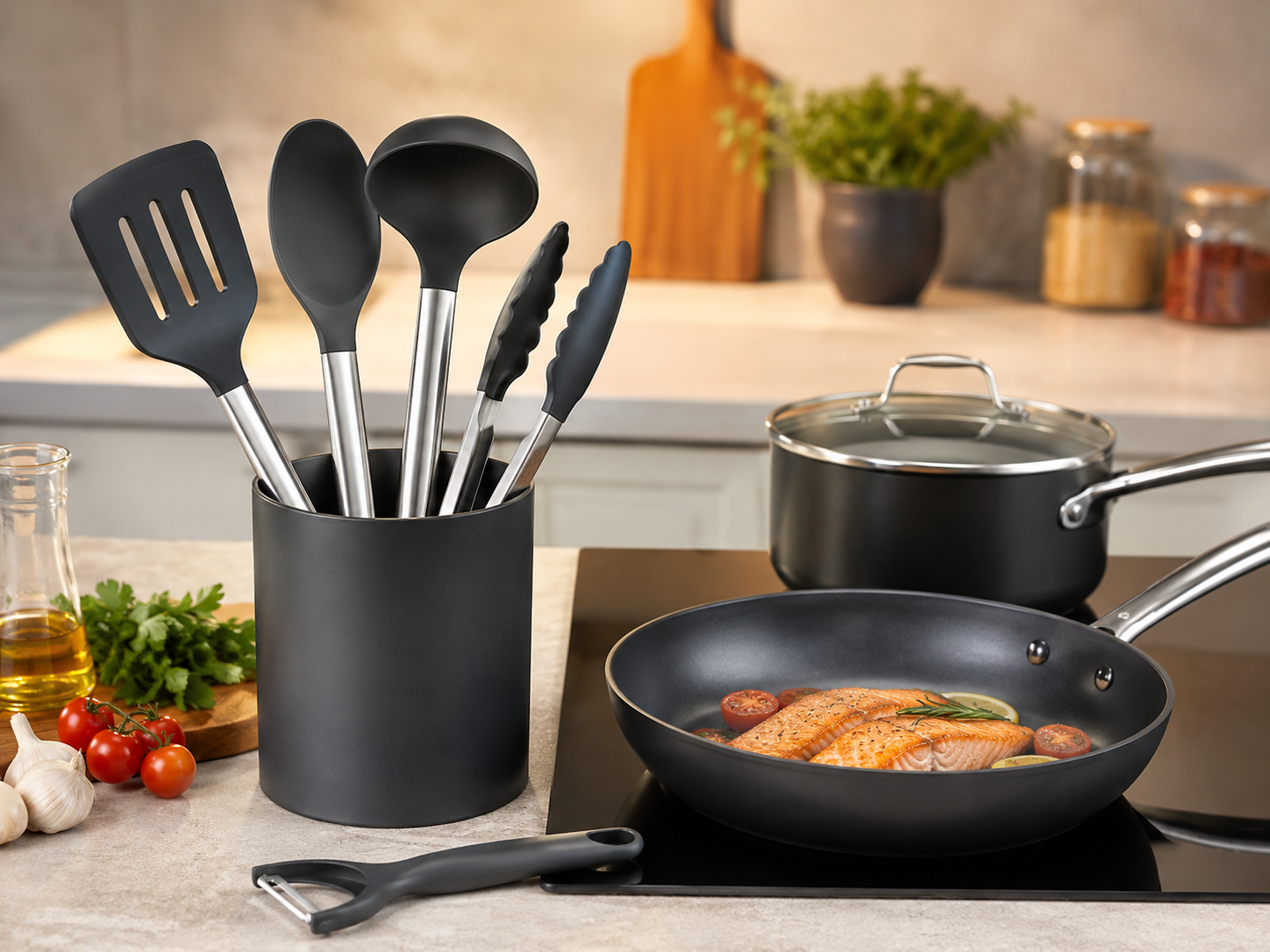
A professional supplier should be able to explain why each utensil has its shape, thickness, handle, and edge. A spatula needs a thin and smooth turning edge. A ladle needs enough bowl depth and a balanced handle. Tongs need steady spring action and gripping tips that do not feel slippery. A peeler needs a secure blade seat. A scraper needs flexible edges but a stronger body.
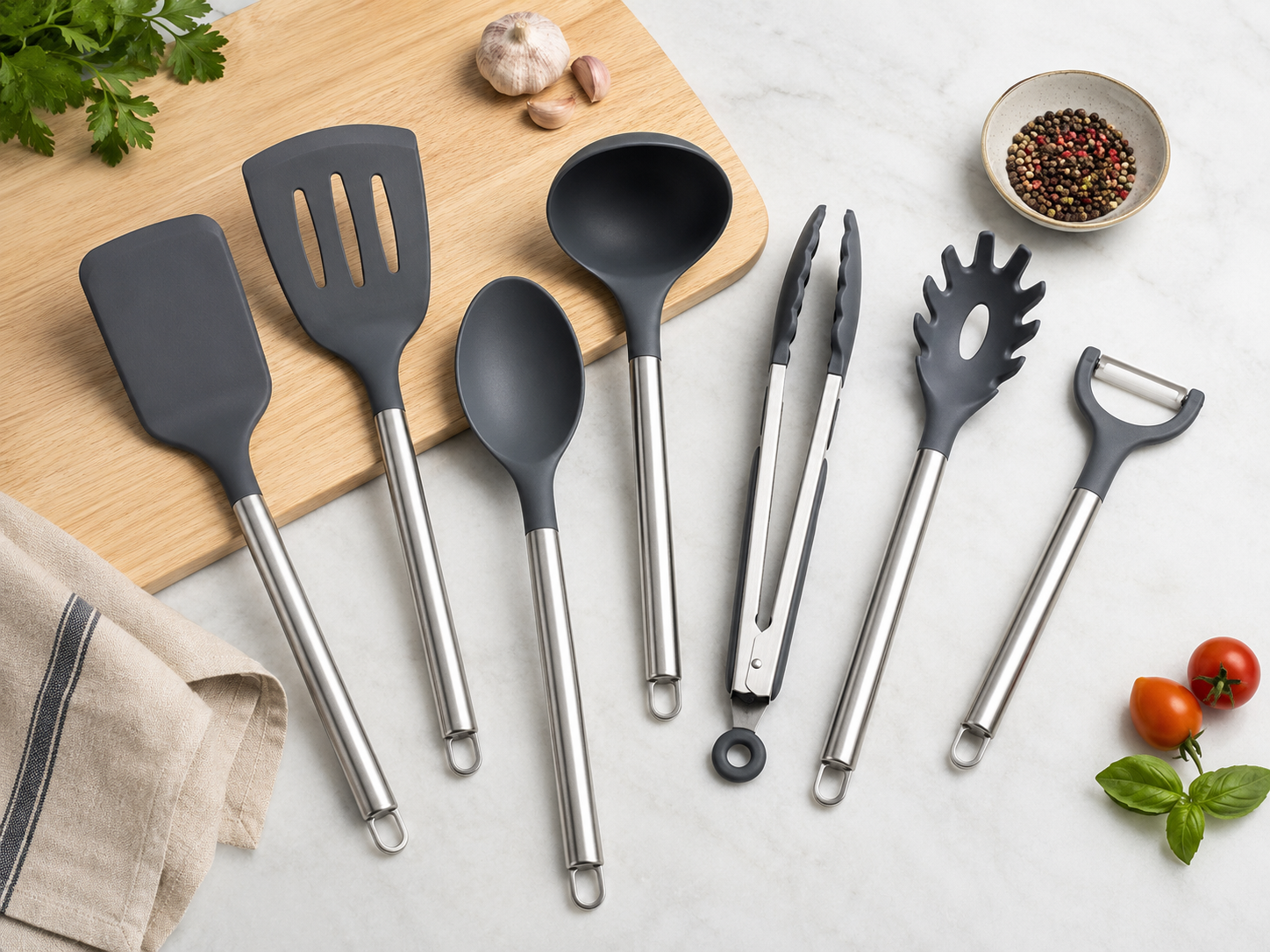
Retail buyers should avoid building a set only by matching colors. A better approach is to build around use scenarios: nonstick cookware cooking, baking preparation, serving, vegetable preparation, compact kitchens, or gift sets. This makes the assortment easier to explain in online listings and easier for consumers to understand on a shelf.
Low-Cost Buying vs Retail-Ready Sourcing
| Checklist Point | Low-Cost Buying Pattern | Retail-Ready Supplier Approach |
|---|---|---|
| Material selection | Chosen mainly by price or appearance | Matched to cooking use, handling, and market requirements |
| Tool design | Looks acceptable in sample photos | Checked for stirring, turning, scraping, serving, and cleaning |
| Handle comfort | Thin grip or weak balance | Assessed for hand feel, stability, hanging holes, and easy cleaning |
| Nonstick cookware use | Claim appears on packaging only | Edge softness, surface finish, and head firmness are reviewed |
| Packaging | Added after the product is selected | Planned for shelf display, shipping protection, and consumer explanation |
| Bulk quality | Good sample but unclear shipment control | Inspection points agreed before production begins |
This comparison matters because utensils are high-frequency kitchen tools. Consumers may not know the technical reason for a problem, but they will recognize a spatula that bends too much, a tong that loses grip, or a handle that feels unstable after washing.
What to Ask a Kitchen Utensil Supplier Before Ordering
Before confirming a bulk order, buyers should prepare clear questions instead of relying only on a catalog. Useful sourcing questions include:
- Which materials are used in each part of the utensil, including head, handle, joint, and packaging contact areas?
- What food-contact documentation is available for the intended market?
- Can the supplier provide samples from the same process intended for bulk production?
- How are color consistency, surface finish, and edge smoothness checked?
- What are the normal tolerance points for handle fitting, hanging holes, and assembled parts?
- Can the supplier support private-label logo placement, color planning, and set combinations?
- What packaging options are available, and how are products protected during shipping?
- What inspection process is recommended before shipment?
If information is missing, phrase it as a requirement to be confirmed. Buyers should ask directly about minimum order quantity, lead time, packaging artwork requirements, sample charges, testing responsibility, and current compliance documents.
Packaging Should Help Consumers Understand the Set
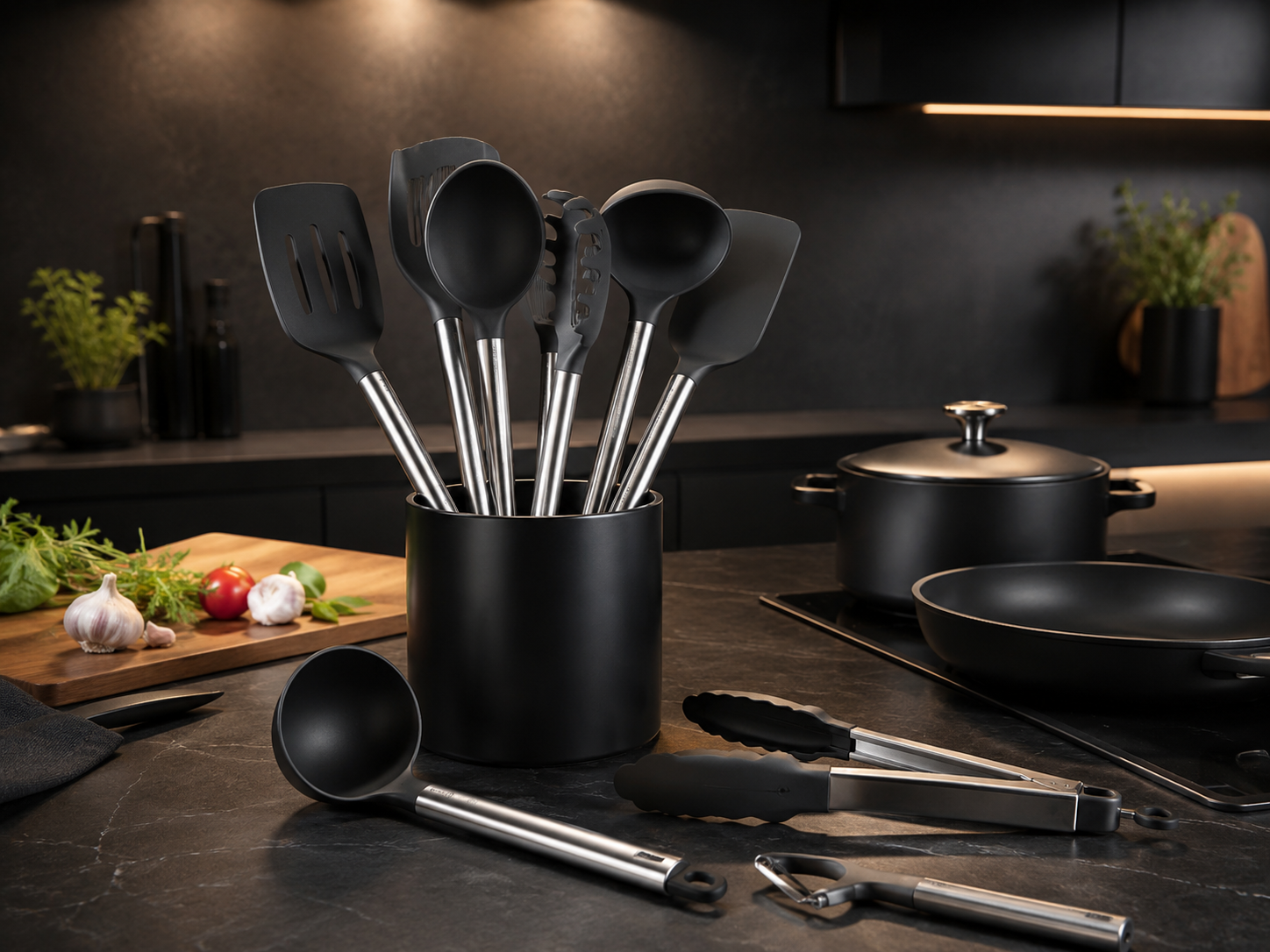
Packaging is often treated as a final step, but for kitchen utensils it can strongly affect retail performance. A utensil set may include useful tools, yet sell slowly if consumers cannot understand the purpose of the set. Is it designed for nonstick cookware? Is it a starter set for a first apartment? Is it focused on baking, family cooking, or meal preparation?
Good packaging should communicate the main use case, tool count, care instructions, and practical benefits without exaggerated claims. For online retail, the same logic applies to product photos and bullet points. Buyers should request packaging mockups early so that product selection, color planning, and selling message are aligned.
Quality Control Points for Bulk Shipments
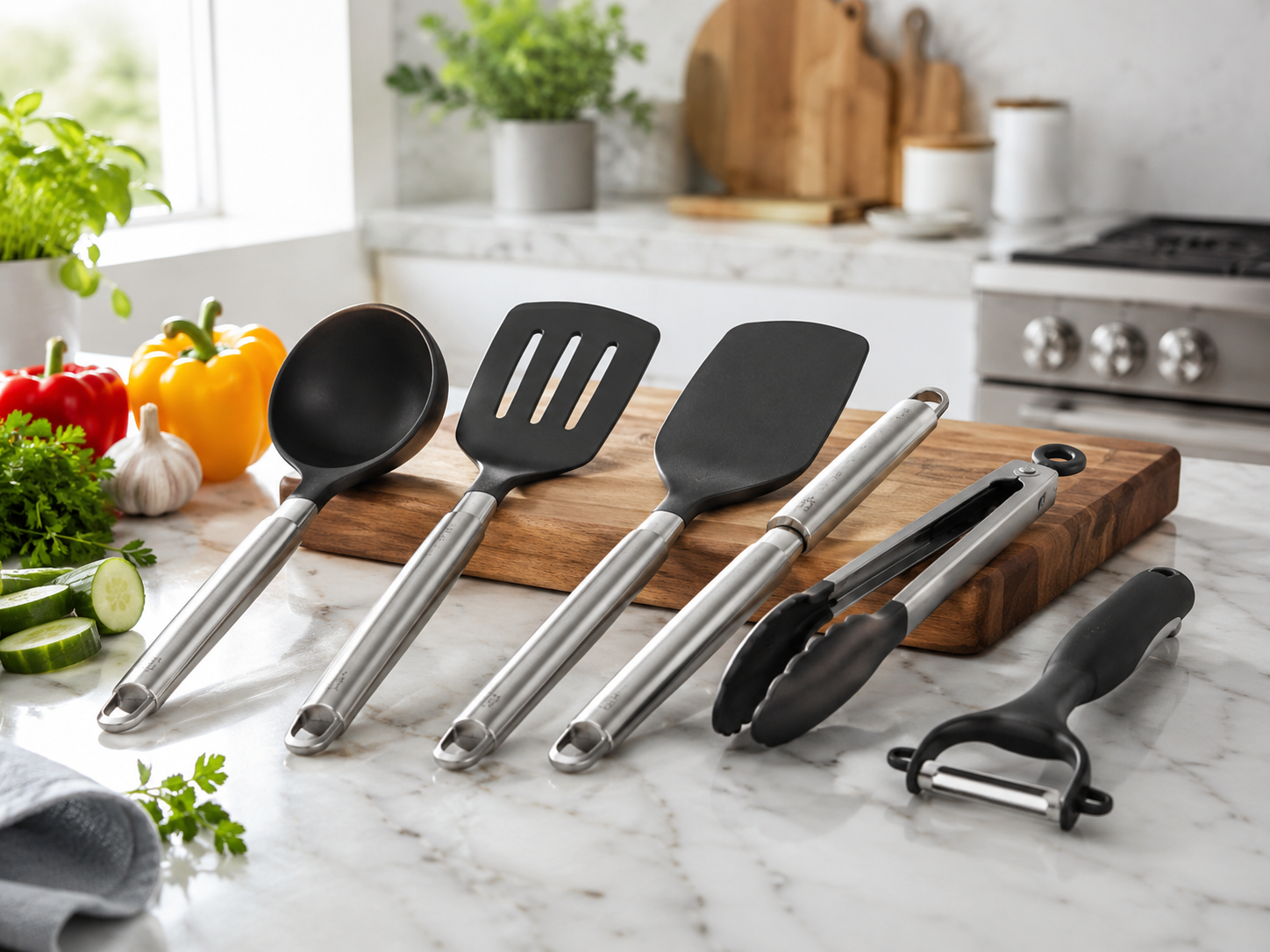
Kitchen utensil QC should be practical and repeatable. A buyer’s inspection checklist can include visual defects, color variation, flash or rough edges, odor, handle security, head flexibility, balance, packaging print quality, barcode accuracy, and carton protection. For tongs, check spring movement and tip alignment. For peelers, check blade seating and smooth movement. For spatulas and spoons, check the edge, neck strength, and surface feel.
BONET is based in Yangjiang, a region associated with knife and scissors manufacturing, and presents its business around kitchenware and precision cutting tools. Buyers reviewing any supplier background should verify current company information, factory documents, quality-management claims, and social responsibility records directly with the supplier before using them in procurement decisions.
Practical FAQ
Q: What products are usually included in a kitchen utensil sourcing program?
A: Common items include spatulas, turners, spoons, ladles, tongs, peelers, brushes, scrapers, pasta servers, and compact multi-functional kitchen tools.
Q: What is the biggest risk when buying low-cost utensils?
A: The main risk is mismatch between the product and real cooking use. A utensil may look acceptable but feel too soft, rough, weak, or unstable during daily cooking.
Q: Are kitchen utensils suitable for private-label programs?
A: Yes, they can work well for private-label assortments when buyers confirm logo options, colors, set combinations, packaging layout, and applicable market documentation.
Q: How should buyers compare two suppliers?
A: Compare sample performance, documentation, packaging support, communication quality, QC process, replacement policy, and the supplier’s ability to keep repeat orders consistent.
Build a Utensil Line Buyers Can Reorder With Confidence
A strong kitchen utensil program is built around use, consistency, and clear retail presentation. Instead of choosing only the lowest-cost spatula, spoon, tong, or peeler, buyers should ask how the product will perform in daily cooking, how it will be inspected, and how consumers will understand its value.
For category planning, review BONET’s kitchenware direction and product range at BONET product page. For company background and cooperation questions, buyers can also visit the BONET About Us page.
