






Choosing the right kitchen knife set is essential for efficient, convenient, and reliable food preparation. Whether for home kitchens, professional cooking environments, or retail kitchenware collections, understanding the differences between stainless steel knives and plastic knife options helps buyers select products that match their specific needs.
Traditional stainless steel kitchen knife sets may include chef's knives, meat cleavers, bread knives, santoku knives, utility knives, and paring knives. Each knife serves a different cutting purpose, offering flexibility for preparing vegetables, fruits, meat, bread, and other ingredients. The actual knife selection depends on the product configuration.
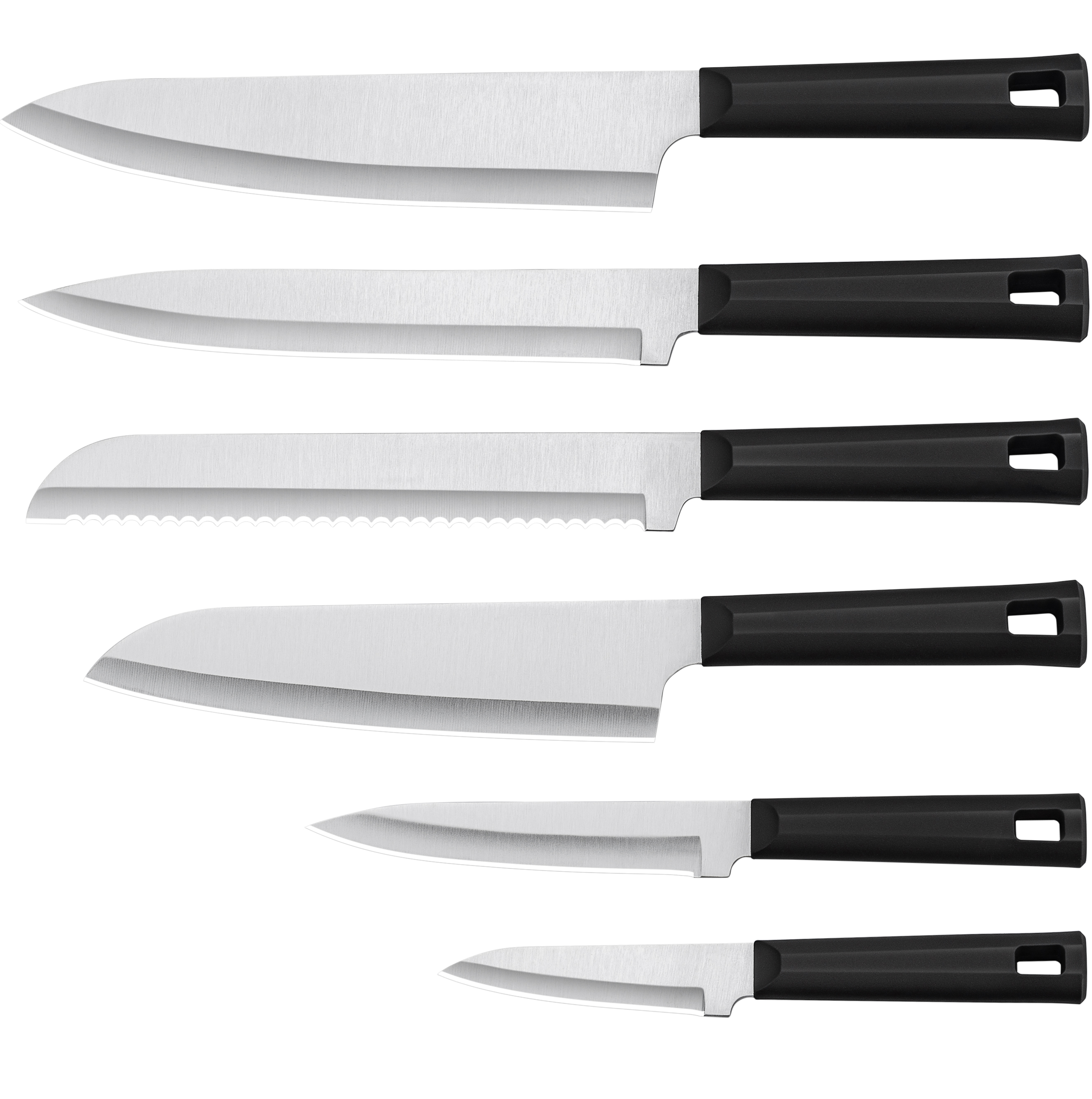
Stainless Steel Kitchen Knife Sets: Precision and Versatility
Stainless steel kitchen knives are widely used for their strength, cutting performance, and suitability for everyday food preparation. Different blade designs allow users to handle a variety of kitchen tasks.
Chef's knives and santoku knives are commonly used for chopping and slicing, while bread knives feature serrated edges designed for cutting crusty bread. Utility knives and paring knives provide greater control for smaller preparation tasks.
The performance of a stainless steel knife depends on its specific steel grade, blade geometry, edge treatment, and manufacturing quality. Regular cleaning, proper storage, and appropriate sharpening help maintain cutting performance over time.
For kitchenware importers and distributors, selecting the right stainless steel kitchen knife set requires evaluating blade quality, handle comfort, product consistency, and suitability for the intended market.
Plastic Kitchen Knife Options: Lightweight and Convenient
Plastic kitchen knives offer an alternative for certain food preparation tasks. Depending on their design, these knives may be suitable for spreading ingredients, cutting softer foods, and handling selected light-duty kitchen activities.
Their lightweight construction can make them convenient for specific applications. However, cutting performance, durability, dishwasher compatibility, and age suitability depend on the particular product and material.
Plastic knives should not automatically be considered injury-proof or suitable for unsupervised use by children.
It is also important to distinguish between plastic-blade knives and stainless steel knives with plastic handles. A kitchen knife featuring a PP handle may still have a metal cutting blade.
Stainless Steel vs. Plastic Kitchen Knives: Key Differences
| Feature | Stainless Steel Knives | Plastic Knives |
|---|---|---|
| Typical Applications | Chopping, slicing, cutting meat and vegetables | Soft-food preparation and spreading |
| Cutting Performance | Depends on blade steel and edge design | Generally suited to lighter cutting tasks |
| Maintenance | Cleaning, drying, and periodic sharpening | Cleaning according to product instructions |
| Weight | Depends on blade and handle construction | Often lightweight |
| Durability | Depends on steel grade and construction | Depends on plastic material and design |
| Buyer Considerations | Blade quality, handle construction, edge performance | Intended use, material quality, and durability |
Both materials have practical applications, but neither option is universally better. The appropriate choice depends on cooking requirements, product design, user expectations, and the intended purchasing market.
Kitchen Knife Set Selection for Wholesale Buyers
For importers, distributors, retailers, and private-label brands, selecting a kitchen knife set involves more than comparing appearance or material names.
Important purchasing considerations include:
-
Blade Material: Verify the stainless steel grade and actual material specifications.
-
Knife Configuration: Confirm the number and types of knives included.
-
Handle Design: Evaluate grip comfort, construction, and attachment quality.
-
Product Quality: Review sample cutting performance, surface finishing, and manufacturing consistency.
-
Packaging Requirements: Confirm available retail packaging, labeling, and blade protection.
-
Customization Options: Discuss branding, color preferences, and packaging feasibility.
-
Wholesale Purchasing: Confirm minimum order quantities, pricing, sampling arrangements, and production lead times.
BONET HOUSEWARE supplies kitchenware products for international business customers and supports inquiries involving kitchen knife sourcing, product specifications, and customization requirements.
Conclusion
Selecting the best kitchen knife set requires balancing cutting performance, material characteristics, handling comfort, and intended applications. Stainless steel knives are widely used for versatile cutting tasks, while plastic knife options can be suitable for selected lighter preparation activities.
For wholesale kitchenware buyers, evaluating product specifications, sample quality, and packaging requirements is essential before purchasing. Contact BONET HOUSEWARE to discuss available kitchen knife products, wholesale quotations, and customization options.