




Best Left-Handed Children Scissors: Safe Sourcing Guide
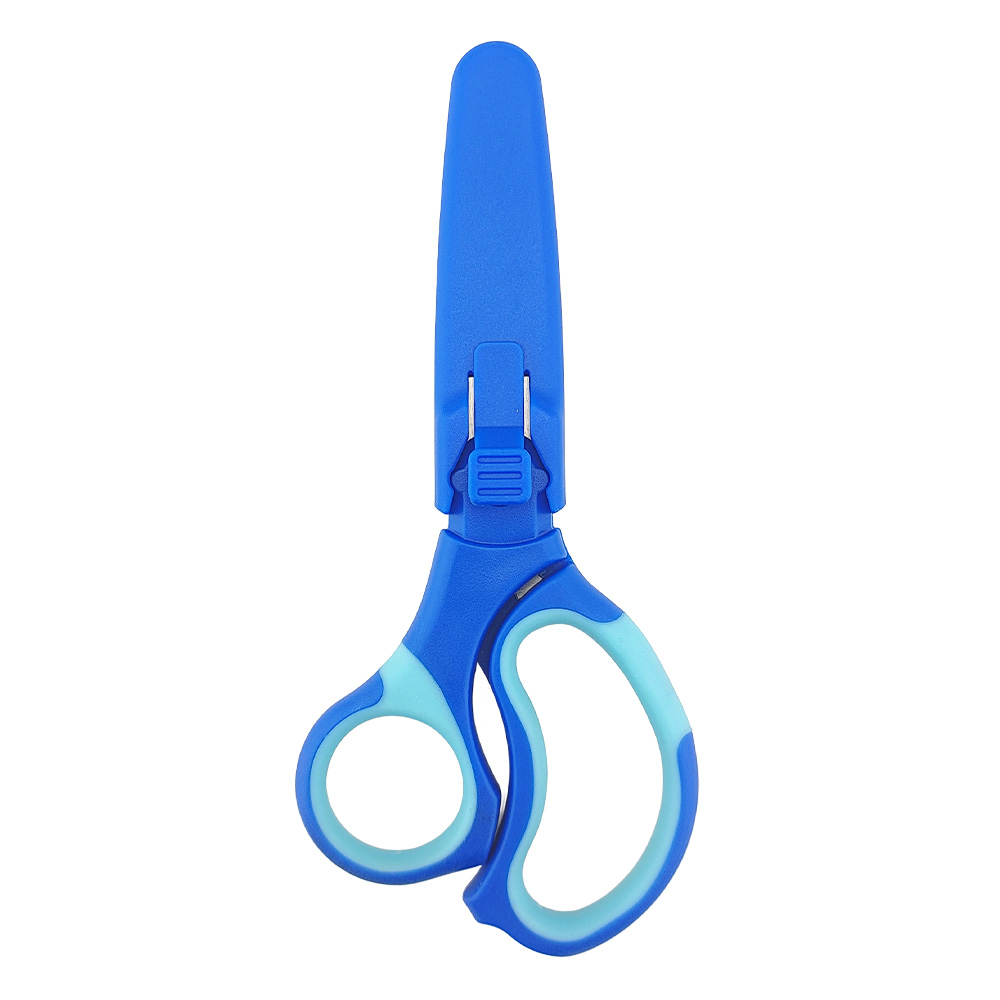
Left-handed children need scissors that match the way they naturally hold, see, and guide a cut. For schools, stationery brands, craft-kit packers, wholesalers, and OEM buyers, the goal is not only to find a child-friendly design, but also to confirm that the supplier can consistently deliver a product suitable for young users. The original product presentation highlights left-handed children scissors with a safety cover design, rounded-tip blades, and a blue handle with soft aqua accents. Those are useful starting points, but a good sourcing decision should go further: evaluate usability, age suitability, packaging, inspection steps, and the questions a buyer should ask before placing an order.
Key Takeaways
- Left-handed children scissors should support a natural left-hand grip and clear cutting visibility.
- Rounded tips and a protective cover are practical safety-oriented features, but buyers should still request full product details.
- For OEM or wholesale sourcing, confirm materials, age grading, packaging options, quality checks, and compliance documentation with the supplier.
- Sample testing should include comfort, cutting performance, cover fit, blade alignment, and durability during normal classroom or craft use.
Why Left-Handed Scissors Matter for Children
Many children struggle with cutting not because they lack coordination, but because the tool does not suit their dominant hand. Standard right-handed scissors can block the cutting line for a left-handed child, causing tearing, awkward wrist angles, and frustration. A purpose-designed left-handed children scissor helps the child hold the handles more naturally and guide the material with better control.
For education and craft markets, this detail matters. A classroom pack that includes only right-handed scissors may not serve all students equally. Retailers and wholesalers can also build a more complete product range by offering left-handed scissors for kids alongside standard school scissors. The buying decision should focus on whether the scissors feel intuitive in a child’s hand and whether the design supports safe, simple cutting of common craft materials such as paper or cardstock, as noted in the original article.
Safety Features to Review Before Buying
The original article mentions safety cover scissors, rounded-tip blades, and protective covers. These are important because children’s scissors are often carried in pencil cases, craft bins, or school bags. A cover can help protect the blade edge during storage, while rounded tips reduce the chance of accidental poking during ordinary use.
However, buyers should avoid assuming that a safety-looking design automatically meets every market requirement. Ask the supplier to explain the intended user age, blade design, cover attachment method, handle material, and packaging warnings. If your market requires specific testing or documentation, request evidence before confirming a bulk order. Do not rely only on product photos or general claims.
Comparison Checklist for OEM and Wholesale Buyers
| Selection Point | What to Check | Questions to Ask the Supplier |
|---|---|---|
| Left-handed usability | Handle shape, blade orientation, cutting-line visibility | Is this model designed specifically for left-handed children, or is it a universal design? |
| Safety cover | Cover fit, ease of removal, storage security | Does the cover stay in place during normal storage and transport? |
| Rounded tip | Tip shape and finish consistency | Can you provide close-up photos or samples from current production? |
| Cutting performance | Paper and light craft material cutting | What materials is the scissor intended to cut, and what should it not be used for? |
| Child comfort | Grip size, handle edges, weight balance | What age range or hand size is the product designed for? |
| OEM packaging | Branding area, barcode, warnings, carton packing | What packaging customization options are available, and what information is required? |
| Quality control | Blade alignment, screw tightness, handle finish | What inspection steps are used before shipment? |
How to Evaluate Samples in Practice
Before committing to a wholesale or OEM order, request samples and test them under realistic conditions. Have adult evaluators check the scissors first, then observe how easily a left-handed child can grip and cut with supervision. The goal is not to test beyond the product’s intended use, but to confirm that the design works for normal school and craft activities.
- Check that the handles are smooth, with no sharp plastic edges or uncomfortable pressure points.
- Open and close the scissors several times to assess movement and alignment.
- Cut basic paper in straight and curved lines to see whether the child can follow the line comfortably.
- Fit and remove the protective cover repeatedly to confirm it is practical for daily storage.
- Inspect several samples, not just one, to look for consistency in finish and assembly.
If the scissors are being considered for a branded children’s line, also test how the product looks inside its final packaging. A good retail presentation should show the left-handed purpose clearly so parents, teachers, and buyers do not confuse it with a standard scissor.
Supplier Questions for an OEM Scissors Factory
When the sourcing intent involves an OEM scissors factory, buyers should be precise. Instead of asking only for the lowest price, prepare a technical and commercial question list. This helps prevent misunderstandings and makes it easier to compare suppliers fairly.
- Can the supplier confirm the product is left-handed and explain the design difference?
- What materials are used for the handles, blades, screw, and safety cover?
- What age range is the product intended for?
- Are private label colors, logo placement, or packaging designs available?
- What is the minimum order quantity, lead time, and sample process?
- What quality inspection criteria are used for blade alignment, handle finish, and cover fit?
- What documents or test reports can be provided for the buyer’s target market?
These questions do not assume that every supplier offers the same options. They simply give buyers a structured way to confirm what is available and what still needs verification.
Use, Storage, and Care Guidance
Even well-designed children scissors need appropriate use. Adults should supervise younger children, especially during the first uses. The scissors should be used for intended craft materials, kept away from very hard items, and stored with the protective cover when not in use. If the blades become loose, misaligned, rusty, or difficult to open and close, the product should be removed from use.
For schools and craft programs, label left-handed scissors separately so they are easy to find. This small step can reduce classroom frustration and helps left-handed children build confidence with cutting tasks. For retailers, clear product naming and packaging copy are equally important because many shoppers search specifically for left-handed scissors for kids.
FAQ
Are left-handed children scissors different from right-handed scissors?
Yes. A left-handed design is intended to support left-hand grip and cutting visibility. Buyers should still confirm with the supplier whether the model is truly left-handed or marketed as a general-use scissor.
Why is a safety cover useful?
A protective cover helps shield the blade area during storage in a pencil case, school bag, or craft drawer. It does not replace adult supervision, but it is a practical storage feature.
What should wholesale buyers check before ordering?
Check samples for comfort, cutting performance, rounded-tip consistency, cover fit, packaging clarity, and production consistency. Also ask for material details, intended age range, and any documents required for your market.
Can these scissors be customized for OEM projects?
Customization may be possible, but buyers should ask the supplier directly about color, logo, packaging, minimum order quantity, lead time, and sample approval procedures.
What materials can children use these scissors on?
The original article mentions paper and cardstock. For any other material, confirm the intended use with the supplier and avoid using children’s scissors on items that are too hard or unsafe.
