




Choosing the Right Knife Sharpener Supplier
Selecting a knife sharpener supplier is not only a price decision. For retailers, kitchenware distributors, hospitality buyers and promotional product companies, the right supplier should help you source a product that is practical, consistent and appropriate for your target users. A knife sharpener may look simple, but small differences in grip, base stability, sharpening stages, packaging and quality control can affect customer satisfaction and repeat orders.
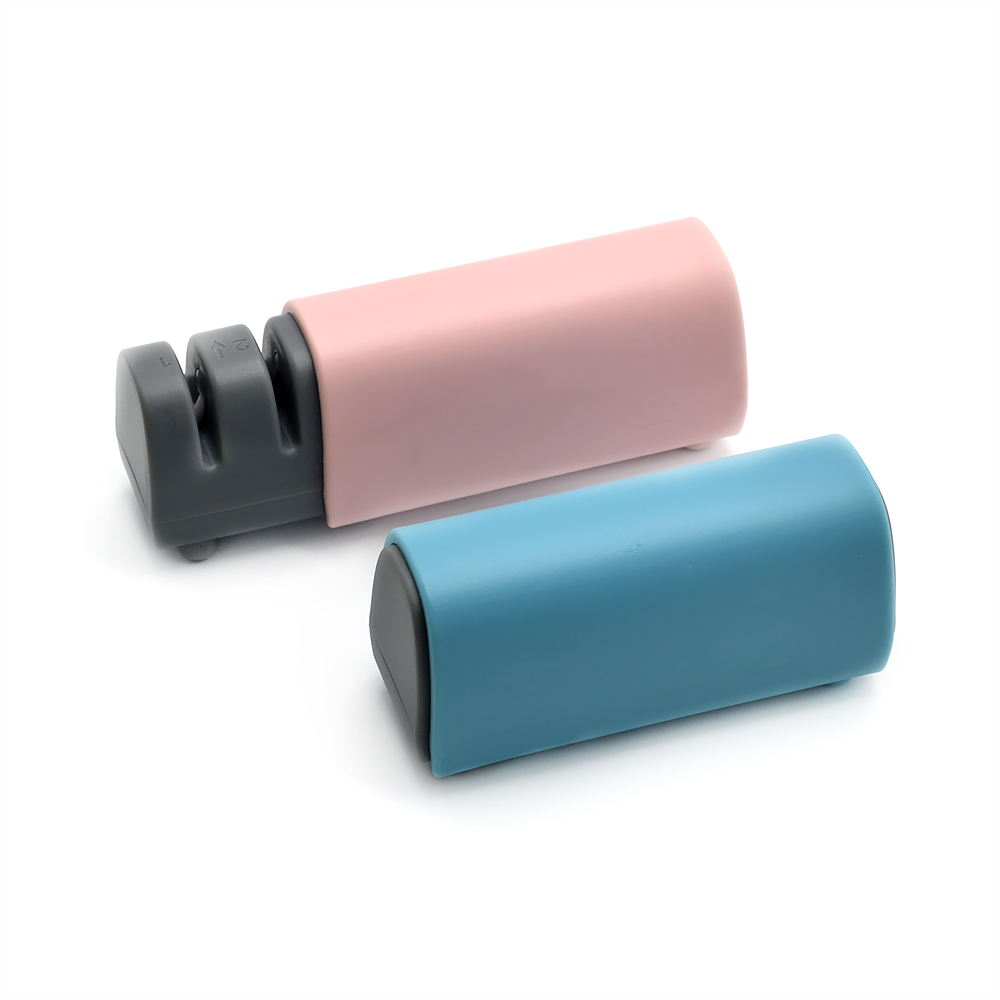
The original product description highlights compact knife sharpeners in lime green and grey, with ergonomic grips, anti-slip bases and a two-stage sharpening system using coarse carbide blades for initial sharpening and fine ceramic rods for polishing. Those are useful features to discuss with any supplier, but buyers should still confirm commercial details, compliance requirements and order terms before committing to a wholesale purchase.
Start With the Intended Buyer and Use Case
Before comparing suppliers, define who will use the sharpener and how often. A home cook may need a compact countertop tool for chef knives and paring knives. A kitchenware retailer may want a consistent, easy-to-explain item for shelf display. A commercial kitchen buyer may care more about repeatable performance, safe handling and simple staff training. An industrial knife sharpener supplier may offer heavier-duty equipment for high-volume sharpening, but that category should be evaluated separately from compact manual sharpeners.
Clear use-case planning prevents overbuying and helps you ask better questions. For example, if the product is intended for consumer retail, packaging, instructions and safe operation matter. If it is intended for wholesale distribution to professional kitchens, durability, replacement planning and after-sales support may be more important.
Key Product Features to Confirm
A two-stage knife sharpener can be attractive because it gives users a simple sequence: one stage for reshaping or sharpening the edge and another for finishing or polishing. In the source description, the coarse stage uses carbide blades and the fine stage uses ceramic rods. Buyers should confirm whether these components match the sample, whether the stages are clearly marked and what types of knives the supplier recommends for use.
- Grip design: Ask whether the handle is comfortable for both left- and right-handed users.
- Base stability: Confirm the anti-slip base material and test it on common countertop surfaces.
- Sharpening stages: Check whether the coarse and fine slots are easy to identify and use correctly.
- Knife compatibility: Ask which knife types are suitable and which blades should not be used.
- Instructions: Request clear use-and-care guidance for end users and retail customers.
A supplier should be able to explain these features without overstating performance. Avoid relying only on product photos; request samples and test them with the knife types your customers actually use.
Supplier Evaluation Checklist
When sourcing wholesale knife sharpeners, build a repeatable checklist so different suppliers can be compared fairly. The table below outlines practical evaluation points for buyers.
| Evaluation Area | What to Check | Questions to Ask the Supplier |
|---|---|---|
| Product sample | Grip comfort, slot alignment, base stability and finish quality | Can you provide pre-order samples from the same production process? |
| Sharpening system | Coarse carbide stage and fine ceramic stage as described | Are the sharpening materials and layout consistent across batches? |
| Packaging | Retail box, instructions, barcode space and shipping protection | What packaging options are available, and can artwork be reviewed before production? |
| Quality control | Visual inspection, functional checks and defect handling | What checks are performed before shipment, and how are nonconforming items handled? |
| Commercial terms | MOQ, lead time, payment terms and reorder process | What are the current minimum order quantities and production timelines? |
| Compliance needs | Market-specific documentation, labeling and safety requirements | Which documents can you provide for the destination market? |
Wholesale Buying Considerations
Wholesale sourcing can reduce unit cost and improve supply continuity, but it also increases the importance of planning. Buyers should avoid placing a large order based only on catalog claims. Instead, request a sample, review packaging, test the product with common knives and confirm how the supplier handles order changes or repeat purchases.
If the sharpener is being sold under your own brand, ask whether OEM or private-label service is available. Do not assume logo printing, custom colors or custom packaging are included. Confirm the artwork process, sample approval steps, color tolerance, carton marking and whether any extra fees apply. If you distribute to multiple markets, ask whether instructions can be prepared in the languages required by those markets.
For businesses comparing a general knife sharpener supplier with an industrial knife sharpener supplier, match the product category to the application. Compact manual sharpeners are typically easier to merchandise for home and light professional use. Industrial sharpening equipment is a different sourcing project and may require deeper review of maintenance, operator training, spare parts and safety procedures.
How to Assess Quality Without Overclaiming
Quality should be evaluated through evidence, not broad statements. A supplier may describe a sharpener as durable or user-friendly, but buyers should look for observable details. Does the base stay in place during use? Are the sharpening slots cleanly finished? Does the handle give enough clearance from the blade path? Are instructions specific enough to reduce misuse?
It is also wise to test consistency. If possible, compare more than one sample or request samples from the expected production batch. Record observations in a simple scorecard, including appearance, function, packaging and user feedback. This process helps purchasing teams make decisions based on practical performance instead of marketing language.
Communication and After-Sales Support
A good supplier relationship depends on clear communication. Before ordering, ask who will manage your account, how production updates are shared and what happens if there are delays or product issues. For wholesale buyers, the response to problems can be as important as the product itself.
Useful questions include: How are defects reported? What photos or inspection records are needed? Is there a replacement or credit process? Can the supplier support repeat orders with the same color and packaging? These details reduce uncertainty and help protect your customer relationships.
Key Takeaways
- Choose a knife sharpener supplier based on use case, sample quality, communication and repeat-order reliability.
- Confirm explicit features such as the ergonomic grip, anti-slip base and two-stage carbide and ceramic sharpening system.
- Ask about MOQ, lead time, packaging, OEM options and documentation instead of assuming they are available.
- Use samples and a checklist to compare wholesale knife sharpeners before placing a larger order.
- Separate compact manual sharpeners from industrial sharpening equipment because the sourcing requirements differ.
Practical FAQ
What should I ask a knife sharpener supplier before ordering?
Ask for product samples, current MOQ, lead time, packaging options, quality-control steps, available documentation and the process for handling defects or repeat orders.
Are two-stage knife sharpeners suitable for wholesale programs?
They can be, especially when the stages are easy to understand and the supplier provides clear instructions. Confirm the coarse carbide and fine ceramic stages through samples before buying in bulk.
Can I request private-label packaging?
Possibly, but it should not be assumed. Ask the supplier whether OEM or private-label service is available, what artwork files are required and whether approval samples can be reviewed.
How do I compare manual and industrial knife sharpener suppliers?
Manual sharpeners are usually evaluated for retail usability, packaging and consumer instructions. Industrial suppliers should be assessed for equipment capacity, maintenance needs, training, spare parts and operational safety.
What is the best way to reduce sourcing risk?
Start with samples, document your inspection criteria, confirm all commercial terms in writing and place orders only after packaging, product features and delivery expectations are clear.
