





Classic Household Scissors: Practical Buying and Sourcing Guide
Classic household scissors are simple tools, but they influence many everyday tasks: opening packages, trimming paper, cutting thread, preparing craft materials, and handling small home repairs. The original article highlighted their versatility, precision, and role in both home use and custom scissors manufacturing. This expanded guide keeps that focus while giving buyers, retailers, and sourcing teams a clearer framework for evaluating scissors without relying on vague claims.
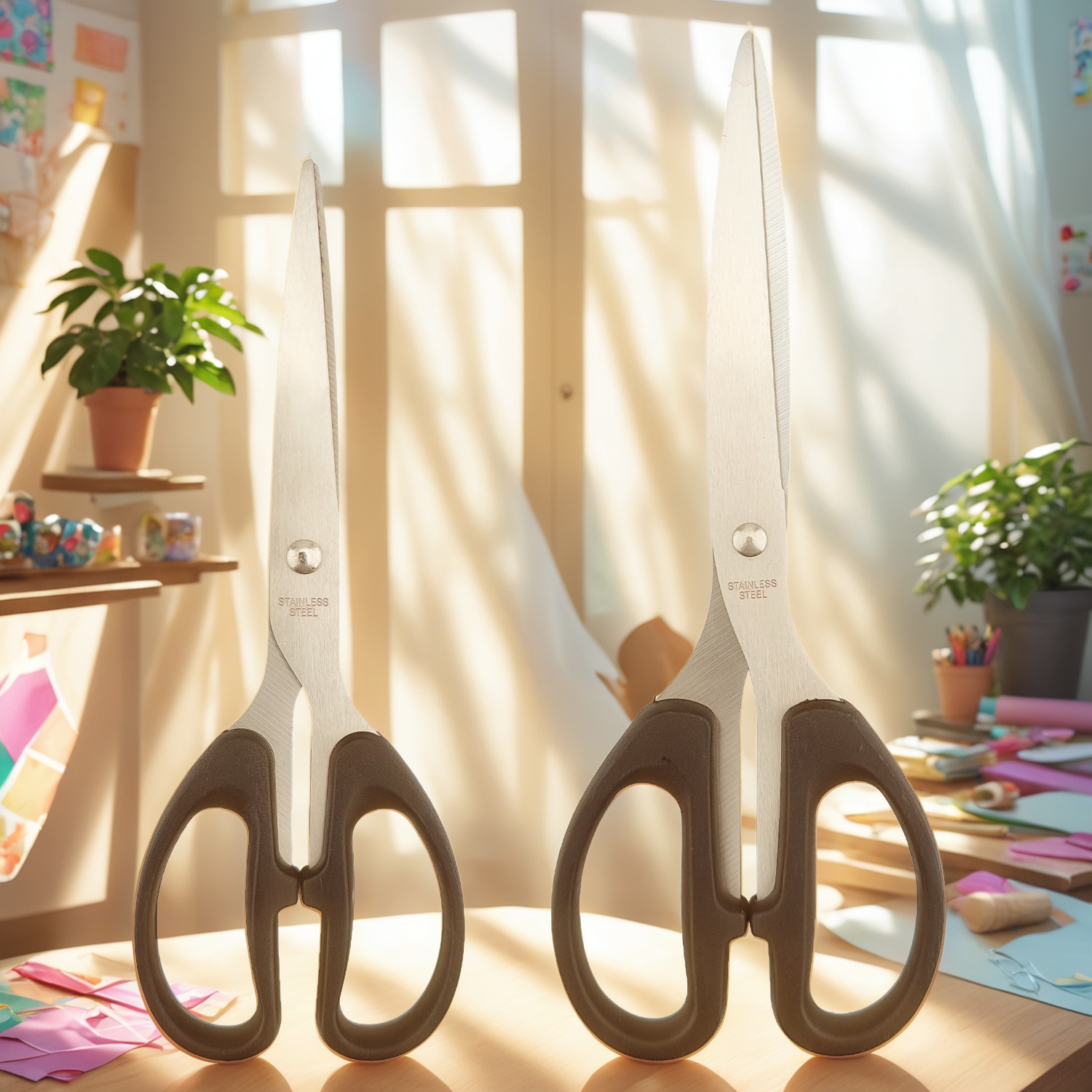
Why Classic Household Scissors Still Matter
A well-made pair of household scissors is valued because it performs many small jobs consistently. Unlike specialized tailoring shears, kitchen shears, or industrial cutters, classic household scissors are usually selected for general convenience. They should be easy to store, comfortable to hold, and reliable enough for routine cutting tasks.
For consumers, the main question is whether the scissors feel controlled and cut cleanly through common household materials. For business buyers, the question is broader: will the product match the intended retail price point, packaging format, target user, and expected level of durability? A sourcing decision should consider both user experience and commercial practicality.
Common Uses Around the Home
Classic household scissors are often kept in a kitchen drawer, desk organizer, sewing kit, or craft box. Their value comes from being ready for quick work rather than from extreme specialization. Typical uses include:
- Opening parcel tape, paper packaging, and light cardboard.
- Trimming paper, labels, gift wrap, and craft sheets.
- Cutting thread, ribbon, yarn, or lightweight fabric for household projects.
- Handling school, office, and DIY organization tasks.
- Keeping a backup cutting tool available in shared spaces.
Because these uses vary, buyers should avoid judging scissors by appearance alone. A polished design may look suitable for retail display, but edge alignment, grip comfort, pivot smoothness, and packaging protection all affect satisfaction after purchase.
Selection Criteria for Home Use Scissors
When choosing classic household scissors for a product line or personal use, focus on practical performance. The original article mentioned sharpness, precision, comfortable grip, and stainless steel scissors as relevant points. If a supplier describes the blades as stainless steel or the handles as ergonomic, ask for the exact specification, test method, or sample confirmation before using those claims in marketing.
| Evaluation Point | What to Check | Why It Matters |
|---|---|---|
| Blade alignment | Blades should meet evenly from pivot to tip | Poor alignment can cause snagging or incomplete cuts |
| Sharpness | Test on paper, thread, and light packaging | General scissors must handle varied household materials |
| Handle comfort | Check grip size, pressure points, and hand fit | Comfort affects control during repeated use |
| Pivot action | Open and close repeatedly to assess smoothness | A rough pivot can make simple tasks tiring |
| Packaging | Confirm tip protection and retail presentation | Packaging supports safety, shipping, and shelf appeal |
Guidance for OEM and Wholesale Buyers
For wholesale or OEM sourcing, classic household scissors should be treated as a product with measurable quality requirements, not just a low-cost accessory. An OEM scissors factory or custom scissors manufacturing partner may offer variations in blade material, handle shape, color, logo placement, packaging, and carton configuration. However, buyers should confirm what is actually available rather than assuming standard options.
Before placing an order, ask the supplier clear questions:
- What blade material options are available, and how are they documented?
- Can the supplier provide pre-production samples for approval?
- What tolerances are used for blade alignment and pivot assembly?
- Which handle materials and colors are available for customization?
- What packaging formats are offered for retail, e-commerce, or bulk supply?
- Are there any buyer-specific compliance, labeling, or documentation requirements to discuss?
Do not rely only on catalog photos. Request samples and compare them against your intended use case. If you sell to craft users, test repeated cutting of paper and thread. If the scissors are meant for a general household assortment, test a wider range of everyday materials. If the product will be sold online, confirm packaging durability for parcel shipping.
Quality Checks Before Confirming an Order
Quality control for household scissors can be straightforward if expectations are defined early. Buyers should create a checklist that includes appearance, function, safety, packaging, and labeling. For example, samples should open and close smoothly, cut consistently along the blade length, and have no obvious burrs, sharp handle edges, or loose assembly.
Retailers may also want to check whether the product photography and descriptions match the final item. If a listing describes stainless steel, a soft grip, a particular color, or a multi-purpose design, those points should be supported by the sample and confirmed with the supplier. When details are not verified, it is safer to describe the product in general terms instead of making specific performance or material claims.
Care and Storage Tips for Longer Use
For consumers, proper care helps classic household scissors stay useful. Keep them dry, wipe residue from the blades after cutting tape or adhesive labels, and store them away from moisture. Avoid using general household scissors on materials that may damage the edge, such as wire, hard plastic, or thick cardboard, unless the product is specifically designed for that task.
If the pivot becomes stiff, check whether cleaning is needed before assuming the scissors are worn out. If the blades become dull, replacement may be more practical than sharpening for low-cost household models. For homes with children, store scissors safely and choose age-appropriate products for school or craft use.
Key Takeaways
- Classic household scissors are useful because they handle many light everyday cutting tasks.
- Selection should focus on blade alignment, cutting consistency, grip comfort, and pivot smoothness.
- OEM and wholesale buyers should verify materials, samples, packaging, and customization options directly with suppliers.
- Specific claims about steel grade, durability, or compliance should only be used when supported by supplier documentation.
- Good care, dry storage, and appropriate use help maintain cutting performance over time.
FAQ
What are classic household scissors best used for?
They are best for general home, office, school, and craft tasks such as cutting paper, thread, ribbon, light packaging, and labels. They are not a substitute for heavy-duty cutters unless the product is designed for that purpose.
Should wholesale buyers choose stainless steel scissors?
Stainless steel is commonly requested for household scissors, but buyers should ask the supplier to confirm the exact material and provide supporting information. Do not add a specific grade to product copy unless it is documented.
What should I test in a pre-production sample?
Test cutting performance, blade alignment, pivot smoothness, handle comfort, surface finish, packaging protection, labeling accuracy, and consistency across multiple samples.
Can household scissors be customized for retail programs?
Many sourcing projects may discuss customization such as handle color, logo placement, and packaging. Availability depends on the supplier, tooling, order details, and production setup, so buyers should confirm options before planning a launch.
How can consumers keep scissors working well?
Use them on suitable materials, keep them clean and dry, remove adhesive residue from the blades, and store them safely. Avoid cutting hard materials that can damage the edge or loosen the pivot.
