




Classic Household Scissors: OEM Sourcing Guide for Home-Use Ranges
Classic household scissors remain one of the most frequently used tools in a home, office, craft room, or retail utility drawer. For buyers, distributors, and private-label brands, the challenge is not simply finding scissors that look familiar. It is choosing a reliable OEM scissors factory or supplier that can deliver consistent cutting performance, comfortable handling, suitable packaging, and clear commercial communication.

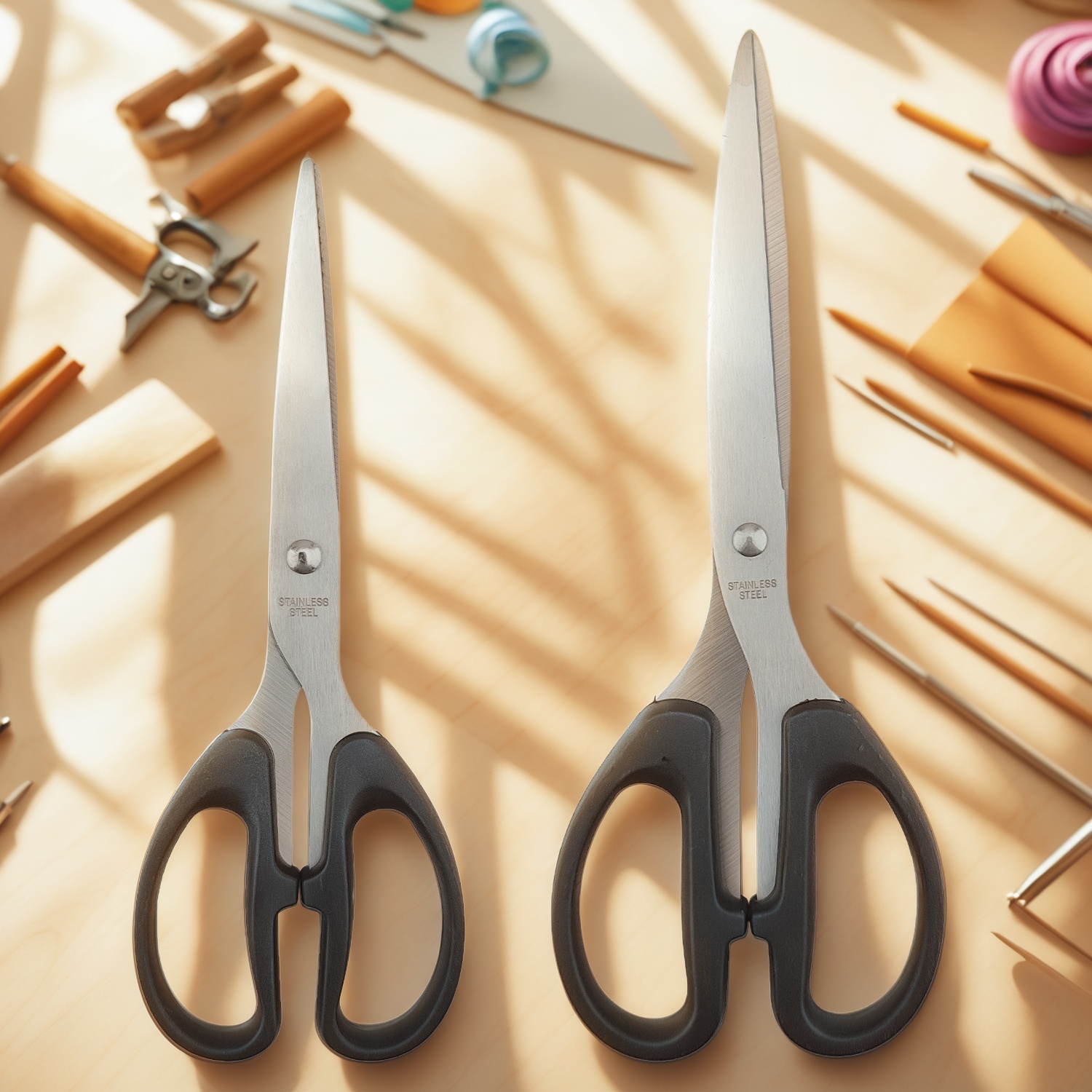
The original product description highlights a classic design for professional projects and at-home tasks, with stainless-steel blades, ergonomic handles, and a sleek black finish. Those features make the category suitable for general household cutting, sewing support, paper crafts, packaging tasks, and simple DIY use. However, when sourcing in bulk, buyers should verify every detail through samples, specifications, and supplier documentation rather than relying on appearance alone.
Key Takeaways
- Classic household scissors are a broad-use product category, so define the intended user and cutting tasks before ordering.
- Stainless-steel blades and ergonomic handles are useful features, but buyers should confirm blade thickness, hardness, finish, and handle material with the supplier.
- OEM and custom scissors manufacturing should be evaluated through samples, quality checkpoints, packaging options, and communication speed.
- Do not assume certifications, capacity, MOQ, or compliance claims. Ask the supplier to provide current written details.
What Makes Classic Household Scissors Practical?
A classic pair of household scissors is valued because it is simple, familiar, and useful across many everyday tasks. The product does not need complicated technology to be successful. It needs clean cutting edges, balanced tension, comfortable handles, and enough durability for repeated use. The stainless-steel blades mentioned in the original product information are an important selling point because stainless steel is commonly selected for household tools where moisture and daily handling may be present.
That said, not all stainless-steel scissors perform the same way. Buyers should ask what blade material is used, how the cutting edge is formed, whether the surface has a brushed or polished finish, and how the pivot is assembled. A supplier may describe a product as suitable for home use, but the final quality depends on the details of blade alignment, handle molding, screw tightness, and edge finishing.
How to Evaluate an OEM Scissors Factory
When sourcing from an OEM scissors factory, start with the factory’s ability to translate a specification into consistent production. A good sourcing conversation should cover sample lead time, production process, inspection points, packaging capabilities, and how defects are handled. Avoid making assumptions about manufacturing capacity, certifications, or testing results unless the supplier provides current documents.
Useful questions to ask include: What materials are available for the blade and handle? Can the factory provide pre-production samples? What visual and functional inspections are performed before shipment? Can the supplier support private-label packaging? What information is needed to quote accurately? If the product is intended for a regulated market, ask what compliance documents may be required and whether the supplier can provide relevant evidence for your review.
Customization Options for Home-Use Scissors
Custom scissors manufacturing can involve small visual changes or a more complete OEM development process. For a household range, common customization topics include handle color, handle shape, blade finish, logo placement, retail card design, barcode labels, instruction inserts, and carton packing. The original article notes ergonomic handles and a sleek black finish, which can be relevant for a classic utility look. Buyers considering other finishes should request color samples or physical references to avoid mismatched expectations.
Customization should be based on the target sales channel. A supermarket, hardware store, online marketplace, and promotional gift program may each need different packaging and product positioning. For example, an online seller may prioritize protective packaging and clear photography, while a retail buyer may care more about hanging cards, shelf visibility, and barcode placement. Before ordering, confirm artwork requirements, packaging dimensions, carton quantity, and whether the supplier can share a dieline for design work.
Comparison Checklist for Supplier Selection
| Evaluation Area | What to Check | Questions to Ask |
|---|---|---|
| Blade quality | Material, edge sharpness, alignment, surface finish | What blade material is used, and can you provide samples for cutting tests? |
| Handle comfort | Shape, grip size, molding finish, right- or left-hand suitability | What handle materials and colors are available for OEM orders? |
| Assembly | Pivot tightness, smooth opening, consistent closing action | How do you inspect screw tension and blade alignment during production? |
| Packaging | Retail card, blister, box, label, carton protection | Can you support private-label packaging and provide artwork requirements? |
| Commercial terms | MOQ, lead time, payment terms, sample cost | What are the current MOQ and lead time for this model and custom versions? |
Sample Testing Before Bulk Orders
Samples are essential when buying household scissors for wholesale or OEM programs. A catalog image cannot show the feel of the pivot, the comfort of the handle, or the accuracy of the cutting edge. Test samples with the types of materials your customers are likely to cut, such as paper, light cardboard, thread, fabric scraps, plastic packaging, or household labels. Do not overstate the product’s capability beyond normal home-use tasks unless the supplier has designed and specified it for heavier cutting.
During sample review, check whether the scissors open smoothly without wobbling. Inspect the blade tips, screw area, handle edges, and any printed or coated surfaces. If the black finish is important to your product range, review whether it is consistent across samples and whether it meets your visual standard. Keep written notes and photos so the approved sample can become a reference for production comparison.
Packaging and Positioning for Wholesale Buyers
For B2B buyers, packaging is more than decoration. It affects shipping protection, retail presentation, and customer understanding. A clear product name, safe storage message, and visible cutting-purpose description can reduce confusion. If the scissors are part of a broader household range, packaging should align with the rest of the product line while still communicating the specific item clearly.
Buyers should also consider the information required by the destination market and sales channel. Ask the supplier what labeling space is available and whether product warnings, importer details, recycling marks, or language versions are needed. Because requirements vary by market, confirm obligations with your own compliance advisor or customer before approving mass packaging.
Practical FAQ
Are classic household scissors suitable for all cutting jobs?
No. They are generally intended for everyday home, office, craft, and light utility tasks. For heavy materials, food preparation, hair cutting, or industrial use, choose scissors specifically designed for that purpose.
What should I confirm before choosing an OEM scissors factory?
Confirm blade and handle materials, sample availability, production lead time, MOQ, packaging options, inspection process, and the supplier’s ability to provide written specifications for the exact model.
Can household scissors be customized for a private-label range?
Often yes, depending on the supplier. Common options may include handle color, logo, packaging, and carton labeling. Ask which changes are available for the order quantity you are considering.
How can I judge cutting quality from a sample?
Test several common materials, check tip accuracy, listen for scraping, feel the pivot smoothness, and inspect whether the blades meet evenly from base to tip. Compare multiple samples, not just one pair.
Should I assume stainless-steel scissors are rust-proof?
Do not assume that. Stainless steel is commonly chosen for resistance to corrosion, but performance depends on the specific material, finish, use environment, and care. Ask the supplier for material details and care guidance.
Final Sourcing Advice
Classic household scissors are a dependable product category when buyers treat sourcing as a specification-driven process. The design may look simple, but the user experience depends on blade quality, handle comfort, assembly, packaging, and consistency from sample to shipment. For OEM or wholesale programs, the best approach is to define the intended use, request physical samples, document approved details, and ask suppliers direct questions about any missing commercial or technical information.
