




Classic Household Scissors: Practical Sourcing Guide
Classic household scissors remain one of the most frequently used tools in homes, offices, schools, craft spaces, and retail assortments. They are simple products, but buyers still need to evaluate blade performance, handle comfort, design consistency, packaging options, and supplier reliability before placing a wholesale or OEM order. A pair of household scissors may be used for cutting paper, coupons, fabric scraps, labels, packaging, thread, and other light daily materials, so the best choice is rarely based on appearance alone.

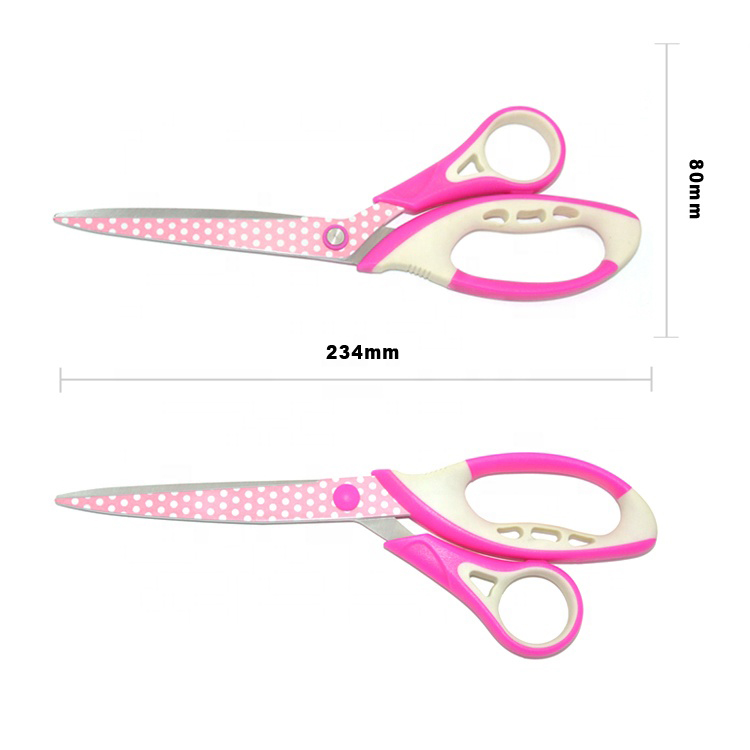
The original product information highlights classic household scissors with stainless steel blades, series scissors designs, vibrant polka-dot patterns, dual-tone handles, ergonomic handles, sturdy construction, and availability in various sizes. Those details are useful starting points. For a sourcing decision, however, a buyer should go further and confirm what each specification means in production, how quality is controlled, and which options can be customized for the target market.
Key Takeaways
- Classic household scissors should be assessed by cutting performance, comfort, durability, and consistency across batches.
- Stainless steel blades are mentioned in the original product description, but buyers should ask the supplier for the exact material details and care guidance.
- Series scissors with polka-dot or dual-tone handles can help retailers build a coordinated assortment without changing the core product function.
- Wholesale and OEM buyers should confirm packaging, labeling, sample approval, inspection process, and replacement policy before ordering.
What Makes Household Scissors Suitable for Everyday Use?
Household scissors need to perform well across varied tasks rather than one specialized job. A consumer may use the same pair to open a parcel, cut paper for a school project, trim a loose thread, or handle basic craft work. For this reason, the blade should cut smoothly, the handles should feel stable, and the pivot should open and close without looseness or excessive friction.
The original article describes the scissors as sharp scissors for home with precision-engineered stainless steel blades. That is a helpful feature statement, but buyers should still request samples and test them on the real materials their customers are likely to cut. A retail buyer focused on stationery may test paper, cardboard, stickers, and thin plastic packaging. A homeware distributor may also test fabric scraps, ribbons, and general household packaging.
Design Details: Series Scissors, Patterns, and Handles
Design matters because household scissors are often displayed in visible places: kitchen drawers, office desks, craft rooms, school supply sections, and home organization areas. The original product description mentions series scissors with vibrant polka-dot patterns and dual-tone handles. These details can create a more recognizable range for retail shelves or online listings.
For B2B buyers, the main question is whether the design is repeatable and suitable for the intended channel. A playful polka-dot design may work well for craft, school, and family-oriented assortments. A simpler color range may be more appropriate for office supply or utility-focused buyers. If ordering a series, ask whether colors, patterns, handle finishes, packaging artwork, and barcode labeling can be aligned across sizes.
Comparison Checklist for Buyers
| Check Area | What to Review | Questions to Ask the Supplier |
|---|---|---|
| Blade performance | Smooth cutting, edge consistency, clean cuts on common household materials | What materials were used for blade testing, and can samples be provided for evaluation? |
| Blade material | Stainless steel blades are stated in the source information | What is the exact blade material, and what care instructions should be printed or shared? |
| Handle comfort | Ergonomic handles and dual-tone grip appearance | Are different handle sizes or colors available for different target users? |
| Series consistency | Matching design language across various sizes | Can the supplier maintain consistent colors, patterns, and packaging across repeat orders? |
| Packaging | Retail display, e-commerce protection, labeling, and instructions | What packaging formats are available, and can artwork be reviewed before production? |
| Quality control | Visual checks, cutting tests, handle alignment, pivot function | What inspection steps are used before shipment, and can an inspection standard be agreed? |
How to Evaluate Samples Before a Wholesale Order
Sample evaluation should be practical, repeatable, and documented. Do not test only one cut on one sheet of paper. Instead, create a simple checklist that mirrors customer use. Open and close the scissors repeatedly, cut different materials, check whether the blades meet evenly, and inspect the handle edges for comfort. If the scissors are sold in multiple sizes, test each size rather than assuming the smallest and largest versions perform the same.
- Inspect the appearance, handle color, pattern placement, and packaging condition.
- Test cutting on paper, light card, thread, ribbon, and packaging film if relevant to the market.
- Check grip comfort during repeated cutting, especially for users who craft or prepare office materials.
- Review blade alignment, pivot tightness, and whether the scissors open smoothly.
- Record issues with photos and notes so the supplier can respond clearly before bulk production.
OEM and Private Label Sourcing Considerations
For OEM or private label programs, household scissors are not only a product but part of a wider merchandising plan. Buyers may need consistent colors, a specific packaging style, warning labels where applicable, and clear product descriptions for online listings. Because the original product information does not state minimum order quantity, certifications, pricing, or production capacity, those details should be treated as supplier questions rather than assumptions.
Ask the supplier whether private label packaging is available, what files are required for artwork, how samples are approved, how color matching is handled, and what happens if production goods differ from approved samples. If the product will be sold in multiple regions, buyers should also confirm which labeling, safety, and import requirements apply in their own market. The supplier can provide product information, but compliance responsibility often depends on the buyer's sales destination and channel.
Choosing the Right Assortment for Retail or Distribution
A good assortment should match the use case. For a general homeware program, include classic household scissors that feel comfortable and are easy to recognize as everyday tools. For craft or school channels, series scissors with colorful patterns may be more attractive. For office supply buyers, a cleaner and more practical visual style may be preferable.
The original description notes that the scissors are available in various sizes. That can be useful for building a tiered product range, but buyers should clarify the actual size options, packaging dimensions, and carton details before planning shelf space or shipping costs. Online sellers should also confirm product photos, exact measurements, and care instructions to reduce customer confusion and returns.
Use and Care Guidance for End Customers
Even durable household scissors last longer when used correctly. Retailers and distributors can reduce complaints by providing simple care guidance. Customers should use household scissors for appropriate light daily cutting tasks and avoid using them on hard wire, thick plastic, or materials outside the product's intended purpose unless the supplier confirms suitability. Blades should be kept clean and dry after use, especially when cutting adhesive labels or tape.
If the scissors become sticky, users can wipe the blades carefully according to the supplier's care instructions. They should store scissors in a drawer, holder, or protective package away from small children. Clear use guidance is especially important for colorful scissors, because decorative handles may appeal to families and craft users.
Practical FAQ
What are classic household scissors best used for?
They are best suited for common home, office, school, and craft tasks such as cutting paper, labels, coupons, thread, ribbons, and light packaging materials, depending on the supplier's stated use guidance.
Are stainless steel blades confirmed for this product?
The original product description states that the scissors use stainless steel blades. Buyers should still ask the supplier for the exact blade material details, care instructions, and any available test or inspection information.
Can series scissors support a retail assortment?
Yes, series scissors can help create a coordinated product line through different sizes, colors, or patterns. Buyers should confirm which designs are available and whether repeat orders can match the approved samples.
What should wholesale buyers ask before ordering?
Ask about sample availability, size options, packaging formats, labeling support, inspection steps, lead time, MOQ, payment terms, and how quality issues are handled after shipment.
How should buyers avoid overclaiming product features?
Use only confirmed supplier information in listings and packaging. If a feature, certification, material grade, or performance result is not documented, treat it as a question for the supplier rather than a marketing claim.
